
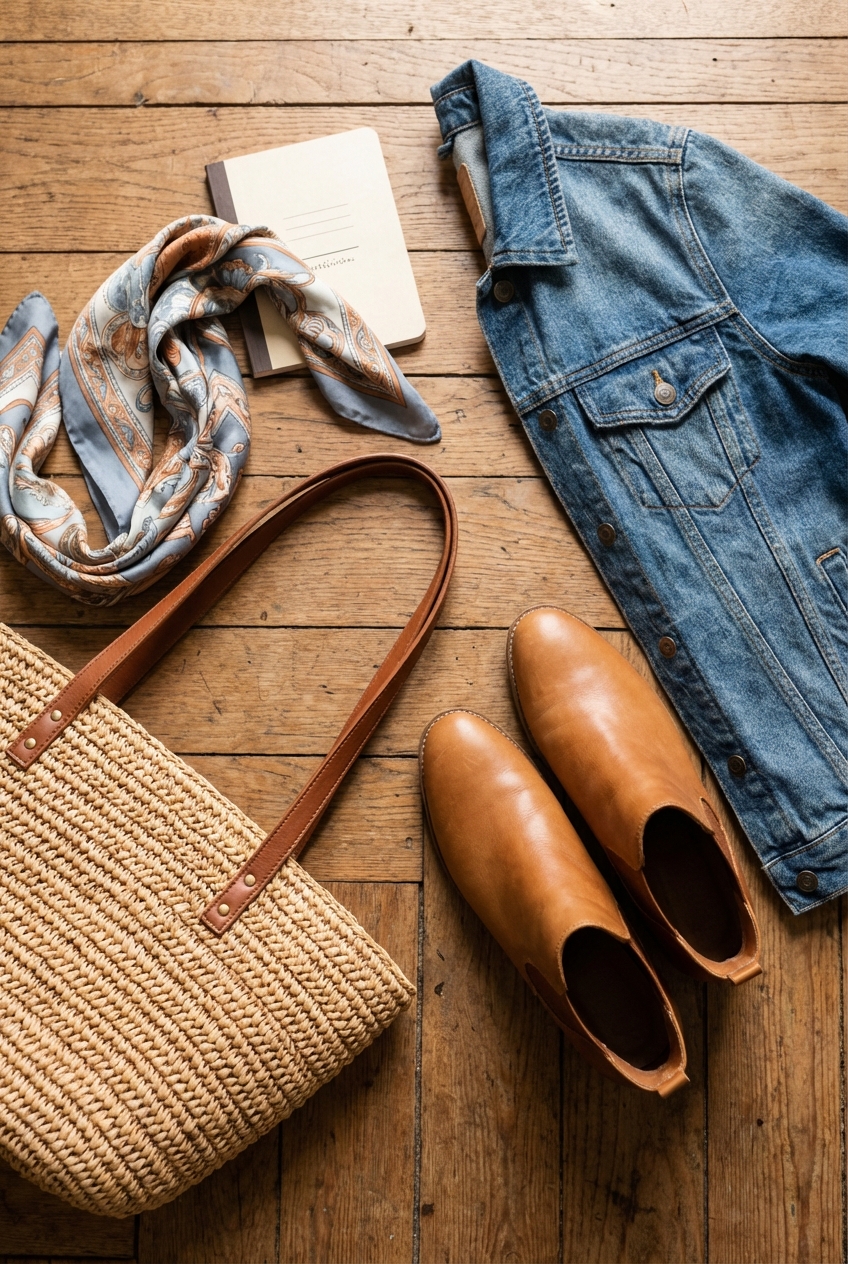
Matching Shoes And Handbags Without Overdoing It
For decades, the golden rule of accessories was strict, unwavering adherence to the “twin set” mentality. If you wore navy pumps, you carried a navy handbag, preferably in the exact same leather grain. While there is a certain retro charm to that level of precision, modern style relies on a much more fluid, effortless approach to coordination.
Today, true style mastery isn’t about perfectly matching your accessories; it is about creating a visual conversation between them. When shoes and bags match too perfectly, the look can feel forced or dated, as if you bought a boxed set off a department store shelf. The goal is to curate a look that feels intentional and cohesive without appearing studied.
However, abandoning the matching rule doesn’t mean you should embrace chaos. There are specific principles of color theory, texture weight, and scale that high-end stylists use to ensure disparate items look like they belong together. To see visual examples of these combinations done right, check out the Picture Gallery at the end of the blog post.
The “Cousins, Not Twins” Philosophy
The most important concept to grasp in modern accessorizing is that your shoes and handbag should be related, but they shouldn’t be identical twins. Think of them as cousins; they share the same DNA or vibe, but they have their own distinct personalities. This approach adds depth and dimension to an outfit that a perfect match simply cannot achieve.
If you are wearing a floral dress, for example, you shouldn’t try to find a shoe and a bag that match the exact background color of the print. Instead, pull a secondary color from the pattern for your shoes, and choose a neutral tone for your bag. This distributes the color palette across your silhouette rather than concentrating it in blocks.
This philosophy also applies to materials. If you are wearing leather shoes, you do not necessarily need a leather bag. In fact, mixing materials often looks more expensive. A leather boot paired with a suede or canvas tote creates a tactile richness that elevates the entire ensemble.
Designer’s Note: The Dye Lot Trap
One of the biggest mistakes I see clients make is trying to match colors from different brands. A “camel” shoe from one designer will likely have a yellow undertone, while a “camel” bag from another might lean pink or gray. When you wear them together, they will clash subtly, making the outfit look slightly “off.” It is better to go for a deliberate contrast (like dark chocolate and beige) than a near-miss match.
Balancing Visual Weight and Texture
Visual weight refers to how heavy or light an item looks to the eye, which is often dictated by the material and the silhouette. A chunky combat boot has a heavy visual weight, while a strappy stiletto has a light visual weight. To maintain balance, your handbag needs to complement that weight without competing with it.
If you are wearing a heavy, chunky shoe, a delicate satin clutch will disappear, making your feet look disproportionately large. Conversely, wearing a massive, slouchy hobo bag with delicate kitten heels can make you look top-heavy. You want the visual weight of your accessories to stabilize your silhouette, not tip it over.
Texture plays a massive role here as well. High-shine textures, like patent leather or metallics, reflect light and draw the eye. If you wear patent leather shoes and carry a patent leather bag, you are creating two high-intensity focal points that fight for attention.
Common Mistakes + Fixes
- The Mistake: Wearing high-gloss patent leather shoes with a matching high-gloss bag.
- The Fix: Keep one item glossy and the other matte. Pair patent pumps with a suede clutch or a soft-grain leather satchel to absorb light and create balance.
- The Mistake: Pairing heavy winter boots with a summery straw or raffia bag.
- The Fix: respect seasonality in visual weight. Pair heavy boots with thick leather, wool felt, or suede bags. Save the raffia for sandals and loafers.
Mastering the Monochromatic Look
Monochromatic dressing—wearing different shades of the same color—is a sophisticated way to match without looking dated. This technique works exceptionally well with neutrals like beige, cream, gray, and cognac. The key is to vary the depth of the shade so there is a clear distinction between the foot and the hand.
For example, if you are wearing an all-white or cream outfit, you might choose ecru shoes and a latte-colored handbag. They are in the same color family, but the variation prevents the “medical uniform” effect. This creates a gradient effect that elongates the body and looks incredibly chic.
When working with bold colors monochromatically, such as red or blue, texture becomes your best friend. A burgundy leather boot paired with a brighter red velvet bag works because the change in fabric justifies the slight shift in color. It looks like an intentional styling choice rather than a failed attempt at matching.
Pro Tip: The Hardware Rule
When doing monochrome, pay close attention to your hardware (buckles, zippers, chains). If your bag has bright gold hardware and your shoes have silver studs, it can break the harmony of a monochromatic look. While mixing metals is acceptable in jewelry, I prefer keeping accessory hardware consistent when the color palette is simple.
Using the Anchor Method
The Anchor Method is a styling technique where one accessory acts as the “star” and the other acts as the “anchor.” This is particularly useful when you have a statement piece, such as a handbag with a loud print, heavy embellishment, or a neon color.
If you carry a statement bag, your shoes should be the anchor. They should be neutral, streamlined, and understated to let the bag shine. If you try to wear statement shoes and a statement bag, the eye doesn’t know where to rest, and the outfit becomes visually exhausting.
The reverse is also true. If you are wearing a pair of intricate, jeweled heels or bright metallic boots, your handbag should be the supporting character. Opt for a sleek silhouette in a solid neutral tone. This hierarchy of accessories ensures that your look remains elegant and focused.
What I’d Do in a Real Project
If I were styling a client for an event and she wanted to wear a pair of crystal-embellished emerald green pumps:
- I would select a handbag in a neutral tone, likely black or nude, depending on the dress.
- I would ensure the handbag is small and structured, like a box clutch, to keep the vibe formal.
- I would avoid any green on the bag entirely to prevent it from looking like a costume.
- I would use emerald green exclusively in her earrings to tie the shoes into the upper body without involving the bag.
The Role of Prints and Patterns
Mixing prints is an advanced styling move that can look incredible when done correctly. However, matching a printed shoe to a printed bag of the same pattern is generally a fashion faux pas unless it is a very specific runway look. It almost always looks like you bought a “bundle deal.”
Instead, treat animal prints (leopard, snake, zebra) as neutrals. A leopard print shoe can actually pair beautifully with a red handbag. The leopard acts as a complex beige/black mix, and the red provides a pop of contrast. The key is to ensure the scale of the prints doesn’t clash if you are daring enough to mix two patterns.
If you are wearing a floral shoe, pick one distinct color from the print—preferably the least dominant one—and match your bag to that. If the shoe is navy with pink and white flowers, a white bag will look fresh and summery, while a pink bag will bring out the feminine details. A navy bag would be the “safe” choice, but often the least interesting one.
Styling Checklist: Print Coordination
- Scale: Keep the print on the smaller accessory. A printed shoe is easier to style than a massive printed tote.
- Separation: Never wear a printed bag that touches a printed shoe (this is physically impossible, but visually, keep them distinct).
- Solids: If both accessories are printed, the outfit in between must be solid and neutral to provide a visual break.
Proportions and Lifestyle Constraints
We cannot talk about handbags and shoes without discussing the reality of your lifestyle. As a designer, I see many women buy “matching sets” that don’t actually function for their daily lives. You might have a great tote that matches your heels, but if you commute on the subway, those heels are staying in the bag.
Proportion is key to looking put-together. If you are a petite woman, carrying a massive oversized tote can swallow your frame, especially if you are wearing flats. If you need to carry a lot of items, look for a tote that has vertical structure rather than horizontal width, which draws the eye up and down.
When styling for travel or long days, prioritize the shoe comfort and let the bag do the heavy lifting for style. A pair of clean white leather sneakers is a neutral base. You can pair this with a structured, high-end leather handbag to elevate the sneakers. The contrast between the casual shoe and the formal bag is a quintessential “fashion editor” look.
Real-World Constraints: Weather and Maintenance
- Rain/Snow: Never match suede shoes with a suede bag in bad weather. If you ruin one, you break the “set.” Wear leather boots and carry a nylon or treated canvas bag.
- Commuting: If you wear sneakers for the commute and change into heels, match your bag to the outfit, not the commute shoes. The bag is part of the all-day look; the sneakers are temporary.
- Durability: Your handbag generally lasts longer than your shoes. Don’t invest in a “matching” color that is so unique you can’t wear the bag once the shoes wear out.
Finish & Styling Checklist
Before you walk out the door, run through this quick mental checklist to ensure your accessories are working for you, not against you. This is the exact process I use on set to verify a look is camera-ready.
1. Check the Undertones
Do your leathers clash? Make sure you aren’t mixing a cool-toned gray bag with warm-toned taupe boots. Keep warm with warm and cool with cool.
2. The “One Shine” Rule
Do you have too much gloss? If your shoes are patent, your bag should be matte. If your bag is metallic, your shoes should be suede or leather.
3. The Distance Test
Stand six feet back from a full-length mirror. Does your eye jump back and forth ping-pong style between your feet and hand? If so, the match is too aggressive. The eye should travel smoothly up your silhouette.
4. The Occasion Match
Do the formalities align? Ensure you aren’t pairing a satin evening clutch with casual cork wedges. The formality level must match, even if the colors don’t.
5. The Third Piece Tie-In
If your shoes and bag feel disconnected, use a third piece to bridge the gap. A belt, a scarf tied to the bag, or a statement necklace can unite the two distinct colors.
FAQs
Can I wear black shoes with a brown bag?
Absolutely. This used to be a fashion taboo, but it is now considered a classic, sophisticated combination. To make it look intentional, ensure the brown is a rich cognac or chocolate shade rather than a dark, muddy brown that looks like a faded black. Using a belt that combines both colors can also help bridge the gap.
Is it okay to wear white shoes if my bag is black?
Yes, but you need to be careful with the visual balance. White shoes can look very “heavy” or distracting because they draw the eye down. This look works best if you have some white or light elements near your face (like a white shirt or pearl earrings) to balance the brightness of the shoes against the darkness of the bag.
Do my belt and bag need to match if my shoes don’t?
Generally, it is best if the belt relates to the shoes. If you are wearing black boots and a brown bag, a black belt helps elongate the leg line. If you match the belt to the bag in this scenario, it can chop your body in half visually. Think of the belt and shoes as the structural framework, and the bag as an independent accessory.
Can I mix silver and gold hardware on shoes and bags?
Yes, the mixed metal trend is here to stay. However, try to keep the style of the hardware similar. For example, chunky industrial silver chains on a bag might clash with delicate, filigree gold buckles on a shoe. If the vibe of the metal is consistent (e.g., both are sleek and modern), the color difference matters less.
What is the safest “non-matching” combo for beginners?
The safest entry point is the “Neutral + Pop” formula. Wear a completely neutral outfit (jeans and a white tee) with neutral shoes (nude or white sneakers). Then, add a bag in a singular pop of color like red, electric blue, or emerald. It’s impossible to mess up because the bag has no competition.
Conclusion
The days of rigid, restrictive fashion rules are behind us, and we are all the better for it. Matching your shoes and handbag should no longer be a chore of finding identical dye lots, but rather a creative exercise in balance and harmony. By focusing on complementary tones, interesting texture contrasts, and appropriate visual weights, you can build outfits that feel dynamic and modern.
Remember that confidence is the ultimate accessory. If you love a combination, wear it with conviction. The guidelines regarding scale, hardware, and color families are there to help you when you feel stuck, not to limit your creativity. Fashion is a language, and how you pair your accessories is your personal accent.
Picture Gallery


