
Maxi Dresses With Long Sleeves For Winter Elegance
The misconception that maxi dresses are exclusively reserved for summer vacations or spring weddings is one of the biggest missed opportunities in a winter wardrobe. In my years as a stylist, I have found that a floor-sweeping silhouette offers unparalleled elegance during the colder months. It provides full coverage, allows for secret layering, and creates a dramatic vertical line that is incredibly flattering.
I recall a specific Fashion Week in February where the wind chill was unforgiving. While many attendees shivered in mini skirts and sheer tights, I wore a heavyweight cashmere maxi dress with long sleeves. I was arguably the warmest person in line, yet the look read as high-fashion rather than utility gear. That moment solidified my belief in the power of the winter maxi.
The key to pulling this off lies in intentional styling. You cannot simply throw a summer bohemian dress over tights and hope for the best. Winter elegance requires specific attention to fabric weight, sleeve tailoring, and how the hem interacts with your footwear. If you are looking for visual inspiration on how to execute these looks, I have curated a stunning Picture Gallery at the end of the blog post.
1. Prioritizing Fabric Weight and Composition
The success of a long-sleeved maxi dress in winter depends almost entirely on the material. A flimsy viscose or unlined polyester will cling to your tights via static electricity and fail to provide the necessary structure. You need fabrics that have “guts”—weighty materials that hang straight and trap heat.
The Luxury of Natural Fibers
For the highest level of warmth and style, look for natural fibers. Merino wool and cashmere blends are the gold standard. They offer breathability, which is crucial when you move from the freezing outdoors into a heated office. A knit maxi dress made from 100% merino wool will drape heavily against the body, smoothing over undergarments rather than clinging to them.
Velvet and Heavyweight Silk
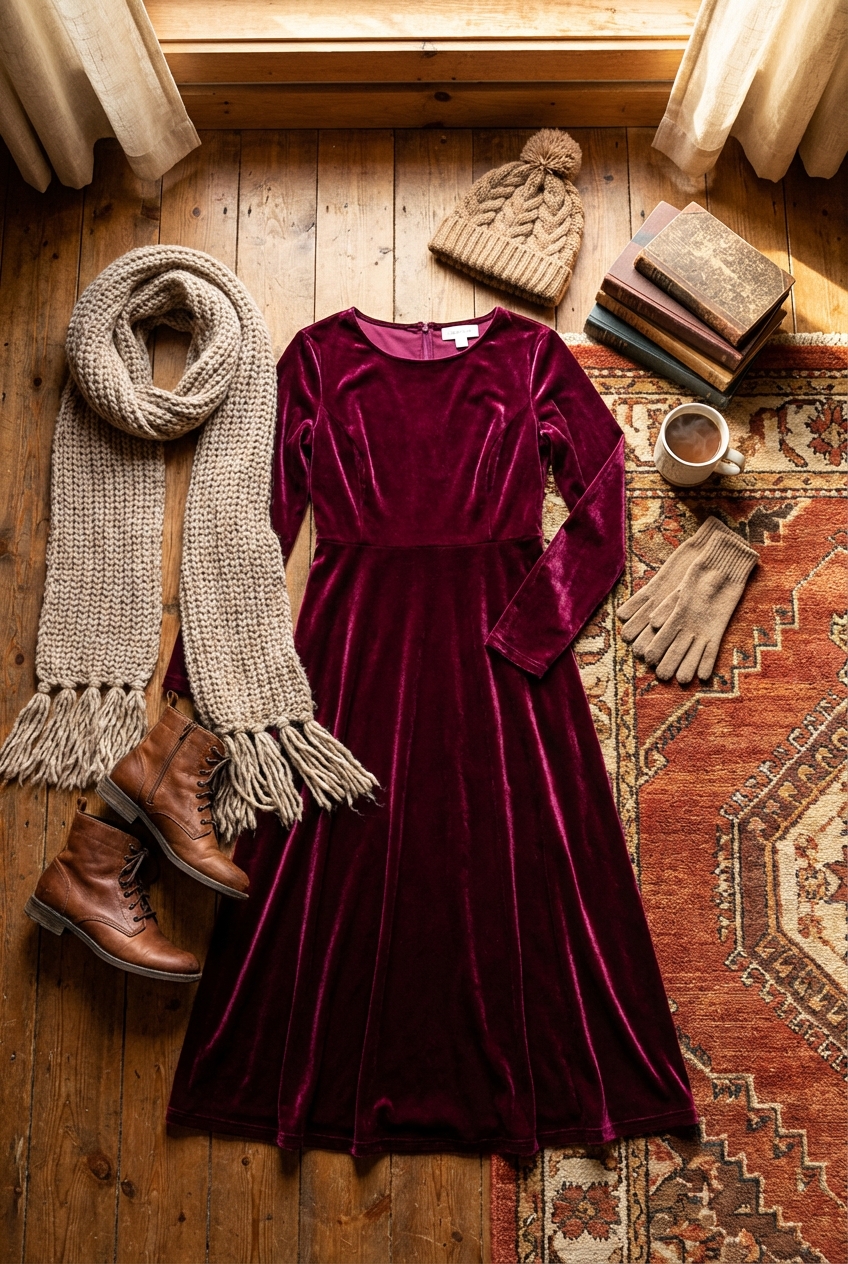
For evening wear, silk velvet is unmatched. It captures light beautifully and has a density that feels appropriate for December and January. Heavyweight silk crepes (4-ply or similar) are also excellent options for formal events. They provide thermal insulation that lighter chiffons simply cannot match.
Designer’s Note: The Lining Check
One lesson I teach all my clients is the “lining pinch test.” If you are buying a dress that isn’t a sweater knit, pinch the fabric. If you can feel your fingers through it easily, it requires a slip. For winter, I always recommend having a dress lined in silk or a high-quality anti-static rayon. If the dress is unlined, you must factor in the cost of a separate full-body slip to ensure the skirt moves fluidly as you walk.
2. The Geometry of Hemlines and Boot Pairings
The most technical aspect of styling a maxi dress is the relationship between the hem of the dress and your boots. In summer, we look for ankle clearance. In winter, we want a seamless transition to maintain that long, elegant column of color.
The Continuous Line
Ideally, your maxi dress should overlap with the top of your boots. There should be no sliver of skin visible. This creates a continuous vertical line that elongates the frame. Knee-high leather boots are the best tool for this. When the dress moves, the leather boot maintains the structure underneath.
Hem Clearance Rules
If you are wearing a floor-length gown for a gala, the hem should sit exactly 0.5 to 1 inch off the floor while wearing your shoes. This prevents the fabric from dragging in slush or salt. For daytime wear, a maxi that hits right at the ankle bone is more practical.
Common Mistakes + Fixes
Mistake: Wearing ankle booties that leave a gap of skin or sock showing when you sit down.
Fix: Switch to a tall boot that disappears up into the skirt. If you must wear ankle boots, wear opaque tights in the exact same color as the boots to bridge the gap visually.
3. Balancing Volume and Silhouette
Long sleeves combined with a floor-length skirt involves a lot of fabric. If the proportions are off, the dress can swallow you whole. As a stylist, I focus on creating definition so the body isn’t lost in the yardage.
Defining the Waist
Unless you are intentionally going for an avant-garde tent shape, waist definition is non-negotiable with long sleeves. Look for dresses with built-in structural waistbands, or utilize a belt. For winter knits, a wide leather belt (2 to 3 inches) works well to break up the texture and anchor the look.
Sleeve Considerations
If the skirt is voluminous (like an A-line or circle skirt), opt for a fitted sleeve. This balance keeps the silhouette refined. Conversely, if you are wearing a column dress or a pencil-skirt style maxi, you can play with volume in the sleeves, such as a bishop sleeve or a structured shoulder.
Scaling for Petites
For clients under 5’4″, a long-sleeved maxi can be daunting. The trick is to ensure the dress is fitted through the torso and arms. Avoid dropped shoulders, which can make you look shorter. A monochromatic look—where the dress and boots match—is the most effective way to add height.
4. The Art of Invisible Layering
True winter elegance is looking effortless while being secretly armored against the cold. The advantage of a maxi dress is the hidden real estate underneath the skirt. Unlike trousers, which limit your base layer options, a maxi dress allows for substantial thermal gear.
Base Layers
I recommend high-tech thermal bodysuits rather than separate tops. A bodysuit won’t untuck or bunch up around your waistline. Look for scoop-neck thermals that stay hidden under the neckline of your dress.
The Tight Equation
Your choice of tights matters immensely for the drape of the dress. Textured tights can act like Velcro against a knit dress, causing it to ride up.
- For Knit Dresses: Wear smooth, high-denier nylon tights or shapewear shorts on top of tights to create a glide surface.
- For Woven Dresses: You can get away with thicker wool or fleece-lined tights as long as the dress is lined.
Real World Project Tip
When I style outdoor winter shoots, I often have models wear biker shorts over their tights. This adds an extra layer of warmth to the core and prevents the tights from slipping down as they walk, which is a common annoyance with heavy winter hosiery.
5. Mastering Outerwear Coordination
The most common question I receive is, “What coat do I wear with a maxi dress?” The wrong coat length can cut your body in half or make the outfit look sloppy. You generally have two distinct options that work best.
Option A: The Cropped Jacket
A jacket that hits at the natural waist is excellent for maintaining the maxi silhouette. This could be a shearling aviator jacket, a cropped puffer, or a tailored wool blazer. By stopping at the waist, you allow the full length of the skirt to flow, keeping your legs looking long.
Option B: The Full-Length Coat
For the most dramatic and elegant look, match your coat length to your dress length. A wool trench or dad coat that hits mid-calf or lower creates a cohesive, expensive-looking ensemble.
What to Avoid
Try to avoid coats that hit right at the knee or just above the knee. This creates a “stair-step” effect with the hem of the maxi dress that often looks unintentional and breaks up your vertical line.
6. Accessorizing for Texture and Light
Winter fashion is often heavy and matte (wool, heavy cotton, suede). To bring elegance to the look, you need to introduce light and contrasting textures through accessories.
Metal and Shine
Long sleeves mean your wrists are covered, so bracelets are less effective unless you wear a bold cuff over the sleeve (a very chic styling trick). Instead, focus on earrings and necklaces. A gold chain belt or a pendant necklace can break up a solid block of color on a high-neck dress.
Scarf Play
Be careful with oversized blanket scarves. Since you are already wearing a lot of fabric with a long-sleeved maxi, a giant scarf can look suffocating. Opt for silk neckerchiefs for a pop of color or a streamlined cashmere scarf tucked neatly into your coat.
Bag Selection
The scale of your bag should match the visual weight of the dress. A tiny clutch can get lost against a heavy cable-knit maxi. structured leather totes or shoulder bags with substantial hardware tend to hold their own better against winter textures.
Finish & Styling Checklist
Before you head out the door, use this “Stylist’s Final Check” to ensure your look is polished and functional.
1. The Sit Test
Sit down on a chair. Does the dress ride up? Do your socks show? If you see a gap of skin that breaks the color line, switch to taller boots or matching tights.
2. The Static Check
Rub the fabric against your legs. If it clings, spray the inside of the dress and your tights with an anti-static spray. In a pinch, running a wire hanger over the tights can help discharge the electricity.
3. The Sleeve Length
Ensure the sleeves hit at the wrist bone or slightly below. If they are too long and cover your hands, it looks ill-fitted. If they are too short, it looks like it shrank. Tailoring sleeves is an inexpensive alteration that elevates the whole garment.
4. The Neckline Balance
If you are wearing a turtleneck maxi, wear your hair up or pulled back to elongate the neck. If it is a V-neck, consider a delicate pendant or a silk scarf for warmth.
5. The Hem Hygiene
Check the weather. If it is snowing or raining, ensure your hem is at least an inch off the ground. Wet hems wick moisture upward and ruin the elegance of the look immediately.
FAQs
Q: Can I wear a floral maxi dress in winter?
A: Absolutely, but the color palette is key. “Winter florals” typically feature darker backgrounds—black, navy, deep burgundy, or forest green. Avoid white-based pastels, which read too summery. Pair the dress with heavy black boots and a leather jacket to ground the print for the season.
Q: How do I stop my knit maxi dress from bagging out at the seat?
A: This is a common issue with natural fibers like wool and cashmere. Look for blends that include a small percentage (2-5%) of elastane or nylon, which helps with shape retention. Additionally, wearing a firm slip or shapewear underneath reduces the friction and direct pressure on the knit, helping it bounce back better.
Q: What shoes work for a formal winter maxi dress besides heels?
A: If you are attending a winter gala and refuse to freeze in pumps, look for a sleek, pointed-toe sock boot in velvet or satin. As long as the shaft of the boot is tight to the ankle and disappears under the dress, it mimics the silhouette of a heel but provides full foot coverage.
Q: Is it okay to wear a belt over a coat and maxi dress?
A: Yes, cinching a coat over a dress is a classic styling maneuver. However, ensure the coat is not too bulky. This works best with wool trench coats or unlined wrap coats. It creates an hourglass silhouette and integrates the outerwear as part of the outfit.
Conclusion
Embracing maxi dresses with long sleeves during the winter is a sign of a sophisticated wardrobe. It demonstrates that you understand how to balance comfort with high-style aesthetics. By selecting the right weighted fabrics, paying attention to the interaction between hem and boot, and layering strategically, you can create looks that are as functional as they are beautiful.
Don’t let the drop in temperature limit your style to jeans and sweaters. The drama of a full-length skirt paired with the coziness of long sleeves is the ultimate winter power move. It commands attention, keeps you warm, and offers endless versatility from the office to evening events.
Picture Gallery


