
Mesh And Netting Incorporating See Through Textures
Introduction
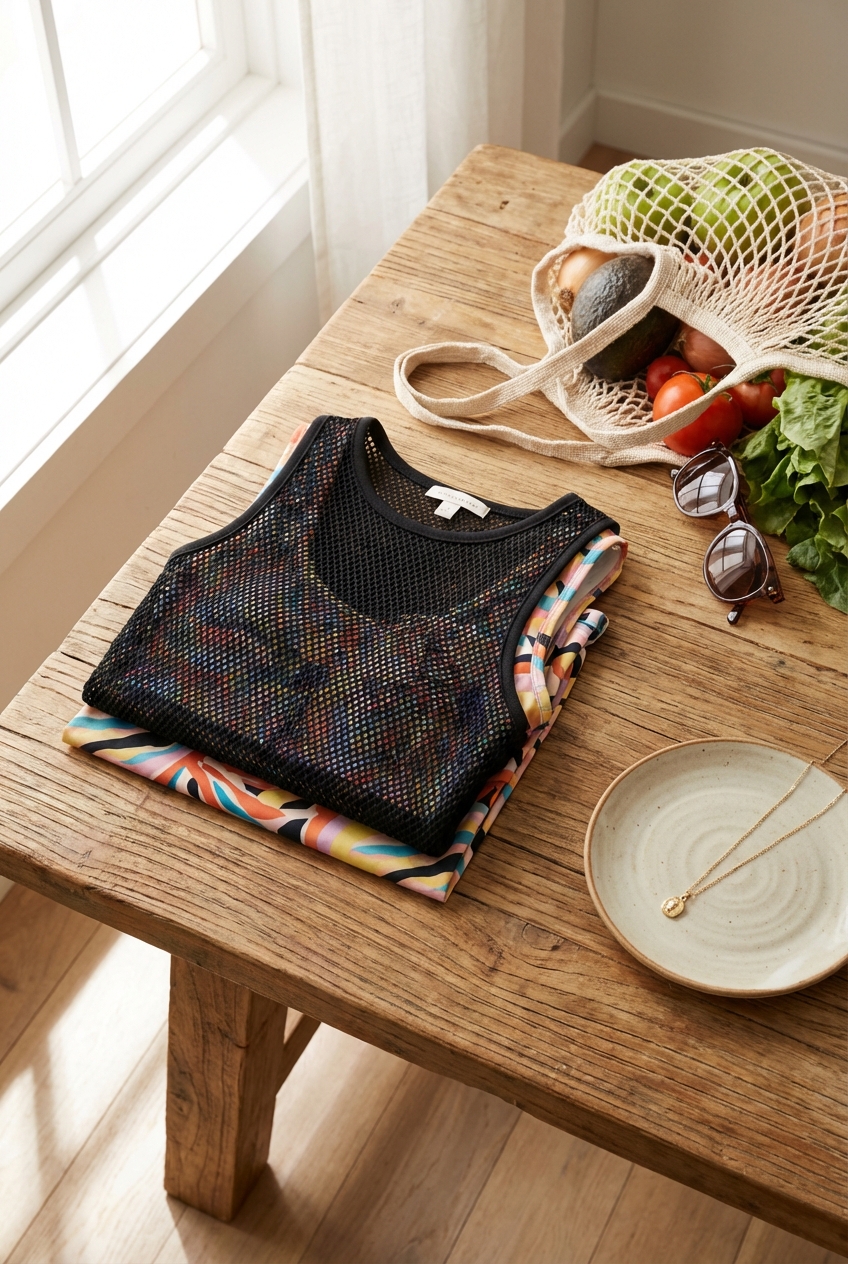
In the world of high fashion, we often talk about the “reveal.” It is that moment on the runway when a sheer fabric, a strategic cutout, or an intricate mesh overlay suggests nudity without giving it all away. This concept of controlled transparency is incredibly seductive, and it translates seamlessly from the catwalk to interior design. Just as a fishnet top adds edge to a structured blazer, incorporating mesh and netting into your home adds a layer of sophisticated grit and visual intrigue.
I look at a room the same way I look at an outfit: it needs texture to breathe. Solid walls and heavy furniture are like wearing a wool coat buttoned to the chin; sometimes you need to break it up with materials that let the light—and the eye—travel through. Whether it is architectural wire mesh cabinetry or organic cane webbing, these “see-through” textures create depth without adding visual weight.
Getting this look right requires a delicate balance between industrial hardness and organic softness. For those of you looking for visual inspiration, I have curated a stunning Picture Gallery at the end of the blog post to show you exactly how these textures come to life. Let’s explore how to drape your home in the architectural equivalent of couture netting.
The Industrial Edge: Metal Mesh Cabinetry
When we think of mesh in fashion, we often think of the sportswear craze or the grunge era, but in interiors, metal mesh is pure luxury. Replacing standard glass or solid wood cabinet fronts with decorative wire grilles changes the entire personality of a kitchen or media console. It mimics the look of a vintage jewelry cage or an antique French larder.
The beauty of metal mesh is that it obscures the clutter while still reflecting light. If your dishware isn’t perfectly color-coordinated, a tight-weave mesh acts like a “soft focus” lens, blurring the contents just enough to look chic. I love using antique brass or oil-rubbed bronze mesh in shaker-style doors to bridge the gap between traditional and industrial styles.
However, the gauge (thickness) of the wire matters immensely. A thin, chicken-wire style can look cheap and farmhouse-y if not framed correctly. For a high-end fashion look, opt for a woven architectural grille with a double-crimp pattern.
Designer’s Note: The Dust Factor
In my experience, clients love the look of mesh but forget about maintenance. A woven wire mesh catches dust in the crevices like you wouldn’t believe.
The Fix: Always install a clear glass pane behind the mesh if the cabinet is in a high-grease area like a kitchen. You get the texture without the impossible cleaning task.
The Alternative: If you want airflow (for media consoles with hot electronics), leave the glass off but choose a flat-wire mesh rather than a round-wire weave; it is much easier to wipe down.
Organic Netting: Cane and Rattan
If metal mesh is the studded leather jacket of interiors, cane webbing is the linen resort wear. It brings an immediate sense of ease, warmth, and travel to a space. We are seeing a massive resurgence of the “Vienna Straw” pattern, traditionally known as octagonal cane webbing, appearing on everything from wardrobe doors to room dividers.
This material is perfect for renters or smaller spaces because it provides coverage without blocking light. A folding screen made of cane allows sunshine to filter through, keeping the room feeling airy while hiding that Peloton you haven’t used in months. It creates a beautiful shadow play that changes throughout the day, much like lace on skin.
When selecting cane furniture, pay attention to the scale of the weave. A “radio weave” (square pattern) feels more modern and grid-like, while the classic hexagonal weave feels more vintage and bohemian.
Common Mistakes + Fixes
Mistake: Using natural, untreated cane in high-humidity bathrooms. It will mold and sag, just like a straw hat left in the rain.
Fix: Use synthetic “all-weather” wicker for humid zones, or ensure the natural cane is sealed with a marine-grade matte varnish.
Mistake: Letting pets near loose-weave netting. Cats view cane furniture as an expensive scratching post.
Fix: If you have claws in the house, keep cane usage to upper cabinets or light fixtures, well out of reach of paws.
Architectural Netting: The Loft Hammock
This is the avant-garde couture moment of the home. Structural interior netting, often called a “hammock floor,” is a trend I have seen in high-end European lofts that is making its way stateside. It involves replacing a section of floor (usually in a mezzanine or reading nook) with high-tensile knotless netting.
This is not a DIY project; it is an architectural feature that requires structural engineering. However, the payoff is incredible. It allows daylight from skylights to penetrate down to the lower levels, keeping an open-concept flow that solid flooring would destroy. It creates a dedicated “lounge zone” that forces you to relax, much like a suspended daybed.
From a fashion perspective, this is all about the silhouette. The lines of the net create a graphic grid against the ceiling, adding a sporty, modern element to the architecture.
What I’d Do in a Real Project: Safety & Specs
If I were specifying this for a client, I would never cut corners on the hardware.
1. Mesh Size: I prefer a 30mm to 50mm mesh (roughly 1-2 inches). Anything larger is uncomfortable to lay on; anything smaller blocks too much light.
2. Material: Polypropylene or polyamide (nylon) is standard. It is soft to the touch but incredibly strong.
3. Anchoring: The perimeter needs to be bolted into structural joists, not just drywall.
4. Weight Limit: A proper installation should support at least 45 lbs per square foot, or roughly 200kg per square meter, to be safe for multiple adults.
Textile Layering: The Fishnet Drape
Let’s talk about window treatments. Velvet and heavy linen have their place, but there is something undeniably chic about an open-weave sheer that resembles netting. I am not talking about cheap polyester voiles; I am referring to chunky, open-weave linens or cotton bouclé fabrics that look like hand-knitted fishing nets.
These fabrics filter light beautifully, casting dappled shadows across the floor. They work exceptionally well in coastal homes or brutalist concrete spaces where you need texture to soften the hard edges. It is the interior equivalent of a crochet cover-up worn over a swimsuit—casual, textural, and sexy.
When using open-weave fabrics, you must be generous with the fabric amount. A skimpy net curtain looks accidental. You need volume to make it look intentional and luxurious.
Designer Rules of Thumb: Drapery Fullness
The Ratio: For open-weave netting fabrics, aim for a 2.5x to 3x fullness. If your window is 5 feet wide, your curtain panels specifically need to be 12.5 to 15 feet wide in total.
The Break: Let these curtains “break” or puddle on the floor by about 1 to 2 inches. Because the weave is loose, the fabric will relax and stretch over time. Hemming them to “kiss” the floor initially will result in them dragging later, so lean into the puddle look intentionally.
Hardware: Use a simple matte black or brushed nickel rod. The fabric is the statement; the hardware should disappear.
The Green Room: Landscape Trellising
Taking our fashion eye outdoors, we use netting to structure nature. Just as corsetry shapes the body, wire mesh and trellising shape the garden. A “green wall” created with architectural wire mesh is the ultimate way to create privacy without erecting a solid, unfriendly fence.
I love using galvanized cattle panel or remesh (concrete reinforcement wire) for a look that is rugged and industrial. When covered in Star Jasmine or Clematis, the metal disappears, leaving you with a floating wall of greenery. This is particularly effective in urban gardens or small balconies where horizontal space is limited.
For a more modern, minimal look, stainless steel cable netting is the gold standard. It is practically invisible to the naked eye from a distance, allowing the vines to appear as if they are climbing thin air.
Planting Strategy for Mesh
The Climbers: Choose vines that twine (wrap around) rather than those that adhere with suckers. Jasmine, Honeysuckle, and Wisteria love wrapping around wire mesh. Ivy requires more surface area and can damage masonry, but grows well on tighter mesh.
Spacing: Ensure the mesh is mounted at least 2 to 3 inches away from the wall or fence. Plants need air circulation behind them to prevent fungus and rot.
Durability: If you are using wood trellis, expect it to rot in 3-5 years. Metal mesh is a “one and done” installation that will last for decades.
Lighting: Shadows as Pattern
Lighting fixtures made from mesh, perforated metal, or woven rattan are less about the fixture itself and more about the atmosphere they create. When the light is on, the mesh acts as a stencil, projecting intricate patterns onto your walls and ceiling.
This is a fantastic way to add “wallpaper” to a room instantly with the flip of a switch. A large, oversized mesh pendant over a dining table creates an intimate, enclosed feeling without visually blocking the view across the room. It defines the zone perfectly.
I often use wire-mesh cage lights in hallways. Hallways are notoriously boring and difficult to style. A fixture that casts a geometric shadow pattern creates instant drama and movement in a stagnant space.
Pro-Tip: Bulb Selection
Clear Bulbs: Use a clear filament LED bulb if you want crisp, defined shadows on the walls. The single point of light projects the mesh pattern sharply.
Frosted Bulbs: Use a frosted or opal bulb if you want a soft, diffuse glow. This will eliminate the shadows and just highlight the texture of the fixture itself.
Finish & Styling Checklist
To wrap up this trend, here is how I would style a room using mesh and see-through textures without it looking like a construction zone.
1. Mix Your Scales
Just like mixing prints in fashion, you cannot have all your meshes be the same size. If you have a large-scale cane room divider, pair it with a tight-weave metal mesh cabinet. Contrast is key.
2. Layer Over Solids
Mesh needs a background to pop. A black wire mesh chair looks stunning against a white wall. A rattan screen gets lost against a beige wall; place it in front of a dark charcoal accent wall for drama.
3. Soften the Hardness
Metal mesh is cold. Always pair it with warm woods, plush velvets, or sheepskin throws. If you have a metal grid chair, toss a cashmere blanket over the arm. The juxtaposition of “hard/cold” and “soft/warm” is the essence of chic design.
4. Watch the Snags
Be mindful of where you place wire mesh or rough cane. Do not place it right next to where you walk in silk pajamas or delicate knits. It will snag your clothes. Keep these textures on cabinet fronts, light fixtures, or areas you don’t brush against constantly.
5. The Rule of Three
Don’t go overboard. Limit see-through textures to three distinct moments in a room.
Example:* A cane headboard (1), a rattan pendant light (2), and sheer linen curtains (3). Any more than that, and the room starts to feel unfinished.
FAQs
Is cane furniture durable enough for everyday use?
Yes, but with caveats. Traditional hand-woven cane is delicate and shouldn’t be stood on or subjected to heavy, concentrated weight (like a knee). Machine-woven cane webbing is much stronger. For high-traffic dining chairs, look for seats reinforced with a nylon mesh underlayer, which prevents sagging over time.
How do I clean dust out of wire mesh cabinets?
This is the number one complaint. Use a vacuum with a soft bristle brush attachment. Do not use a wet cloth first, as that turns the dust into mud in the corners. Vacuum first, then use a can of compressed air (like you use for keyboards) to blow out the crevices, and finally wipe with a microfiber cloth.
Can I paint metal mesh?
Absolutely. In fact, painting inexpensive silver hardware cloth (available at hardware stores) a matte black or gold is a great designer hack. Use a spray paint specifically designed for metal (like Rust-Oleum) and apply in several light coats to avoid drips clogging the holes.
Does a hammock floor affect home value?
It is a polarizing feature. While it adds a “wow” factor for the right buyer, it can be a turn-off for families with very young children or mobility issues. However, because they are usually installed over a void space, they are generally seen as adding usable square footage where there was none before, which is a net positive.
What is the best mesh for outdoor privacy that still lets wind through?
Go for a synthetic “privacy screen” mesh or a high-density polyethylene (HDPE) fabric. These block 80-90% of visibility but allow wind to pass through, preventing the fence from acting like a sail and blowing over in a storm. For a more organic look, I prefer slat fencing or tightly woven willow hurdles.
Conclusion
Incorporating mesh, netting, and see-through textures is about mastering the art of the tease. It allows us to define boundaries in our homes—separating the kitchen from the dining area, or the garden from the street—without putting up a solid barrier. It is welcoming yet mysterious, structured yet airy.
As we move away from the heavy, blocky furniture of the past decade, these translucent materials offer a refreshing way to layer our spaces. They capture the light, create movement, and bring a touch of high-fashion complexity to everyday living. Whether you start small with a cane-fronted nightstand or go bold with a structural hammock floor, remember that the space between the threads is just as important as the threads themselves.
Picture Gallery


