
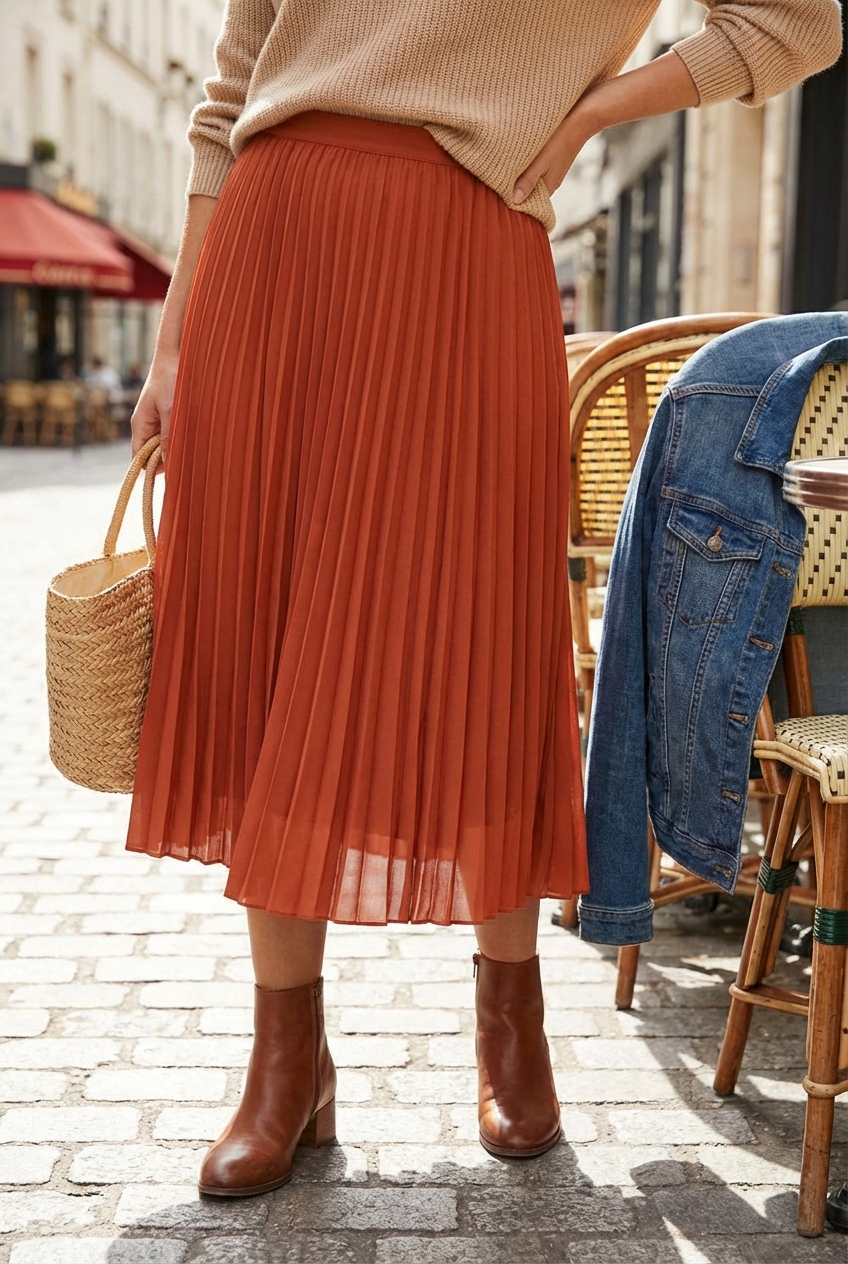
Midi Skirts Movement How To Style This Versatile Length
I remember the first time I convinced a hesitant client to try a midi skirt. She was convinced that anything falling below the knee but above the ankle would instantly dowdy her appearance or cut her height in half. We were in a dressing room in Soho, surrounded by piles of denim and silk. I handed her a bias-cut emerald skirt and a structured white tee. When she stepped out, her posture had changed. She didn’t look shorter; she looked statuesque.
The midi skirt is often misunderstood. It sits in that ambiguous middle ground—literally and figuratively—between the youthful rebellion of a mini and the formal drama of a maxi. However, once you unlock the architectural rules of this length, it becomes the hardest-working piece in your wardrobe. It offers coverage without bulk and femininity without fuss.
Whether you are navigating a corporate boardroom or a casual Saturday market, the midi is your anchor. It bridges seasons and dress codes with surprising ease. In this guide, I will walk you through the precise styling formulas I use with my private clients to ensure this length elongates rather than stumps. Don’t forget to scroll down to the Picture Gallery at the end of this post for visual inspiration.
The Golden Ratio: Finding Your Hemline
The success of a midi skirt relies almost entirely on where the hem hits your leg. In fashion styling, we look for the “narrow point.” The visual goal is to draw a line across a part of your leg that tapers, rather than widens.
If a skirt cuts across the widest part of your calf muscle, it creates a horizontal line that visually thickens the leg. This is what creates the dreaded “stumpy” look.
For most women, the sweet spot is approximately two inches below the thickest part of the calf, right where the leg begins to narrow toward the ankle. Alternatively, for a “tea length” look, it can hit about two inches above the ankle bone.
The Petite Client Rule
If you are under 5’4″, the midi can be intimidating. The rule of thumb here is to go slightly shorter or opt for a slit. A hemline that sits just below the knee cap (a “midi-lite”) keeps more leg visible, creating the illusion of height.
High-waisted styles are non-negotiable for shorter frames. By raising the waistline, you extend the appearance of the lower body. When I style petite clients, I always measure the skirt length with their preferred heel height in mind.
Silhouette Selection: Volume Control
Not all midi skirts are created equal. The silhouette you choose dictates the volume of the rest of your outfit. Styling is ultimately an exercise in balancing proportions.
The Bias-Cut Slip
This is the most fluid and perhaps the most timeless version. Cut against the grain of the fabric, it skims the hips and flares gently at the hem.
- Best for: Adding softness to heavy knits or structured blazers.
- Styling Note: Because bias cuts cling, seamless undergarments are essential. I recommend a high-waisted shaping brief to create a smooth line from ribcage to hip.
The A-Line and Pleated
Structured A-line skirts or accordion pleats add physical volume to the lower body.
- Best for: Defining the waist and camouflaging the hip area.
- Styling Note: Balance is key. If the skirt has volume, the top must be fitted. Think bodysuits, slim turtlenecks, or tucked-in button-downs.
The Pencil Midi
This is the power player. It follows the line of the body straight down.
- Best for: Office environments and evening dates.
- Styling Note: Ensure the skirt has a back slit or adequate stretch. You need to be able to walk comfortably. If you have to shuffle, the fit is wrong.
Designer’s Note: The Fabric Factor
In my years of styling, the biggest mistake I see is ignoring fabric weight. A cheap, thin jersey midi will cling to static and lose its shape by noon.
The Lesson:
I once styled a client for an outdoor summer wedding in a polyester satin midi. It looked great in the mirror, but in the heat, it showed every drop of perspiration and stuck to her legs.
The Fix:
Prioritize natural fibers or high-quality blends.
- Silk and Viscose: Offer the best drape and movement. They breathe well but require steaming.
- Wool and Tweed: Perfect for structure and winter wear. They hide undergarment lines beautifully.
- Cotton Poplin: superb for warmer months, providing a crisp, architectural shape that holds pleats well.
Footwear Alchemy: Anchoring the Look
Shoes make or break a midi skirt outfit. Because the skirt ends mid-leg, your choice of footwear determines the visual continuity of your silhouette.
The Knee-High Boot (The Winter Savior)
This is my favorite trick for colder months. By wearing a tall boot that disappears under the hem of the skirt, you create a seamless, continuous line. This eliminates the “skin gap” that can chop up your leg length.
- Rule of Thumb: The boot shaft should be fitted. A slouchy boot under a midi skirt can look bulky.
- Heel Height: A block heel works best for balancing the visual weight of a wool or leather skirt.
The “Barely There” Sandal
For evening or summer, the goal is to show as much foot skin as possible to extend the leg line. Nude sandals or thin straps work magic here. Avoid ankle straps with thick buckles if you are sensitive about leg length, as they create another horizontal line.
Sneakers and the Midi
Yes, you can wear sneakers, but the profile matters.
- Avoid: High-top basketball sneakers that cut off the ankle (unless you have very long legs).
- Choose: Low-profile styles like classic white leather tennis shoes or retro runners. Showing the ankle bone is crucial here to keep the look light and feminine.
The Waistline Equation
Because a midi skirt draws the eye to the lower half of the body, defining the waist is critical to avoid looking like a rectangle.
The Full Tuck
For blouses and tees, a full tuck is the cleanest option. It highlights the smallest part of your torso. If the fabric creates bulk when tucked, switch to a bodysuit.
The French Tuck
If you are wearing a chunky sweater with a silk skirt, a full tuck is impossible. Use the “French Tuck” (tucking just the front center of the sweater). This reveals the waistline visually while allowing the back of the sweater to drape over the hips for coverage.
The Cropped Top
This doesn’t mean showing skin. A “cropped” length that hits exactly at the waistband of the skirt is a modern, chic way to style midis without dealing with bunching fabric from tucking.
Common Mistakes + Fixes
Even seasoned fashion lovers can stumble with this length. Here are the most frequent errors I correct in closets.
Mistake: Wearing a tunic-length top over a midi skirt.
Why it fails: It elongates the torso and shortens the legs, creating a disproportionate 1:1 ratio that looks heavy.
The Fix: Either tuck the top in or belt it at the waist to re-establish the “Rule of Thirds” (1/3 torso, 2/3 leg).
Mistake: Choosing a skirt with too many details.
Why it fails: A midi skirt with ruffles, a chaotic print, asymmetrical hems, and pockets can overwhelm the wearer.
The Fix: Pick one design element. If it’s a bold print, keep the cut simple. If it’s a complex asymmetrical cut, stick to a solid color.
Mistake: Ignoring the coat length.
Why it fails: Wearing a coat that ends just a few inches above the skirt hem creates a weird, stepped layering effect.
The Fix: Wear a cropped jacket that hits the waist, or a long coat that covers the skirt entirely (or leaves just an inch or two visible).
What I’d Do in a Real Project
If I were building a capsule wardrobe for a client today, here is exactly how I would integrate midi skirts.
1. The Foundation
I would start with a black or navy slip skirt in a matte silk or high-quality cupro. This piece can go to a funeral, a date, or the office.
- Style with: A white T-shirt and denim jacket for weekends; a cashmere sweater and pumps for work.
2. The Statement
Next, I would add a pleated midi in a metallic tone or a bold color like chartreuse or burgundy.
- Style with: A simple black bodysuit and a leather moto jacket. This mixes textures (hard leather vs. soft pleats) for a high-fashion look.
3. The Utility
Finally, a denim or cotton drill midi skirt with a front slit.
- Style with: A crisp button-down shirt and loafers. This replaces jeans for a more polished daytime look.
Finish & Styling Checklist
Before you head out the door, run through this mental checklist to ensure your proportions are on point.
- Hem Check: Does the skirt end at a narrowing point of your leg (not the widest calf point)?
- Waist Definition: Is your top tucked, cropped, or belted to define the waist?
- Shoe Gap: If wearing boots, do they meet the hem? If wearing shoes, is the ankle visible?
- Volume Balance: If the skirt is voluminous, is the top fitted? If the skirt is tight, does the top have movement?
- Fabric Condition: Is the skirt static-free? (Keep a small can of anti-static spray in your bag for synthetics).
FAQs
Can I wear a midi skirt if I have wide hips?
Absolutely. In fact, midi skirts are incredibly flattering for pear shapes. Look for A-line cuts or bias cuts that skim over the hips rather than hugging them. Avoid stiff pleats that might flare out aggressively at the widest point. A darker color on the bottom with a lighter, brighter top draws the eye upward and balances the silhouette.
Are midi skirts appropriate for formal black-tie events?
Yes, but the fabric is the deciding factor. A cotton midi is too casual. However, a midi skirt in satin, velvet, or sequin embellishment, paired with a tuxedo blazer or a silk camisole and statement jewelry, is perfectly appropriate for “cocktail” or “black tie optional” codes. For strict black tie, a maxi is safer, but a very fancy midi can work if styled impeccably with high heels.
How do I style a midi skirt for the office without looking old-fashioned?
The key is to avoid looking too “prim.” If you wear a pleated midi with a cardigan and pearls, it can look dated. Instead, add modern elements. Pair the skirt with a sharp, oversized blazer and pointed-toe flats. Or, wear a monochromatic look (e.g., camel sweater with a camel skirt) to create a sleek, modern column of color.
What outerwear works best with midi skirts?
This is the hardest part for most people. You have two main options:
1. Cropped: A leather jacket, denim jacket, or cropped blazer that hits at the waist.
2. Long: A trench coat or wool coat that is the same length or longer than the skirt.
Avoid mid-length coats that cut across the thigh, as they disrupt the flow of the skirt.
Conclusion
The midi skirt movement isn’t just a trend; it’s a shift toward versatile, comfortable, and elegant dressing. It respects the reality of our daily lives—we need clothes that allow us to move, sit, and walk without constant adjustment—while maintaining a sense of style.
By focusing on the geometry of the hemline, the quality of the fabric, and the balance of the silhouette, you can make this length work for any body type. It allows you to play with footwear, from your most comfortable sneakers to your highest boots, changing the entire vibe of the outfit with a single swap.
Remember, fashion is about confidence. When you understand the rules of proportion, you can trust your outfit and focus on the day ahead.
Picture Gallery


