
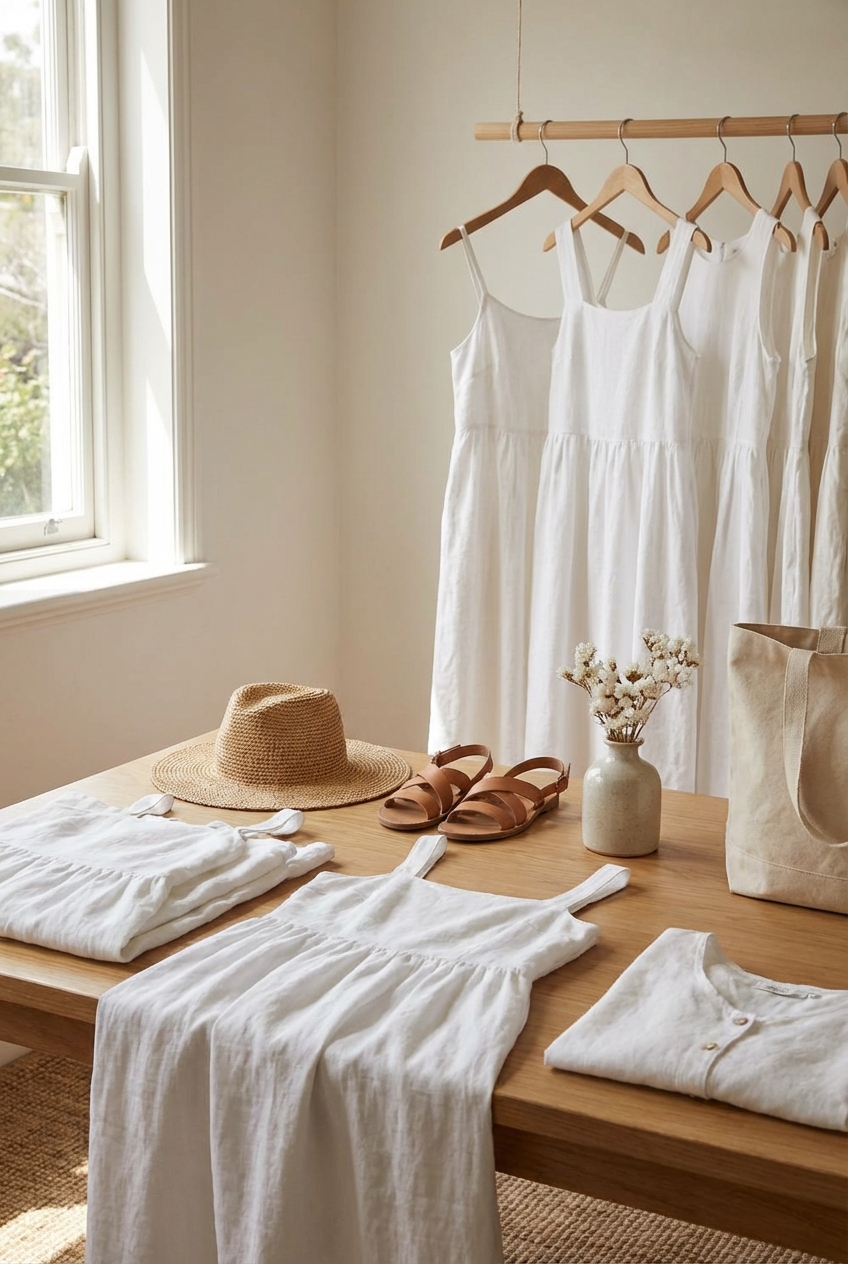
Minimalist White Linen Dresses For Summer Classics
There is a specific moment every year when the humidity shifts, the days stretch longer, and the heavy wools of spring finally retreat to the back of the closet. In the world of high-end wardrobe curation, this signals the return of the white linen dress. It is perhaps the most enduring staple in a woman’s closet, acting as a blank canvas for personal style while offering unrivaled comfort in sweltering heat.
I remember styling a client for a month-long retreat in Provence last year. She packed heavy silks and structured cottons, thinking they signaled “luxury.” By day three, she called me in a panic because she was overheating and uncomfortable. We immediately sourced three high-quality linen pieces locally. The lesson remains: true luxury is effortless functionality. If you are fighting your fabric, you will never look elegant.
Finding the perfect white linen dress is deceptively difficult. It requires navigating transparency issues, understanding fabric weight, and mastering the art of the “intentional wrinkle.” If you are looking for visual inspiration on silhouettes and styling combinations, keep in mind that the Picture Gallery is at the end of the blog post.
Identifying High-Quality Linen
Not all linen is created equal. In the mass market, you will often find linen blends that pill after one wash or fabrics so thin they are virtually see-through. As a fashion expert, I look for European flax, primarily from Belgium or France, where the climate allows for longer, stronger fibers.
The technical metric you should look for is GSM (Grams per Square Meter). For a summer dress that offers coverage without bulk, you want a weight between 150 and 185 GSM. Anything under 140 GSM is generally suitable only for linings or sheer beach cover-ups. If a brand does not list the weight, use the “hand test.” Good linen should feel cool to the touch and have a slight bounce; it should not feel scratchy or excessively stiff.
Designer’s Note:
One common issue with lower-tier linen is “slubbing”—the uneven lumps in the yarn. While some texture is characteristic of linen, excessive or large slubs indicate shorter, cheaper fibers that will break down faster. Run your hand over the fabric; it should feel textured but consistent.
The Silhouette Guide: Choosing Your Cut
Minimalism does not mean boring. When the color is removed, the architecture of the garment becomes the focal point. The cut of your white linen dress dictates not just where you can wear it, but how you will feel in it.
The Shift Dress
This is the ultimate utilitarian piece. It hangs straight from the shoulders and bypasses the waist. It is ideal for high-humidity days where you want zero fabric clinging to your skin. For a polished look, aim for a hemline that hits exactly two inches above the knee.
The A-Line Midi
This is the most universally flattering cut. A fitted bodice with a skirt that flares gently creates a classic silhouette. I recommend a length that hits the mid-calf muscle. If it hits the widest part of the calf, it can visually shorten the leg. Tailoring this hem is crucial.
The Wrap Dress
Linen wrap dresses offer a softer, more romantic aesthetic. However, because linen lacks stretch, ensure the wrap provides enough overlap. A “wardrobe malfunction” is common if the interior panel is too narrow. Look for wraps with an internal tie to secure the waist properly.
Navigating Transparency and Linings
The fear of transparency is the number one reason clients avoid white linen. It is a valid concern, but one that is easily managed with the right knowledge. First, understand that a lining is not always the answer. A cheap polyester lining defeats the purpose of wearing breathable linen.
If the dress is unlined, you must assess the density of the weave. Hold your hand behind the fabric in natural light. If you can see the details of your fingerprints, the dress will require a slip. If you can only see the shadow of your hand, it is generally safe with the right undergarments.
Common Mistakes + Fixes:
- Mistake: Wearing white underwear under white linen.
- Fix: Always match your underwear to your skin tone, not the dress. White underwear creates a stark contrast against your skin that shows through white fabric.
- Mistake: Relying on synthetic slips.
- Fix: Invest in a 100% silk or lightweight cotton voile half-slip. It maintains the breathability of the linen while providing opacity.
Styling: The Art of Texture Mixing
When you wear a monochrome minimalist piece, texture becomes your color palette. A white linen dress can look clinical or like a nightgown if styled incorrectly. The goal is to ground the airy fabric with substantial accessories.
Leather Pairings
Cognac or deep tan leather creates a rich contrast against crisp white. A structured leather slide or a wide belt adds weight to the look. Avoid black leather with white linen during the day; the contrast is often too harsh for the relaxed vibe of the fabric.
Natural Fibers
Lean into the organic nature of the material. Raffia totes, woven straw hats, and wooden jewelry complement the flax fibers. However, be careful not to go overboard. Choose one statement natural piece—like a large basket bag—rather than wearing a hat, bag, and espadrilles all at once.
Metallic Accents
Gold jewelry warms up the cool tones of white linen. I prefer brushed or hammered gold over high-shine finishes. The imperfect surface of hammered metal mirrors the organic texture of the linen.
The Wrinkle Debate: Embracing the Nature of Flax
We must address the elephant in the room: linen wrinkles. In the US, we often have a cultural obsession with perfectly pressed clothing. However, in high-end fashion, the wrinkles of linen are viewed as a sign of authenticity and natural luxury.
The goal is not to eliminate wrinkles entirely, but to manage them. A dress that looks like a crumpled paper bag is unpolished; a dress with soft creases at the hip and elbow looks lived-in and chic. This is often referred to as “noble wrinkling.”
What I’d do in a real project:
- Steam, don’t iron: Ironing flattens the fibers and creates sharp, unnatural creases. Steaming relaxes the fibers while maintaining the fabric’s natural loft.
- Use a starch alternative: If you need crispness for a formal event, use a light sizing spray rather than heavy starch, which can make linen brittle.
- The sit test: Before leaving the house, smooth the skirt beneath you. When you stand, accept the creases across the lap. They are inevitable.
Maintenance and Longevity
A high-quality linen dress is an investment that should last for a decade or more. Linen is actually one of the few fabrics that gets stronger when wet and softer with every wash. However, incorrect laundering can destroy the shape.
Washing Protocols
Always wash on a cold, gentle cycle. Hot water shrinks linen fibers rapidly. I recommend using a mild, pH-neutral detergent. Avoid bleach at all costs, even on white linen. Bleach weakens the flax fibers and can actually cause them to yellow over time.
Drying Logic
Never put your linen dress in the dryer on high heat. The tumbling action combined with heat sets in hard wrinkles that are nearly impossible to remove and causes significant shrinkage. Air drying is the gold standard. Hang the dress on a padded hanger, or lay it flat to dry to prevent the weight of the water from stretching the shoulders.
Stain Management
Summer means rosé, iced coffee, and grass stains. Because linen is absorbent, you must act fast. Do not rub the stain, as this grinds the pigment into the flax. Blot gently with a damp cloth. For oil stains (like salad dressing), apply cornstarch or talcum powder to absorb the grease before washing.
Finish & Styling Checklist
Before you head out the door, run through this quick mental checklist to ensure your look is polished and intentional.
- Check the Hem: Is the hem dragging or hitting an awkward spot on the calf? A quick trip to a tailor to lift the hem by one inch can change the entire proportion of the dress.
- Undergarment Audit: Check your reflection in direct sunlight, not just your dim bedroom mirror. Ensure your silhouette is obscured.
- Shoe Balance: If the dress has a lot of volume (like a tent dress), wear a more substantial shoe (chunky sandal or loafer). If the dress is fitted, a delicate strappy sandal works best.
- Jewelry Scale: Avoid jewelry that snags. Linen has an open weave; pronged rings or sharp bracelets can pull threads easily. Stick to bezel settings or smooth metals.
- The Third Piece: Have a plan for cooler evenings. A denim jacket is too heavy for fine linen. Opt for a lightweight cashmere wrap or an open-knit cotton cardigan.
FAQs
Does linen stretch out as you wear it?
Yes, linen relaxes significantly with body heat. A dress that feels snug in the morning will be looser by lunch. If you are between sizes, I generally recommend sizing down for fitted bodices, provided the buttons aren’t pulling, as the fabric will give about half a size comfortably.
Can I wear a white linen dress to the office?
Absolutely, but the cut matters. Avoid spaghetti straps or high slits. A linen shirt dress with a collar and belt is perfectly appropriate for most business casual environments. Pair it with a closed-toe mule or loafer rather than a sandal to anchor the look professionally.
How do I fix a snag in my linen dress?
Do not cut the thread! Cutting a snag creates a hole. Use a “snag repair needle” (a textured needle) or a very small crochet hook to pull the loose loop through to the inside of the garment. Once it is on the interior, the snag effectively disappears.
Is white linen appropriate for evening events?
Yes, but fabric quality is paramount here. Look for a heavier weight linen or a linen-silk blend which has a slight sheen. Accessories should be elevated—think heeled sandals and a clutch rather than a tote bag.
Conclusion
The minimalist white linen dress is more than a garment; it is a philosophy of summer living. It prioritizes comfort without sacrificing sophistication. By choosing the right weight, mastering the fit, and accepting the fabric’s natural characteristics, you build a wardrobe that serves you rather than restricts you.
Remember that the goal is effortless elegance. When you find that perfect piece—the one that breathes with you and moves beautifully as you walk—care for it well. It will likely become the vintage piece you pass down, soft with memory and perfectly broken in.
Picture Gallery


