
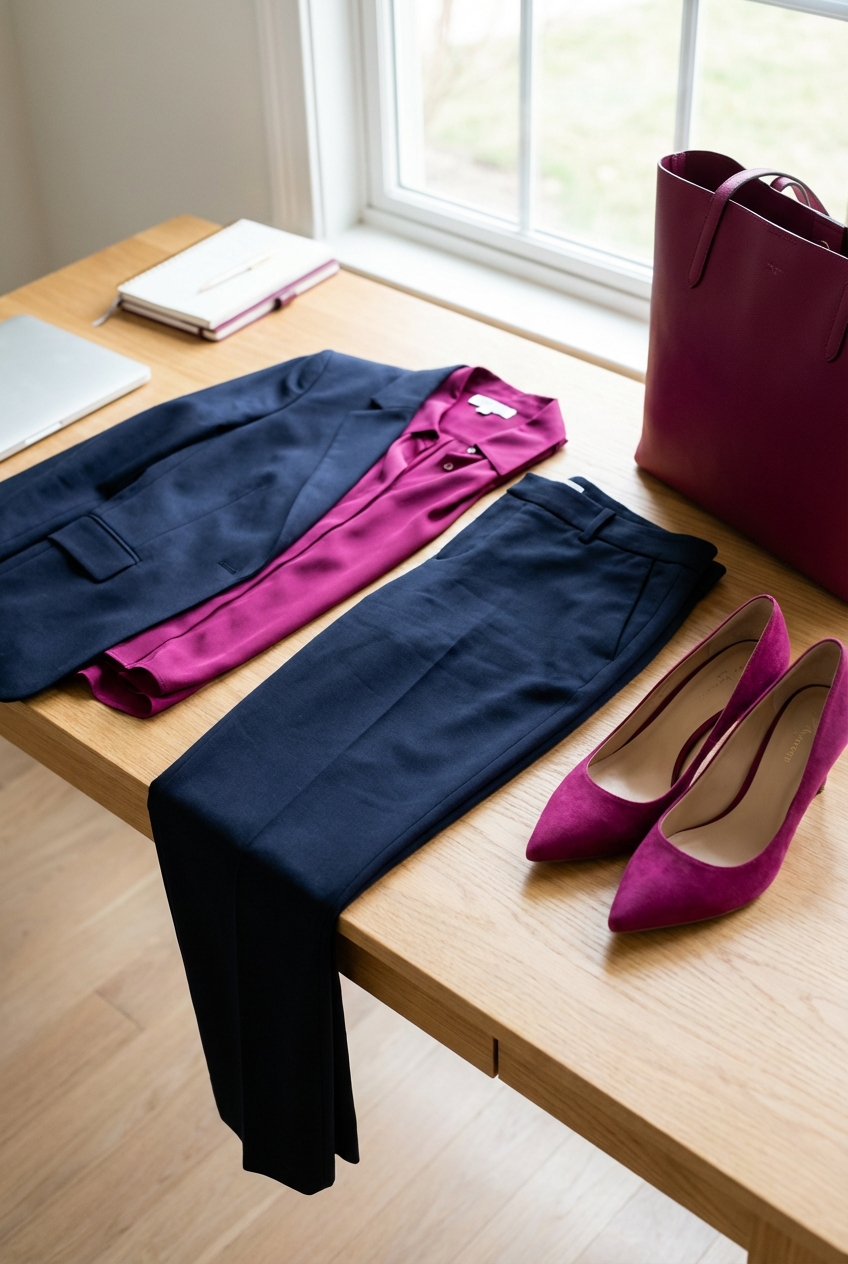
Mixing Navy And Magenta In Standout Office Wear
Many of my clients come to me feeling stuck in a monochromatic rut. They rely heavily on black, charcoal, and grey because these shades feel safe and professional. While there is nothing wrong with a classic neutral palette, it often lacks the energy and authority that a well-placed pop of color can provide.
Mixing navy and magenta is one of my absolute favorite strategies for breaking out of that safety zone without sacrificing professionalism. Navy provides the grounding, trustworthy foundation that works in even the most conservative boardrooms. Magenta adds a layer of assertiveness, creativity, and feminine power that commands attention without screaming for it.
When executed correctly, this combination is sophisticated rather than chaotic. It balances the cool, intellectual vibes of blue with the warm, emotional resonance of pink-purple hues. To see exactly how I style these pieces for different body types and office environments, make sure to look at the curated Picture Gallery at the end of this blog post.
Understanding The Color Theory: Why It Works
Before we start buying pieces, we need to understand the relationship between these two hues. Navy is essentially a neutral in the fashion world, functioning much like black but with less severity. It creates a soft, rich backdrop.
Magenta is a jewel tone, sitting right between purple and red on the color wheel. Because blue (navy) and red (a component of magenta) are primary colors, they naturally complement each other. The purple undertone in magenta bridges the gap to the blue in the navy, creating a harmonious analogue color scheme.
The key to making this look “high-end” rather than “costume” is selecting the right saturation. You want a navy that is deep and inky, not a bright royal blue. Similarly, the magenta should be rich and berry-toned, avoiding neon or highlighter pinks that look inexpensive under fluorescent office lighting.
Designer’s Note: The Lighting Factor
I learned this lesson the hard way early in my career while styling a client for a televised panel. We chose a bright magenta blazer that looked stunning in natural daylight. However, under the harsh, cool studio lights, the fabric reflected too much blue light and looked almost neon purple.
In an office environment, overhead lighting is usually cool and unflattering. Always test your magenta fabrics in artificial light before purchasing. If the fabric has a sheen (like satin), it will amplify the light and look cheaper. Stick to matte fabrics like wool crepe, cashmere, or matte silk for the most luxurious result.
The Ratios: Balancing Boldness and Professionalism
The most common question I get regarding color mixing is about proportion. How much color is too much? For office wear, I generally recommend a 70/30 or 60/40 split.
The 70/30 split is the safest bet for corporate environments like law or finance. This usually means your suit or primary outfit is navy (70%), and your blouse or shell is magenta (30%). This allows the navy to anchor the look while the magenta provides a focal point near your face, which is excellent for video calls and presentations.
The 60/40 split is bolder and works well for creative industries or “power dressing” days. This might look like a navy pencil skirt and a magenta silk blouse, or a magenta sheath dress with a navy blazer.
Common Mistakes + Fixes
Mistake: Splitting the body in half precisely at the waist.
Fix: Avoid wearing a magenta top and navy pants where the contrast line hits right at your widest point. It cuts the visual line. Instead, use a tuck or a blazer to blur that line.
Mistake: Using equal intensity accessories.
Fix: If you are wearing a magenta dress and navy blazer, do not add magenta shoes and a navy bag. It looks too “matchy-matchy.” Switch to nude or metallics for your accessories to let the clothes speak for themselves.
Fabric Selection: The Secret to Luxury
In high-end fashion, the cut is important, but the fabric is everything. When dealing with bold colors like magenta, the quality of the material dictates whether the outfit looks expensive or cheap.
Synthetic fabrics like cheap polyester do not hold dye as richly as natural fibers. A polyester magenta blouse often has a plastic-like shine that cheapens the entire ensemble.
I always advise my clients to look for “matte” textures. A matte wool magenta trouser absorbs light, making the color look deep and velvety. A silk crepe de chine blouse has a subtle luster but not a high shine, which radiates sophistication.
Preferred Fabrics Checklist
- Wool Crepe: Ideal for blazers and trousers. It resists wrinkling and holds saturation beautifully.
- Silk Georgette: Perfect for blouses. It has a beautiful drape and softens the intensity of the magenta.
- Cashmere or Merino Wool: For sweaters. The fuzziness of the wool softens the transition between the navy and magenta.
- Ponte Knit: A thick, double-knit fabric that works well for structured dresses, providing comfort and structure.
Styling The Anchor Piece: Navy Suits and Separates
If you are new to this color combination, start with navy as your canvas. A well-tailored navy suit is arguably the most versatile item in a woman’s work wardrobe.
When pairing a navy suit with magenta, pay attention to the lapel and the neckline of the blouse. If the suit has a standard notch lapel, a pussy-bow blouse in magenta adds a soft, feminine contrast to the menswear-inspired tailoring.
For a more modern, architectural look, try a collarless navy blazer over a magenta crew-neck shell. This reduces visual clutter and lets the blocks of color stand out.
What I’d Do In A Real Project
If I were styling a CEO for an annual general meeting, here is the exact formula I would use:
- Base: A monochromatic navy column (navy trousers and a matching navy fine-knit top). This creates a long, lean vertical line.
- Layer: A tailored magenta blazer in a matte crepe fabric.
- Shoes: Pointed-toe pumps in a nude shade close to her skin tone to extend the leg line, or a navy suede pump.
- Jewelry: Gold architectural earrings. Gold warms up the magenta, whereas silver can sometimes make it look icy.
Incorporating Magenta Bottoms
Wearing magenta trousers or a skirt is a bolder move than wearing a magenta top. It draws the eye downward, so fit is paramount.
When wearing bright trousers, the tailoring must be impeccable. There is no place to hide ill-fitting seams or pulling fabric when the color is this loud. I recommend a wide-leg trouser or a straight-leg cut rather than a tight skinny fit. The volume of a wide leg feels more luxurious and current.
Pair magenta trousers with a crisp navy button-down shirt tucked in. The structure of the shirt balances the “fun” aspect of the pink trousers.
Hemline Rules of Thumb
- Wide-leg trousers: The hem should graze the top of your foot, breaking slightly. It should cover most of the shoe heel but not drag on the floor.
- Ankle pants: These should hit right at the ankle bone. If they are too short, they look like capris, which can appear dated in a formal office setting.
- Pencil skirts: The hem should hit right at the knee or just below (midi length). Avoid mini skirts in bright magenta for the office.
Accessories: Bridging The Gap
Accessories can make or break this color combination. Many people mistakenly think they need to introduce black accessories, but black can actually be too harsh against the navy and magenta pairing.
Instead, lean into neutrals that support the palette. Camel, beige, taupe, and cognac leather work beautifully with navy and magenta. A cognac leather tote bag brings an earthy warmth that grounds the high-energy magenta.
If you want to keep the look cool and sharp, opt for grey or silver accessories. A grey suede pump is a fantastic alternative to black.
Jewelry Selection
Gold jewelry tends to complement the warm undertones of magenta, making the outfit feel rich and inviting. If your magenta leans more purple and your navy is very dark, silver or white gold creates a striking, icy contrast that looks very modern.
Avoid colored costume jewelry that competes with the clothes. If you are wearing a magenta top, skip the statement necklace with pink stones. Opt for solid metal pieces or classic pearls.
Navigating Specific Office Dress Codes
Not all offices are created equal. What works in a creative marketing firm might be frowned upon in a conservative law firm. Here is how to adapt the Navy and Magenta pairing for your specific environment.
Creative / Tech / Start-up:
Here, you can break the rules. Try a magenta jumpsuit with a navy leather jacket. Or mix patterns—a navy pinstripe pant with a floral magenta blouse. You can also experiment with silhouettes, like oversized blazers or paper-bag waist trousers.
Business Casual:
This is the most common dress code. A pair of dark navy denim jeans (clean, no distressing) paired with a magenta silk blouse and a navy blazer is perfect. Alternatively, a navy wrap dress with a magenta scarf or magenta block heels adds just enough personality.
Corporate Formal:
Stick to the 90/10 or 80/20 rule here. A full navy suit is non-negotiable. Introduce magenta through a silk pocket square, a subtle pattern in a silk scarf, or a blouse that just peeks out from under a buttoned blazer. The color serves as an accent, not a statement.
Seasonal Transitions
One of the best aspects of mixing navy and magenta is that it is seasonless. It does not feel strictly like “summer” or “winter.” However, you can tweak the materials to suit the weather.
In the spring and summer, look for “Marine” navy, which is slightly lighter and bluer. Pair this with magenta in silk, linen, or cotton blends. A sleeveless magenta shift dress with a light navy cardigan is a summer staple.
In the fall and winter, shift toward “Midnight” navy, which is darker and moodier. Pair this with heavier magenta fabrics like velvet, wool, or brocade. Dark navy tights can also be worn with a magenta wool skirt to elongate the leg line during colder months.
Finish & Styling Checklist
Before you walk out the door, run through this mental checklist to ensure your outfit is polished and cohesive. This is the same process I use with my private clients.
- Check the Undertones: Do the navy and magenta clash, or do they sing? If the navy looks grey and the magenta looks neon, swap one out.
- Fabric Quality: Is the magenta item matte? If it’s shiny, is it high-quality silk? If it looks plastic, change it.
- The Third Piece: Have you added a “third piece” (blazer, cardigan, or structured belt) to complete the look?
- Shoe Check: Are your shoes scuffed? Bright colors draw the eye to the whole outfit, so worn-out shoes will be more noticeable.
- Lint Check: Navy shows lint and pet hair aggressively. Use a lint roller before leaving.
- Makeup Balance: If wearing a magenta top near your face, ensure your blush and lipstick don’t clash. A neutral lip often works best.
FAQs
Can I wear black shoes with navy and magenta?
Technically yes, but it is not my first choice. Black can look heavy and severe against the vibrancy of magenta and the richness of navy. Nude, camel, grey, or navy shoes usually create a more sophisticated flow.
Does this combination work for all skin tones?
Absolutely. Navy is universally flattering. The trick is finding the right shade of magenta. If you have cool undertones, look for a magenta that leans purple (berry). If you have warm undertones, look for a magenta that leans slightly redder (fuchsia).
Can I mix patterns with these colors?
Yes, but keep the scale in mind. If you wear a navy skirt with white polka dots, pair it with a solid magenta top. If the magenta top has a floral print, ensure the navy in the print matches your solid navy bottom.
Is magenta considered professional enough for an interview?
For a creative role, yes. For a traditional corporate role, I would use magenta very sparingly—perhaps just a silk scarf or a subtle shell under a buttoned blazer. Blue implies trust; pink implies emotion. In an interview, you usually want to lead with trust.
Conclusion
Stepping out of the all-black safety net requires a bit of courage, but the rewards are worth it. Mixing navy and magenta allows you to project confidence, competence, and approachability simultaneously. It is a power pairing that says you know the rules of dressing well, and you have the confidence to play with them.
Remember that fashion is a tool for communication. By choosing this combination, you are telling your colleagues and clients that you are dynamic and present. Start with small doses—a magenta scarf with your favorite navy trench—and work your way up to the full power suit.
Picture Gallery


