
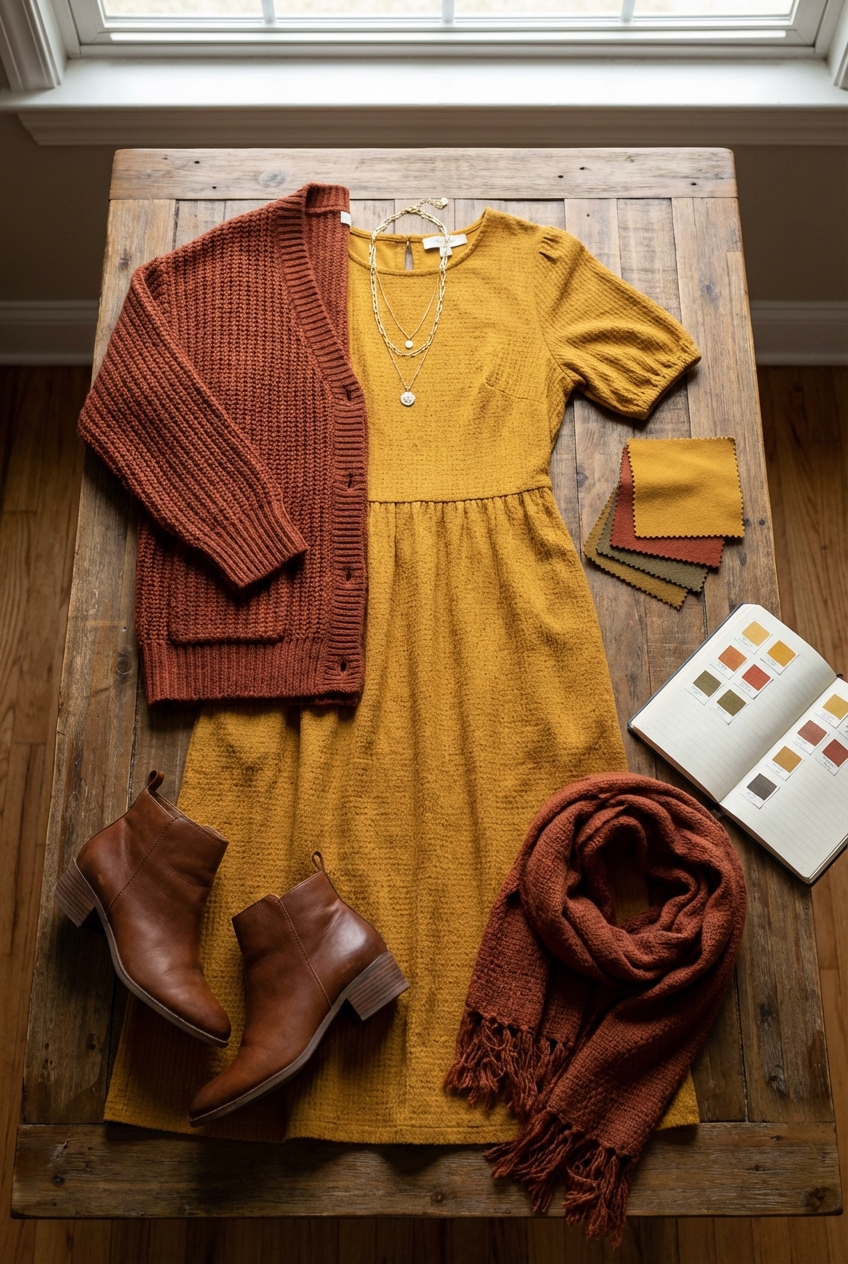
Mustard And Rust Color Combos For Statement Dresses
There is something undeniably magnetic about the combination of mustard yellow and rust orange. These two shades sit next to each other on the warm side of the color wheel, evoking a sense of organic luxury that feels both vintage and thoroughly modern. I remember styling a client for a late-September vineyard wedding in Napa Valley, and we were struggling to find a look that felt appropriate for the transition from blazing afternoon sun to a cool evening reception.
We landed on a bias-cut silk slip dress in a deep, spiced mustard, paired with a plush velvet rust shawl and antique gold jewelry. The result was electric—she didn’t just blend into the autumn scenery; she commanded it. The interplay between the zesty yellow and the grounded, reddish-brown orange creates a visual vibration that is hard to achieve with safer neutrals. It communicates confidence, warmth, and a high-fashion sensibility that isn’t afraid of saturation.
However, nailing this combo requires a keen eye for undertones and fabric textures, as these colors can easily clash or wash you out if mishandled. If you are looking for visual inspiration on how to execute this bold palette, be sure to browse the curated Picture Gallery at the end of the blog post. In this guide, I will walk you through the precise styling rules, fabric choices, and accessory pairings needed to master this statement look.
The Color Theory: Why Mustard and Rust Work
Understanding why these colors work together is the first step to wearing them with confidence. Mustard and rust are analogous colors, meaning they share a common primary root—yellow and red—but vary in saturation and depth. This relationship creates a low-contrast harmony that is pleasing to the eye because it mimics color progressions found in nature, like falling leaves or desert landscapes.
When styling a statement dress, you aren’t just putting on clothes; you are creating a composition. Mustard acts as the “high note” or the highlight, bringing brightness and energy. Rust serves as the “bass note,” providing a grounding, earthy anchor that prevents the yellow from feeling too acidic or flighty.
To make this pairing look expensive rather than costume-like, you must pay attention to saturation levels. If your mustard dress is vibrant and punchy (think turmeric), your rust accents should be equally rich (think terracotta). If your dress is a paler, dustier ochre, pair it with a muted, brownish brick tone. Matching the intensity of the colors ensures the outfit looks intentional and balanced.
Choosing the Right Fabric Weights and Textures
The success of a mustard and rust ensemble often comes down to material. In high-end fashion styling, we often say that texture is the silent color. A mustard shade in flat cotton looks completely different than the same shade in crushed velvet or heavy silk charmeuse.
For statement dresses, I always recommend prioritizing fabrics with a natural sheen or interesting weave. Mustard yellow absorbs light differently depending on the surface. On a matte linen, it can look casual and bohemian. On satin, it becomes regal and gem-like.
When introducing rust into the mix—perhaps through a color-blocked panel on the dress or a layering piece—contrast the textures. If the dress is a flowing, shiny silk mustard, pair it with a matte, structured rust leather jacket or a suede belt. This push-and-pull between matte and shine adds depth and keeps the two warm tones from blending into a singular, muddy blob.
Designer’s Note: The Lighting Factor
One thing I have learned from countless fittings is that mustard is notoriously tricky under artificial lighting. In natural daylight, it looks golden and radiant. However, under cool-toned LED indoor lighting, it can take on a greenish cast.
If you are styling this look for an evening event indoors, lean toward a “spicier” mustard—one with more orange or brown in it—rather than a lemon-yellow mustard. This ensures the color holds its warmth regardless of the lighting conditions in the venue.
Skin Undertones and Color Placement
A common fear with mustard and rust is that they will clash with certain skin tones. While it is true that these are demanding colors, anyone can wear them if the placement is correct. The key is knowing which shade should sit closest to your face.
If you have warm undertones (golden, olive, or peachy skin), mustard is generally your friend. It will enhance the natural glow of your complexion. You can wear a dress where the bodice or neckline is predominantly mustard, utilizing rust for the skirt, accessories, or patterns.
If you have cool undertones (pink, blue, or porcelain skin), traditional mustard can sometimes make you look sallow. In this case, prioritize rust near the face. Look for a dress with a rust-colored bodice or neckline, or use a rust scarf to separate the mustard fabric from your skin. The deep reds in rust are universally flattering and will provide the necessary contrast to cool skin.
Common Mistakes + Fixes
Mistake: Ignoring makeup balance.
Fix: When wearing two strong warm tones, your face needs to match the energy. Avoid cool-toned pink lipsticks or blue-based eyeshadows. Opt for warm terracottas, bronzes, and berry shades to tie the look together.
Mistake: Overwhelming the frame.
Fix: If you are petite (under 5’4″), a maxi dress split 50/50 between mustard and rust can cut your height in half. Opt for a monochromatic mustard dress with smaller rust accents (belt, bag, shoes) to maintain a long vertical line.
Accessorizing: The Metallic Rules
When dealing with such a warm, earthy palette, your choice of metal hardware and jewelry is critical. The instinctive choice is gold, and for good reason. Gold mirrors the yellow undertones in both mustard and rust, creating a seamless, luxurious flow.
What I’d do in a real project:
- For a Vintage Vibe: I would choose antiqued brass or dull gold. Bright, shiny yellow gold can sometimes look cheap against earthy wools or linens. The patina of antique brass bridges the gap between the two colors perfectly.
- For Modern Glamour: I would actually mix metals or go for rose gold. Rose gold picks up the pinkish/red tones in the rust, bringing them to the forefront.
- The Silver Exception: Generally, I avoid silver with this combo as it clashes with the warmth. However, if the dress is a very cool-toned, greenish mustard, a dark oxidized silver or gunmetal can look edgy and architectural.
Avoid brightly colored plastic jewelry or resin pieces in competing colors (like teal or purple) unless you are strictly aiming for a maximalist, color-blocked aesthetic. To keep it high-end, stick to metals, natural stones (like amber or tiger’s eye), or wood elements.
Footwear Strategy: Grounding the Look
Shoes can make or break a statement dress. With mustard and rust, you have three distinct paths for footwear, depending on the occasion and the dress length.
1. The Nude or Skin-Match Approach
If the dress is a complex design with ruffles, patterns, or asymmetrical cuts, keep the shoes neutral. A nude sandal that matches your skin tone extends the leg and lets the color combo be the star.
2. The Tonal Approach
For a cohesive, editorial look, match your shoes to the rust elements in your outfit. A pair of rust suede boots or cognac leather strappy heels provides a solid base for the lighter mustard dress. This “sandwiches” the outfit, balancing the visual weight.
3. The Metallic Pop
For evening formal wear, a bronze or gold metallic heel is stunning. It adds a touch of evening sparkle without introducing a new color family that might disrupt the harmony.
Hemline Logic
When selecting boots to pair with a midi dress in these colors, pay attention to where the boot hits the leg. There should either be a clear gap of skin (at least 2-3 inches) between the hem and the boot, or the boot should disappear completely under the hem. Avoid the boot cutting off exactly where the dress ends, as this creates a heavy, stumpy visual line.
Layering for Seasons
Mustard and rust are often pigeonholed as “fall colors,” but with the right styling, they work year-round. The secret lies in the third piece—the coat, blazer, or cardigan you layer over the dress.
For cooler months, a heavy wool coat in camel, oatmeal, or deep navy works beautifully. Navy acts as a complementary color to the orange/yellow hues, creating a sophisticated, academic aesthetic. A long trench coat is another classic option that keeps the palette earthy and neutral.
For spring or summer evenings, drape a denim jacket over your shoulders. The indigo blue of denim provides a cool relief to the heat of mustard and rust, making the outfit feel fresh and casual. Alternatively, a cream or ivory linen blazer can brighten the look up for a daytime brunch or garden party.
Finish & Styling Checklist
Before you head out the door, run through this final stylist check. These are the minute details that elevate a look from “wearing clothes” to “styled outfit.”
- The Steamer Check: Mustard fabrics, especially satin or cotton, show wrinkles aggressively. Ensure the dress is perfectly pressed. Shadows from wrinkles can make the color look dirty.
- The Hardware Match: Check that the hardware on your bag (zippers, clasps) doesn’t clash with your jewelry. If your bag has silver hardware but you are wearing gold earrings, try to swap the bag for one with hidden hardware or matching gold.
- The Lip Color: Does your lipstick harmonize? If you feel “washed out” by the mustard, a bold brick-red or terracotta lip is usually the quickest fix.
- The Hemline Gap: If wearing boots, ensure the spacing between the boot top and dress hem is intentional (either overlapping or distinctly separated).
- The “Squint Test”: Look at yourself in the mirror and squint. Does one color dominate too much? If the rust accessories look like black blobs, you might need a lighter shade of cognac leather instead.
FAQs
Can I wear black shoes with a mustard and rust dress?
Technically yes, but black can be very harsh against these warm, mid-tone colors. It often creates a “bumblebee” effect with mustard. I generally recommend deep espresso brown, cognac, or burgundy leather instead of stark black. These shades maintain the warmth while providing the necessary darkness.
Is this color combination appropriate for a wedding guest?
Absolutely. It is a sophisticated, non-traditional choice. For spring/summer weddings, choose lighter fabrics like chiffon or silk. For fall/winter, opt for velvet or crepe. Just avoid white or cream accessories to keep it from looking bridal; stick to metallics or tonal accessories.
What nail polish color works best?
You have two great options. For a clean, high-fashion look, go for a sheer nude or a “your nails but better” pink. If you want a moody contrast, a deep oxblood or vampy plum nail looks incredible against mustard fabric. Avoid matching the nail polish exactly to the dress; it tends to look a bit dated.
Can I mix patterns with these colors?
Yes, but proceed with caution. A leopard print accessory acts as a neutral and pairs wonderfully with mustard and rust. Floral patterns can also work, provided they contain hints of the mustard or rust tones within the print to tie the look together.
Conclusion
Embracing the mustard and rust color combination requires a shift in mindset. You are moving away from the safety of neutrals and stepping into a palette that is rich, historical, and unapologetically warm. It is a pairing that tells a story of confidence and creativity.
By paying attention to fabric sheen, balancing your accessories with the right metals, and ensuring the colors flatter your specific skin tone, you can turn a statement dress into a signature moment. Fashion is ultimately about expression, and few color duos express “joyful sophistication” quite like this one.
Picture Gallery


