
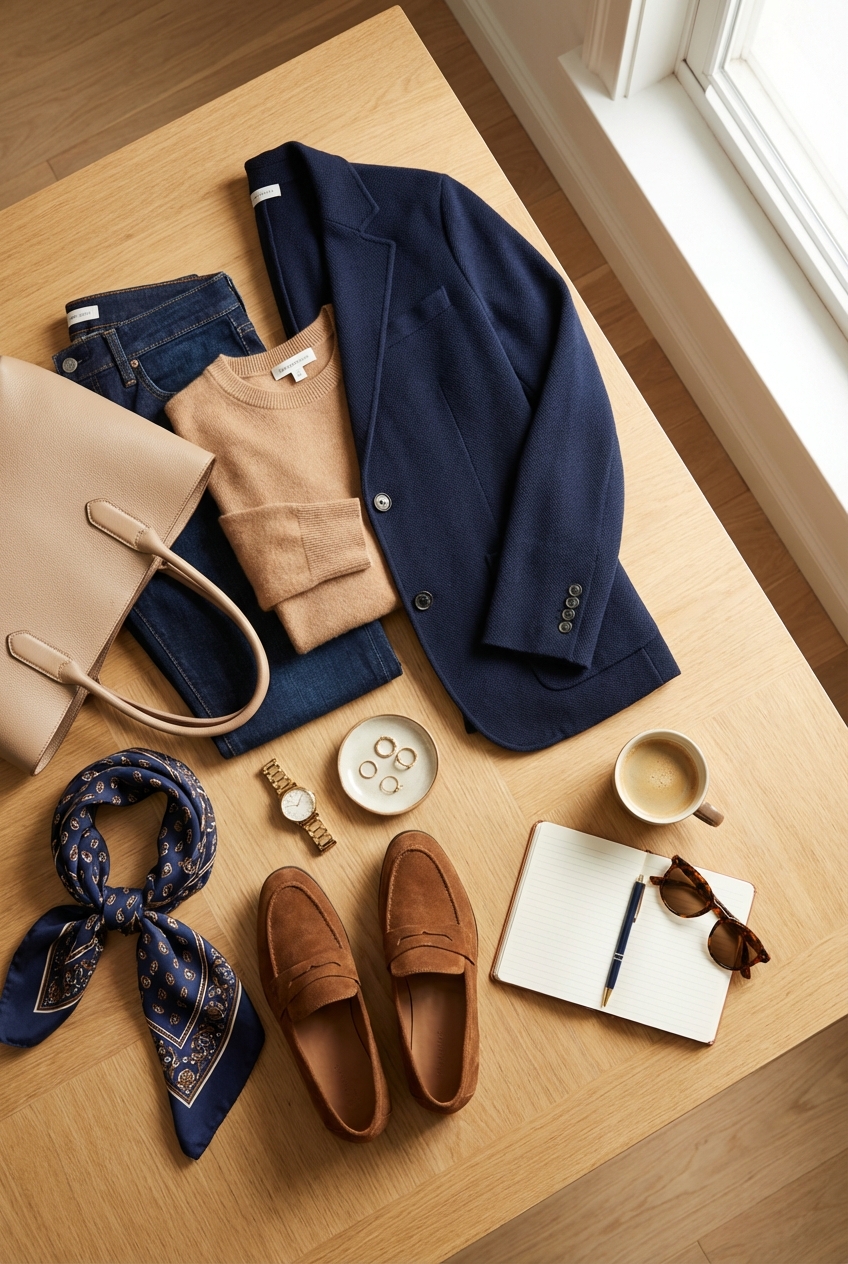
Navy And Tan Outfit Ideas For A Polished Look
The combination of navy and tan is one of the most enduring partnerships in fashion history. It strikes a balance that few other color duos can achieve. It manages to look grounded and professional while remaining warmer and more approachable than the stark contrast of black and white.
As a stylist, I often recommend this pairing to clients who want to build a “quiet luxury” wardrobe or simply elevate their daily workwear. Navy acts as your dark neutral anchor, providing a slimming and serious foundation. Tan, whether in the form of camel, cognac, or beige, adds richness and texture.
This guide will walk you through exactly how to execute this look with high-end precision. We will cover fabric choices, accessory coordination, and specific outfit formulas for different occasions. For a huge dose of inspiration, make sure you scroll down to the Picture Gallery at the end of this post.
Mastering the Shades and Textures
The success of a navy and tan outfit relies heavily on the specific tones you choose. Not all navies are created equal, and “tan” covers a spectrum from pale sand to deep tobacco.
To get a polished look, you need enough contrast. If your tan is too cool or grayish (like a taupe), it might look muddy against a dark navy. Look for warm tans—think caramel, camel, and cognac—to pop against the deep, cool undertones of midnight blue.
Texture plays a massive role here. Because you are working with solid blocks of color, flat fabrics can look boring. I always encourage mixing materials. Pair a chunky cable-knit tan sweater with smooth navy silk, or wear crisp navy wool trousers with a soft suede tan boot.
Designer’s Note: The 70/30 Rule
In design, we often talk about visual weight. For this color combination, try to avoid a perfect 50/50 split, which can look like a uniform.
Instead, aim for a 70/30 ratio. Let navy take up 70% of the outfit (the suit, the dress, or the coat) and let tan take the remaining 30% (the accessories, the sweater, or the shoes). This creates a focal point rather than visual confusion.
Common Mistakes + Fixes
Mistake: Wearing a tan that matches your skin tone too closely.
Fix: If the tan piece is near your face (like a scarf or turtleneck), ensure it is at least two shades lighter or darker than your complexion. If it blends in, swap it for navy near the face and move the tan to your trousers or accessories.
The Corporate Power Look
Navy is the ultimate corporate color. It commands respect without the severity of black. When you introduce tan into office wear, it suggests a level of sophistication and attention to detail.
My go-to formula for the boardroom is a monochromatic navy base. Start with a high-waisted navy trouser and a matching navy blouse or thin cashmere sweater. The column of color elongates the body immediately.
Add a camel trench coat or a sharp tan blazer over the top. This breaks up the dark column and frames the body. If you are petite, keep the blazer cropped at the hip to avoid overwhelming your frame.
What I’d Do: The Shoe Selection
In a professional setting, the shoe color dictates the formality.
- Option A: Navy pumps. This keeps the leg line continuous and is the most formal option.
- Option B: Nude or Tan pumps. This elongates the leg if you are wearing a skirt, but be careful with trousers. If the trousers are cropped, a tan shoe cuts the visual line.
- Option C: Cognac Loafers. Perfect for business casual. Look for leather with a slight sheen to keep it dressy.
Casual Chic and Weekend Wear
Taking this color palette to the weekend requires a shift in fabrics. We are moving away from wool gabardine and silk, and toward denim, cotton, and chunky knits.
Dark wash denim is essentially a neutral navy in the fashion world. A pair of high-quality, straight-leg indigo jeans is the perfect starting point. Avoid distressing or heavy fading if you want to maintain that “polished” aesthetic mentioned in the title.
Pair your indigo jeans with a camel oversized sweater. The key here is the “French Tuck.” Tuck the front of the sweater loosely into the waistband to define your waist, then let the back hang loose. This highlights the contrast between the tan knit and the navy denim.
Pro-Level Rule: The Third Piece
Even in casual wear, a look feels incomplete with just a top and bottom. The “Third Piece Rule” implies adding one extra element to make it an outfit.
- The Element: A tan leather belt.
- Why it works: It bridges the gap between the navy denim and the top. Match your belt leather to your boots or bag for a cohesive, intentional look.
- Sizing: For jeans, aim for a belt width of 1 to 1.5 inches. Anything thinner looks too dressy; anything wider looks purely utilitarian.
Outerwear as the Statement
If you invest in one high-ticket item for this color palette, let it be the coat. A camel coat is a wardrobe icon for a reason. It instantly elevates anything worn underneath it.
When styling a camel coat, I prefer wearing all navy underneath. Imagine a navy midi dress with tall navy boots. Throwing a long camel wool coat over your shoulders creates a look that screams “fashion editor.”
Alternatively, a navy pea coat is a classic nautical staple. Pair this with tan corduroy pants or a beige wool skirt. The navy coat frames the face, which is generally flattering for most skin tones as it provides high contrast.
Hemline Logic
When pairing coats with skirts or dresses, scale is critical.
- The Rule: Your coat should either be longer than your skirt (covering it completely) or at least two inches shorter than your skirt.
- The Risk: If the coat and skirt end at the exact same spot, it creates a heavy horizontal line that widens the figure.
- My Preference: A long camel coat that hits mid-calf, worn over a navy slip skirt that ends just above the ankle. Ideally, you want about 3-4 inches of the skirt visible beneath the coat.
Accessorizing with Cognac and Gold
Accessories are where the navy and tan palette truly shines. Specifically, leather goods in shades of cognac, saddle, or whiskey look incredibly expensive against navy blue.
Avoid black leather accessories when wearing this combo. Black can look harsh and accidental. Instead, commit to the brown spectrum. A structured cognac tote bag or a saddle bag adds warmth to the coolness of navy.
For jewelry, gold is the undisputed champion here. The warm undertones of gold metal complement the warm notes in tan and camel fabrics. Silver can sometimes look too icy and disconnected from the earthiness of the tan.
Styling Checklist: The Jewelry Edit
- Earrings: Chunky gold hoops are a daily staple. They draw the eye up and mimic the warmth of a camel coat.
- Watches: A watch with a brown leather strap is perfect for the office. If you prefer metal links, stick to gold or two-tone (gold and steel).
- Scarves: A silk scarf incorporating both navy and tan is a power move. Tie it to the handle of your bag or wear it tightly around the neck to bridge the gap between a tan trench and a navy top.
Seasonal Transitions: Summer vs. Winter
Many people associate navy and tan strictly with autumn, but it works year-round if you adjust the materials.
In Winter: Focus on weight and warmth. Wool, cashmere, velvet, and leather. Darker tans (tobacco/cognac) tend to look better in winter light than pale beige. A navy velvet blazer with tan wool trousers is a stunning holiday party alternative to a dress.
In Summer: Switch to linen, cotton, and silk. A navy linen sundress paired with tan leather gladiator sandals is effortless. Or, try white jeans (acting as a bright neutral) with a navy striped tee and a tan straw hat.
Designer’s Note: The Summer “Tan”
In summer, your “tan” elements often shift from leather and wool to natural fibers.
- Raffia and Straw: A tan basket bag is the summer equivalent of the leather tote.
- Cork: Wedges with cork heels introduce that tan shade in a texture appropriate for heat.
- Wood: Bangle bracelets or heel details in wood tones add that necessary warmth without the visual heaviness of leather.
Finish & Styling Checklist
Before you walk out the door, run through this quick stylist checklist to ensure your look is cohesive.
- Check the Undertones: Does your tan item look green or gray? If so, ensure the lighting supports it. Warm lighting helps; fluorescent office lighting might make it look dull.
- The Leather Match: Your shoes and bag do not need to match perfectly, but they should be in the same tonal family. Don’t mix a cool taupe bag with warm cognac boots.
- Lint Check: Navy fabric, especially cotton and wool, is a magnet for lint and pet hair. Keep a lint roller by the door. Nothing ruins a polished look faster than a dusty navy blazer.
- Proportion Control: If you are wearing wide-leg tan trousers, keep the navy top fitted. If you are wearing an oversized navy sweater, keep the tan bottoms slim. Balance is key.
- The Third Color: If you need a breaker color, use crisp white. A white shirt under a navy sweater with tan pants keeps the look fresh and prevents it from looking muddy.
FAQs
Can I wear black shoes with a navy and tan outfit?
Technically, you can, but I generally advise against it for this specific aesthetic. Black shoes can weigh down the look and create a “void” at your feet. To keep the look cohesive and expensive-looking, stick to brown, tan, nude, or navy footwear. If you must wear black, ensure there is another black element in the outfit (like a belt or bag) to tie it in.
Is navy and tan appropriate for a formal evening event?
Yes, but the fabrics must be luxurious. A navy silk floor-length gown with a tan (or champagne) pashmina is elegant. However, for black-tie events, you usually want to lean heavily into the navy and use metallic gold accessories rather than leather tan accessories. Leather reads “daytime,” while metallics read “evening.”
Does this color combination work for all skin tones?
Navy is universally flattering. The tricky part is the tan. If you have pale skin, a pale beige might wash you out. Opt for a richer caramel or cognac. If you have a deeper skin tone, pale beige can look striking and high-contrast. Always hold the tan fabric up to your face in natural light before buying.
Can I mix patterns with these colors?
Absolutely. A navy and white Breton stripe top looks incredible with a camel skirt. Alternatively, a leopard print shoe (which is essentially black and tan) acts as a neutral and pairs beautifully with a solid navy dress. Pattern adds depth and personality to the color block.
Conclusion
Embracing the navy and tan color palette is one of the smartest style decisions you can make. It creates a wardrobe that feels curated, expensive, and timeless. It allows you to buy fewer, better things because the colors play so well together across different seasons.
Remember that confidence comes from fit and fabric. Invest in a tailor to hem your navy trousers to the perfect length. spend a little extra on a camel sweater that won’t pill after one wear. These small details are what separate a generic outfit from a truly polished look.
Experiment with your proportions, play with textures, and don’t be afraid to add a flash of gold jewelry to warm it all up. You now have the toolkit to master this classic combination.
Picture Gallery


