
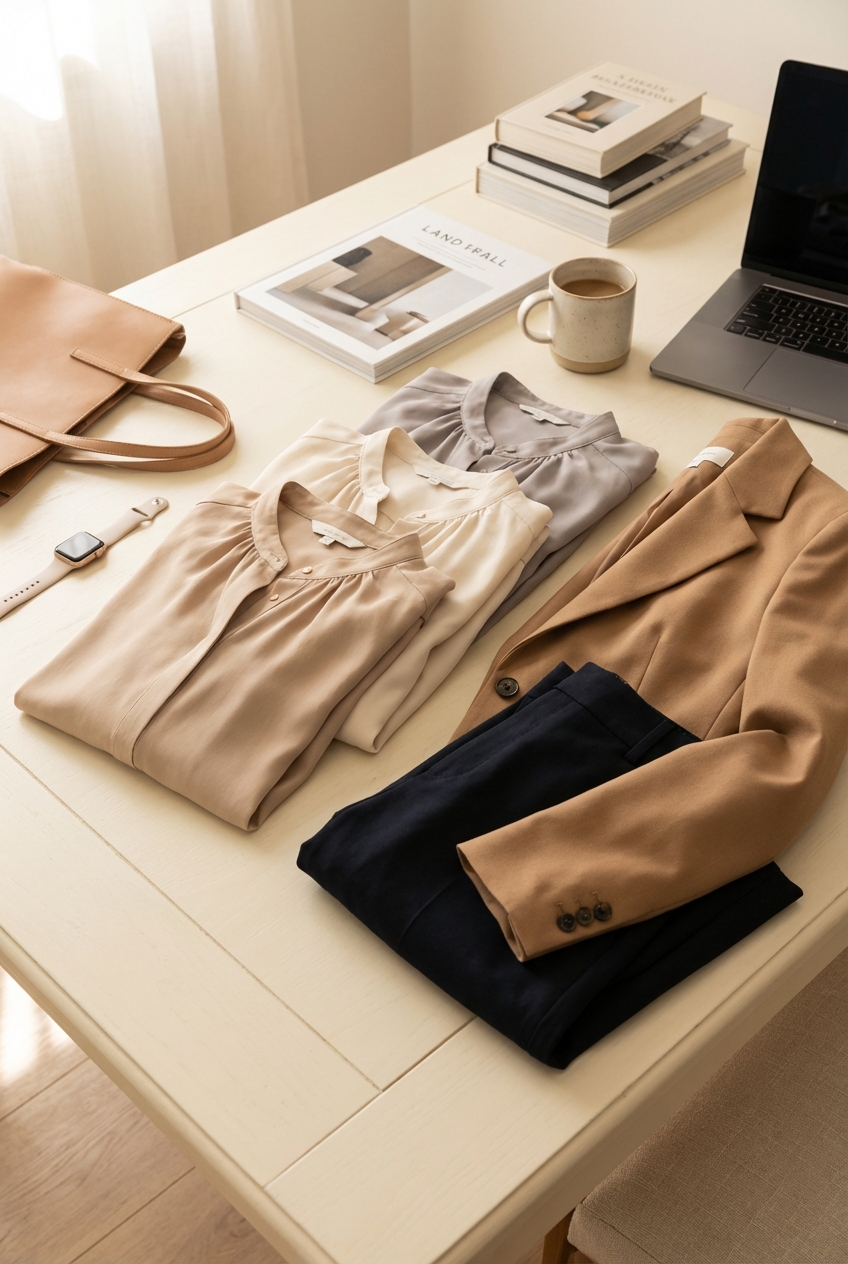
Neutral Blouses For Polished Workwear
In my years working as a personal stylist for executive women, I have noticed a recurring theme during closet audits. We often focus heavily on the “hero” pieces—the structured blazers, the designer handbags, and the power heels. However, the foundational layer is frequently neglected. This leads to that frantic morning feeling of having a closet full of clothes but nothing to wear.
The neutral blouse is the unsung hero of a polished work wardrobe. It is the canvas upon which you build your professional image. Finding the right one involves more than just grabbing a white button-down off the rack. It requires an understanding of fabric drape, skin undertones, and architectural details that separate a sloppy look from a sophisticated one.
I have curated this guide to help you identify the perfect neutral blouses that work as hard as you do. We will cover fabric choices, fit mechanics, and how to maintain these delicate pieces. If you are looking for visual examples of how to style these looks, don’t forget that the Picture Gallery is at the end of this blog post.
The Fabric Hierarchy: Choosing the Right Material
When selecting a blouse for the office, the fabric is the single most important variable. It dictates how the garment hangs on your body, how much it wrinkles throughout the day, and how breathable it is during high-stress meetings.
Silk and Silk Blends
Silk is the gold standard for high-end workwear. A silk crepe de chine or charmeuse has a natural luster that reflects light beautifully, instantly elevating a suit or pencil skirt. It regulates body temperature, keeping you cool when the office heating is too high and warm when the air conditioning blasts.
However, 100% silk requires commitment. It creates a soft, fluid silhouette that is less structured than cotton. If you are concerned about durability, look for a silk-viscose blend. This offers the drape of silk with slightly more resilience against snagging.
Cotton Poplin
For a sharper, more architectural look, cotton poplin is your best friend. This fabric holds its shape, allowing for crisp collars and dramatic cuffs. It projects authority and pairs exceptionally well with unstructured cardigans or soft wool trousers because the contrast in textures adds visual interest.
The downside to poplin is wrinkling. If you sit at a desk for eight hours, the stomach and lower back areas will crease. I always recommend looking for “two-ply” cotton or blends with a small percentage (2-3%) of elastane. This adds stretch and helps the fibers bounce back after movement.
High-Quality Synthetics
Do not immediately dismiss polyester, but be discerning. Modern Japanese technical polyesters can mimic the hand-feel of silk without the dry-cleaning bill. These are excellent for business travel as they rarely wrinkle in a suitcase.
Avoid low-grade, shiny polyester. It traps heat and odors, which is a disaster in a professional setting. If the fabric feels slippery or makes a swishing sound when you move, put it back on the rack.
Stylist’s Note: The Transparency Test
One of the most common issues with neutral blouses, specifically white and cream, is opacity. Before buying, put your hand inside the blouse. If you can clearly see your skin tone or a ring, the fabric is too thin. You will spend your entire day worrying about your undergarments rather than your presentation.
Finding Your Shade: Undertones Matter
“Neutral” does not just mean white or black. It encompasses a vast spectrum of champagnes, oatmeals, pewters, and ivories. Wearing the wrong shade of neutral can wash you out, making you look tired even after a full night’s rest.
Warm Undertones
If your veins appear green or you look better in gold jewelry, you likely have warm undertones. Pure, optic white might look too harsh against your skin. Instead, gravitate toward cream, ivory, ecru, and warm camel tones. These colors will bring out the golden glow in your complexion.
Cool Undertones
If your veins appear blue and silver jewelry makes your skin sing, you have cool undertones. You can handle stark, crisp white beautifully. You also look fantastic in dove gray, charcoal, and icy taupe. Avoid yellow-based creams, as they can make your skin look sallow.
Universal Neutrals
If you are unsure, stick to colors like blush pink (often called “millennial pink” but a staple in luxury workwear) or navy. Navy is technically a color, but in the fashion world, it functions as a neutral. It is softer than black and universally flattering.
The Architecture of Fit
A blouse can cost $500, but if the fit is poor, it will look like $20. Conversely, a budget-friendly top can look designer if the fit is precise.
The Shoulder Seam
This is the most critical anchor point of any garment. The seam where the sleeve attaches to the bodice must sit exactly at the corner of your shoulder bone. If it slips down the arm, the blouse looks too big and sloppy. If it sits too high toward the neck, it looks shrunken and restricts movement.
Necklines and Modesty
In a professional environment, necklines should be strategic. A V-neck elongates the torso and is very flattering, but be mindful of the depth. A good rule of thumb is that the point of the V should be no lower than the top of your armpit level.
Boat necks and crew necks are elegant and work well for smaller busts. However, if you have a larger bust, high necks can sometimes create a “shelf” effect. A surplice (wrap) neckline is often the most flattering option for curvier figures as it highlights the waist and accommodates the bust without gaping.
Sleeve Length
For long sleeves, the cuff should hit just past the wrist bone when your arm is bent. If it covers your hand, you look like you are wearing a child’s costume. If it’s too short, it looks like it shrank in the wash. Tailoring sleeve length is one of the easiest and cheapest alterations you can make to elevate your look.
Common Mistakes + Fixes
Even seasoned professionals make styling errors. Here are a few I see often and how to correct them quickly.
Mistake: Wearing a white bra under a white blouse.
Correction: This actually highlights the bra because the white glows against your skin tone. Always wear a bra that matches your skin tone (nude, cocoa, brown, etc.) or a red bra (which surprisingly disappears under white for many skin tones).
Mistake: Gaping buttons at the bust.
Correction: This is a distracter in meetings. Size up to fit your bust comfortably, then have a tailor take in the waist. Alternatively, use double-sided fashion tape between the buttons or have a tailor add a hidden snap closure inside the placket.
Mistake: The “Muffin Top” tuck.
Correction: When tucking a blouse into trousers, it often bunches up. If the blouse is thin, tuck it into your shapewear or tights to keep it smooth. If the blouse is thicker, use the “military tuck”: fold the excess fabric at the sides toward the back before tucking it in.
Styling Formulas for the Modern Office
Once you have the right blouse, styling it effectively is key to maximizing your wardrobe. Here are three go-to formulas I use with my clients.
The Power Contrast
Combine a fluid silk blouse with structured wool trousers. The softness of the top balances the rigidity of the pants. This is perfect for days when you need to be authoritative but approachable.
Formula: Ivory silk blouse + Charcoal wide-leg trousers + Pointed toe pumps.
The Monochromatic Column
Dressing in one color family from head to toe creates a long, lean line. This is incredibly chic and high-fashion.
Formula: Camel cashmere blend blouse + Camel pencil skirt + Nude heels.
The Layering Expert
Use your neutral blouse as a base for statement pieces. Since the blouse is simple, you can afford to be bolder with your outer layers.
* Formula: Crisp white poplin shirt + Plaid or textured blazer + Dark denim (for casual Fridays).
Maintenance: Protecting Your Investment
Neutral blouses, particularly light ones, show wear and tear faster than dark prints. Proper care is essential to keep them looking polished.
The Deodorant Dilemma
Yellow pit stains are the enemy of white blouses. They are caused by the aluminum in antiperspirants reacting with sweat. Switch to an aluminum-free deodorant if possible. Wait for your deodorant to dry completely before getting dressed to avoid white streaks on dark neutrals.
Steaming vs. Ironing
I rarely recommend ironing silk; the direct heat can crush the fibers and leave shiny marks. A handheld steamer is a safer, faster option for removing wrinkles from delicate fabrics. For cotton poplin, however, an iron is necessary to get that crisp, professional finish.
Storage
Never hang knits or heavy jersey blouses on wire hangers; they will stretch out the shoulders. Use velvet flock hangers for silk to prevent slipping, and padded hangers for delicate knits. Ensure your closet is not overcrowded—clothes need space to breathe to avoid permanent creasing.
Finish & Styling Checklist
Before you head out the door or finalize an online purchase, run through this mental checklist to ensure your look is cohesive and functional.
- Opacity Check: Can you see the outline of your bra in daylight?
- Wrinkle Test: Scrunch the fabric in your hand for 10 seconds. Does it smooth out or stay creased?
- The Sit Test: Sit down in a chair. Do the buttons gape? Does the back rise up?
- Color Harmony: Does the tone of the blouse flatter your skin, or does it make you look gray?
- Hardware: Are the buttons secure? Are there loose threads?
- Hemline: Is the length appropriate for whether you plan to tuck it in or leave it out?
FAQs
Q: Can I wear a sleeveless blouse to the office?
A: It depends on your office culture. In creative or business casual environments, yes, provided the straps are wide (3 inches or more) and the armholes are not cut too low. In corporate law or finance, sleeveless is generally acceptable only if worn under a blazer or cardigan.
Q: How do I keep my silk blouse from static cling?
A: Static is caused by dryness. You can use an anti-static spray, or in a pinch, run a wire hanger over the garment (on the inside) to discharge the electricity. Rubbing a dryer sheet on the inside of the fabric also works wonders.
Q: What is the best neutral blouse for a capsule wardrobe?
A: If you can only buy one, choose an ivory silk or high-quality polyester crepe blouse with a simple crew or V-neck. It layers under everything, works year-round, and transitions easily from day to night.
Q: How many neutral blouses do I need?
A: For a full-time office job, I recommend starting with five: two whites (one crisp, one soft), one black, one navy, and one patterned neutral (like a subtle stripe or polka dot). This covers a full work week without needing to do laundry mid-week.
Conclusion
Building a wardrobe of high-quality neutral blouses is one of the smartest investments you can make for your career. These pieces are the workhorses of your closet, quietly supporting your style while allowing your skills and personality to take center stage.
By focusing on superior fabrics, precise tailoring, and the right undertones, you can create a rotation of outfits that look expensive and feel effortless. Remember, polished workwear is not about having the most clothes; it is about having the right clothes that fit your body and your life perfectly.
Picture Gallery


