
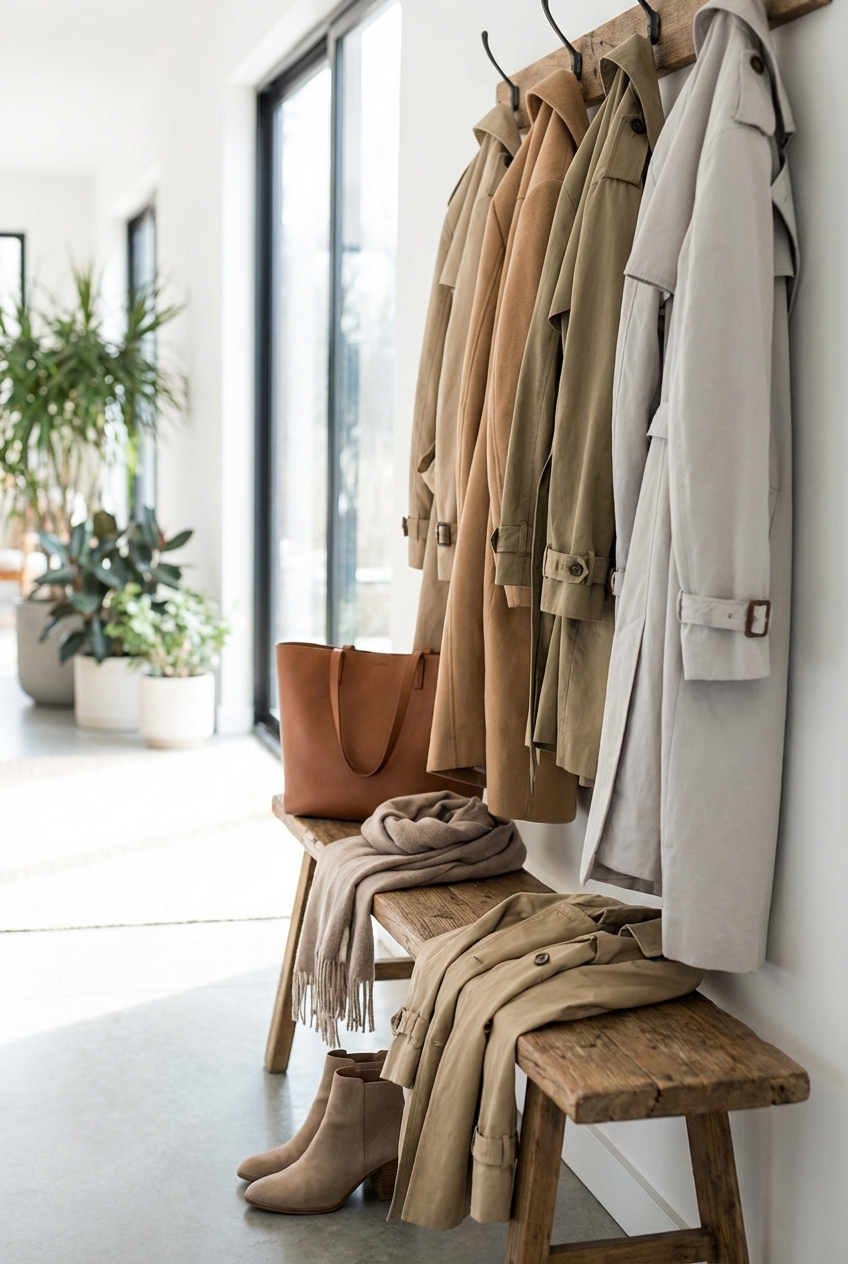
Neutral Trench Coats For Transitional Weather
There is a specific week in early March, and another in late September, where the weather simply refuses to make up its mind. Mornings are crisp enough to see your breath, but by noon, the sun is blazing enough to make a wool coat regrettable. In my years of styling clients for high-stakes professional environments, this transitional period is the source of the most sartorial panic.
The solution is almost always a neutral trench coat. It is the architectural anchor of a wardrobe, capable of elevating a simple denim look or softening a sharp tailored suit. However, not all trenches are created equal. The difference between looking polished and looking like a detective from a noir film lies entirely in the fabrication, the cut, and the shade of neutral you select.
Finding the right trench is an investment in your personal brand. It requires understanding your body proportions, the undertones of your complexion, and the functional demands of your lifestyle. If you are looking for specific outfit combinations, make sure to check out the Picture Gallery at the end of this blog post.
1. Decoding the Fabric: Gabardine, Twill, and Drape
When I consult with clients on investment outerwear, the first thing we discuss is not the brand, but the hand-feel of the fabric. The silhouette of a trench coat is entirely dependent on the weight and weave of the material. A coat that is too stiff will add unnecessary bulk, while one that is too flimsy will look cheap and wrinkle the moment you sit down.
Cotton Gabardine: The Gold Standard
Historically invented for durability, tightly woven cotton gabardine is the ideal choice for high-end styling. It is water-resistant by nature of the weave, not just a chemical coating. It holds its shape, meaning the collar will pop and stay up, and the belt will cinch cleanly without bunching.
Fluid Crepe or Tencel Blends
For a “soft trench” look, which is popular for more casual or warmer climates, Tencel or viscous blends offer incredible drape. These coats move with you like a dress. However, be aware that they offer very little protection against wind and rain compared to cotton structures.
Designer’s Note on Fabric Weight:
If you are ordering online, check the fabric composition immediately. Avoid coats that are 100% polyester unless it is a specific technical rain shell. Polyester traps body heat and creates a “sauna effect” during transitional weather. Look for at least 60% natural fiber (cotton or wool) mixed with polyamide for durability.
2. The Architecture of Fit: Measurements that Matter
Fit is the difference between wearing the coat and the coat wearing you. In interior design, we talk about scale relative to the room; in fashion, we talk about scale relative to your bone structure. A trench coat involves a lot of fabric, so getting the breakpoints right is non-negotiable.
The Shoulder Seam
The seam of the shoulder should sit exactly at the corner of your shoulder bone. If it drops down the arm (unless it is an intentionally oversized raglan sleeve), you will look rounder than you are. If it sits up too high, you will not be able to layer a blazer underneath.
The Sleeve Length Rule
Ideally, the sleeve should hit just past the wrist bone, reaching the base of your thumb. This allows for roughly 0.5 inches of a shirt cuff or sweater to peek through when you move your arms, which adds a layer of texture to your look.
Common Mistake & Fix:
The Mistake: Buying a coat with sleeves that cover the knuckles to “keep warm.” This makes your arms look shorter and the coat look ill-fitting.
The Fix: Take the coat to a tailor. Hemming sleeves is a simple alteration that instantly makes a $200 coat look like a $2,000 coat.
3. Selecting Your Neutral: Undertones and Complexion
The term “neutral” is misleading because beige is never just beige. Neutral trenches come in a spectrum ranging from cool stone to warm camel. Selecting the wrong temperature for your skin tone can make you look tired or washed out, while the right one acts like a natural highlighter.
Cool Undertones (Pink or Blue Veins)
If you have cool undertones, stay away from yellow-based khakis. They will clash with your skin. Instead, look for “Stone,” “Dove Grey,” or “Taupe.” These shades have a grey or pink base that harmonizes with cool complexions.
Warm Undertones (Golden or Olive Skin)
You will shine in “Camel,” “Honey,” or “Sand.” These rich, yellow-based browns enhance the warmth in your skin. A stark, cool grey trench can make warm skin look sallow.
What I’d Do in a Real Styling Session:
I hold the fabric up to the client’s face in natural light, without makeup. If the fabric makes their dark circles more pronounced, it’s the wrong undertone. If it makes their eyes look brighter, it’s a winner. When in doubt, “Greige” (a mix of grey and beige) is the universal donor of neutrals and works on almost everyone.
4. Hardware and Heritage Details
In high-end fashion, luxury is whispered, not shouted. The quality of a trench coat is often revealed in the hardware and the traditional military-inspired details. Even if you are buying a modern iteration, these elements provide visual balance and functionality.
The Buttons
Inspect the buttons closely. High-quality trenches use buffalo horn or faux-horn resin, which has depth and variation in color. Avoid coats with flat, shiny plastic buttons that match the fabric color exactly; this is a sign of mass production and cheapens the overall aesthetic.
The Buckles
Look for leather-wrapped buckles on the belt and the cuffs. This adds a texture contrast against the cotton gabardine. If the buckles are plastic, ensure they are matte and sturdy, not flimsy.
The Storm Flap
The flap of fabric on the upper back (and sometimes the front shoulder) is called a storm flap. Functionally, it allows rain to run off the coat without soaking the shoulder seam. Aesthetically, it adds volume to the upper body. If you are pear-shaped, a prominent storm flap helps balance your hips by broadening the shoulder line.
5. Styling Proportions: The Rule of Thirds
Styling a trench coat requires an understanding of proportion. Because the coat covers so much of your body, you must be intentional about what is visible. We use the “Rule of Thirds” to ensure the silhouette remains elongated rather than boxy.
The Hemline Ratio
For the most flattering modern silhouette, opt for a “midi” length. The hem should hit the middle of your calf. This creates a long vertical line. A coat that hits at the knee cuts the leg in half visually, which can be unflattering for anyone under 5’9″.
The Pant Break
When wearing a long trench, ensure your trousers are tailored. A cropped ankle pant or a straight-leg jean that hits the top of the shoe works best. Avoid wide-leg trousers that puddle on the floor, as the volume of the pants combined with the volume of the coat can overwhelm your frame.
Designer’s Note on Belting:
Never buckle the belt traditionally. It looks too stiff. Instead, double-knot the belt at the waist to cinch the silhouette. If you are wearing the coat open, tie the belt in a loose knot behind your back. This pulls the fabric in at the waist, giving you shape even when the coat is unbuttoned.
6. The Transitional Edit: Layering Strategy
The beauty of the trench is its role as a transitional hero piece. However, layering requires a strategy to avoid feeling restricted in your movement. You need warmth without the bulk.
The Inner Column
Create a monochromatic column of color underneath the coat. For example, black trousers and a black cashmere turtleneck. When you throw a camel trench over this, the contrast is sharp and chic. This “column” effect also elongates the body.
Texture Play
Since the trench is usually a flat, smooth cotton, you need to introduce texture elsewhere. Pair it with chunky ribbed knits, leather boots, or a silk scarf. The contrast between the crisp coat and a soft sweater is what makes the outfit look expensive.
Common Mistakes + Fixes:
The Mistake: Wearing a thick blazer under a fitted trench, causing “sausage arms.”
The Fix: If you plan to wear suit jackets under your trench, size up one size or look for a “raglan” sleeve cut (where the sleeve seam goes to the neck) rather than a set-in sleeve. This offers more room in the armhole.
Finish & Styling Checklist
Before you commit to a purchase or finalize your outfit, run through this mental checklist to ensure the look is cohesive and high-end.
- Check the composition: Is it mostly natural fibers (cotton/wool)?
- Test the wrinkle factor: Squeeze the fabric in your hand for 10 seconds. Does it spring back or stay crushed?
- Shoulder alignment: Does the seam sit squarely on your shoulder bone?
- Sleeve length: Can you see your wrist bone or shirt cuff?
- Hardware check: Are the buttons sewn on securely? Do they have a backing button?
- Knot technique: Have you knotted the belt rather than buckled it for a relaxed look?
- Collar prep: Have you steamed the collar so it stands up crisply?
FAQs
Should I size up in a trench coat to fit sweaters?
generally advise clients to buy their true size if the coat is a classic fit. Most heritage brands cut trench coats with “ease” (extra room) to accommodate layers. If you size up too much, the shoulders will droop, which ruins the sharp silhouette. Only size up if the cut is advertised as “slim” or “fitted.”
Can I wear a trench coat to a black-tie event?
Yes, but fabric matters. A cotton gabardine trench is a bit too utilitarian for a gown. For evening wear, look for a trench cut in satin, silk, or a very fine wool crepe. Drape the coat over your shoulders (cape style) rather than putting your arms through the sleeves for an elegant entrance.
How do I clean my trench coat?
Always read the care label, but generally, high-end trenches should be dry cleaned, especially if they have structure or interfacing. However, spot cleaning is your friend. Use a damp cloth to wipe off surface dirt from the hem immediately after wear. If you wash a water-resistant coat at home, you may strip the coating.
Is a short trench coat (hip length) in style?
While short trenches (pea coat length) exist, they lack the dramatic impact and versatility of a knee-length or midi coat. A longer coat offers better rain protection and creates a more flattering vertical line. I usually steer clients toward lengths that hit at least at the knee.
Conclusion
A neutral trench coat is more than just rainwear; it is a tool for composing a pulled-together look when the weather is chaotic. By focusing on the structural details—crisp gabardine, horn buttons, and the perfect shoulder fit—you elevate your entire wardrobe.
Remember that the goal is not just to cover up your outfit, but to complement it. Whether you choose a cool stone shade or a warm honey hue, the right trench coat will serve you for a decade or more. It is one of the few items in fashion where the return on investment is almost guaranteed.
Picture Gallery


