
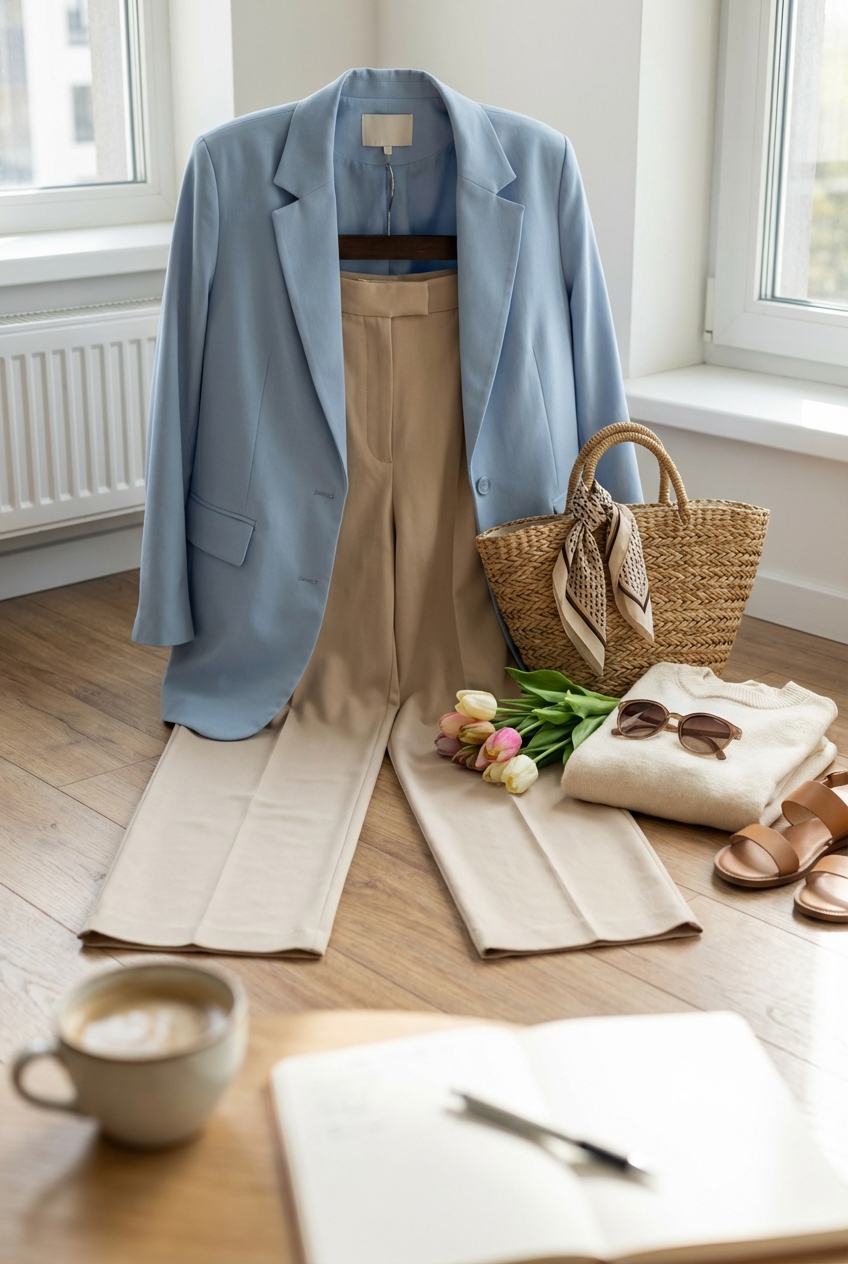
Oversized Blazers With Wide Leg Trousers For Spring Chic
Introduction
There is a moment in every stylist’s career when they realize that volume is not the enemy of elegance. I vividly remember a fitting with a client last April. She was terrified of “drowning” in fabric. She stood before the mirror in a structured, boxy blazer and floor-sweeping trousers, initially pulling at the waist to create shape. But once we adjusted the hem to perfectly graze her heel and pushed the sleeves up to expose the wrist bone, her posture shifted. She didn’t look messy; she looked powerful.
The combination of an oversized blazer with wide-leg trousers is the modern uniform for women who want comfort without sacrificing authority. It creates a silhouette that commands attention, moving away from the body-con trends of the past decade into something far more architectural. For spring, this pairing is particularly versatile, offering warmth during brisk mornings and breathability during sunny afternoons.
However, wearing volume on volume requires a specific understanding of proportion and tailoring. It is not as simple as buying two sizes up. It requires a keen eye for where the fabric breaks, how the shoulder line sits, and the visual weight of your accessories. If you are looking for visual inspiration, we have curated a stunning Picture Gallery at the end of this blog post to guide your styling choices.
The Golden Ratio of Volume: Balancing the Silhouette
The biggest misconception about wearing an oversized blazer with wide-leg trousers is that anything goes regarding size. In high-end fashion styling, “oversized” is a specific fit, not just a large size tag. The goal is to look intentionally relaxed, not like you borrowed a suit that doesn’t fit.
When pairing a loose jacket with loose pants, you must adhere to the “Column Rule.” This styling technique creates a long, unbroken vertical line that elongates the body. To achieve this, the width of the blazer’s shoulders must balance the width of the trouser hem. If the trousers are extremely wide (palazzo style), the blazer needs strong, padded shoulders to prevent your frame from looking like a pyramid.
Conversely, if the trousers are a moderate wide-leg or a straight-leg bootcut, an unstructured blazer with a softer shoulder works better. The harmony comes from the alignment of these two widest points.
Stylist’s Note: The Wrist and Ankle Rule
In my years of styling, the most common mistake with this look is covering every inch of skin. When your torso and legs are covered in voluminous fabric, you must expose the “narrow points” of your body to prove there is a human underneath. Always scrunch or roll the blazer sleeves to show your wrists. If the weather permits, choose a trouser length that shows a hint of ankle or wear an open-toe shoe. This breaks up the mass of fabric.
Fabric Weight and Drape: Navigating Spring Temperatures
Fabric choice is the difference between looking expensive and looking sloppy. For Spring, we are moving away from the heavy tweeds and stiff wools of winter. However, you cannot go too flimsy. A thin jersey blazer will not hold the architectural shape needed to balance wide-leg pants.
You need materials with “guts” but breathability. The best options for this specific look are Tropical Wool, Linen-Silk blends, and heavy-weight Cottons.
Tropical Wool (Cool Wool):
This is the gold standard for spring tailoring. It is a lightweight merino wool woven loosely to allow airflow. It has excellent drape, meaning the wide-leg trousers will hang straight down rather than clinging to static. It resists wrinkling, making it perfect for office wear.
Linen-Silk Blends:
Pure linen wrinkles the moment you sit down. While some embrace this wabi-sabi aesthetic, a blend of linen and silk adds a subtle sheen and reduces the severity of creases. The silk adds a fluid motion to the wide trouser legs as you walk, creating a dynamic silhouette.
Common Mistakes + Fixes
Mistake: Wearing 100% polyester suiting for spring.
Why it fails: Polyester traps body heat and often lacks the weight to drape properly. It tends to puff out rather than hang straight, making you look larger than you are.
The Fix: Check the care label. Look for natural fibers or blends with at least 50% natural content (viscose/rayon is a decent budget-friendly alternative that drapes well).
The Hemline Debate: Precision Tailoring for Wide Legs
In interior design, we obsess over the distance between a sofa and a coffee table (usually 18 inches). In fashion, we obsess over the “break” of the trouser. The break is where the fabric hits the shoe. With wide-leg trousers, incorrect hemming is the number one killer of the look.
There are two acceptable lengths for this aesthetic in high-end styling:
1. The Floating Hem (The Grazing Cut):
The trousers should end exactly 1/4 to 1/2 inch above the ground when you are wearing your intended shoes. This creates a seamless leg line. The pants should never drag on the pavement—that ruins the fabric and looks unkempt.
2. The Puddle (The Editorial Cut):
This is trendier and involves the fabric “puddling” slightly over the shoe. It requires a very soft fabric (like silk or rayon). The hem should hit the floor but only extend about 1 inch past your heel. This look is high-maintenance and not recommended for rainy spring days.
Measuring Tip
Never go to a tailor without the shoes you plan to wear. A wide-leg trouser hemmed for sneakers will look awkward and short with 3-inch heels. If you alternate between heels and flats, hem the trousers for a low block heel (1.5 inches) as a compromise, or commit to one shoe height for that specific suit.
Layering Strategies: What Goes Underneath?
Since you are dealing with two large garments, the layer underneath the blazer acts as the anchor. It dictates the vibe of the outfit. The rule of thumb here is “Contrast in Fit.”
Because the outer layers are loose, the inner layer should generally be fitted or show skin. This prevents the “marshmallow effect.”
The Fitted Tank or Bodysuit:
A ribbed white tank top is the hero piece of this look. The tight texture contrasts against the smooth flow of the suit. Tuck it in completely to define the waistline. A bodysuit is even better as it guarantees no bunching at the waistline, which can ruin the line of the trousers.
The Bralette or Crop Top:
For a night out or a daring day look, wearing a structured blazer buttoned once with just a bralette underneath is incredibly chic. The oversized lapels provide coverage, while the sliver of skin breaks up the vertical mass.
The Button-Down Shirt:
If you must wear a button-down for work, do not wear a stiff, oversized oxford shirt under an oversized blazer. It is too much bulk. Choose a silk or satin shirt that glides against the blazer lining. Unbutton the top three buttons to open up the neckline.
Color Palettes: Monochromatic vs. Color Blocking
Spring offers a chance to reset the dark palette of winter. How you use color impacts how the volume of the clothes is perceived.
Monochromatic (The Column of Color):
Wearing the blazer and trousers in the same shade is the most effective way to look taller and leaner. When the eye moves vertically without interruption, the volume of the clothes becomes secondary to the line of the body.
Top Spring shades: Butter Yellow, Sage Green, Dove Grey, and Cream.
Designer Tip: If doing all white or cream, ensure the fabrics match in tone. A cool-white blazer with warm-cream pants looks mismatched, not styled.
Color Blocking:
If you separate the suit, keep the darker color on the bottom to ground the look. A beige oversized blazer with navy wide-leg trousers creates a classic, nautical spring vibe. Avoid wearing a light trouser with a heavy, dark blazer unless the blazer is unlined and very fluid; otherwise, you risk looking top-heavy.
What I’d Do in a Real Project
If I were styling a client for a spring event:
Suit: A monochromatic dusty blue suit in lightweight wool-crepe.
Top: A tight, scoop-neck white bodysuit.
Shoes: Pointed-toe silver flats (the point extends the leg line from under the wide hem).
Tailoring: I would have the blazer taken in slightly at the back seam to suggest a waist without losing the oversized feel.
Shoe Selection: Anchoring the Volume
The shoe you choose changes the physics of how the trouser moves. With wide-leg trousers, the shoe is often partially hidden, but the toe box is critical.
The Pointed Toe:
Whether it is a pump, a mule, or a flat, a pointed toe is the best friend of wide-leg trousers. It peeks out from the hem and visually extends the foot, cutting through the width of the pant leg. A round toe can sometimes make the foot look “stumpy” beneath a wide hem.
The Chunky Sneaker:
For a street-style look, a “dad sneaker” works well because its bulk balances the bulk of the blazer. However, the trousers must be hemmed specifically for this shoe to avoid dragging.
The Strappy Sandal:
As we move deeper into spring, a barely-there sandal lightens the look. This works best with lighter fabrics like linen. The contrast between the heavy fabric and the delicate foot is very stylish.
Accessorizing: Scale and Placement
When the clothes are big, tiny accessories get lost. You need to play with scale.
Bags:
Avoid medium-sized crossbody bags that cut across your chest. The strap ruins the line of the blazer lapel. Instead, opt for a structured top-handle bag or an oversized clutch. A clutch tucked under the arm reinforces the relaxed, “borrowed from the boys” aesthetic.
Jewelry:
Since we are often exposing the wrist and neckline (as discussed in the Stylist’s Note), focus your jewelry there. A stack of mixed-metal bangles fills the negative space at the wrist. A chunky chain necklace draws the eye up to the face and away from the volume of the midsection.
Belts:
Belting an oversized blazer is a controversial move. If done wrong, it creates a strange “skirt” effect at the bottom of the jacket. If you want to define your waist, belt the trousers and wear the blazer open. If you must belt the blazer, use a wide leather belt and ensure the fabric is gathered evenly around the back.
Designer’s Checklist: Finishes and Details
Before you leave the house, run through this mental checklist. These are the details that separate a deliberate outfit from a messy one.
- The Steam Test: Wide-leg trousers show wrinkles aggressively in the crotch and knee area. Steam them vertically. A crisp crease down the front of the leg adds instant structure.
- The Pocket Check: Are the pockets of your blazer stitched shut? Cut them open carefully with a seam ripper or small scissors. This allows you to put your hands in your pockets, which helps pose the jacket for photos and casual walking.
- The Lint Roll: High-surface-area fabrics attract lint. Keep a travel roller in your bag, especially if wearing dark colors.
- The Shoulder Fit: Even if the blazer is oversized, the shoulder pads should not droop halfway down your bicep. They should extend past your natural shoulder but remain firm and horizontal.
Finish & Styling Checklist
Use this summary to ensure your look is polished and proportional.
1. Check the Proportion
- Shoulders of the blazer are defined, not drooping.
- Trouser width is balanced by the blazer’s structure.
- Wrists or ankles are visible to break up the fabric mass.
2. Check the Hem
- Trousers are 1/4 to 1/2 inch off the floor with shoes on.
- No fabric is dragging under the heel.
- Sleeves hit at the thumb knuckle (unrolled) or are pushed to the elbow.
3. Check the Underlayer
- Top is fitted or tucked in to define the waist.
- Neckline contrasts with the blazer lapels (e.g., scoop neck vs. sharp collar).
4. Check the Hardware
- Accessories are scaled up to match the outfit volume.
- Shoe toe shape cuts through the wide hem (pointed or architectural).
FAQs
Can petite women wear oversized blazers with wide-leg trousers?
Absolutely. The key for petite frames is to opt for a “slim” wide leg rather than a palazzo cut. Ensure the blazer is not too long; it should hit just below the hip, not mid-thigh. A monochromatic color scheme is essential for petites as it prevents the body from being “cut in half” visually. Always wear a pointed-toe shoe to elongate the leg.
Is this look appropriate for a corporate office?
Yes, but the fabric choice dictates the formality. Stick to fine wools or structured crepes in neutral tones (navy, charcoal, camel). Avoid linen (too casual due to wrinkles) or extreme oversized fits. Wear a silk blouse underneath rather than a tank top, and ensure your shoes are closed-toe.
How do I keep the blazer from swallowing me up?
Shoulder fit is everything. The jacket can be loose in the body, but if the collar gapes at the neck or the shoulders slide off, it’s too big, not oversized. Also, keep the blazer open. This creates a vertical slice down the center of your body, showing your waist and hips, which proves your actual size to the eye.
What is the best way to clean these large items?
Structure is fragile. Always dry clean structured blazers. Washing them at home can dissolve the fusing inside the lapels, causing them to bubble. Wide-leg trousers in cotton or linen can often be washed on a delicate cycle, but must be hung to dry immediately to prevent difficult wrinkles.
Conclusion
Embracing the oversized blazer and wide-leg trouser combination for spring is about more than just following a trend; it is about embracing a silhouette that takes up space. It projects confidence and ease. By focusing on the architecture of the clothes—the break of the hem, the roll of the sleeve, and the weight of the fabric—you can master this look regardless of your height or body type.
Remember that fashion is an optical illusion. You are using lines and volume to direct the eye where you want it to go. With the right tailoring and a few strategic styling choices, this spring uniform will become the most powerful tool in your wardrobe.
Picture Gallery


