
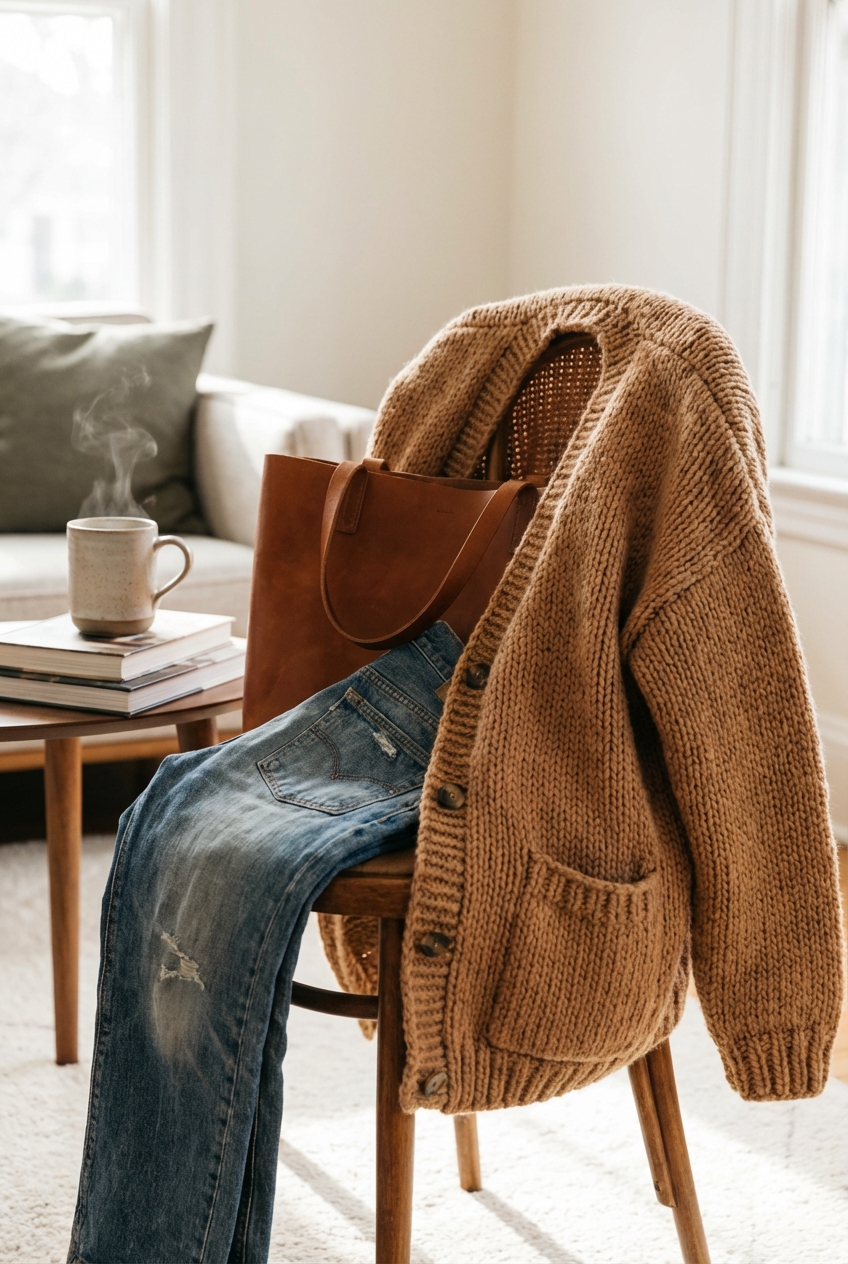
Oversized Cardigans As Statement Outerwear
Introduction
There is a precise moment in early autumn when the heavy wool coat feels too committed, yet the denim jacket offers zero protection against the bite in the air. This is the transitional sweet spot where knitwear takes center stage, specifically the oversized cardigan. For years, we viewed cardigans as library attire or layering afterthoughts, but high-end fashion has reclaimed them as architectural statement pieces.
When styled with intention, a substantial knit acts as a soft coat, offering a level of nonchalant luxury that structured outerwear simply cannot replicate. The key lies in treating the cardigan not as a sweater, but as your primary outer layer. It requires a shift in perspective regarding volume, weight, and the fabrics you choose to invest in.
I have spent years styling editorial shoots where the goal is to make comfort look expensive, and nothing achieves this faster than a floor-grazing cashmere piece or a chunky merino cable knit. If you are looking for visual inspiration on how to execute these silhouettes, keep reading because I have curated a stunning Picture Gallery at the end of the blog post.
1. The Architecture of Fiber: Selecting the Right Weight
When you use a cardigan as outerwear, the fiber composition is the single most critical factor. A lightweight cotton blend will never hang correctly or provide the necessary insulation to act as a jacket substitute. You need fibers with “guts” and memory.
I always steer clients toward natural animal fibers for statement outerwear. Merino wool and cashmere are the gold standards because they offer high thermal retention without excessive bulk. However, for a truly sculptural look, consider Peruvian Highland wool or an Alpaca blend, which provides a stiffer drape that holds its shape against the wind.
Synthetics often lack the weight required for a coat-like drape. An acrylic sweater might look chunky on the hanger, but it often lacks the density to fall properly against the body, leading to a static-clinging, cheap appearance. If you want the piece to command attention, check the label for at least 80% natural fiber content.
Designer’s Note: The “Hand-Feel” Test
When shopping, bunch the fabric in your hand and release it. If it springs back immediately, the yarn has high twist and tension, meaning it will hold its structural shape as a coat. If it collapses or wrinkles, it is too flimsy for outerwear use.
2. Mastering Proportion and Volume
The most common fear women have regarding oversized knitwear is that it will overwhelm their frame. This is a valid concern, but it is easily mitigated by understanding the rules of volume. If the top layer is voluminous, the bottom half needs to be streamlined to maintain visual balance.
Think of your outfit as a geometry equation. If you are wearing a balloon-sleeve, drop-shoulder cardigan, pair it with a straight-leg trouser or a fitted midi skirt. Avoid wide-leg palazzo pants with oversized knits unless you are exceptionally tall or cinching the waist significantly.
For petite frames, the length of the cardigan is non-negotiable. A midi-length that hits mid-calf creates a long, vertical column that actually elongates the body. Anything stopping at the widest part of the hip will add visual width and shorten your silhouette.
Common Mistakes + Fixes
Mistake: Wearing a bulky base layer under a bulky cardigan.
Fix: Use the “sandwich” technique with textures. If the outer layer is thick wool, the inner layer should be silk, Tencel, or fine-gauge cotton. This reduces friction and prevents the “stuffed” feeling in the sleeves.
3. The Art of the Tuck and Cinch
Wearing an oversized cardigan open creates a lovely vertical line, but sometimes the weather or the silhouette demands structure. Adding a belt is the quickest way to transform a slouchy knit into a tailored coat-dress hybrid. However, the type of belt matters immensely.
Avoid the thin, stringy belts that often come attached to the cardigan; they tend to look flimsy and bathrobe-like. Swap them for a wide leather belt with hardware. This introduces a contrasting texture that elevates the knit from loungewear to streetwear.
Alternatively, consider the “French Tuck” for button-down cardigans. Button the bottom few buttons and tuck the front hem into your trousers while leaving the back loose. This defines the waistline without sacrificing the cozy, oversized vibe of the back profile.
What I’d Do in a Real Project
If I were styling a client for a city lunch, I would take a charcoal gray oversized cardigan, remove the fabric sash, and replace it with a cognac leather belt worn high on the natural waist. I would blouse the knit slightly over the belt to hide the tension point, creating an intentional hourglass shape.
4. Texture Play: Ribbing, Cables, and Bouclé
Since a cardigan lacks the lapels and structured shoulders of a blazer, the interest must come from the texture of the weave. A flat knit in a solid color can sometimes read a bit dull in a large format. Texture is what catches the light and adds depth to your outfit.
Cable knits are the classic choice for a heritage or academic aesthetic. They add significant physical thickness, making them excellent coat replacements in temperatures down to 50 degrees Fahrenheit. The raised pattern creates a built-in structure that helps the garment hold its shape.
For a more modern, minimal approach, look for a Fisherman’s rib or a shaker stitch. These vertical ribbing patterns draw the eye up and down, which is incredibly flattering. Bouclé or brushed mohair offers a softer, more ethereal vibe, blurring the edges of your silhouette for a romantic look.
Texture Rules of Thumb
- Cable Knit: Adds volume. Best for slim body types or when paired with very fitted bottoms (like leather leggings).
- Vertical Rib: Slimming and elongating. Excellent for all body types, especially when worn open.
- Bouclé/Mohair: Adds visual softness but can add visual bulk. Keep the color palette monochromatic to streamline the look.
5. Layering Mechanics for warmth
Treating a cardigan as outerwear requires strategic layering to ensure you are actually warm. The porous nature of knitwear means wind can cut right through even the thickest wool. The secret weapon here is a slim, wind-blocking base layer.
I frequently recommend long-sleeve bodysuits made of technical fabrics or tightly woven silk. These sit close to the skin and trap body heat without adding bulk to your arms. You want your arms to slide easily into the cardigan sleeves without the fabric bunching up at the biceps.
Scarves are also essential partners for the collarless cardigan. Since you don’t have a collar to pop against the wind, a giant cashmere wrap scarf is necessary. It closes the gap at the neck and adds another tier of texture to the look.
6. Footwear: Grounding the Look
Your choice of shoe dictates whether you are heading to the sofa or the boardroom. Because oversized cardigans have a natural “heaviness” to them, your footwear needs to be substantial enough to balance that weight. A delicate ballet flat often looks too light and gets lost under a massive knit.
Knee-high leather boots are my preferred pairing. They disappear under the hem of a long cardigan, creating a seamless transition that looks incredibly chic. The leather structure contrasts beautifully with the soft wool, providing that necessary “hard vs. soft” tension.
Chunky loafers with a lug sole are another excellent option for a more casual, menswear-inspired vibe. The visual weight of the heavy sole stands up to the volume of the knit. If you must wear heels, opt for a block heel rather than a stiletto to maintain balance.
7. Maintaining the Investment
If you are spending money on a high-quality statement cardigan, you must commit to its care. Unlike a structured coat, a knit is vulnerable to gravity. Never, under any circumstances, hang a heavy knit cardigan on a hanger. The weight of the garment will stretch the shoulders and lengthen the hem until it is misshapen.
Store your knits folded on a shelf. If you lack shelf space, fold them over the bar of a hanger with tissue paper in between to prevent creasing. You should also invest in a high-quality fabric shaver or sweater stone. Even $500 cashmere will pill in high-friction areas (like under the arms) eventually.
Regular “shaving” of your knitwear keeps it looking polished and new. Treat this maintenance as a ritual. A depilled, well-steamed cardigan looks infinitely more expensive than a neglected one, regardless of the price tag.
Finish & Styling Checklist
Before you head out the door, run through this quick styling audit to ensure your oversized knit looks intentional, not accidental.
- Shoulder Check: Is the shoulder seam hitting where it’s supposed to? If it’s a drop-shoulder, it should be well down the arm. If it’s a raglan, it should flow smoothly.
- The Cuffs: Are the sleeves swallowing your hands? Roll or push up the sleeves to expose your wrists. This is a stylist’s trick to show “skin breaks” which lightens the look.
- Hemline Clearance: Ensure the cardigan hem isn’t fighting with your skirt hem. It should either be significantly shorter or longer than the layer underneath.
- Lint Check: Dark knits attract everything. A quick pass with a lint roller is mandatory, especially if you have pets.
- Hardware Polish: If you added a belt, ensure the buckle is centered and the leather isn’t twisted in the back.
FAQs
Q: Can I wear an oversized cardigan to a formal office?
A: Absolutely. Choose a fine-gauge merino wool or cashmere blend in a neutral tone like camel, navy, or black. Belt it over a silk blouse and tailored trousers. Avoid chunky, rustic cable knits for boardrooms; keep the texture smooth and refined.
Q: How do I wash a floor-length wool cardigan?
A: Ideally, you don’t wash it often. Wool is self-cleaning and resists odors. Air it out after wearing. If it needs cleaning, dry cleaning is the safest bet for heavy, structured knits to prevent them from growing or shrinking.
Q: What bag should I carry with a chunky knit?
A: Avoid shoulder bags with chain straps, as they will snag the knit and cause pulls. A top-handle bag or a soft leather clutch carried under the arm is the safest and most stylish choice.
Q: Is there an age limit on oversized trends?
A: Fashion is about attitude, not age. However, as we mature, structure becomes more important. Ensure the cardigan is high quality and pair it with sharp, tailored pieces underneath to keep the look sophisticated rather than juvenile.
Conclusion
The oversized cardigan is far more than a cozy layer for Sunday mornings; it is a legitimate contender in the world of statement outerwear. By prioritizing natural fibers, mastering the balance of proportions, and treating the garment with the same care you would a tailored trench coat, you unlock a level of style that is effortless yet commanding.
Remember that the goal is contrast. Soft knit against tough leather, voluminous wool against sleek silk, and relaxed drape against structured accessories. When you master these tensions, the humble cardigan becomes the most powerful piece in your wardrobe.
Picture Gallery


