
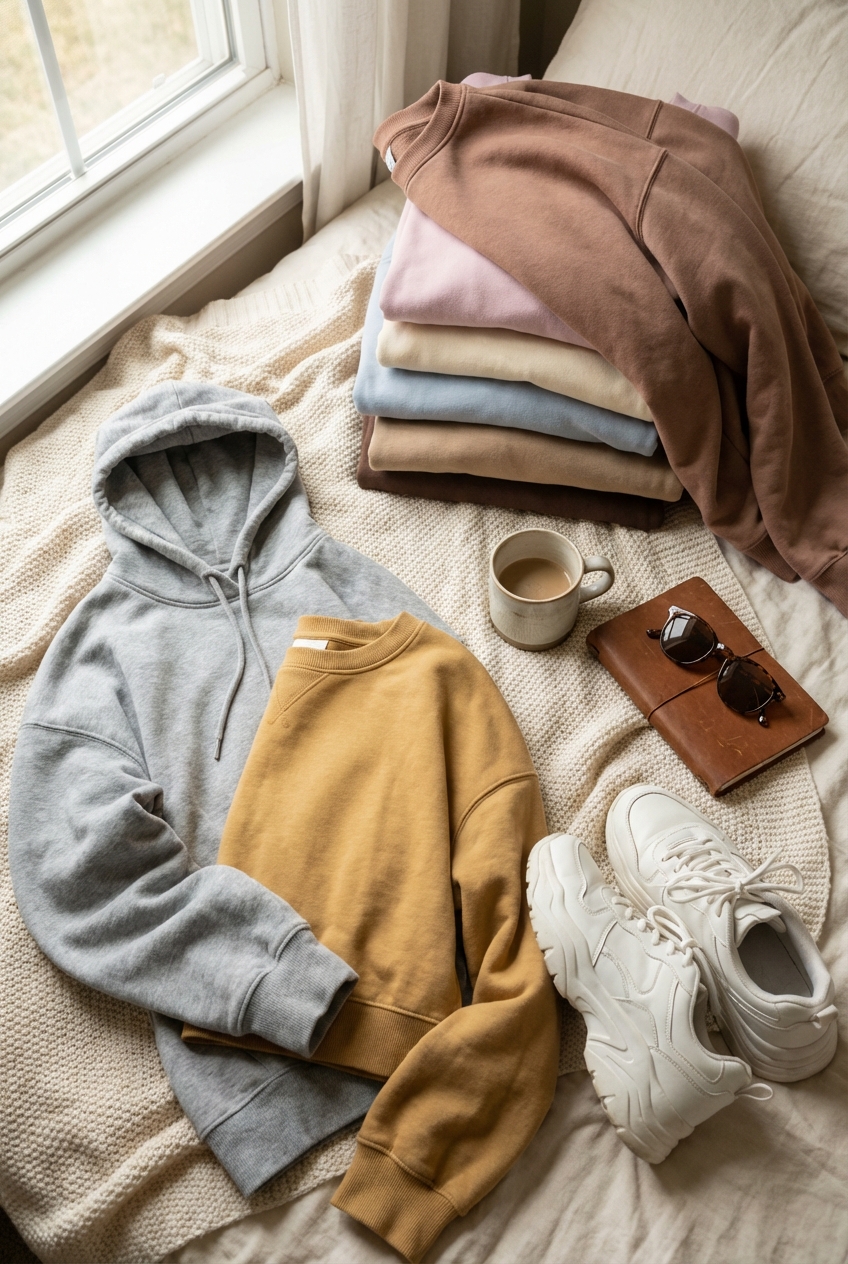
Oversized Sweatshirts For Lounge Or Street Style
Introduction
There was a time when the oversized sweatshirt was strictly reserved for post-gym commutes or sick days spent entirely on the couch. In the world of high-end fashion, that narrative has completely shifted. Today, the voluminous sweatshirt is a foundational architectural piece in a modern wardrobe, serving as a canvas for silhouette play and textural contrast.
I remember styling a client for a casual press tour who was terrified of looking “sloppy” in anything loose. We swapped her fitted knits for a heavy, 450 GSM French terry crewneck paired with structured trousers, and the result was instantly chicer and more authoritative. It is all about intention; when you understand how to manipulate volume, a simple sweatshirt becomes a statement of effortless luxury.
In this guide, I will walk you through the technical aspects of selecting the right garment, from fabric weight to hem placement, and how to style it for both comfort and street credibility. If you are looking for visual inspiration on how to execute these looks, make sure to check out the Picture Gallery at the end of the blog post.
The Architecture of the “Oversized” Fit
The most common misconception about the oversized look is that you should simply buy a standard sweatshirt three sizes too big. This is a mistake that leads to poor proportions, bunching fabric at the armpits, and a hem that hugs the hips too tightly. True oversized garments are pattern-cut differently to drape intentionally.
When shopping or styling, look for a “drop shoulder” seam. This seam should fall at least two to three inches down your upper arm, rather than sitting at the shoulder point. This construction allows the fabric to hang vertically from the widest point of the body, creating a clean, rectangular silhouette rather than a round, lumpy one.
You also need to evaluate the width of the hem ribbing. A tight, elasticized hem will cause the sweatshirt to bubble up around your waist, ruining the line of the outfit. Look for a split hem or a relaxed ribbing that hangs loose against the hips.
Designer’s Note: The Volume Ratio
In my years of styling, the biggest failure point I see is volume overload. If you are wearing volume on top, you generally need structure on the bottom to anchor the look. If you wear a giant sweatshirt with wide-leg sweatpants, you lose your frame entirely unless you are very tall. My golden rule: if the top is a circle, the bottom must be a line.
Fabric Composition and Weight Mechanics
In interior design, we talk about the “hand” of a fabric, and the same applies here. The difference between a sweatshirt that looks expensive and one that looks cheap is almost always the “GSM” (Grams per Square Meter). This measures the density and weight of the fabric.
For a high-end, structured street style look, you want a heavyweight cotton, typically between 400 and 500 GSM. This weight is heavy enough to hold its own shape, meaning the hood stands up rather than flopping flat, and the sleeves stack neatly at the wrist. It creates a silhouette that looks deliberate.
For a lounge look where drape is more important than structure, aim for a lighter weight, around 280 to 320 GSM. This allows for more movement and softness against the skin. Avoid 100% polyester blends if possible, as they tend to pill quickly and trap heat without breathing.
Comparing Materials
- French Terry: Features loops on the interior. It is breathable, moisture-wicking, and offers a refined, smoother drape. Ideal for layering under blazers.
- Brushed Fleece: The interior loops are brushed to create a fuzzy, soft texture. It is warmer and creates a stiffer, boxier volume. superior for standalone street style.
- Synthetic Blends: Often used in vintage styles. While they offer a retro look, they lack the longevity of high-quality cotton.
Balancing Proportions for Street Style
Styling an oversized sweatshirt for the street requires mastering the “Rule of Thirds.” You never want to cut your body exactly in half. Since an oversized sweatshirt creates a long torso, you must counteract this by elongating the leg line or defining a waist point.
If you are wearing a long sweatshirt that hits the mid-thigh, pair it with leggings, biker shorts, or skinny leather trousers. This creates an inverted triangle silhouette that is universally flattering. The volume on top makes the legs look slimmer by comparison.
If you prefer to wear denim, opt for a straight-leg cut rather than a wide leg. To restore your proportions, utilize the “French Tuck.” Tuck just the front two inches of the sweatshirt waistband into your jeans, slightly off-center. This reveals the waistline and visual leg length while maintaining the relaxed vibe of the back and sides.
Common Mistakes + Fixes
Mistake: Letting long sleeves swallow your hands completely.
Fix: Push the sleeves up to the mid-forearm. Exposing the wrists and forearms is a styling trick that instantly makes a large garment look fitted to your body.
Mistake: Wearing a hood that lays flat and messy.
Fix: “Pop” the hood. Pull the front of the hood opening backward so the fabric stacks around your neck like a scarf. This frames the face and adds intention.
Elevated Loungewear Logic
Loungewear does not mean “pajamas.” The goal of elevated lounge styling is to look presentable enough to answer the door or take a video call without changing. The secret here is the monochromatic palette.
Matching sets are the easiest way to achieve a high-end look with zero effort. When your oversized sweatshirt matches your joggers exactly in tone and texture, it creates a vertical column of color that lengthens the body. Neutrals like oatmeal, camel, charcoal, and navy are timeless and hide wear better than pastels.
Pay attention to your socks. In a lounge setting, your socks are a primary accessory. Choose a ribbed athletic crew sock in a pristine white or a color that matches your set. Pull them up over the hem of your leggings or joggers to taper the ankle.
What I’d Do in a Real Project
If I were building a capsule lounge wardrobe for a client, I would start with three distinct sets.
1. The Slate Grey Set: A heavyweight hoodie and jogger for deep winter comfort.
2. The Cream Cotton Set: A French terry crewneck and shorts for transitional weather.
3. The Black Architect Set: A massive, structured black hoodie paired with black leggings for working from home.
Layering Mechanics: The High-Low Mix
The true mark of a fashion expert is the ability to mix casual items with formal tailoring. An oversized sweatshirt is the perfect candidate for this “high-low” friction. This is where you take the item out of the gym context entirely.
Try layering a structured wool blazer over a hoodie. The key is sizing; the blazer must be slightly oversized as well to accommodate the bulk of the sweatshirt. The hood should be pulled out to rest over the lapels of the blazer. This combination works best with a thinner, French terry hoodie to avoid looking like a linebacker.
Another sophisticated option is the trench coat. The fluid nature of a trench complements the structure of a heavy sweatshirt. Leave the trench open to create vertical lines down the center of your body, breaking up the bulk of the sweatshirt.
Texture Pairing Checklist
- Leather + Cotton: A matte cotton sweatshirt looks incredible against the sheen of leather pants or a leather jacket.
- Denim + Fleece: The classic Americana look. Ensure the denim wash contrasts with the sweatshirt color (e.g., light wash jeans with a navy top).
- Silk + Jersey: For the brave, a midi silk skirt paired with a chunky sweatshirt creates a stunning textural clash.
Footwear Pairings
Your choice of shoe dictates the genre of the outfit. Because an oversized sweatshirt has so much visual weight, you need footwear that creates balance. A delicate ballet flat or a thin sandal will often look disproportionate, making you look top-heavy.
Chunky boots are a natural ally. A combat boot or a lug-sole Chelsea boot provides the visual weight needed to anchor a large sweatshirt. This is particularly effective when wearing leggings or skinny jeans.
For a sportier look, retro sneakers (like “dad shoes”) work well because their bulk mirrors the bulk of the top. If you want to dress it up, avoid a standard pump. Instead, go for a sharp, pointed-toe ankle boot or a strappy heel if you are wearing the sweatshirt as a dress.
Finish & Styling Checklist
Before you walk out the door, run through this mental checklist to ensure your oversized look is polished, not messy.
- Check the Neckline: If wearing a crewneck, ensure your t-shirt underneath is either hidden or showing a clean, crisp rim. No stretched-out undershirts.
- Sleeve Management: Are the sleeves pushed up to expose the wrist bone? This adds fragility to a heavy look.
- Lint Check: Heavy cotton attracts dust. A quick lint roll is mandatory, especially for black garments.
- Jewelry Layering: Did you add gold hoops or a chunky chain? Jewelry signals that the outfit is styled, not accidental.
- The Tuck: If wearing jeans, have you employed the half-tuck to define the waist?
FAQs
Q: Can I wear oversized sweatshirts if I am petite?
A: Absolutely. The key for petites is length. Avoid sweatshirts that hit at the knee, as they will shorten your legs. Look for “cropped oversized” cuts that hit at the hip bone, or wear the sweatshirt as a mini dress with opaque tights and heeled boots to elongate the frame.
Q: How do I keep the inside of my sweatshirt soft?
A: Never use high heat. Wash your sweatshirts inside out in cold water on a gentle cycle. Air dry them flat. Heat from the dryer melts the synthetic fibers in fleece blends, causing that scratchy, matted feeling.
Q: Should I size up in men’s sweatshirts or buy women’s?
A: Men’s sweatshirts often have superior fabric weight and length for the “leggings look.” However, they can be tight in the hips. If you have curvy hips, look for women’s cuts that have side slits, or buy a men’s size that accommodates your widest measurement.
Q: How do I stop the bottom band from riding up?
A: This happens when the ribbing is too tight. You can manually stretch the ribbing while the garment is damp. Alternatively, look for sweatshirts with an open hem (no elastic band) for a better drape.
Conclusion
The oversized sweatshirt has graduated from a utility garment to a legitimate fashion staple. It offers a unique opportunity to play with scale, texture, and silhouette in a way that few other garments can. Whether you are curating a monochrome lounge look for a Sunday at home or layering a hoodie under a blazer for a coffee run, the principles remain the same: intentional fit, quality fabric, and balanced proportions.
By paying attention to the GSM weight, mastering the half-tuck, and anchoring your look with the right footwear, you can harness the comfort of sportswear without sacrificing elegance. Fashion is about how you wear it, not just what you wear. Embrace the volume, but make sure you remain the architect of the look.
Picture Gallery


