
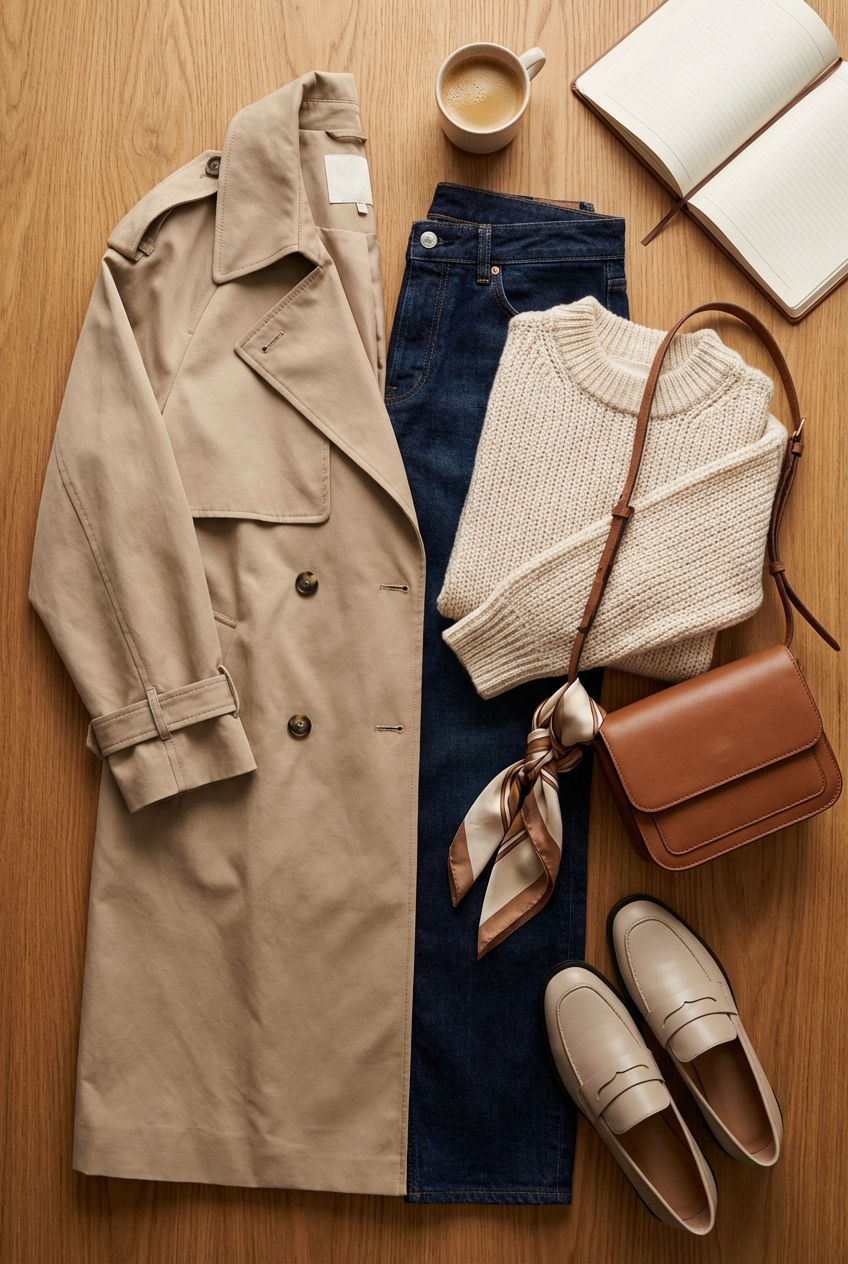
Oversized Trench Coats For Casual Luxe
There is a specific kind of armor required for the transitional seasons. It needs to be substantial enough to block a chilly wind but light enough to handle a sudden burst of sunshine. More importantly, it needs to communicate a sense of effortless polish. The oversized trench coat is the undisputed champion of this category, bridging the gap between utilitarian function and high-fashion drama.
I recall a styling session with a client who was terrified of volume. She believed that anything not strictly tailored would swallow her frame. We put her in a vintage, oversized Burberry trench, rolled the sleeves, and popped the collar. The transformation was immediate. She didn’t look messy; she looked expensive. That is the essence of “Casual Luxe”—it implies you are too busy to be uncomfortable, yet too refined to be sloppy.
This guide will break down exactly how to select, fit, and style an oversized trench to achieve that coveted aesthetic. Make sure to browse the curated Picture Gallery at the end of this post for visual inspiration on these styling techniques.
The Architecture of Intentional Volume
The most critical distinction to make is the difference between a coat that is simply “too big” and a coat that is designed to be oversized. A standard coat purchased three sizes up will usually fit poorly in the shoulders and armholes. An intentionally oversized trench features dropped shoulders, deeper armholes, and a wider sweep at the hem.
When looking for that casual luxe silhouette, pay close attention to the shoulder seam. On a traditional trench, the seam sits at the edge of your shoulder bone. For an oversized look, you want a raglan sleeve or a dropped shoulder seam that sits at least two to three inches down the arm. This allows for heavy layering underneath without the fabric bunching up in the armpit.
Length is the second architectural element. A true oversized trench should hit below the knee. For a modern, luxurious feel, I prefer a midi length that hits mid-calf. This creates a long, fluid line that elongates the body, even when there is significant volume in the width.
Designer’s Note:
When fitting a client, I always check the “sweep”—the circumference of the coat’s hem. If the coat hangs straight down like a box, it often looks cheap. You want an A-line cut where the hem has movement and swing when you walk. This dynamic movement is what separates high-end design from fast fashion.
Fabric Selection: Structure vs. Drape
The fabric you choose dictates how the volume behaves on your body. In the world of luxury outerwear, we generally look at two main categories: structural cottons and fluid drapes. Your lifestyle and body type should dictate which route you take.
Structural Cottons (Gabardine, heavy drill, rubberized cotton):
These fabrics hold their shape. When you pop the collar, it stays up. When you tie the belt, the fabric crunches satisfyingly. This is the classic choice and offers the most “expensive” look because the fabric creates a silhouette independent of your body.
Fluid Drapes (Silk blends, Tencel, soft wools):
These fabrics collapse against the body. They offer a softer, more romantic vibe. While comfortable, they can sometimes look like a bathrobe if not styled with structured accessories. If you choose a fluid fabric, ensure it has a matte finish; shiny synthetic blends tend to cheapen the look.
Common Mistakes + Fixes:
- Mistake: Buying a stiff fabric that is also too thick.
- Fix: Look for a tightly woven cotton gabardine. It repels water and holds structure but isn’t bulky.
- Mistake: Choosing 100% polyester for a “drapey” look.
- Fix: Opt for a Lyocell or Rayon blend. These natural-based fibers breathe better and move more elegantly than pure synthetics.
Mastering Proportions for Different Heights
One of the biggest myths in fashion is that petite women cannot wear oversized clothing. This is false. Anyone can wear volume, but the math changes depending on your height. The goal is always to maintain visibility of the body somewhere, so you don’t look like you’re drowning in fabric.
For Petite Frames (Under 5’4″):
You need to show skin or a fitted silhouette underneath. The “column of color” trick is your best friend here. Wear a monochrome outfit (black turtleneck, black slim trousers) underneath a beige oversized trench. This creates an unbroken vertical line. Ensure the coat length does not go past mid-calf, or it will drag you down visually.
For Tall Frames (Over 5’8″):
You have the luxury of playing with maximum volume. You can handle floor-grazing lengths and wider lapels. However, be careful with sleeve length. Oversized coats often have wider sleeves, but not always longer ones. Ensure the sleeve hits at the knuckle of your thumb, not the wrist bone, to maintain the luxe aesthetic.
What I’d do in a real project:
- Petite Client: I would hem the coat to exactly 2 inches below the knee and push the sleeves up to the elbows to expose the forearms.
- Tall Client: I would look for men’s vintage trenches, which often offer better arm length and a more dramatic shoulder drop.
Layering Strategies for Casual Luxe
The “Casual Luxe” aesthetic relies heavily on the tension between high and low elements. The trench coat acts as the unifying piece that makes casual items look intentional and dressy items look approachable.
The Hoodie Combination:
This is the modern uniform. Pair a high-quality, heavyweight grey hoodie under a classic beige trench. Pull the hood out over the collar of the coat. The key here is the quality of the hoodie—no logos, no pilling. The structure of the trench sharpens the softness of the sweats.
The Denim Tuxedo:
Denim on denim is a neutral base. A chambray shirt tucked into straight-leg jeans creates a textural contrast with the smooth cotton of the trench. The blue denim acts as a perfect foil to the warm camel or khaki tones of the coat.
Texture Play:
In interior design, we mix leather, wool, and wood. In fashion, we do the same. Try a chunky cable-knit sweater under the trench. The bulk of the knit requires the oversized fit of the coat. If the coat was fitted, you would look stuffed; with an oversized cut, you look cozy and affluent.
The Mechanics of Styling: Belts, Buttons, and Collars
How you manipulate the coat is just as important as the coat itself. A trench coat should rarely be buttoned up properly unless you are in a torrential downpour. It is meant to be wrapped, tied, and adjusted.
The Belt Knot:
Never use the buckle. It looks too rigid and “perfect.” Instead, tie the belt in a double knot at the waist.
- Closed: Wrap the coat tight, overlap the front panels significantly, and knot the belt tightly at the natural waist. This creates an hourglass shape despite the volume.
- Open: Tie the belt in a loose knot behind your back. This creates a gathered effect that pulls the coat in slightly at the waist, giving it shape even when worn open. It also prevents the belt from hanging loose and hitting your ankles.
The Sleeve Scrunch:
Oversized sleeves can look sloppy if they are too long. Use the “hair tie trick.” Place a rubber band or hair tie over the sleeve around your mid-forearm. Pull the fabric up and over the band to hide it. This keeps the sleeves pushed up and exposes your wrists, which is a crucial visual break that reduces the bulk of the outfit.
The Collar Pop:
Don’t be afraid to pop the collar, especially the back half. It frames the face and provides wind protection. If you have long hair, tuck it inside the coat for a “model-off-duty” look, or pull it into a low bun to show off the neck.
Finishing Touches: Footwear and Accessories
Because an oversized trench takes up so much visual real estate, your choice of footwear anchors the entire look. The wrong shoe can throw off the balance of the silhouette.
The Chunky Loafer or Boot:
To balance the volume on top, you need weight on the bottom. A chunky loafer or a combat boot provides a solid foundation. If you wear a delicate ballet flat with a massive coat, you risk looking top-heavy.
The Sleek Sneaker:
For a true city-walking look, a retro sneaker (like a New Balance 990 or a sleek Adidas Samba) works perfectly. Ensure the hem of the trousers hits the top of the sneaker so there isn’t too much fabric pooling at the ankles.
Bags:
Go for a structured crossbody worn under the open trench, or a large leather tote carried by hand. Avoid wearing a crossbody bag over a buttoned trench, as it ruins the clean lines and bunches the fabric awkwardly.
Investment Strategy: Cost Per Wear
An oversized trench is an investment piece. Unlike a trendy print or a specific cut of denim, this silhouette has remained relevant for decades. When budgeting, consider the “Cost Per Wear” (CPW) model.
If you spend $500 on a high-quality trench and wear it 100 times over two years (spring and autumn), the cost is $5 per wear. If you buy a cheap $100 version that loses its buttons and shape after 10 wears, the cost is $10 per wear.
Check for these quality indicators:
- Horn buttons: Plastic buttons often break and look cheap.
- Lining: A natural fiber lining (viscose, cotton, cupro) prevents static and breathes better than polyester.
- Stitching: Look for storm flaps that are securely stitched and pockets that are reinforced.
Finish & Styling Checklist
Before you head out the door, run through this quick mental checklist to ensure your casual luxe look is on point.
1. Check the Shoulders: Is the drop intentional, or does it look like a mistake? The seam should be smooth.
2. Manage the Sleeves: Are they drowning your hands? Scrunch them or roll them to show a wrist or a watch.
3. Anchor the Feet: Are your shoes substantial enough to balance the coat’s volume?
4. Edit the Accessories: Keep jewelry minimal; the coat is the statement.
5. The Back View: Did you tie the belt behind you? Ensure it isn’t dragging on the ground.
6. The Layer Check: Can you move your arms freely? If the layers underneath are too bulky for the armholes, swap the sweater for a thinner gauge knit.
FAQs
Can I wear an oversized trench to a formal office?
Absolutely. In fact, it is often more chic than a fitted wool coat. Wear it over your suit or sheath dress. Keep the coat unbuttoned to show the tailoring underneath. Stick to classic colors like camel, stone, or navy for professional environments.
How do I clean a heavy cotton trench?
Most high-end trenches are dry clean only, specifically to protect the water-resistant coating and the structure of the collar interfacing. However, for small spots, use a damp cloth and a mild detergent. Do not rub aggressively, as this can lighten the dye in that specific spot.
Is beige the only option?
While beige is the classic, it doesn’t suit every skin tone. If beige washes you out, look for “stone” (a cooler, greyer beige), olive green, or navy. Navy is particularly excellent for a casual luxe look as it hides stains better and looks incredibly sharp with white denim.
What if the belt is too long?
This is common with oversized coats. Do not cut it. Take it to a tailor and have them shorten it from the buckle end, or simply embrace the length and tie a more elaborate knot. A long belt hanging down is part of the relaxed aesthetic.
Conclusion
The oversized trench coat is more than just a piece of outerwear; it is a tool for projecting confidence. It allows you to take the simplest, most comfortable clothes in your wardrobe—jeans, t-shirts, hoodies—and elevate them into a cohesive look.
By focusing on the architecture of the fit, the quality of the fabric, and the mechanics of styling, you can master the casual luxe aesthetic. Remember that the goal is not perfection, but rather a curated sense of ease. Let the coat do the work for you.
Picture Gallery


