
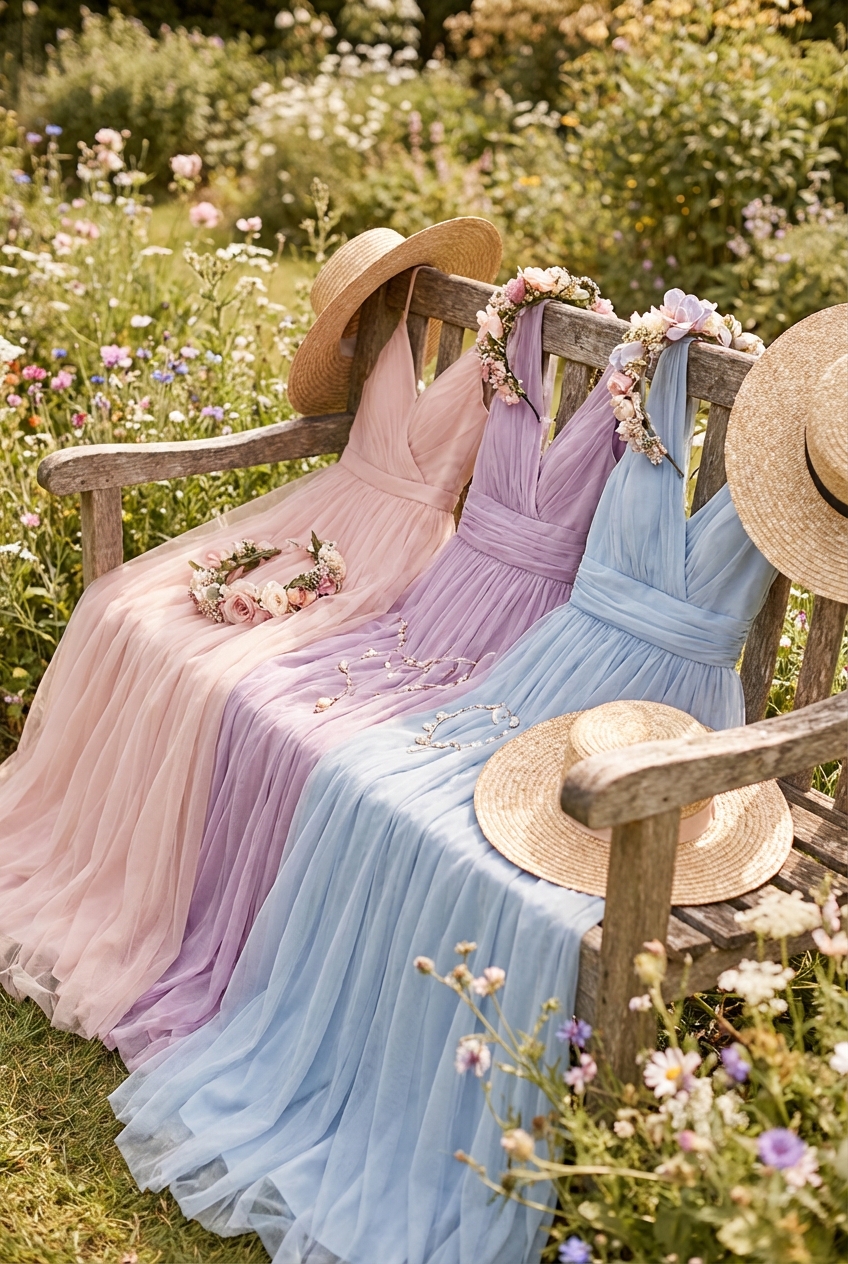
Pastel Gowns Perfect For Spring Garden Parties
There is a specific magic to a spring garden party that indoor events simply cannot replicate. As the season turns, the invitation to step onto a manicured lawn with a glass of champagne in hand signals the true beginning of the social calendar. It is a moment where high fashion meets nature, requiring a wardrobe that feels both ethereal and grounded.
However, styling for an outdoor venue presents a unique set of challenges that I have navigated for years with my private clients. The wrong fabric can wilt in humidity, and the wrong hemline can become a disaster after five minutes on damp grass. Styling a pastel gown is not just about choosing a pretty color; it is about architectural balance and material physics.
In this guide, I will walk you through the technical aspects of selecting the perfect pastel gown, from fabric weight to color theory. If you are looking for visual inspiration, don’t miss the curated Picture Gallery at the end of this blog post.
Selecting the Right Fabric for Outdoor Venues
When selecting a gown for a garden setting, the fabric choice is your most critical decision. Unlike an air-conditioned ballroom, a garden exposes you to variable elements like humidity, wind, and direct sunlight.
I always steer my clients toward natural fibers that breathe. Silk chiffon, organza, and high-quality cotton voiles are premier choices because they allow airflow. A heavy polyester satin might look structured in a photo, but it will trap heat against the body, leading to discomfort within an hour.
You must also consider the “movement factor” of the textile. Stiffer fabrics like taffeta can look jarring against a soft, organic garden backdrop. Softer fabrics that drape and sway with the breeze create a harmonious visual link between you and the environment.
Designer’s Note: The Humidity Factor
A lesson I learned early in my career involved a client wearing a heavy, beaded silk crepe to an afternoon tea. The fabric was too dense for the 75-degree day, and the weight of the beads caused the dress to stretch and drag by the end of the event. Always test the weight of the gown in your hand; if it feels heavy on the hanger, it will feel twice as heavy after two hours in the sun.
Navigating Color Theory and Skin Undertones
Pastels are the definitive palette for spring, but they are notoriously difficult to get right. The wrong shade of mint or blush can wash out a complexion, making you look tired rather than radiant.
If you have cool undertones (veins appear blue), lean toward icy pastels. Think powder blue, lilac, or a cool-toned peppermint green. These colors will contrast crisply against your skin rather than blending into it.
For warm undertones (veins appear green), you want pastels that have a golden or peach base. Apricot, butter yellow, and warm coral pinks are exceptional choices. These shades pick up the warmth in your skin and create a glow that looks stunning in natural sunlight.
Common Mistakes + Fixes
- Mistake: Matching the dress too closely to your skin tone, creating a “naked” look from a distance.
- Fix: Ensure there is at least two shades of difference between your skin and the fabric. If you are pale, go for a saturated pastel. If you have deep skin, almost any pastel will pop, but lighter creams create the highest contrast.
- Mistake: Ignoring the greenery. Wearing a true green dress can sometimes cause you to blend into the landscaping.
- Fix: If you love green, opt for a blue-green teal or a very pale celery shade to distinguish yourself from the grass and hedges.
Silhouette and Mobility on the Lawn
The architecture of your gown determines your comfort level. A garden party usually involves standing, walking on uneven turf, and potentially sitting on garden furniture which can be wrought iron or wicker.
I generally advise against mermaid or trumpet silhouettes for these events. These cuts restrict knee movement, making it difficult to navigate grassy knolls or stepping stones gracefully. You want to glide, not shuffle.
An A-line skirt or a soft column dress with a slit offers the best functionality. These shapes allow for a full range of motion. If the wind picks up, a fuller skirt has movement, whereas a tight skirt fights against you.
What I’d Do in a Real Project
- Check the Volume: I ensure the skirt has enough volume to not get caught between the legs while walking, but not so much that it knocks over champagne flutes.
- Sit Test: I make every client sit in a wicker chair while wearing the gown. If the fabric snags or pulls tight across the hips, we move to a different silhouette.
- Neckline Security: Garden parties often involve leaning forward to smell flowers or greet seated guests. I ensure the neckline stays flush to the skin during movement.
The Mathematics of Hemlines and Heels
This is the area where most technical errors occur. In an indoor setting, we tailor a gown to graze the floor (roughly 1/4 to 1/2 inch clearance). In a garden, that math changes completely.
Grass acts like a lush carpet that your heels sink into, effectively lowering your height by half an inch or more. If your hem is too long, it will drag through dirt, pollen, and dampness. The bottom of your expensive gown will be stained green within minutes.
I recommend tailoring a garden party gown to hit at the ankle bone or roughly 1.5 to 2 inches off the ground. This “floating” hemline looks intentional and elegant while protecting the fabric.
Pro-Tip: Heel Protectors
Never wear a stiletto heel to a garden party without a clear plastic heel protector. These small caps increase the surface area of the heel, preventing you from sinking into the dirt. Ideally, opt for a block heel or a wedge, which provides stability on uneven ground.
Undergarments and Structure
Pastel fabrics are often lighter and more sheer than their darker counterparts. This means your foundation garments are not just for support; they are essential for opacity.
White undergarments are a rookie mistake under pastel clothing. White acts as a highlighter, showing clearly through pale yellow or pink. You must choose a tone that matches your skin exactly, or go one shade darker.
You also need to consider the structure of the gown itself. Because we want breathable fabrics like chiffon, the dress might lack built-in boning.
If the dress is unstructured, a seamless bodysuit is often the best solution. It provides a smooth line from torso to hip, eliminating the risk of a visible waistband break that ruins the flow of the silk.
Accessorizing for Day-to-Night Transitions
Garden parties often start in the late afternoon sun and extend into the cooler evening. Your accessories need to serve a dual purpose: aesthetic elevation and thermal regulation.
Jewelry should be chosen based on the quality of light. Natural sunlight makes diamonds and crystals explode with sparkle, but it can also make heavy gold look garish. I prefer pearls or semi-precious stones (like aquamarine or morganite) for garden settings. They have a softer luster that complements the botanical surroundings.
You must have a plan for warmth. A heavy wool coat looks out of place over a pastel gown. Instead, source a cashmere wrap in a complementary neutral tone (oatmeal, cream, or dove gray).
Styling Checklist: The Final Edit
- Texture Check: Does the wrap clash with the dress texture? Cashmere over silk is lovely; heavy knit over lace can be too busy.
- Bag Choice: Leave the heavy leather tote at home. Opt for a structured wicker clutch or a silk pouch.
- Sunglasses: Essential for the first hour. Choose a frame color that matches the hardware of your jewelry (gold frames with gold jewelry).
Finish & Styling Checklist
Before you head out the door, run through this final checklist. These are the exact steps I use on photo shoots and with private clients to ensure the look holds up for the duration of the event.
The “High-End Expert” Inspection:
- Steam Perfection: Pastels show wrinkles aggressively. Steam the gown 30 minutes before wearing it, and let it cool completely so the fibers set.
- The Transparency Test: Stand in front of a window with the sun behind you. If you can see the silhouette of your legs through the skirt, you need a slip.
- Hem Safety: Walk five steps on a carpet. If you step on the front of your dress, it is too long for the grass. Pin it or tape it if you cannot tailor it in time.
- Secure the Hardware: Check that all hooks and eyes are tight. Garden parties are social; you will be hugging people. You don’t want a clasp to pop.
- Scent Application: Do not spray perfume directly on silk or chiffon, as the oils can leave grease spots on pastels. Spray it on your hair or collarbone instead.
FAQs
Can I wear black accessories with a pastel gown?
I generally advise against it for a garden party. Black can look harsh and “heavy” against soft pastels and fresh greenery. If you need contrast, opt for metallics like pewter, bronze, or a deep espresso brown. These ground the look without overpowering the delicate color of the dress.
What should I do if it rains the day before?
If the ground is soaked, you must rethink your footwear. Swap the open-toed sandals for a closed-toe block heel or a very elegant flat. Mud splatter is inevitable with sandals. You might also want to hold your dress slightly when walking; a wrist loop on the train of the gown is a lifesaver in these conditions.
Are prints acceptable, or should I stick to solids?
Prints are absolutely acceptable, provided the scale is correct. Large, loud geometric prints can feel out of place in a romantic garden. Soft floral prints, watercolor washes, or subtle gingham checks work beautifully. The key is that the print should look like it belongs in the environment.
Is it appropriate to wear a hat?
A hat is not only appropriate; it is practical chic. However, avoid stiff, heavy felt hats. Look for straw boaters, sinamay fascinators, or wide-brimmed sun hats with a ribbon tie. Ensure the brim is not so wide that you cannot converse comfortably with other guests.
Conclusion
Mastering the art of the pastel gown for a garden party is about respecting the environment as much as the fashion. It requires a delicate balance of practical engineering and stylistic flair. When you choose a fabric that breathes, a color that illuminates your skin, and a silhouette that allows you to move freely among the flowers, you achieve a level of elegance that feels effortless.
True style is not just about how the dress looks in a mirror; it is about how you live in it. By following these guidelines, you ensure that you remain comfortable, confident, and impeccably dressed from the first pour of champagne until the sun sets behind the hedges.
Picture Gallery


