
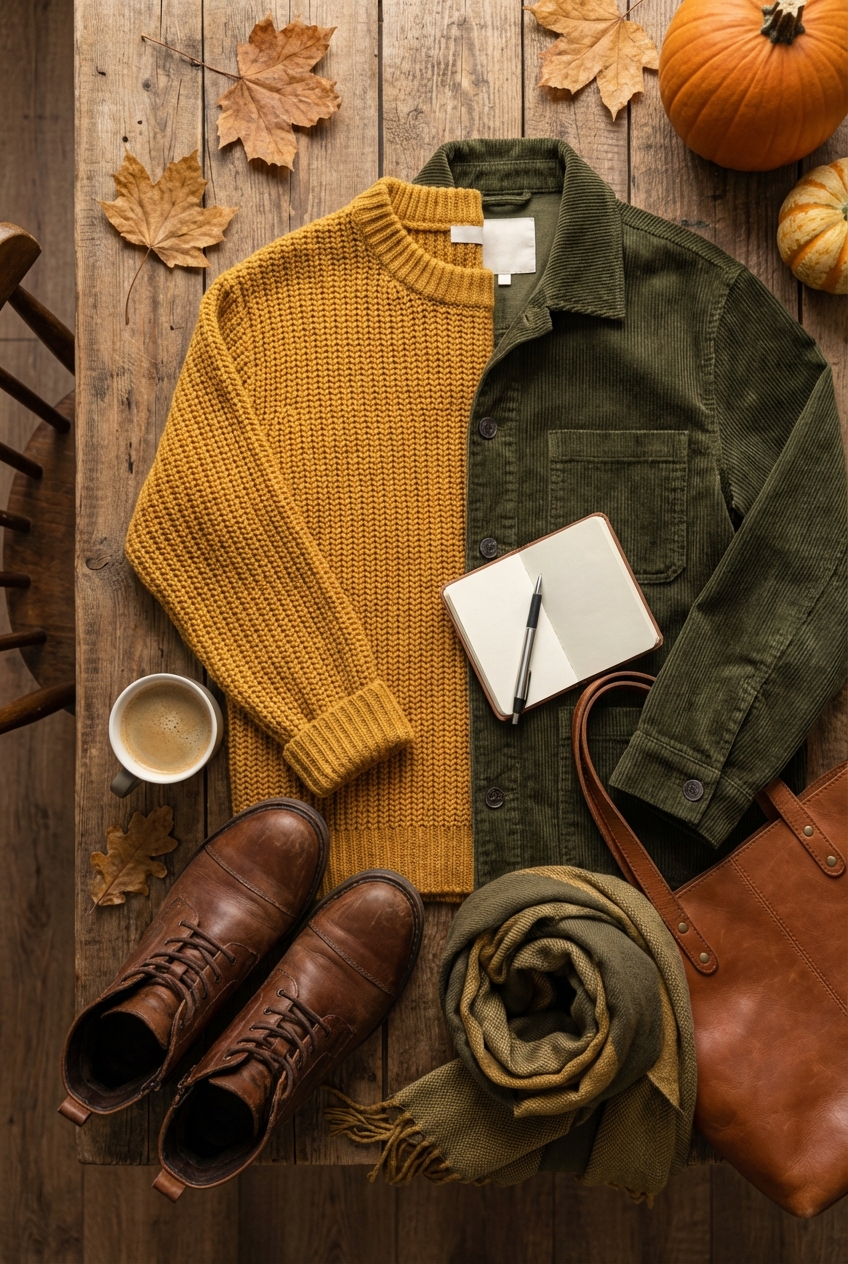
Perfect Mustard And Deep Olive For Fall Outfits A Rich And Earthy Combination
There is a specific moment in late September when the light changes. The harsh, direct sunlight of summer softens into a golden glow, and our wardrobes naturally yearn to reflect that shift. While many rush deeply into neutrals or straight to black, there is a far more sophisticated pairing that captures the essence of the season: mustard and deep olive.
This combination is rooted in nature, mirroring the turning leaves and the evergreen resilience of the forest. However, pulling it off requires a distinct eye for tone and texture. It is not enough to simply throw a yellow top on green pants; that can quickly veer into costume territory. The secret lies in selecting rich, saturated hues and pairing them with fabrics that have weight and history.
As a fashion stylist, I often see clients shy away from mustard because they fear it will wash them out, or they avoid olive for fear of looking too utilitarian. When balanced correctly, however, this duo is arguably the most luxurious palette for autumn. If you are looking for visual inspiration, check out the curated Picture Gallery at the end of this post.
Understanding the Color Theory: Saturation and Undertones
To master this look, you must first understand that “mustard” and “olive” are broad categories. In high-end fashion, specificity is everything. We aren’t looking for a neon yellow or a bright grassy green. We are looking for depth.
For the mustard element, aim for “spicy” tones. Think turmeric, ochre, or antique gold. These shades have a touch of brown or orange in them, which grounds the yellow and makes it universally more flattering than a primary lemon shade. A true mustard should feel warm and inviting, not acidic.
For the olive, look for “forest floor” shades. This means greens that have a significant amount of gray or brown in the mix. A deep army green or a moss shade provides a neutral backdrop that allows the mustard to pop without competing for attention.
Designer’s Note: The “One Shade” Rule
A common mistake I see is mixing too many variations of the same color. If you are wearing olive trousers, don’t wear an olive jacket in a slightly different discordant tone. Keep your olive blocks consistent, or vary the texture so significantly that the color difference looks intentional.
Selecting the Right Mustard for Your Skin Tone
- Fair with Cool Undertones: Look for mustards that lean toward “chartreuse” or cool gold. Keep this color on your lower half (skirts or trousers) and wear the olive near your face to avoid looking sallow.
- Medium with Warm Undertones: You hit the jackpot. rich, deep turmeric shades will make your skin glow. You can wear mustard head-to-toe or as a statement scarf.
- Deep Skin Tones: High-voltage marigold and bright mustard offer stunning contrast. You can handle the most saturated versions of these colors effortlessly.
Texture Play: The Key to Elevated Style
In interior design, we use texture to prevent a room from feeling flat. In fashion, the principle is identical. Because mustard and olive are earthy tones, they look most expensive when worn in natural, organic fabrics. A shiny polyester mustard blouse will always look cheap. A mustard cashmere sweater, however, looks like quiet luxury.
When styling this combination, I always aim for “high tactile value.” This means the clothes should look as good to touch as they are to look at. Fall is the season of weight, so lean into heavier grams of fabric.
Approved Fabric Pairings
- Wool and Silk: A heavy olive wool coat over a liquid silk mustard slip skirt creates a beautiful tension between structure and flow.
- Corduroy and Cotton: Olive wide-leg corduroys paired with a crisp mustard poplin shirt offer a scholarly, sophisticated vibe perfect for daytime.
- Leather and Knitwear: This is my favorite. Try an olive leather skirt (pencil or A-line) with a chunky, cable-knit mustard sweater. The sheen of the leather contrasts perfectly with the matte fluff of the wool.
The 60/30/10 Ratio for Outfits
A fail-proof way to construct an outfit without it looking like a uniform is to apply the 60/30/10 rule. This ensures balance and prevents the “bumblebee effect” or looking like a tree. You need a third neutral to cleanse the palette.
The Breakdown:
- 60% Dominant Color (Olive): Olive acts as your new neutral. Use it for the largest items, such as a trench coat, trousers, or a suit. It is less aggressive than black and softer than navy.
- 30% Secondary Color (Mustard): Use this for the “impact” piece. A sweater, a blouse, or a midi skirt. It draws the eye but doesn’t overwhelm the silhouette.
- 10% Accent (Cream, Cognac, or Navy): You need a breaker. Cream keeps the look fresh and light. Cognac leather reinforces the earthiness. Navy adds a dark, serious edge.
Common Mistake + Fix:
Mistake: Pairing a bright mustard top with bright olive pants and black shoes. The black is too harsh against these warm tones.
Fix: Swap the black shoes for dark brown, oxblood, or nude footwear. This maintains the warm temperature of the outfit.
Silhouette and Scale: What I’d Do in a Real Project
When I am styling a client for a fall lookbook, I focus heavily on silhouette. The richness of these colors can add visual bulk if the tailoring isn’t precise. Here is exactly how I structure the fit for different body types using this palette.
For the Petite Frame
If you are under 5’4″, large blocks of mustard can be overwhelming. I would style you in a column of olive—high-waisted olive trousers and a fitted olive turtleneck. This creates a long, unbroken vertical line.
I would then layer a cropped mustard jacket or a mustard scarf on top. This draws the eye upward to your face without cutting your vertical line in half. Keep handbag sizes small to medium to avoid distorting your scale.
For the Curvy Figure
Mustard attracts light (expansion), while deep olive absorbs light (contraction). Use this physics to your advantage. If you want to highlight your upper body, wear a mustard boat-neck sweater. If you want to minimize your hips, opt for dark olive wide-leg trousers.
The Measurement Rule:
When wearing wide-leg olive trousers, the hem should sit exactly 1/4 to 1/2 inch off the floor while you are wearing your shoes. Any shorter, and you lose the lengthening effect. Any longer, and the fabric buckles, looking messy.
Styling for Occasion: From Desk to Dinner
One of the greatest strengths of the mustard and olive combination is its versatility. It transitions seamlessly from professional environments to social gatherings, provided you adjust the formality of the garments.
The Professional Edit
For the office, structure is your best friend. A tailored olive pantsuit is a power move that feels modern compared to the standard gray or blue. Pair it with a mustard silk camisole or a fine-gauge knit shell underneath.
Keep jewelry gold and geometric. The warmth of gold connects the mustard and olive, creating a cohesive “suite” of colors. Avoid silver, which can clash with the warm undertones of mustard.
The Weekend Casual Edit
For Saturday markets or brunch, we want comfort that looks curated. My go-to formula is high-waisted denim (dark wash) paired with a mustard sweater and an olive utility jacket. The denim acts as a neutral base, allowing the jacket and sweater to interact playfully.
Alternatively, try an olive midi dress in a jersey or knit fabric, paired with mustard tights. This is a bold, retro-inspired look that works beautifully in October and November.
Outerwear and Accessories: The Finishing Touches
If you aren’t ready to commit to a full outfit of these colors, outerwear and accessories are the safest entry point. A coat is an investment piece, and an olive coat is just as versatile as a camel one, but far more interesting.
The Olive Trench or Overcoat
Look for a coat in a heavy melton wool or a waterproof gabardine. The shade should be “loden” or “military green.” This color hides city dirt exceptionally well and pairs with every pair of jeans you own. When wearing an olive coat, a peek of a mustard scarf or beanie adds just the right amount of personality.
Footwear Considerations
Shoe choice can make or break this color combination. As mentioned earlier, black can sometimes be too severe.
- Cognac/Tan Boots: The orange undertones in cognac leather harmonize beautifully with mustard. This is the most natural pairing.
- Burgundy/Oxblood: If you want more drama, deep red boots create a triad of autumn colors (green, yellow, red) that feels very high-fashion.
- Snakeskin/Animal Print: A neutral snake print bootie often contains grays and browns that tie olive and mustard together effortlessly.
Finish & Styling Checklist
Before you walk out the door, run through this mental checklist to ensure your mustard and olive look is polished and purposeful.
- Check the lighting: Look at your mustard garment in natural daylight. Does it make your skin look vibrant or tired? If tired, move the color away from your face (to a skirt or pants).
- Validate the fabric condition: Earth tones show pilling and lint more than black does. Ensure your olive wools are de-pilled and your mustard silks are steamed.
- The Third Piece Rule: Do you have a third element (belt, jacket, statement necklace) to finish the look?
- Gold Hardware: Ensure zippers, buttons, and jewelry are gold-toned to match the warmth of the palette.
- Shoe Gap: If wearing cropped olive pants and boots, ensure the boot shaft goes under the pant leg, or shows a deliberate amount of skin. Avoid the awkward 1-inch gap where socks might show.
FAQs
Can I wear this combination in the spring?
Yes, but you must shift the weights and shades. Move from heavy wools to linen and cotton. Shift the colors slightly lighter—think citron yellow and sage green. The current deep olive and spicy mustard are specifically coded for autumn and winter.
Does silver jewelry work with this?
It is not forbidden, but it is much harder to pull off. Silver is a cool metal, while mustard and olive are warm tones. Gold, brass, or copper naturally complement the underlying hues of the fabric. If you must wear silver, mix it with gold to bridge the gap.
Is mustard trendy or timeless?
Mustard is a “periodic classic.” It surges in popularity every autumn, particularly in retro-inspired or bohemian aesthetics. While it may not be a core neutral like navy, it returns faithfully every year, making pieces good long-term investments.
How do I wash mustard clothes without fading?
Red and yellow dyes are the most unstable and prone to fading. Always wash mustard garments inside out in cold water. If it is a natural fiber like cotton or linen, line dry it in the shade. Direct sunlight will bleach mustard fabric very quickly.
Conclusion
Embracing the combination of spicy mustard and deep olive is a declaration of confidence. It moves away from the safety of monochromatic neutrals and steps into a world of rich, painterly expression. It signals that you understand color, texture, and the rhythm of the seasons.
Remember that fashion is ultimately about how a garment makes you feel. These earth tones are grounding, comforting, and sophisticated. Start with a single accessory if you are hesitant, or dive in with a head-to-toe look if you are ready to make a statement. Trust the richness of the palette, invest in quality textures, and enjoy the warmth these colors bring to your fall wardrobe.
Picture Gallery


