
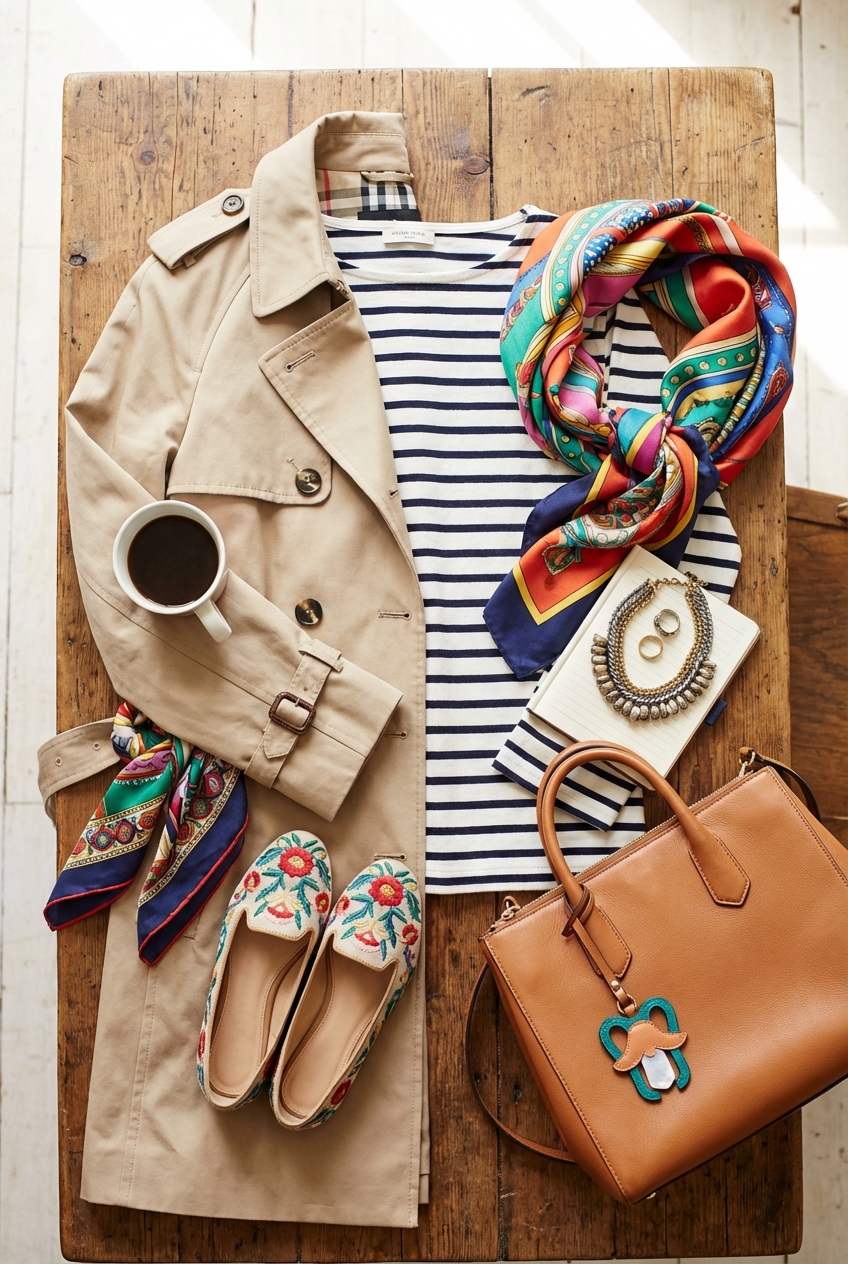
Personalizing Your Capsule Wardrobe Infusing Individual Style Into Basics
I remember sitting in a consultation with a client who had done everything “right” according to the internet. She had purged her closet, donated the trendy pieces she never wore, and invested in high-quality neutrals. She had the perfect white button-down, the tailored black trousers, and the classic trench. Yet, looking in the mirror, she told me she felt like she was wearing a uniform belonging to someone else. She looked polished, certainly, but she had styled herself into anonymity.
This is the most common pitfall of the capsule wardrobe journey. We get so caught up in the checklist of “must-haves” that we forget the wardrobe is supposed to serve the woman, not the other way around. A capsule wardrobe shouldn’t just be a study in efficiency; it needs to be a curated exhibit of your personal taste. It requires a shift in thinking from “does this match everything?” to “does this feel like me while matching everything?”
In this guide, we are going to break down exactly how to take a foundational wardrobe from sterile to signature. We will cover fabric choices, the crucial role of tailoring, and how to use accessories to change the narrative of an outfit. For visual inspiration on how to execute these combinations, make sure you look through the Picture Gallery at the end of the blog post.
The Foundation: Why Basics Often Feel Boring (and How to Fix It)
The primary reason a capsule wardrobe feels lifeless is often a lack of variation in “visual weight.” If every item in your closet is a flat cotton or a smooth wool blend in a mid-tone neutral, the eye has nowhere to rest. The outfit reads as one flat note rather than a melody.
To fix this, you need to apply the concept of “tension.” In high-end styling, tension is created by opposing forces. It is the friction between something structured and something fluid, or something rough and something shiny. This is what transforms a “shirt and pants” look into an “ensemble.”
The 80/20 Balance Rule
A sustainable personal style relies on an 80/20 split. Eighty percent of your capsule should be the workhorses—the denim, the tees, the blazers. The other twenty percent must be the “personality pieces.” These are the items that might not mix with everything, but they mix with enough to justify their place because of the joy they bring.
Designer’s Note:
A common mistake I see is clients trying to make their “personality pieces” too practical. If you love a sequined skirt or a velvet blazer, don’t try to buy it in black just to be safe. Buy it in the color or finish that excites you. If the rest of your capsule is neutral, that bold piece will automatically match everything anyway.
The Rule of Three: Texture, Silhouette, and Hardware
When you are limited in color, you must maximize texture. This is the oldest trick in the luxury fashion book. A monochromatic outfit in all black looks like a caterer’s uniform if the fabrics are identical. However, black leather trousers paired with a black cashmere sweater and a black silk camisole looks expensive and intentional.
Prioritizing Fabric Hierarchy
When building your basics, look for fabrics that reflect light differently. This adds depth without adding color.
- Light-Absorbing Fabrics: Wool, suede, cotton, linen, denim. These provide the grounding elements of your look.
- Light-Reflecting Fabrics: Silk, satin, patent leather, polished hardware. These provide the highlights.
For a personalized capsule, ensure you have at least one “light reflector” for every three “light absorbers.” If you are wearing jeans and a t-shirt (both absorbers), your third piece should have some sheen, perhaps a leather jacket or a glossy loafer.
Silhouette Play
Standard basics often rely on standard fits—straight leg, regular fit. To inject personality, play with volume. If you prefer a romantic aesthetic, opt for blouses with bishop sleeves rather than standard cuffs. If you prefer an architectural look, choose trousers with a sharp pleat and a wide leg rather than a standard slim fit. The item remains a “basic,” but the shape dictates the style.
Color Theory for the Minimalist: Beyond Beige and Black
A capsule wardrobe does not have to be colorless. In fact, relying solely on black, white, and beige can wash out many complexions. The goal is cohesion, not colorlessness.
Finding Your Neutral Anchor
Instead of black, consider navy, charcoal, or chocolate brown as your darkest neutral. These shades are often softer on the skin and feel more luxurious.
- Navy: Pairs beautifully with black, white, cream, and denim. It feels nautical and preppy.
- Charcoal: A softer alternative to black that pairs well with pastels and jewel tones.
- Camel/Tan: Adds warmth. Best for those with warm undertones.
The “Signature Color” Strategy
Choose one or two accent colors that make your heart sing and thread them through the capsule. This could be a specific shade of sage green or a deep burgundy. When you buy a scarf, a bag, or a statement blouse, stick to this specific shade. Over time, this color becomes part of your personal brand.
Common Mistake + Fix:
Mistake: Buying accent pieces in a variety of clashing prints and colors (one red top, one floral skirt, one green shoe).
Fix: Commit to a color palette. If your accent color is burgundy, ensure your red items lean cool and deep, not bright orange-red. This ensures your “fun” items can still be worn together.
The Tailor’s Secret: Customization is the Ultimate Luxury
Nothing kills personal style faster than an ill-fitting garment. A $2,000 suit that fits poorly looks cheaper than a $100 suit that has been tailored. Customization is where you take a mass-produced item and make it exclusively yours.
Key Measurements to Watch
- Sleeve Length: Sleeves should hit right at the wrist bone. If they extend over your hand, you look like you are wearing a hand-me-down. Showing the wrist bone (and a watch or bracelet) adds a delicate, feminine touch to heavy knitwear or blazers.
- Hem Breaks: For trousers, decide on your shoe height first. A “break” is where the fabric folds as it hits the shoe.
- No Break: The pant leg ends just above the shoe. This is modern, clean, and great for showing off footwear.
- Full Break: The pant leg has a deep fold. This is more traditional and relaxed but can look sloppy if not managed correctly.
- Waist Suppression: Boxy blazers are trendy, but if you have a defined waist, you might feel lost in them. Having a tailor nip in the waist of a jacket by just an inch can completely change your silhouette from “borrowed from the boys” to “custom made for her.”
Real-Project Checklist:
When I work with clients, we take every single new purchase to the tailor immediately. We don’t wait to “see how it fits.” We pin the sleeves, check the shoulders, and adjust the hems. Budget $20–$50 per item for this. It is the most important money you will spend.
Accessories: The High-Impact, Low-Commitment Pivot
Accessories are the variable variables in your capsule equation. They allow you to take the exact same base outfit (jeans and a white tee) and dress it for three different personalities.
The “Third Piece” Rule
This is a stylist standard. Your top is the first piece. Your bottom is the second piece. Your outfit is not complete without a third piece. This could be a blazer, a cardigan, a statement belt, a scarf, or a significant piece of jewelry. The third piece is where your style lives.
Jewelry as a Signature
Curating a “daily stack” of jewelry is a powerful way to personalize basics.
- The Minimalist: Small gold hoops, a thin pendant necklace, a classic tank watch.
- The Maximalist: Chunky chain links, stacked rings on multiple fingers, mixed metals.
- The Bohemian: Layered turquoise or amber beads, hammered metal cuffs, dangling earrings.
You can wear the same grey cashmere sweater every day, but changing from pearl studs to statement gold hoops changes the vibe entirely.
Shoe Strategy
Shoes dictate the formality of the capsule.
- Pointed Toe: Elongates the leg and reads sharp, aggressive, and corporate.
- Round/Almond Toe: Reads softer, more casual, and approachable.
- Square Toe: Reads trendy, architectural, and fashion-forward.
If your capsule feels too “business casual,” swap your pumps for a sleek pair of white leather sneakers or a chunky loafer.
Adapting for Lifestyle: Office vs. WFH vs. Evening
Your capsule must survive contact with reality. A personalized wardrobe fails if it is not practical for your actual daily life.
The “Life Pie” Chart
Draw a circle and divide it based on how you spend your time.
- 30% Corporate Office
- 20% Work From Home
- 15% Social/Dinner
- 35% Casual/Errands/Kids
Your wardrobe investment should match these percentages. Do not spend 50% of your budget on cocktail dresses if they represent 5% of your life.
The High-Low Mix for Versatility
Personal style often comes from breaking the rules of formality.
- Dress Down the Dressy: Wear your silk slip skirt (usually evening wear) with a chunky wool sweater and sneakers for the school run.
- Dress Up the Casual: Wear your vintage graphic tee (casual) under a sharp blazer with trousers and heels for a creative office environment.
Designer’s Note:
Durability matters. If you have pets or small children, avoid loop-knit sweaters that snag easily or delicate silks that water-stain. Opt for high-twist wools and mercerized cottons that look expensive but can take a beating.
Finish & Styling Checklist
Before you finalize your capsule or head out the door, run through this mental checklist to ensure the look is “you” and not just “clothes.”
The “What I’d Do in a Real Project” Styling Audit:
- Check the Proportions: Are you balancing a loose top with a fitted bottom, or vice versa? (Unless you are intentionally going for an oversized avant-garde look).
- The Cuff and Tuck: Have you “styled” the garment? A “French tuck” (front only) can define the waist. Rolling the sleeves of a blazer reveals the lining and looks relaxed.
- The Texture Check: Do you have at least two different textures present? (e.g., Denim + Cotton + Leather).
- The Focal Point: Where do you want the eye to go? If you are wearing statement shoes, keep the jewelry simple. If you are wearing big earrings, keep the neckline clean.
- The Comfort Test: Can you sit down, reach up, and walk briskly? If you are adjusting your clothes constantly, you will never look stylish, only uncomfortable.
FAQs
How do I stop my capsule wardrobe from feeling repetitive?
Lean into accessories. A silk scarf tied to a handbag, a change in lipstick color, or swapping a belt can make the same dress look completely different. Also, rotate your capsule seasonally so you aren’t looking at the same 30 items for 12 months straight.
Can prints exist in a capsule wardrobe?
Absolutely. The key is to treat the print as a neutral. Leopard print, Breton stripes, and subtle plaids often act as neutrals because they pair with almost any solid color. Stick to classic prints rather than trendy, loud graphics for longevity.
How many items should be in a personalized capsule?
There is no magic number. Some sources say 33, others say 50. I recommend focusing on “outfits” rather than “items.” If you can create 20 distinct outfits that you love and that cover all your lifestyle needs, it doesn’t matter if that takes 15 items or 45 items.
Is it worth investing in expensive basics?
Yes, but be strategic. Spend money on the items you wear closest to your skin (cashmere, silk) or items that bear weight (shoes, bags, coats). You can save money on items that are prone to staining or sweating, like white t-shirts, which need to be replaced more frequently anyway.
What if my personal style is “maximalist”?
A capsule can be maximalist! Your “basics” might be a pink suit and a floral blouse. The rules of a capsule are about cohesion and interchangeability, not about being minimal or boring. As long as your pink suit matches your floral blouse and your other items, it works.
Conclusion
Building a personalized capsule wardrobe is not about restriction; it is about refinement. It is the process of clearing away the clutter to make room for the pieces that actually make you feel like the best version of yourself.
By focusing on texture, mastering the fit through tailoring, and using accessories to tell your story, you transform simple garments into a signature look. Remember that this is an iterative process. Your style will evolve, and your capsule should breathe and grow with you. Start with the foundation, add your signature flourishes, and wear your basics with confidence.
Picture Gallery


