
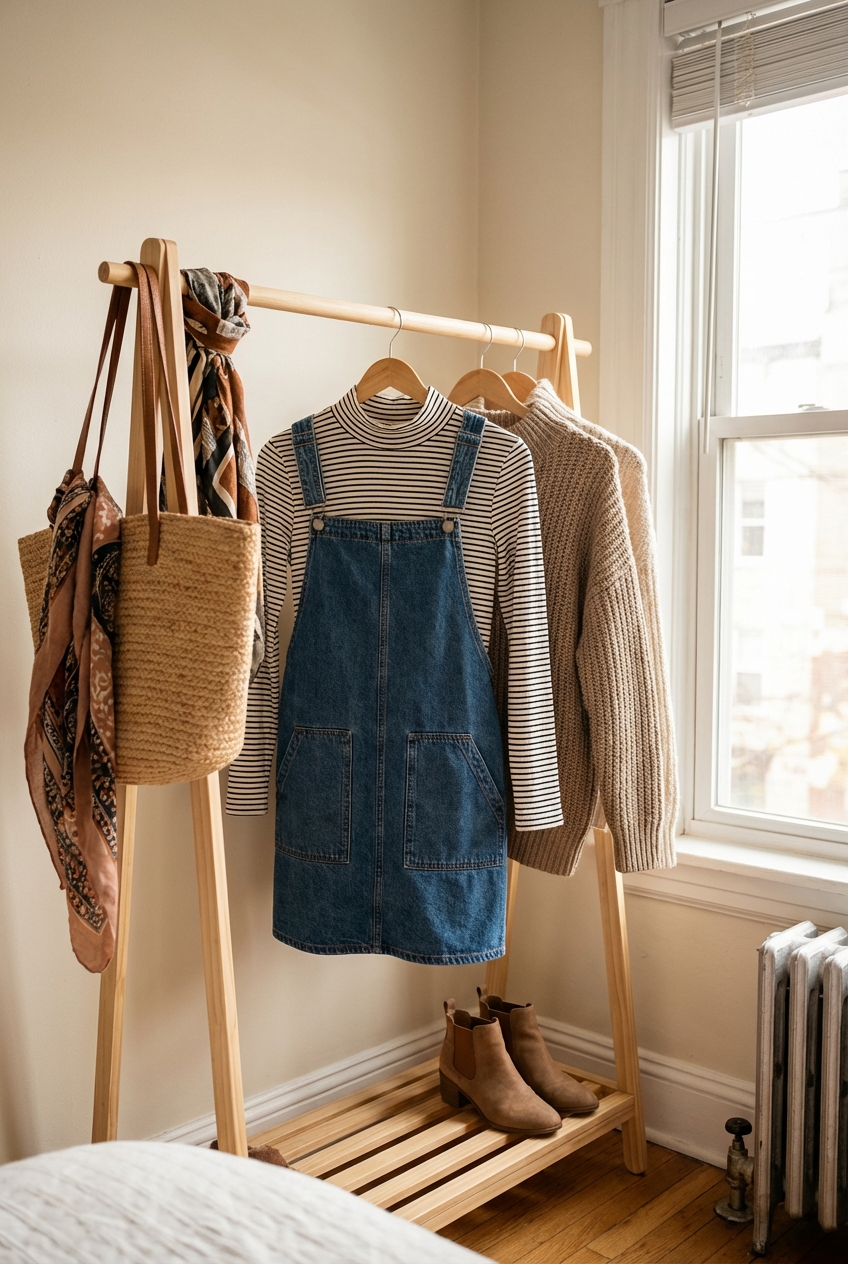
Pinafore Dresses For Layered Casual Looks
For years, many of my clients associated the pinafore dress strictly with school uniforms or juvenile aesthetics. However, when styled with intention and high-quality materials, the pinafore is actually one of the most sophisticated tools in a layered wardrobe. It offers a structured silhouette that allows you to showcase luxurious knitwear and tailored blouses without losing your shape.
I remember styling a client for a weekend press junket who wanted to feel “put together but comfortable” while transitioning between indoor interviews and outdoor photo ops. We landed on a camel suede pinafore layered over a charcoal cashmere turtleneck. The look was architectural yet soft, proving that this garment has graduated far beyond the playground. It creates a vertical line that elongates the body while offering practical warmth.
The secret lies in the interplay of textures and the precision of the fit, specifically where the straps sit and how the skirt falls relative to your boots. If you are looking for visual inspiration on how to execute these combinations, make sure to check out the curated Picture Gallery at the end of the blog post.
1. Analyzing the Architecture: Silhouette and Fit
Before you even look at fabric, you must understand the architecture of the dress. In high-end fashion, we look at the “negative space” created by the pinafore, specifically the depth of the V-neck or the width of the square bib. This determines what base layer you can wear.
A deep V-neck pinafore is universally flattering because it draws the eye vertical, creating a lengthening effect. This cut is ideal for showcasing a statement blouse with a pussy-bow neck or interesting collar details. Conversely, a high square-neck pinafore requires a streamlined base, like a fitted crew neck, to avoid looking boxy or cluttered near the face.
The armholes are the most critical technical measurement. In my design work, I often see off-the-rack pinafores with armholes cut too high, which causes bunching when you layer a sweater underneath. You need at least 2 to 3 inches of clearance below the armpit to accommodate a medium-weight knit without restricting movement.
Stylist’s Note: The Strap Test
One specific issue I encounter during fittings is straps that slide off the shoulders. This usually happens because the back yoke is too narrow for the client’s shoulders. When shopping, check the back construction. A “racerback” or cross-back style will always stay in place better than parallel straps. If you fall in love with parallel straps, have a tailor add a small horizontal “stay” or tack the straps to the dress at the perfect height for your torso length.
Common Mistakes + Fixes
- Mistake: Buying a pinafore that fits perfectly against the skin but is too tight for layers.
- Fix: Always bring your thickest intended base layer (like a cable knit sweater) to the fitting. You should be able to pinch one inch of fabric at the waist when wearing the sweater.
2. Material Matters: Selecting Fabrics with Weight
The difference between a casual look that reads “chic” versus “cheap” is almost always the gram weight of the fabric. For a structured look, the pinafore needs to be heavier than the shirt underneath it. This is a rule of physics in styling: the outer layer must anchor the inner layer.
I steer my clients toward natural fibers with density. Wool bouclé, heavy-wale corduroy, and genuine leather are top-tier choices. These materials have enough stiffness to hold their shape, meaning they won’t ripple or show the outline of the buttons on your shirt underneath. Flimsy synthetics or thin cotton blends will cling to your base layer, creating friction and static.
Denim is a classic choice, but for an elevated aesthetic, look for rigid denim with zero to 1% elastane. Stretch denim tends to look too casual and can lose its architectural shape after a few hours of wear. A dark indigo rigid denim pinafore functions almost like a neutral suit separates—it is polished enough for a creative office environment.
Textural Interplay
Mixing textures is essential for a rich, layered look. If your pinafore is a matte wool flannel, pair it with a silk blouse to reflect light. If the pinafore is leather or velvet, a matte cotton or cashmere layer underneath provides the necessary balance. Avoid pairing two high-shine fabrics together, as it can look costume-like.
3. The Art of the Base Layer
The shirt you choose to wear underneath is not an accessory; it is the foundation. The most common question I get is about sleeve volume. Can you wear a balloon sleeve under a pinafore? The answer is yes, but only if the pinafore straps are set wide enough on the shoulder to accommodate the gathering of the sleeve head.
For a sleek, modern look, a thin merino wool turtleneck is the gold standard. It creates a continuous line from the neck down to the wrist, allowing the dress to be the focal point. This is particularly effective for petite clients who want to avoid looking “cut up” by too many horizontal lines.
If you prefer a button-down shirt, pay attention to the collar. A large, stiff collar can fight with the straps of the pinafore. I prefer collarless “grandad” shirts or soft silk blouses that drape organically. If you do wear a collar, ensure the points of the collar are tucked neatly inside the pinafore bib or stand up purposefully.
Stylist’s Note: The Bunching Battle
Nothing ruins a silhouette faster than fabric bunching at the waist. To prevent this, I use a bodysuit as the base layer whenever possible. Bodysuits ensure a perfectly smooth tuck that won’t ride up throughout the day. If a bodysuit isn’t an option, use the “military tuck” method: fold the excess fabric of your shirt to the sides and tuck it into your tights or shapewear before putting on the pinafore.
4. Footwear: Grounding the Silhouette
Because pinafores often have shorter hemlines (typically falling anywhere from mid-thigh to just below the knee), your choice of footwear dictates the formality of the outfit. The goal is to manage the proportion of exposed leg.
For a mini-length pinafore, knee-high boots are my go-to recommendation. They reduce the amount of skin showing, which makes the shorter hemline feel more appropriate for daywear. A flat riding boot creates a preppy, classic vibe, while a block-heel boot adds a retro 60s influence. The gap between the top of the boot and the hem of the dress is a crucial ratio; 3 to 5 inches of space is usually the sweet spot.
If you are styling a midi-length pinafore, ankle boots or heavy loafers work best. With loafers, you must consider your socks or tights. A chunky loafer paired with a sheer black tight creates a sophisticated, academic aesthetic. Avoid delicate ballet flats with heavy pinafore fabrics like corduroy, as the shoe will look too visually light to support the weight of the outfit.
Legwear Logistics
Opaque tights (80 denier or higher) are non-negotiable for winter layering. They create a solid column of color that elongates the leg. If you are adventurous, a ribbed tight adds texture that complements a smooth leather pinafore. I advise against sheer nude hose; they tend to look dated with this specific garment.
5. Seasonal Transitions and Outerwear
One of the biggest challenges with pinafores is layering a coat on top. Because the pinafore itself is a layer, adding a third layer (a coat) can restrict movement if you aren’t careful about sizing.
When transitioning from fall to winter, the coat length is paramount. Your coat should either be significantly shorter (like a cropped shearling jacket that hits at the waist) or longer than the pinafore hem. A coat that ends at the exact same length as the dress creates a confusing, bulky visual line.
For colder months, I love using the pinafore as a “vest.” You can wear a heavy knit sweater under a wool pinafore, effectively doubling your warmth on the torso. In this scenario, the pinafore acts as a core warmer, similar to a gilet but much more stylish.
Common Mistakes + Fixes
- Mistake: Wearing a cardigan over a pinafore.
- Fix: Cardigans usually lack structure and clash with the straps of the dress. Opt for a structured blazer or a trench coat instead. The straight lines of a blazer complement the geometric lines of the pinafore.
6. Accessorizing Without Overcrowding
A pinafore dress already has a lot of hardware and lines—straps, buckles, bibs, and pockets. Therefore, jewelry should be kept minimal and intentional. Avoid long pendant necklaces that will bounce against the bib or get tangled in the hardware.
Focus on earrings. A bold gold hoop or a geometric stud draws attention up to your face and balances the heavy fabric below. If you are wearing a turtleneck base layer, a short, chunky chain necklace worn on the outside of the turtleneck works beautifully.
Belts can be tricky. Many pinafores have a loose, shift-like fit. If you want to define your waist, you can belt the dress, but ensure the belt is substantial. A thin, flimsy belt will get lost in the heavy fabric. However, I often advise clients to embrace the A-line shape and skip the belt entirely for a more contemporary, effortless look.
Bag Selection
Crossbody bags can be difficult with pinafores because the strap of the bag fights with the strap of the dress. A top-handle bag or a structured tote is a cleaner choice. It keeps the silhouette of the torso uninterrupted.
Finish & Styling Checklist
When I am finalizing a look for a client, I run through this mental checklist to ensure the outfit is cohesive and functional. Use this “What I’d Do” list for your own wardrobe.
The “What I’d Do” Real Project Checklist
- Check the Armhole Gap: Raise your arms to shoulder height. If the side of the pinafore exposes your bra or too much of the base layer’s side seam, the fit is off. It should be close but not constricting.
- The Sit Test: Sit down in the dress. Does the fabric pull tight across the hips? Rigid fabrics like leather and thick denim do not stretch. If it creates “whiskering” (horizontal stress lines) across the lap, size up and tailor the waist.
- Fabric Friction: Rub the pinafore fabric against the base layer. If it grabs or sticks (common with tights and unlined wool skirts), wear a slip. A simple anti-static slip is the unsung hero of layering.
- Hardware Match: If the pinafore has silver buckles, try to match your bag hardware and jewelry to silver. Mixing metals can work, but matching them creates a cleaner, more expensive look.
- Hemline Audit: Check the hem length in relation to your coat. Ideally, the coat covers the dress entirely, or the dress peeks out by no more than 2 inches.
FAQs
Can I wear a pinafore to a professional office?
Yes, but fabric choice is key. Opt for a pinafore in suit-like materials such as wool blend, tweed, or black crepe. Layer it over a crisp white button-down or a silk blouse. Keep the hemline at the knee or below, and pair it with loafers or block heels rather than casual boots.
Am I too old for a pinafore dress?
Absolutely not. The “schoolgirl” connotation comes from pleated, plaid, mini-skirt versions. To mature the look, choose a midi-length silhouette (hitting the calf) in luxe fabrics like leather, suede, or monochromatic wool. A deep V-neck style is generally more sophisticated than a square bib style.
How do I stop my sweater from bunching up under the dress?
The best solution is to wear thinner, higher-quality knits like cashmere or merino wool rather than chunky cable knits. If you must wear a thicker sweater, choose a pinafore with a “drop waist” or a looser shift fit rather than one that is fitted at the natural waist.
Can I wear a pinafore in the summer?
Yes. Look for linen or cotton-twill pinafores. Instead of a long-sleeve knit, layer them over a fitted white t-shirt, a tank top, or even a bandeau if the side coverage allows. Pair with slide sandals or canvas sneakers.
Conclusion
The pinafore dress is a testament to the power of layering. It allows you to build an outfit that is visually interesting, practically warm, and texturally rich. By focusing on architectural fit, investing in high-density natural fabrics, and mastering the proportions of your base layers and footwear, you can elevate this piece from casual to high-fashion.
Remember that the success of this look relies on the quality of the individual components. A well-cut wool pinafore over a perfect cashmere sweater is a combination that transcends trends. It creates a uniform that is both functional for a busy lifestyle and polished enough for nearly any room you walk into.
Picture Gallery


