
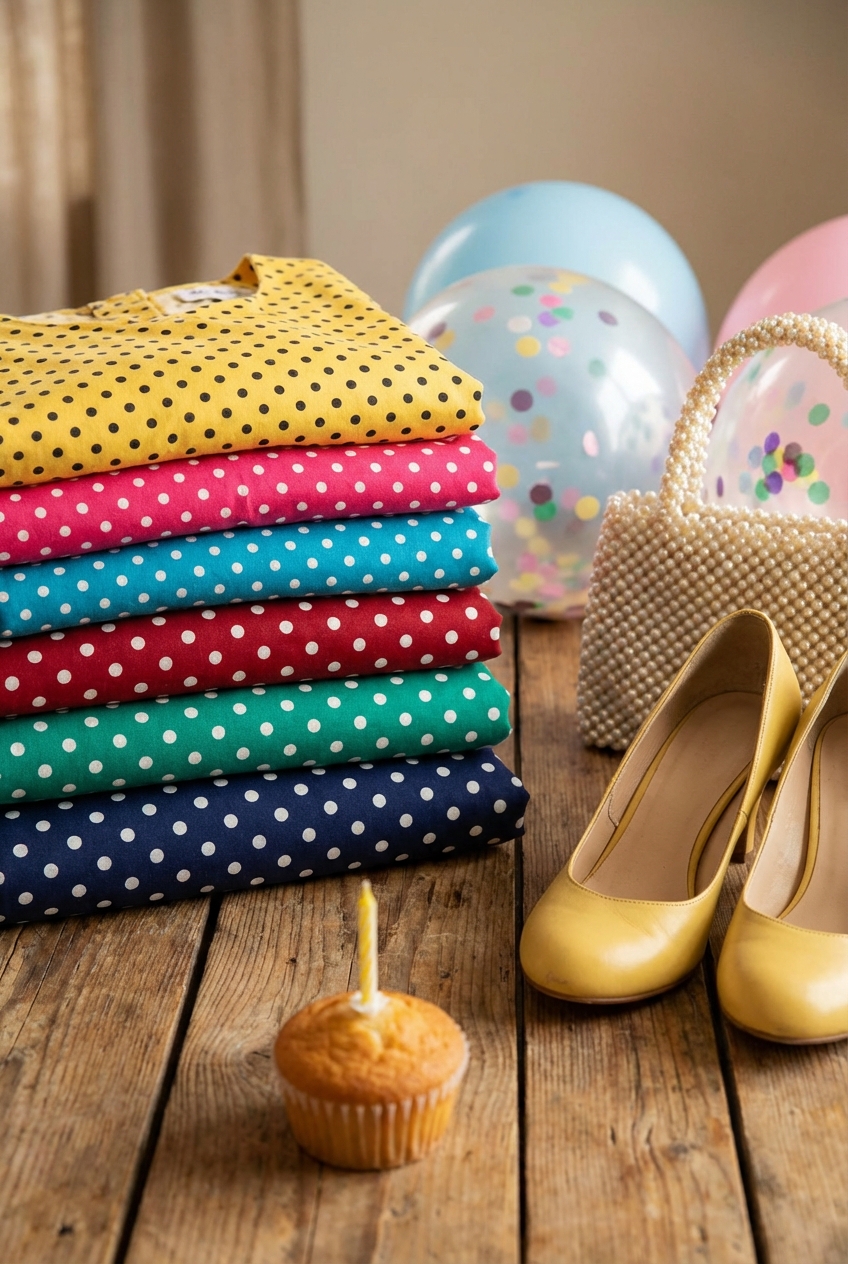
Playful Polka Dot Dresses For Retro Birthday Parties Embracing Whimsy And Nostalgia
There is something undeniably magnetic about a polka dot dress. In my years styling high-end clientele for events ranging from garden galas to milestone birthday bashes, I have found that few patterns evoke joy quite like the humble dot. It captures a spirit of playfulness that fits perfectly with the celebration of another year around the sun.
I recently worked with a client celebrating her 40th birthday who felt torn between wanting to look sophisticated and wanting to embrace a fun, youthful theme. We landed on a 1950s-inspired silhouette featuring navy and white polka dots. The result was transformative; she didn’t just look elegant, she looked like the life of the party. The pattern invites conversation and instantly sets a festive tone without saying a word.
Navigating retro fashion without looking like you are wearing a Halloween costume requires a delicate balance of fit, fabric, and styling. It is about channeling the era, not mimicking it entirely. If you are looking for visual inspiration on how to execute this look, be sure to check out the curated Picture Gallery included at the end of this blog post.
The Psychology and Scale of the Polka Dot
When selecting a dress for a retro-themed birthday, the first styling decision involves the scale of the pattern. In the fashion world, we treat pattern scale much like an interior designer treats furniture size; it changes the perception of volume and mood.
Large, coin-sized dots (often called coin dots) are bold, graphic, and inherently whimsical. They draw the eye and create a focal point. However, they can also overwhelm a petite frame if not balanced correctly. If you choose a large print, the silhouette of the dress should be simpler to avoid visual clutter.
Conversely, small dots (pin dots or Swiss dots) read almost as a solid color from a distance. They offer a more subtle, textured look that leans towards sophistication. For a birthday party where you want to stand out as the guest of honor, I generally recommend a medium-scale dot—about the size of a dime or nickel—with high contrast. This size photographs beautifully and reads clearly as “retro” without becoming clownish.
Designer’s Note: The Spacing Rule
One aspect many people overlook is the negative space between the dots. In high-end design, we look for “breathing room” in a pattern.
- Densely packed dots: These create a high-energy, busy look. This works well for shorter, mod-style 60s shifts but can be dizzying on a full-length gown.
- Sparse dots: These feel more elegant and airy. This spacing is ideal for full-skirted 50s swing dresses as it allows the fabric folds to not disrupt the pattern too aggressively.
Selecting the Era-Appropriate Silhouette
“Retro” is a broad term that can encompass several decades, but for polka dots, we usually look to the 1950s and the 1980s. For a birthday party, the 1950s “New Look” silhouette is universally flattering and celebratory. It emphasizes the waist and allows for movement, which is essential if you plan on dancing.
The classic fit-and-flare dress is the gold standard here. This involves a fitted bodice that hits exactly at the natural waist (the smallest part of your torso), exploding into a full circle or A-line skirt. This structure creates an hourglass shape regardless of your natural body type.
Fit Constraints and Measurements
When sourcing these dresses, pay close attention to the bodice length.
- Petite frames: Vintage reproductions often have longer torsos. You may need to take up the shoulder straps to ensure the waist seam hits your actual waist, not your hips.
- Bust considerations: Look for dresses with “darts” or princess seams in the bust. Cheaper garments often rely on stretchy fabric to accommodate curves, but a high-quality retro dress should have structural tailoring to hold the shape.
Fabric Choice: Structure vs. Drape
The fabric composition dictates how the dress moves and, more importantly, how comfortable you will be throughout the event. In my experience styling events, the biggest mistake clients make is choosing 100% synthetic costumes that trap heat.
For a structured 50s look, you want fabrics that have “memory” and hold a shape. Cotton sateen is my top choice for birthday parties. It has a slight sheen that looks dressy, it breathes well, and it is stiff enough to hold the volume of a full skirt without collapsing.
If you prefer a drapier, 1940s tea-dress aesthetic, look for rayon or high-quality viscose. These fabrics skim the body and offer a fluid movement that feels very romantic. However, be aware that rayon can cling, so proper undergarments are non-negotiable.
Common Mistakes + Fixes
- Mistake: Buying a dress made of thin, unlined polyester.
Fix: If you love the print but the fabric is flimsy, wear a full slip or a petticoat underneath. This adds the necessary weight and opacity to make the garment look expensive. - Mistake: Ignoring fabric stretch.
Fix: For a fitted bodice, look for a blend with 3-5% elastane (spandex). This allows you to eat cake and breathe comfortably while maintaining that snatched waist look.
Color Theory for a Nostalgic Palette
While black and white is the classic choice, a birthday party is an opportunity to embrace color. The color you choose shifts the “era” vibe significantly.
Navy and white is nautical and preppy, perfect for summer garden parties or coastal venues. Red and white reads very “pin-up” and confident; it commands attention. For a softer, more whimsical approach, I love recommending pastels like mint green, powder blue, or butter yellow with white dots. These shades evoke an ice cream parlor nostalgia that is incredibly charming.
What I’d Do in a Real Styling Session
If I were styling a client for an evening indoor party, I would pivot to a chocolate brown and white dot (very Julia Roberts in Pretty Woman) or a deep emerald green with black dots. These darker combinations feel more formal and evening-appropriate while keeping the playful pattern.
Styling the Look: Accessories and Footwear
The accessories make or break the retro illusion. The goal is to nod to the past, not to look like you walked off a movie set.
Shoes:
Avoid sky-high stilettos, which can look too severe against a playful print. Instead, opt for a block heel or a kitten heel. A Mary Jane style or a classic pump works beautifully. If the dress is busy, keep the shoe solid. A red shoe with a black and white dot dress is a cliché for a reason—it works, but try a bright yellow or cobalt blue shoe for a fresher, modern twist.
Belts:
Most retro dresses come with a flimsy self-fabric belt. Toss it. Replace it with a structured leather belt or a wide elastic cinch belt. This defines the waist and elevates the perceived quality of the dress. Match the belt to your shoes or bag to create a cohesive “bookend” effect.
Jewelry:
Polka dots are a busy pattern. Keep jewelry simple. A pearl stud or a small gold hoop is often enough. If the neckline is open (like a sweetheart or boat neck), a short strand of pearls or a delicate pendant sits nicely. Avoid heavy, chunky statement necklaces that compete with the print.
Hair and Makeup: The Finishing Polish
You cannot wear a vintage-inspired dress with messy, “just woke up” hair. The disconnect is too jarring. The hair needs a level of grooming to match the structure of the clothes.
This does not mean you need complex victory rolls. A sleek high ponytail with a ribbon, soft brushed-out waves, or a polished chignon are perfect accompaniments.
For makeup, a cat-eye liner is the traditional pairing, but it can feel expected. I often suggest a fresh, dewy skin look with a bold lip. If you are wearing a red dress, match the lip color exactly. If you are wearing pastels, a soft coral or pink lip keeps the look airy and light.
Undergarments: The Hidden Foundation
We cannot discuss retro fashion without discussing foundation garments. The silhouettes of the past were built on structure that modern bodies aren’t used to providing on their own.
If you are wearing a full skirt, consider a petticoat. You don’t need a massive, scratching crinoline. A soft, chiffon petticoat adds just enough volume to push the skirt away from your legs, keeping you cool and showcasing the full pattern of the fabric.
For the bodice, a long-line bra or a high-waisted shaper brief can smooth out the transition between the torso and the hip, ensuring the zipper lies flat. This is particularly important for side-zipper dresses, which are common in vintage reproductions and can ripple if the fit isn’t perfect.
Finish & Styling Checklist
Before you head out to the party, run through this final check to ensure the look is polished and practical.
- Check the Transparency: Stand in front of a window or bright light. If you can see the outline of your legs through the skirt, add a slip.
- Sit Test: Sit down in a chair for 2 minutes. Does the waistband dig in painfully? If so, the dress is too tight for a 4-hour party.
- Secure the Hem: If the dress is vintage, check the hemline stitching. It is often the first thing to unravel.
- De-wrinkle: Steam the dress, don’t iron it, especially if it’s a synthetic blend. Steaming gives a softer finish and avoids shine marks.
- Balance the Accessories: Look in the mirror. If you are wearing earrings, a necklace, a belt, and bracelets, take one item off.
FAQs
Can I wear polka dots to a formal evening birthday party?
Absolutely. Look for materials like silk, satin, or velvet (burnout velvet dots are stunning). Choose smaller dots and darker background colors like black, navy, or burgundy. Floor-length silhouettes also elevate the formality.
How do I mix prints with polka dots without looking crazy?
Mixing prints is advanced styling. The safest route is to mix a geometric print (like dots) with an organic print (like florals). Keep them in the same color family. For example, a black and white polka dot dress with a scarf featuring black and white roses.
Are polka dots appropriate for all ages?
Yes. It is a common misconception that dots are “too young.” The maturity of the look depends on the cut of the dress and the quality of the fabric. A well-tailored wrap dress in a navy dot is incredibly sophisticated for women in their 50s, 60s, and beyond.
What do I do if the dress feels too “costumey”?
Modernize the styling. Instead of retro hair and red lips, wear your hair in a messy top knot, skip the eyeliner, and wear a denim jacket over the dress. Pair it with white leather sneakers instead of heels. This grounds the look in the present day.
How do I wash a cotton sateen retro dress?
Always check the label, but generally, cold water wash on a delicate cycle is safe. Hang to dry—never put it in the dryer, as heat breaks down the elastic fibers and fades high-contrast colors.
Conclusion
Choosing a playful polka dot dress for a retro birthday party is about more than just following a theme; it is about embracing a spirit of celebration. These dresses are designed to move, to take up space, and to make the wearer feel vibrant.
By paying attention to the scale of the dots, the quality of the fabric, and the balance of your accessories, you can curate a look that feels both nostalgic and refreshingly modern. Whether you opt for a bold 50s swing dress or a sleek 60s shift, the key is confidence. Wear the dots; don’t let the dots wear you.
Picture Gallery


