
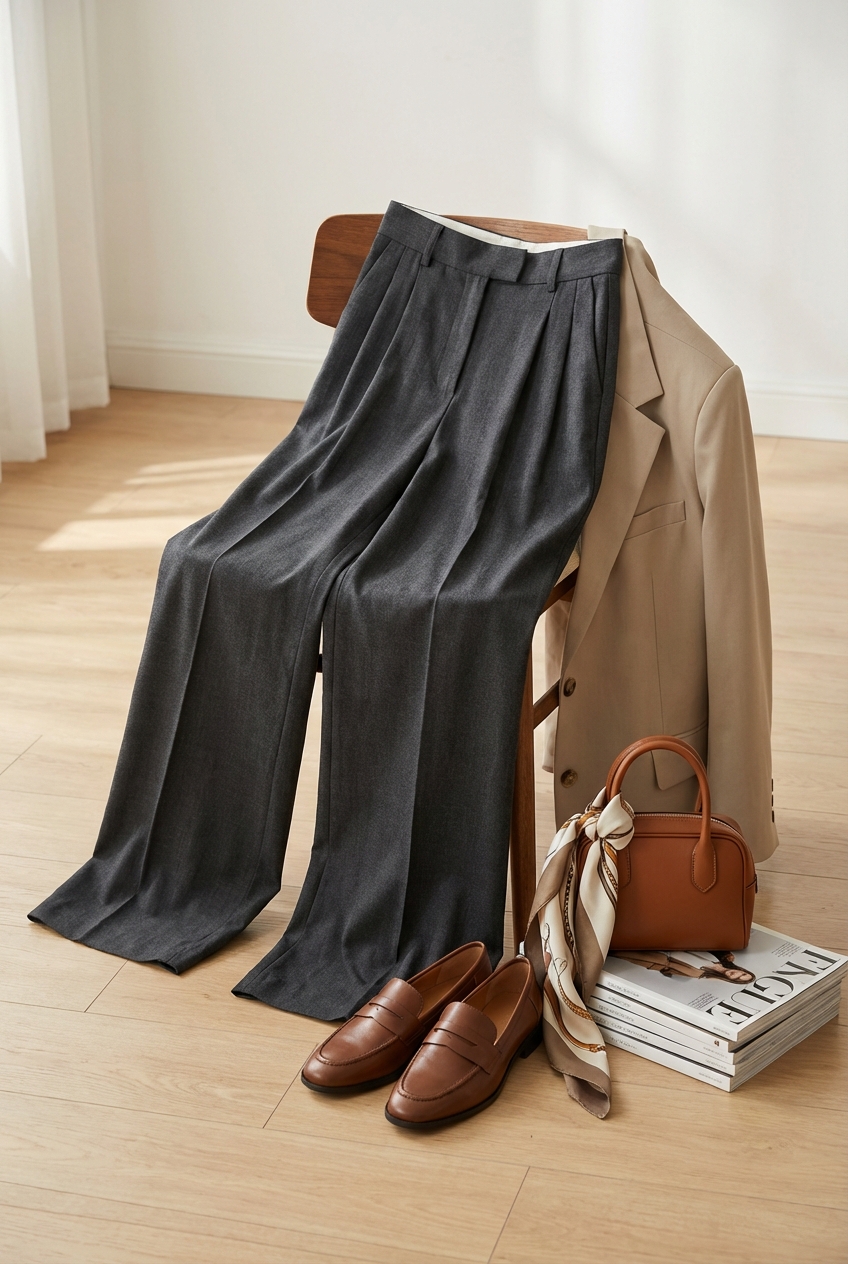
Pleated Trousers With Modern Tailoring
For years, pleated trousers suffered from a bad reputation, often associated with stiff 1980s office wear or ill-fitting uniforms. However, in the current high-fashion landscape, the pleated trouser has returned as the ultimate symbol of effortless elegance and power dressing. When tailored correctly, pleats add volume exactly where you want it and create a fluid, lengthening line that flatters a wide variety of body types.
I remember styling a client for a press tour who was absolutely terrified of adding volume to her hips. We moved her from skinny cuts to a high-waisted, double-pleated wool trouser, and her posture immediately changed. She didn’t look wider; she looked taller, more statuesque, and infinitely more comfortable.
The secret lies entirely in the tailoring specifications and understanding how fabric drape interacts with the fold of the pleat. If you need immediate inspiration on how to style this look, you can skip straight to our curated Picture Gallery at the end of this post.
1. Understanding the Anatomy of the Pleat
To master this look, you must understand that not all pleats are created equal. The direction and depth of the fold dictate how the pant sits on your body. Modern tailoring generally relies on two specific styles: forward pleats and reverse pleats.
Forward pleats open inward toward the zipper seam. This is a classic English tailoring technique that keeps the front of the trouser looking flat and clean. It is exceptionally slimming because the fabric folds essentially hide the volume until you move or sit.
Reverse pleats open outward toward the pockets. This is the more common, Italian-style cut you will find in most ready-to-wear collections. This style offers more comfort and room through the hips, giving that relaxed, “borrowed from the boys” aesthetic that is currently trending.
Designer’s Note: The “Smile” Test
In my years of fitting clients, the number one dealbreaker is the “smiling” pleat. If you are standing still and the pleats are pulling open—looking like a stretched smile—the trousers are too tight in the hip or the rise is too short. A pleat should remain closed and flat when you are standing in a neutral position.
2. Fabric Weight and Drape
The success of a pleated trouser is 80% dependent on the fabric choice. Unlike denim or flat-front chinos, pleated pants require a material that can hold a crease while still moving fluidly. If the fabric is too light, the pleats will balloon out; if it is too stiff, they will protrude awkwardly.
For the best investment, look for worsted wool or high-twist wool gabardine. These fabrics have a natural spring to them. They allow the pleat to snap back into place after you have been sitting at a desk or in a car. The weight should generally be between 10 and 12 ounces for year-round wear.
Linen is a beautiful option for summer, but it requires a different mindset. Linen pleats will never stay crisp. You have to embrace the rumpled, organic look. If you choose linen, ensure the trousers are lined to the knee, or the friction against your skin will distort the shape of the pleats within an hour.
Common Mistakes + Fixes
- Mistake: Buying jersey or thin synthetic blends with pleats.
- Fix: Avoid knits completely for this silhouette. The fabric lacks the structural integrity to support the fold, resulting in a lumpy midsection rather than a crisp line.
- Mistake: ignoring the lining.
- Fix: Check that pockets are lined with a sturdy cotton or silk blend. If the pocket bags are flimsy, the pleats will collapse inward.
3. The Rise and Waistband Placement
Modern pleated trousers almost exclusively require a high rise. The geometry of a pleat needs vertical space to drape properly. If the waistband sits on your hips, the pleats will flare out immediately, creating unflattering width.
The waistband should hit at your natural waist—the smallest part of your torso, usually an inch or two above the belly button. This creates a long, continuous line from the waist to the floor. This elongation is what makes the modern wide-leg silhouette so elegant rather than sloppy.
When measuring for fit, pay attention to the “rise” measurement. For a standard size 6 or 8, a rise of 11 to 12 inches is usually the minimum for a true high-waist fit. If you are tall, look for a rise of 13 inches or more to ensure the crotch seam doesn’t pull when you sit.
What I’d do in a real project:
When tailoring pants for a client, I always have them sit down in the fitting room. A high-waisted pleated trouser will expand when you sit. I ensure there is at least 0.5 to 1 inch of ease in the waistband. If it cuts in when seated, we let the waist out slightly; otherwise, the tension will distort the pleats at the front.
4. Mastering the Hemline and Break
The interaction between the hem of your trousers and your shoe is critical. With flat-front pants, you have more leeway, but pleated trousers involve more fabric volume. If the length is wrong, you risk looking like you are drowning in cloth.
There are two modern ways to handle the hem: the “Full Break” (or puddle) and the “No Break” crop. The “Full Break” is very editorial. The trousers are hemmed to graze the floor while you are wearing shoes, creating a slight pool of fabric over the foot. This elongates the leg but is high-maintenance for city walking.
The “No Break” look is sharper and more practical. The hem hits exactly at the ankle bone, showing no sock but covering the top of the shoe. This allows the pleat’s vertical line to remain uninterrupted from waist to ankle.
Pro-Level Rules of Thumb:
- The Cuff Rule: If you are tall (5’8″ and above), a 1.5 to 2-inch cuff at the bottom adds weight. This weight pulls the fabric down, keeping the pleats straight.
- The Petite Rule: If you are under 5’4″, skip the cuff. A blind hem (invisible stitching) creates a longer visual line.
- Shoe Pairing: If you tailor for flats, you cannot wear heels. The volume of pleated pants looks messy if they are flooding (too short). Pick your primary heel height and tailor specifically to that.
5. Managing Volume and Proportions
Styling pleated trousers is an exercise in the “Rule of Thirds.” Because the trousers take up the bottom two-thirds of your silhouette with volume, the top third must be contained or structured. This balance prevents the outfit from overwhelming your frame.
Tucking in your top is almost non-negotiable. A bodysuit or a slim-fitting turtleneck is the easiest pairing because it highlights the waist definition that the trousers provide. If you leave a shirt untucked over pleated pants, you lose the waistline, and the result is a boxy, rectangular shape.
If you prefer layers, opt for cropped jackets. A jacket that hits right at the waistband accentuates the leg length. Avoid tunic-length blazers or oversized sweaters that end at the widest part of the hip, as this doubles down on volume in the exact area we want to streamline.
Styling Checklist for Volume Control:
- Top: Slim fit or tucked in.
- Jacket: Cropped or open structure.
- Belt: Essential. It acts as the visual anchor. A leather belt with hardware draws the eye to the narrowest point.
6. Navigating Double vs. Single Pleats
You will often see options for single or double pleats. This is not just a style detail; it changes the fit. A single pleat offers a cleaner, more minimalist look. It provides just enough extra room for movement without adding significant bulk. This is the entry-level choice if you are new to the style.
Double pleats are for the fashion-forward. The first pleat is deep, and the second is shallower, sitting closer to the pocket. This creates a vintage, cinematic silhouette reminiscent of 1940s menswear. It offers the most comfort and drape but requires a very confident stance.
For clients with athletic thighs or wider hips, I actually recommend double pleats over flat fronts. Flat front pants can cling to curves, whereas double pleats provide a “curtain” of fabric that skims over the body. It sounds counterintuitive, but more fabric often makes you look smaller because the garment isn’t straining.
Real-World Lesson:
I once worked with a client who insisted on flat-front pants despite having muscular legs. The side pockets constantly flared open (known as “dog ears”). We switched her to a single-pleat trouser. The extra inch of fabric in the pleat absorbed the volume of her leg, the pockets lay flat, and the silhouette instantly smoothed out.
Finish & Styling Checklist
Before you invest in a pair of high-end pleated trousers or head to the tailor, run through this final checklist to ensure the investment pays off.
The Fit Check:
- Does the waistband sit comfortably at the natural waist without digging in?
- Do the pleats lie flat when you are standing still? (No “smiling” pleats).
- Is the rise high enough that there is no pulling at the crotch seam?
The Fabric Check:
- Is the fabric medium-weight (wool, gabardine, heavy cotton)?
- Are the pockets lined with sturdy material to prevent collapsing?
- Does the fabric bounce back when you crush a corner of it in your hand?
The Styling Strategy:
- Have you selected a slim-fitting top or bodysuit to balance the volume?
- Do you have the right belt to finish the waistline?
- Have you decided on the shoe height before visiting the tailor?
FAQs
How do I iron pleated trousers without ruining the lines?
Avoid ironing directly on the fabric if possible. A high-pressure steamer is safer and effective for refreshing the drape. If you must iron, do so from the inside out. To reset the crease, lay the leg flat on the ironing board, matching the side seams exactly. Use a pressing cloth between the iron and the wool to prevent “shine.”
Can petite women wear wide-leg pleated trousers?
Absolutely. The key is the vertical line. Ensure the waist is high, use a monochromatic color palette (same color top and bottom), and ensure the hem is long enough to cover part of your shoe. Avoid large cuffs, which can visually shorten the leg.
Are pleats appropriate for casual wear?
Yes, they are very versatile. For a casual weekend look, pair navy or beige pleated trousers with a simple white T-shirt and clean white leather sneakers. The mix of sharp tailoring with casual basics creates a sophisticated “off-duty” vibe.
Do pleats make your stomach look bigger?
They shouldn’t. If they do, the fit is wrong. Forward-facing pleats are generally flatter on the stomach than reverse pleats. Also, ensuring the waistband is not too tight prevents the “muffin top” effect that pushes the stomach outward against the pleats.
Conclusion
Embracing pleated trousers with modern tailoring is about shifting your perspective on silhouette. It is a move away from the restrictive, skin-tight trends of the past decade toward a look that values drape, movement, and comfort. When you find the right pair—one where the rise hits perfectly and the fabric falls like water—you realize that volume, controlled correctly, is incredibly flattering.
Don’t be afraid to take a size up and have the waist taken in; this is often the secret to getting that designer fit where the pleats remain closed and crisp. Treat these trousers as the architectural foundation of your wardrobe. With the right tailoring, they will serve you from the boardroom to a dinner date with effortless style.
Picture Gallery


