
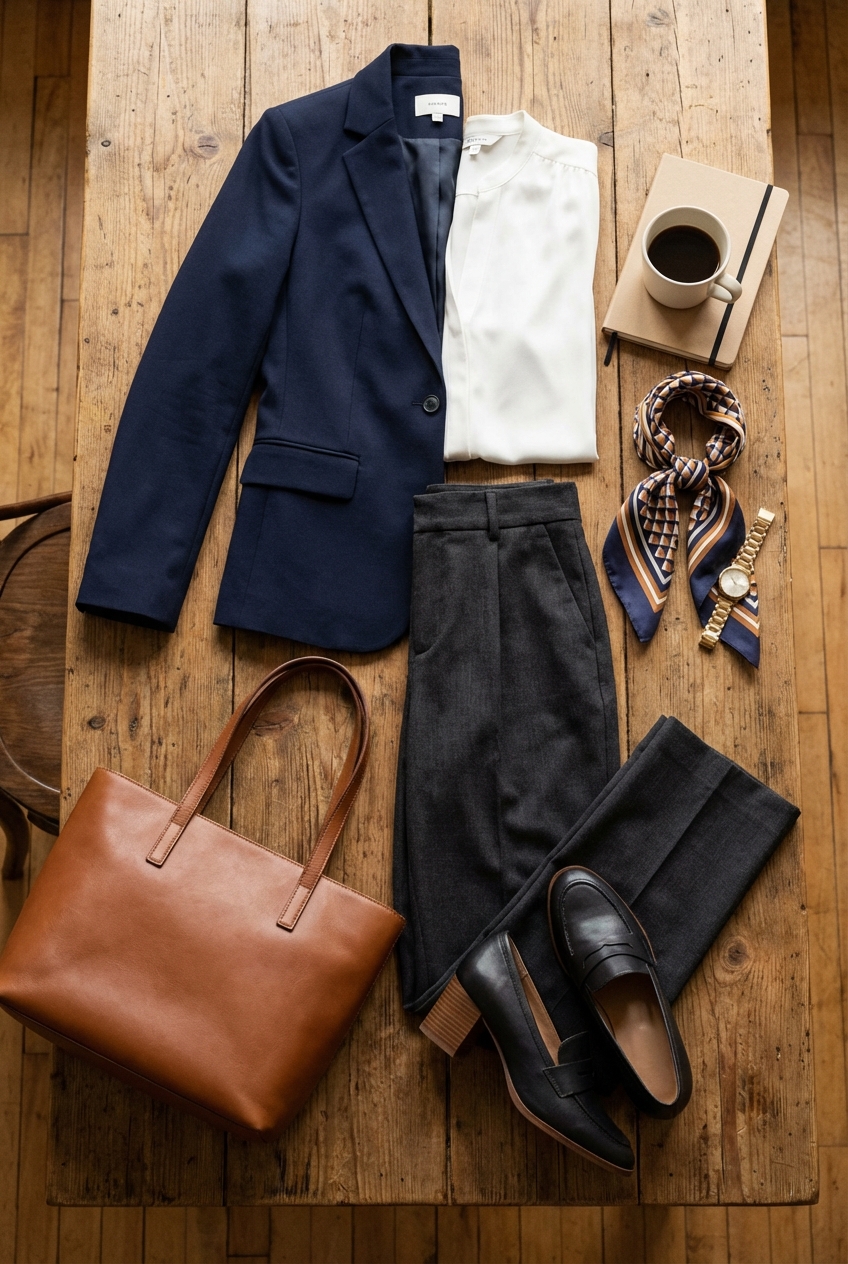
Power Dressing With Womens Suits Embracing Tailored Looks
There is a distinct shift in posture that happens when a woman puts on a perfectly tailored suit. As a fashion stylist who has dressed clients for everything from IPO roadshows to creative agency launches, I have seen this transformation firsthand. The suit is no longer just a corporate uniform borrowed from the boys; it is the ultimate armor of modern femininity, capable of projecting authority and ease simultaneously.
However, the world of suiting can be intimidating if you are accustomed to buying off the rack without alterations. Many women shy away from suits because they fear looking boxy, dated, or uncomfortable. The secret lies not in the price tag, but in the architecture of the garment and how it interacts with your specific body mechanics.
In this guide, we are going to deconstruct the elements of power dressing. We will move beyond basic black blazers and explore how fabric weight, lapel width, and trouser breaks define your look. If you are looking for visual inspiration on how to style these pieces, you will find a curated Picture Gallery at the end of this blog post.
The Architecture of the Perfect Fit
The difference between looking polished and looking like you are wearing a costume comes down to fit. In my years of styling, the most common error I see is prioritizing the size on the tag over the fit of the critical structural points. You must ignore the number and focus on the shoulders and the drop.
The Shoulder Seam
This is your non-negotiable anchor point. The seam where the sleeve attaches to the jacket body must sit exactly at the corner of your natural shoulder bone. If it droops over the edge, the jacket will look like a hand-me-down. If it sits inward, it will pull across the back and make your head look disproportionately large.
The Sleeve Length
Off-the-rack jackets almost always have sleeves that are too long. A suit jacket sleeve should end right at your wrist bone. This allows for that crucial half-inch of shirt cuff or skin to show, which visually elongates your arms. If the sleeve covers your thumb knuckle, you lose the crispness of the silhouette.
The Jacket Waist
Even boxy, “boyfriend” styles need intention. For a classic tailored fit, the jacket should nip in slightly at your natural waist—usually the narrowest part of your torso. When buttoned, the jacket should hug your ribcage without pulling. If you see an “X” shape forming in the fabric around the button, it is too tight.
Designer’s Note: The Golden Rule of Alterations
I tell every client this before we go shopping: Shoulders are expensive to fix; waists are cheap to fix.
The Mistake: Buying a jacket that buttons perfectly at the waist but is tight across the shoulders or upper back.
The Fix: Always size up to fit your shoulders and bust comfortably. A tailor can easily take in the waist of a jacket for $40–$60, but reconstructing a shoulder is a major surgery that can cost hundreds and ruin the garment’s balance.
Decoding Fabric Intelligence
When you are power dressing, the fabric speaks before you do. Cheap synthetics shine under office lighting and trap heat, making you uncomfortable during high-stakes moments. Understanding fiber content is essential for building a wardrobe that lasts.
Wool is King
For a year-round “four-season” suit, look for lightweight worsted wool. You will often see “Super numbers” like Super 100s, 120s, or 150s. This refers to the fineness of the fiber.
- Super 100s–120s: The workhorses. Durable, resistant to wrinkling, and perfect for daily wear.
- Super 150s and above: Extremely fine and soft, almost like silk. However, they are more delicate and prone to wrinkling. Save these for special occasions, not the daily commute.
The Lining Test
Turn the jacket inside out. A high-quality suit will be lined with Cupro, Bemberg, or viscose. These natural-based fibers breathe and regulate body temperature. Avoid jackets lined with 100% polyester. They will make you sweat and often create static cling that ruins the drape of your trousers.
Stretch Composition
A modern power suit often includes a small percentage of elastane or spandex (usually 2% to 5%). This is not cheating; it is practical engineering. It allows the trousers to recover their shape after you have been sitting at a desk for six hours, preventing “knee bagging.”
Mastering the Trouser Break
The “break” refers to the fold or creasing of the fabric above the hem of your pant leg where it meets your shoe. This is a stylistic choice that changes the entire vibe of your suit. When I am fitting a client, we decide on the break based on the shoes she plans to wear most often.
The Full Break
This is a wide-leg or straight-leg trouser that has a significant fold of fabric resting on the shoe. It reads as traditional and authoritative. It works best with wider leg openings.
Measurement rule: The back hem should sit about 1/2 inch off the floor when you are wearing your intended heel height.
The Half/Medium Break
The hem rests lightly on the top of the shoe, creating a slight, single fold. This is the safest, most universally flattering choice for corporate environments. It works well with boot-cut or straight-leg trousers.
The No-Break (Ankle Crop)
The trouser hem ends just above the shoe, showing a sliver of ankle or sock. The fabric falls straight with no folding.
Styling tip: This is the most modern, fashion-forward look. It is ideal for tapered, “cigarette” pants. It looks sharp with loafers or stilettos but requires precise tailoring. If it is too short, it looks like it shrank in the wash.
Common Mistakes + Fixes: The Hemline Dilemma
Mistake: Hemming trousers while barefoot or wearing the wrong shoes.
The Fix: Never go to the tailor without the shoes you plan to wear. If you alternate between 3-inch pumps and flat loafers, you unfortunately need two different pairs of pants or a hemline that compromises.
My Verdict: I usually advise hemming for a low block heel (1.5 inches). This allows you to wear flats without dragging the fabric, and higher heels will just turn the look into a chic ankle crop.
Silhouettes and Lapel Logic
The shape of your suit dictates its personality. Understanding the visual language of lapels and cuts helps you choose the right suit for your specific industry or event.
The Notch Lapel
This is the standard collar where the bottom of the collar meets the top of the lapel at a 75-90 degree angle.
Vibe: Classic, approachable, versatile.
Best for: Daily office wear, job interviews, and conservative fields like law or finance.
The Peak Lapel
The lapel edges point upward toward your shoulders.
Vibe: High fashion, aggressive, formal.
Best for: Speaking engagements, evening events, or when you need to command a room. Peak lapels also have a widening effect, which balances out wider hips.
Double-Breasted vs. Single-Breasted
A single-breasted jacket is universally flattering and lengthens the torso because of the deep V-neckline. Double-breasted jackets, with their overlapping front and two columns of buttons, add bulk.
Stylist Tip: If you are petite or have a large bust, a double-breasted jacket can be tricky. If you love the look, opt for a “low stance” where the buttons start lower on the torso to create a longer neckline.
Color Theory and Pattern Play
While black and navy are safe, true power dressing involves embracing the full spectrum. A suit is a large block of color, so the shade you choose has a massive impact on your perceived presence.
The New Neutrals
Camel, charcoal, and olive are just as versatile as black but feel much more sophisticated. An all-camel suit exudes “old money” luxury. A charcoal grey suit is softer than black and pairs beautifully with pastels or jewel tones.
Pinstripes and Plaids
Pinstripes elongate the body. They draw the eye vertically, making you appear taller and leaner.
Scale Rule: The smaller you are, the finer the stripe should be. A bold, wide “chalk stripe” can overwhelm a petite frame.
Glen Plaid and Checks
Prince of Wales checks offer a heritage, British-countryside vibe that looks incredible in academic or creative settings. When wearing a patterned suit, keep the blouse and accessories solid to avoid visual chaos.
What I’d Do in a Real Project: The Capsule Strategy
If I were building a work wardrobe for a client with a $1,500 budget, here is exactly how I would spend it:
1. The Navy Wool Suit ($600): Single-breasted, notch lapel, flat-front trousers. This is the anchor.
2. The Patterned Blazer ($400): A glen plaid or houndstooth jacket that coordinates with the navy trousers.
3. The Statement Trouser ($300): A wide-leg cream or camel trouser. This pairs with the navy jacket for a mismatched “separates” look.
4. Alterations ($200): I always set aside 15-20% of the budget for tailoring. It is better to buy a cheaper suit and tailor it perfectly than to buy an expensive one and leave it ill-fitting.
Styling For Occasion and Comfort
The versatility of a suit lies in how you layer it. The “third piece” rule in fashion states that an outfit feels complete when it has three elements (pant + top + jacket). The suit gives you two of those instantly.
The Boardroom Look
Pair your suit with a silk blouse or a crisp cotton poplin shirt.
Tip: Ensure the collar of the shirt stays inside the jacket collar. If the shirt collar rides up over the jacket lapel, it looks messy.
The Creative/Casual Look
Swap the button-down for a high-quality T-shirt or a fine-gauge cashmere sweater. White leather sneakers or chunky loafers instantly dress down a full suit.
Sleeve Styling: Push the sleeves up to your elbows. Use a rubber band hidden in the fold of the fabric to keep them in place. This exposes the forearm and makes the suit feel relaxed and lived-in.
Evening Elegance
For a gala or dinner, skip the top entirely if the button stance is high enough. Wearing a jacket with nothing underneath (or a lace camisole just peeking out) is incredibly chic. Pair with statement earrings and a stiletto heel to elongate the leg line.
Care and Maintenance for Longevity
A good suit is an investment. If you treat it like gym clothes, it will degrade quickly. Proper care extends the life of the fabric and keeps the fit sharp.
Stop Dry Cleaning So Often
This is the number one suit killer. The chemicals used in dry cleaning strip the natural oils from wool, making it brittle and shiny over time. Unless you spill something on it, you should only dry clean a suit once or twice a season.
The Power of Steam
Invest in a handheld steamer. Steam kills bacteria and removes odors without damaging the fibers. It also relaxes wrinkles gently.
Warning: Never press a hot iron directly onto wool suit fabric. You will crush the fibers and create permanent shiny patches. If you must iron, use a pressing cloth (a piece of cotton fabric) between the iron and the suit.
Rotation is Key
Wool needs to rest. When you wear a suit, the fibers stretch and absorb moisture from your body. Hang it up in a well-ventilated area for at least 24 hours before wearing it again. This allows the wrinkles to fall out naturally and the elastic fibers to snap back into shape.
Finish & Styling Checklist
Before you walk out the door, run through this mental checklist to ensure your tailored look is flawless.
The X-Check: Button your jacket. Look in the mirror. Is the fabric pulling in an X-shape across your stomach? If yes, unbutton it or wear it open.
The Vent Snip: Did you cut the white tacking stitches on the back vents of the jacket and the sleeve cuffs? These are only there for shipping.
The Pocket Check: Are your pockets sewn shut? You can leave them sewn to maintain a smooth line, or carefully snip them open if you need the utility.
The Sock Situation: If you are wearing cropped pants, do you have no-show socks? If you are wearing full length, are your socks long enough so no bare leg shows when you sit down?
The Lint Roll: Dark suits are magnets for dust and hair. A quick pass with a lint roller is mandatory.
FAQs
Q: Can I wear a black suit jacket with navy pants?
A: Generally, no. Black and navy are too close in tone; it often looks like you got dressed in the dark and made a mistake. If you want to mix separates, there needs to be enough contrast (e.g., Navy jacket with grey pants, or Black jacket with camel pants).
Q: How long should my trousers be if I wear flats?
A: If you exclusively wear flats, the back of the trouser hem should sit just above the ground—think 1/4 to 1/2 inch clearance—so it doesn’t fray. The front should touch the top of your shoe laces.
Q: Is it okay to buy the jacket and pants in different sizes?
A: Absolutely. In fact, it is rare to be the exact same size on top and bottom. This is why buying “suit separates” is often better than buying a “nested suit” (where they come as a set). Always prioritize the fit of the shoulders for the jacket and the hips for the trousers.
Q: What is the best fabric for travel?
A: Look for “high-twist” wool or “travel wool.” These yarns are twisted tighter during weaving, which creates a natural spring-like resistance to wrinkles. You can sit on a plane for four hours, shake the jacket out, and look pristine.
Conclusion
Power dressing with a suit is about more than adhering to a dress code; it is about leveraging design to influence how you feel and how you are perceived. When you understand the mechanics of fit—from the precise break of the trouser to the roll of the lapel—you stop letting the clothes wear you.
Remember that a suit is a modular system. It requires investment in tailoring and care in maintenance, but the return is a wardrobe that serves you for years. Start with the architecture of the shoulders, insist on natural fabrics, and never underestimate the confidence boost of a perfectly hemmed pant.
Picture Gallery


