
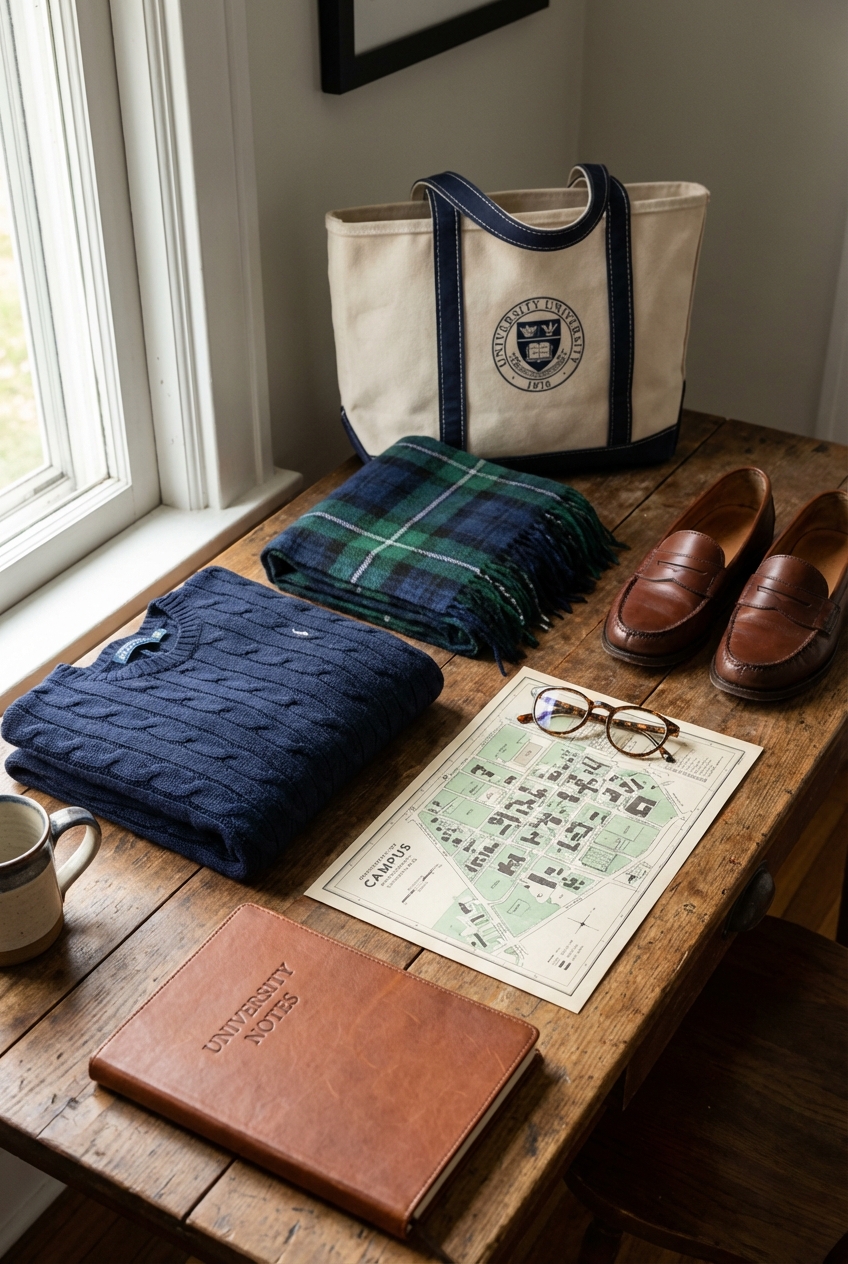
Preppy Ivy League Styles For University Visits
The university visit is a rite of passage that blends high expectations with a distinct sense of nostalgia. Whether you are a prospective student, a supportive parent, or an alumnus returning to campus, the atmosphere of the Ivy League demands a specific sartorial approach. It is about respecting the institution’s history while projecting an image of polished, intellectual curiosity.
When I style clients for these tours, specifically for campuses like Yale, Princeton, or Dartmouth, the brief is never about looking trendy. It is about “Quiet Luxury” and timeless Americana. You want to look established and comfortable, fitting seamlessly against a backdrop of Gothic architecture and manicured quadrangles.
We are aiming for an aesthetic that says you belong here, without looking like you are wearing a costume from a teen drama. For visual inspiration on nailing this balance, see the full Picture Gallery at the end of the blog post.
1. The Architecture of the Perfect Blazer
The cornerstone of any preppy wardrobe is the blazer. For a university visit, this piece acts as your armor. It instantly elevates a simple base layer and provides structure to your silhouette. However, not all blazers are created equal, and the difference between “fast fashion” and “high-end investment” lies entirely in the fit and fabric.
For these visits, I always recommend a single-breasted blazer in navy wool or a camel hair blend. Avoid synthetics like polyester, which tend to shine under sunlight and trap heat during long walking tours. A natural fiber breathes, keeping you temperature-regulated as you move from chilly outdoor quads to heated lecture halls.
The fit is paramount. The shoulder seam should sit exactly where your natural shoulder ends. If it extends past this point, you will look slouchy; if it is too high, the fabric will pull. Sleeve length should hit right at the wrist bone, allowing for a quarter-inch of shirt cuff to show if you are wearing a button-down.
Designer’s Note: The “Sit Test”
Before buying a blazer for a campus tour, button it and sit down. Admissions briefings often last over an hour in rigid wooden chairs. If the blazer pulls tightly across your midsection or the buttons strain, you need to size up and have the sides tailored in. Comfort is key when you need to focus on information sessions.
Common Mistakes + Fixes
- Mistake: Wearing a blazer that is too cropped or tight, reading more “nightclub” than “library.”
- Fix: Opt for a “boyfriend” fit or a classic hip-length cut. It should cover your waistband comfortably when you raise your arms.
2. Knitwear Layers and Material integrity
The weather during typical touring seasons—spring and autumn—is notoriously unpredictable in the Northeast. Layering is not just a style choice; it is a functional necessity. A high-quality knit draped over the shoulders is the ultimate signifier of Ivy League style.
When selecting knitwear, focus on gauge and material. A fine-gauge Merino wool or two-ply cashmere sweater is ideal. These fabrics are thin enough to layer under a blazer without adding bulk but warm enough to function as a standalone piece. Chunky cable knits are beautiful, but reserve them for days when you aren’t wearing a jacket to avoid the “stuffed” look.
If you choose to drape a sweater over your shoulders (the classic “tennis club” look), ensure the arms are tied loosely. A tight knot ruins the line of your outfit and wrinkles the arms of the sweater. The goal is effortless nonchalance.
What I’d do in a real project:
- Base Layer: A crisp white oxford shirt or a high-quality silk tee.
- Mid Layer: A V-neck cashmere sweater in hunter green, burgundy, or heather gray.
- Top Layer: The navy blazer mentioned above or a classic trench coat.
3. Trousers, Skirts, and the “Hemline Rule”
For bottoms, we need to balance mobility with modesty. Campus tours involve climbing stairs, sitting on low walls, and navigating windy open spaces. This is not the environment for mini skirts or restrictive fits.
If you prefer trousers, a tailored chino or a wide-leg wool trouser is perfection. In the fashion world, we look for a “clean break” or a “half break” at the shoe. This means the trouser leg should just barely graze the top of your shoe or have a single, slight fold. Puddling fabric at the ankle looks messy and will inevitably get dirty dragging across campus grounds.
For skirts, a pleated midi skirt or an A-line wool skirt is the gold standard. The movement of the pleats mimics the academic aesthetic perfectly. I advise keeping hemlines at the knee or lower. It eliminates the worry of a wardrobe malfunction on a windy day and maintains a professional silhouette during interviews.
Designer’s Note: The Fabric Weight Factor
Avoid lightweight silks or unlined linens for bottoms. They wrinkle instantly upon sitting. Choose fabrics with “guts”—weighty cotton twills, lined wools, or heavy crepes. They hold their shape and resist creasing even after a three-hour car ride to the campus.
Common Mistakes + Fixes
- Mistake: Wearing distressed denim. While jeans are common on campus, ripped knees feel too casual for a prospective visit.
- Fix: If you must wear denim, choose a dark indigo wash with zero distressing and a straight-leg cut.
4. Footwear Strategy: The 10,000-Step Reality
I cannot stress this enough: do not prioritize aesthetics over mechanics when it comes to footwear. A university visit is essentially a light hike on paved and cobblestone surfaces. You will be walking for hours. Blisters will ruin your experience and your mood.
However, comfortable does not have to mean athletic running shoes. The preppy aesthetic offers excellent options that are both orthopedic-friendly and stylish. The penny loafer or the horsebit loafer is the ultimate choice here. Look for leather that has already been broken in, or buy them three weeks in advance to mold them to your feet.
For cooler months, a flat leather riding boot or a Chelsea boot is appropriate. Ensure the sole has a rubber grip. Many historic libraries and hallways have slick marble or polished wood floors; slipping is a very real hazard with leather soles.
What I’d do in a real project:
- The Sock Rule: If wearing loafers, I style them with a visibly high-quality sock (argyle or solid rib) or a true no-show sock. Nothing ruins a look faster than a cheap athletic ankle sock peeking out.
- The Sneaker Exception: If you wear sneakers, they must be pristine, white leather court shoes (think vintage tennis styles). No neon running shoes.
5. Accessories: The “Old Money” Approach
In high-end fashion styling, we often use the term “editing.” This means removing unnecessary distractions. For an Ivy League visit, your accessories should be functional and understated. Avoid large logos, flashy hardware, or excessive stacking of jewelry.
A classic leather tote bag is the most practical accessory you will carry. It needs to be large enough to hold an information folder, a water bottle, and your layers, but rigid enough to stand up on its own when you place it on the floor. Cognac, oxblood, or black leather are the safest and most chic color choices.
Jewelry should be minimal. A simple strand of pearls, diamond studs, or a small gold hoop is all you need. A good watch is also a fantastic signal of punctuality and appreciation for detail—traits highly valued in academic settings.
Designer’s Note: The Headband Hack
If you are having a bad hair day or dealing with humidity, a padded velvet headband is a lifesaver. It looks intentional and preppy, instantly tidying up your appearance while keeping hair out of your face during outdoor presentations.
Common Mistakes + Fixes
- Mistake: Carrying a clutch or a tiny crossbody bag.
- Fix: You will be handed brochures and merchandise. If your bag is too small, you will end up juggling loose papers, which looks disorganized. Stick to a structured tote.
6. Color Theory and Pattern Play
The Ivy League palette is rooted in nature and heritage. It relies heavily on neutrals and deep, saturated jewel tones. Understanding how to mix these colors elevates your look from “getting dressed” to “styled.”
Stick to the “Rule of Three” for your outfit’s color palette. Choose one base neutral (navy, camel, or charcoal), one accent color (burgundy, forest green, or mustard), and one white or cream element to break it up. This ensures you look coordinated without looking matched-perfectly.
Regarding patterns, less is more. Plaids, tartans, and houndstooth are traditional and appropriate. However, limit yourself to one pattern per outfit. If your blazer is a Prince of Wales check, your trousers and sweater should be solid. If you are wearing a tartan skirt, keep the top half simple and monochromatic.
What I’d do in a real project:
- The Monochrome Trick: If you are unsure about color mixing, wear an all-navy or all-camel outfit. Vary the textures (e.g., wool trousers, cashmere sweater, silk scarf) to keep it interesting. Monochrome is universally slimming and looks expensive.
Finish & Styling Checklist
Before you head out the door for the campus tour, run through this final check. These are the small details that high-end stylists look for before sending a client onto a set or an event.
- The Steam Check: Are your clothes wrinkle-free? Natural fibers hold wrinkles, so a quick steam is mandatory.
- The Lint Roll: Wool attracts lint and pet hair. Give your blazer and dark trousers a vigorous roll.
- The Scuff Test: Wipe down your shoes. Scuffed toes on loafers suggest carelessness.
- The Fit Check: raise your arms and sit down. Does everything stay in place?
- Layer Logic: Can you easily remove your jacket without ruining your base layer?
- Bag Prep: Do you have breath mints, blister plasters, and a notebook in your tote?
FAQs
Can I wear jeans on a university visit?
Yes, but proceed with caution. Dark wash, straight-leg denim with no holes or fraying is acceptable. Pair it with a blazer and loafers to elevate the denim. Avoid light washes or baggy cuts, as they can read too casual for an interview or information session.
What outerwear is best for rainy days?
A classic trench coat in beige or navy is the best option. It covers a blazer without bunching and looks professional. Avoid plastic ponchos or technical hiking gear unless the weather is extreme. A high-quality umbrella is also a great accessory.
Is it okay to wear the university’s merchandise?
It is acceptable for prospective students to wear a subtle piece of university gear, like a cap or a sweatshirt, but I usually advise against it for the initial formal visit. It is better to look like you are bringing your own identity to the campus rather than already wearing the uniform. Save the hoodie for after you have been accepted.
How formal should parents dress?
Parents should aim for “business casual” or “smart casual.” You want to fade into the background while looking respectful. The same rules apply: comfortable shoes, layers, and polished grooming. Avoid tracksuits or athleisure.
Conclusion
Dressing for a university visit is about striking a balance between respect for the institution and confidence in yourself. The Preppy Ivy League style is not just a fashion trend; it is a language that speaks of preparation, ambition, and an appreciation for tradition.
By focusing on fit, natural fabrics, and practical comfort, you ensure that your focus remains on the experience of the campus, not on a blistering heel or a tight waistband. When you look the part, you feel the part, allowing you to walk through those historic gates with your head held high.
Picture Gallery


