
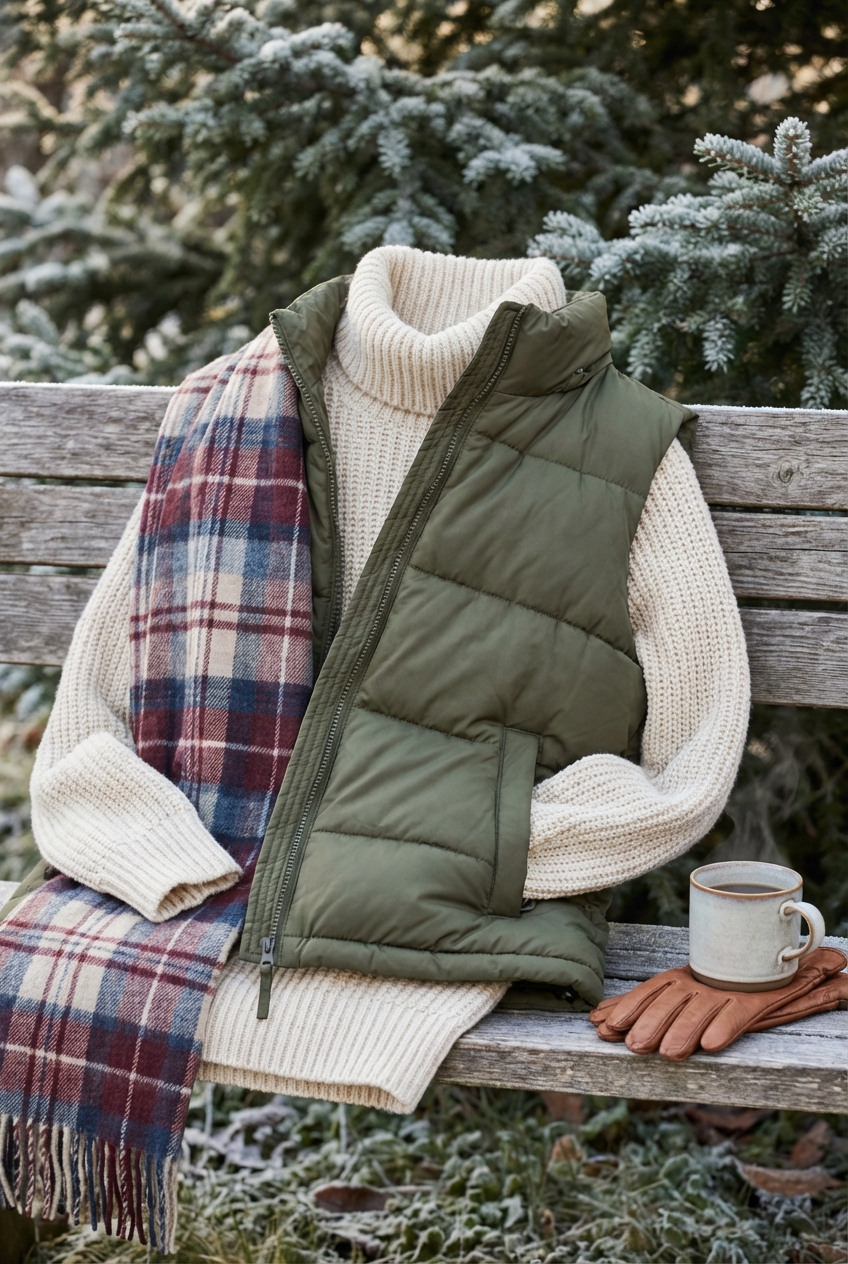
Puffer Vests For Mild But Cold Winter Weather
Living in a city with unpredictable weather means I have spent years mastering the art of the transitional wardrobe. There is a very specific type of winter day that baffles even the most seasoned fashion lovers: the “mild but cold” day. It is too warm for a full wool trench or a heavy parka, but the air carries enough bite that a simple sweater leaves you shivering.
This is exactly where the puffer vest shines as the ultimate hero piece. For a long time, I associated vests strictly with hiking gear or utility wear, devoid of any real sartorial value. However, once I learned how to manipulate proportions and select high-quality materials, the puffer vest became the backbone of my cold-weather layering strategy.
In this guide, I am breaking down exactly how to style, select, and care for puffer vests to keep you chic and warm. I have curated a comprehensive collection of visual inspiration, so keep in mind that the Picture Gallery is at the end of the blog post.
Understanding Fill Power and Thermal Regulation
As a fashion stylist, I often see clients buying outerwear based solely on color or brand name. However, when dealing with winter gear, you must look at the technical specifications first. The “puff” in your vest is useless if it does not actually retain heat.
For mild to cold weather (think 40°F to 55°F), you generally want a fill power between 550 and 700. This range provides ample warmth without making you look like a marshmallow or causing you to overheat when you step into a heated shop. If the vest is too dense (800+ fill power), it becomes difficult to layer under tailored coats later in the season.
You also need to choose between natural down and synthetic fill. Natural down has a higher warmth-to-weight ratio, meaning it is less bulky for the same amount of heat. However, modern synthetic fills have improved drastically and retain warmth even if they get damp during a surprise drizzle.
Designer’s Note:
One thing that usually goes wrong is neglecting the “loft” or fluffiness of the vest over time. If a vest looks flat on the hanger, it will look cheap on you. I always recommend steaming a vest from a distance of six inches to revive the loft before wearing it out.
Mastering Silhouette and Proportion
Styling a puffer vest is an exercise in volume control. Because the vest adds significant bulk to your torso, you must counterbalance that volume elsewhere in your outfit. The goal is to avoid looking round or boxy.
If you are wearing a standard hip-length puffer vest, you should pair it with a streamlined bottom. Think skinny jeans, slim-cut trousers, or leggings. This creates an “inverted triangle” silhouette that is universally flattering. The volume is at the top, tapering down to a narrow point at the ankles.
Conversely, cropped puffer vests that hit at the natural waist are currently very trendy. These allow for wider-leg pants or A-line skirts because they define the waistline before the volume of the pants begins. This restores the Rule of Thirds, breaking the body into pleasing visual proportions rather than cutting you in half.
Common Mistakes + Fixes:
- Mistake: Wearing a chunky knit sweater under a chunky vest. This restricts arm movement and makes you look stifled.
- Fix: Opt for fine-gauge cashmere or merino wool underneath. These fabrics trap heat efficiently without adding bulk to the arms or waist.
The Art of Monochromatic Layering
When in doubt, a monochromatic color palette is the quickest way to elevate a puffer vest from “sporty” to “high-fashion.” Wearing one continuous color creates a vertical line that elongates the body, counteracting the horizontal quilting of the vest.
I frequently style clients in “columns of color.” For example, an ivory turtleneck tucked into ivory wide-leg wool trousers, topped with a cream or beige puffer vest. The slight difference in shades adds depth, while the uniform color keeps the look cohesive and expensive.
Texture plays a massive role here. If your vest is a matte nylon, try pairing it with a ribbed knit sweater and leather pants in the same color family. The interplay of matte, ribbed, and glossy textures makes the outfit interesting even without patterns or bright colors.
What I’d do in a real project:
If I am dressing a client for a city lunch, I usually reach for a black faux-leather puffer vest. I pair it with a black cashmere turtleneck and charcoal grey denim. Ideally, I finish the look with a pointed-toe boot to further elongate the leg line.
Selecting the Right Outer Shell Material
The exterior fabric of your vest dictates the vibe of the entire outfit. Standard nylon or polyester shells are practical and sporty. They are excellent for errands, gym runs, or casual weekends. However, if you want to wear a vest to a dinner or a creative office, you need to look for elevated materials.
Velvet puffer vests offer a luxurious, tactile element that works beautifully for evening transitions. They catch the light softly and feel much dressier than their nylon counterparts. I also love wool-blend exteriors, which bridge the gap between a traditional coat and a casual vest.
Leather (or high-quality faux leather) is my top recommendation for a “fashion-forward” vest. It provides structure that soft fabrics lack. A leather puffer vest holds its shape better, looks sharper, and instantly adds an edge to floral dresses or soft knitwear.
Designer’s Note:
Pay close attention to the hardware. Cheap, shiny zippers can ruin the look of an otherwise beautiful vest. Look for matte hardware, heavy-duty metal zippers, or snaps that are covered in the same fabric as the vest. These small details signal quality.
Navigating Armscye and Sleeve Bulk
The “armscye” is the technical term for the armhole. In puffer vests, the cut of the armscye is critical for both comfort and style. A common issue women face is an armhole that is cut too high, which digs into the underarm when wearing layers.
Conversely, if the armhole is too large or gaping, you lose significant body heat. The wind will cut right through to your ribs. When trying on a vest, wear the thickest sweater you intend to pair it with. You should be able to move your arms forward and backward without the vest shifting across your chest.
You also need to consider the interaction between the vest shoulder and your sweater shoulder. Ideally, the vest should extend just slightly past the shoulder seam of your sweater. This creates a capped effect that protects the shoulder joint from the cold without looking like shoulder pads.
Common Mistakes + Fixes:
- Mistake: Wearing a sleeve with voluminous detailing (like a balloon sleeve) under a vest with a tight armhole.
- Fix: Save your statement sleeves for days when you aren’t wearing a vest. Stick to fitted or straight sleeves to prevent fabric bunching.
Styling for Different Occasions
The versatility of the puffer vest lies in its ability to shapeshift based on what you wear underneath. It is not just for the weekend; it can be a weekday staple if styled correctly.
For the Office:
Choose a vest with a matte finish and minimal quilting (diamond quilting often looks dressier than horizontal channels). Layer it over a crisp white button-down shirt and a fine-gauge v-neck sweater. Leave the shirt collar popped and cuffs visible. Pair with tailored trousers and loafers.
For Weekend Brunch:
This is the time to play with oversized silhouettes. A longline puffer vest that hits mid-thigh is incredibly chic. Pair it with high-quality leggings and a chunky combat boot. Throw on a beanie and oversized sunglasses to complete the “off-duty model” aesthetic.
For Date Night:
Yes, you can wear a puffer vest on a date. Opt for a cropped, metallic, or velvet version. Layer it over a fitted midi dress in a jersey knit. The vest adds warmth for the walk from the car to the restaurant, but the dress keeps the look feminine. Heeled ankle boots are a must here.
Accessories to Bridge the Gap
Since your arms are exposed, accessories become functional necessities rather than just decorations. You need to focus on keeping the extremities warm to compensate for the lack of sleeves.
Long leather gloves or cashmere wrist warmers are elegant additions to a vest outfit. They cover the gap between your cuff and your hand, preventing drafts. I also recommend focusing heavily on scarf styling.
Because a puffer vest often has a high collar, a bulky infinity scarf can feel suffocating. Instead, opt for a large, flat wool scarf. Drape it under the collar of the vest before zipping it up. This creates a seal against the wind and adds a vertical pop of color down the front of your torso.
Designer’s Note:
Don’t forget the belt. Some puffer vests come with a self-belt, but many do not. If you have a longer vest that feels too boxy, try cinching it with a wide elastic belt or a leather corset belt. This immediately gives you a waist and changes the entire architecture of the garment.
Finish & Styling Checklist
To ensure you always look polished rather than puffy, I have compiled this checklist based on my experience styling shoots and clients. Run through these points before heading out the door.
The “High-End Expert” Puffer Protocol:
- Check the Hem: Does the vest end at a flattering point? It should hit either at your natural waist or below the widest part of your hips. Avoid hems that cut right across the widest part of the hip.
- Balance the Volume: If the vest is puffy, are your pants slim? If the vest is cropped, are your pants high-waisted?
- Evaluate the Layer: Is your base layer smooth? Ensure there is no bunching at the armpits or waist.
- Coordinate Hardware: Match the metal of your zipper to your jewelry or bag hardware for a cohesive look.
- Verify the Loft: Give the vest a quick shake or steam to ensure it looks plush, not deflated.
- Shoe Selection: Ensure your footwear has enough visual weight to balance the vest. Avoid delicate ballet flats; opt for boots or substantial sneakers.
FAQs
Can I wear a puffer vest under a coat?
Absolutely. This is a classic menswear move that works beautifully for women too. The key is to use a “liner” vest—these are thin, lightweight down vests specifically designed for layering. Wear it under a wool trench coat for added insulation without the bulk.
How do I wash my down vest without ruining it?
Always check the care label, but generally, you should use a front-loading machine and a specific down wash detergent. The most critical step is drying. You must tumble dry on low with three clean tennis balls or wool dryer balls. The balls beat the vest as it dries, breaking up clumps of wet feathers and restoring the fluff.
Are longline vests flattering for petite women?
They can be, but you have to be careful. If you are under 5’4″, a knee-length vest can overwhelm your frame. Look for a longline vest with a belt to define your waist, and ensure you wear a heel or a platform boot to add height. Keep the vest unzipped to create a vertical line.
Is it okay to wear a hoodie under a puffer vest?
Yes, this is a staple athleisure look. To keep it looking expensive, ensure the hoodie is high quality (heavyweight cotton or cashmere) and that the hood lays flat against the back of the vest. Do not double up on hoods; if the vest has a hood, the sweatshirt should not.
Conclusion
The puffer vest is the unsung hero of the transitional wardrobe. It solves the specific problem of mild but cold weather by keeping your core temperature stable while allowing for freedom of movement and style. It bridges the gap between the heavy wool coats of deep winter and the light denim jackets of spring.
By focusing on proportion, monochromatic layering, and high-quality materials, you can transform this utilitarian piece into a fashion statement. Whether you choose a leather finish for the city or a classic matte nylon for the weekend, the key is to wear it with intention. Don’t let the weather dictate your style; use the vest to master it.
Picture Gallery


