
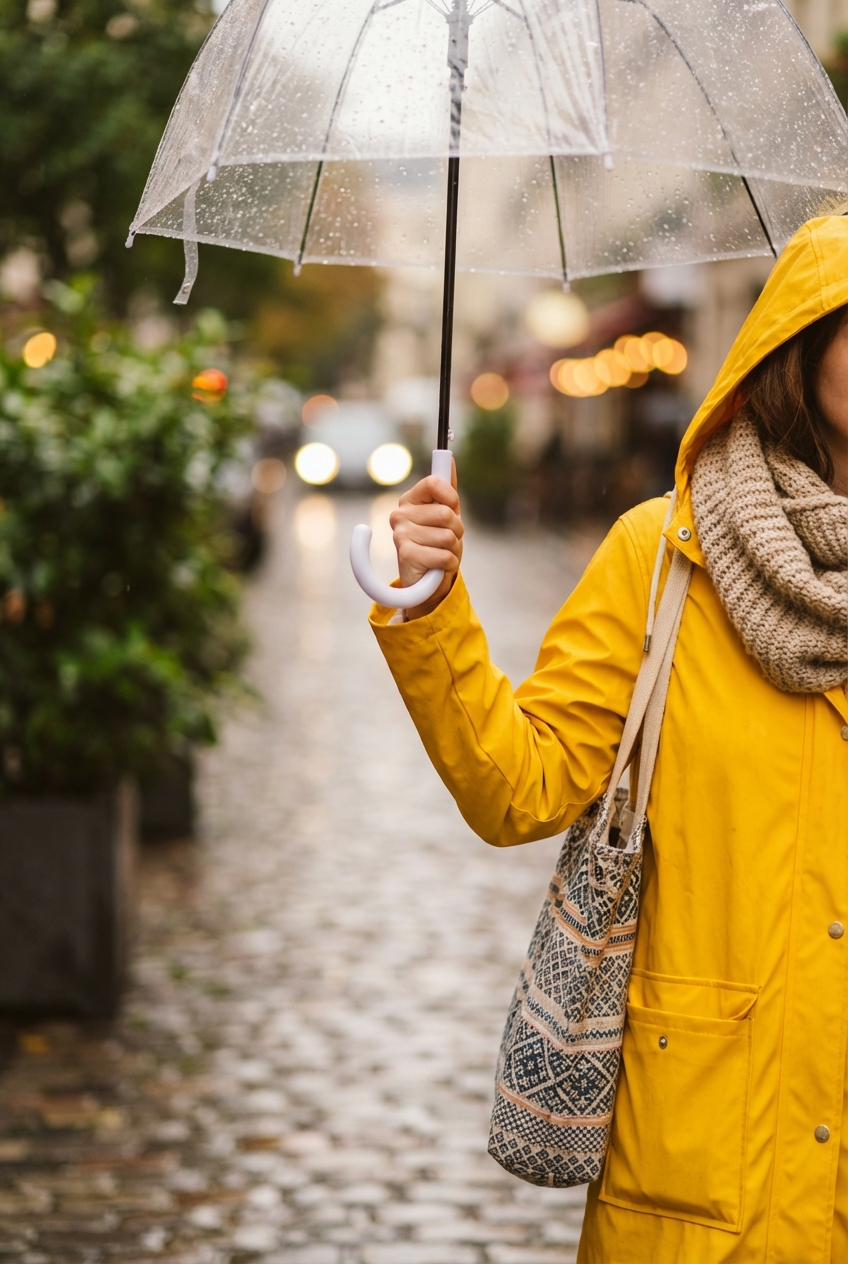
Raincoats With Hoods For Stormy Weather Style
There are few things more disheartening than stepping out in a perfectly curated outfit only to have the sky open up and ruin your look. For years, I treated rainwear as an afterthought, relying on flimsy umbrellas that inverted at the slightest gust of wind or cheap ponchos that felt like wearing a plastic bag. It took a particularly disastrous trip to London Fashion Week—where a sudden downpour destroyed a silk blouse—to make me realize that a high-quality raincoat is not just utility gear. It is a wardrobe anchor.
When you invest in the right outerwear, stormy weather stops being an obstacle and starts being a styling opportunity. The modern raincoat has evolved far beyond the shapeless yellow slickers of our childhood. Today, we look for architectural silhouettes, breathable technical fabrics, and hardware that acts like jewelry. A coat with a functional, well-designed hood is the ultimate luxury because it frees your hands and protects your blowout without compromising your aesthetic.
In this guide, I am going to walk you through exactly how to select a raincoat that bridges the gap between high fashion and heavy-duty function. We will look at fabric technology, essential fit points, and how to style these pieces so you feel polished even when the humidity hits 100 percent. For visual inspiration on how to pull these looks together, be sure to check out the Picture Gallery at the end of the blog post.
Decoding Fabric Technology: Waterproof vs. Water-Resistant
The most common mistake clients make is assuming all raincoats are created equal. In the fashion world, there is a massive technical difference between a coat that is “water-resistant” and one that is fully “waterproof.” Understanding this distinction is the difference between arriving dry and arriving damp.
Water-resistant fabrics are treated with a DWR (Durable Water Repellent) finish. These are excellent for light mists or short dashes from the taxi to the restaurant. However, under sustained pressure or a heavy downpour, water will eventually soak through. These coats are often made from treated cotton gabardine or lightweight nylon. They offer better breathability and drape but less ultimate protection.
True waterproof garments rely on membrane technology or rubberized coatings. Think of materials like Gore-Tex or rubberized cotton. These fabrics have a hydrostatic head rating that physically prevents water molecules from passing through. For a high-end closet, I always recommend having one “heavy duty” fully waterproof statement piece for torrential days.
Designer’s Note: The Seam Secret
Fabric is only half the battle. A coat can be made of waterproof rubber, but if the seams are stitched with a needle, water will leak through those tiny holes. For true storm protection, look for “taped seams” or “heat-sealed seams.” This means a waterproof tape has been applied over the stitching on the interior, sealing the garment completely.
Common Mistakes + Fixes
- The Mistake: Buying a “fashion” vinyl coat that has zero ventilation.
- The Fix: If you love the high-shine vinyl look, ensure the coat has ventilation grommets under the arms or a vented back yoke (a flap across the shoulders). Without air circulation, you will create a greenhouse effect inside the coat, becoming wet from condensation rather than rain.
The Silhouette Guide: Finding the Right Fit
Rainwear requires a different approach to sizing than a tailored blazer or a summer dress. Because this is an outer layer, you must account for “negative ease”—the space between your body and the fabric. If a raincoat fits perfectly over a t-shirt, it is too small. You need to simulate real-world conditions when trying these on.
I always advise clients to fit their raincoats while wearing their chunkiest knitwear or a structured blazer. You need full range of motion in the shoulders. Reach your arms forward as if you are driving or typing; if the fabric pulls tight across the back, size up. The fabric of a raincoat usually does not have stretch, so the cut must provide the movement.
Length is also a critical proportion play. For maximum versatility, a knee-length or midi-length coat is superior to a hip-length jacket. A longer hemline protects your trousers or skirt from the splash-back caused by walking on wet pavement. From a styling perspective, a longer coat creates a dramatic, elongated vertical line that looks incredibly chic with knee-high boots.
Measurements to Watch
- Sleeve Length: Raincoat sleeves should be slightly longer than your regular coats. Ideally, they should hit the first knuckle of your thumb. This extra length prevents your cuffs from getting wet when you bend your arm to hold a bag or check your phone.
- Shoulder Width: The shoulder seam should sit slightly past your natural shoulder bone to accommodate layers without creating a boxy silhouette.
The Hood Factor: Construction Matters
Since we are specifically discussing hooded coats, we need to analyze the hood’s architecture. A floppy, unlined hood is useless in a storm; it will blow off instantly. In high-end design, we look for hoods with three specific features: depth, adjustment, and structure.
First, the hood must be deep enough to cover your forehead. If it stops at your hairline, rain will drip down your face. Look for a “visor” or a stiffened brim extension. This small detail acts like a mini awning, directing water away from your eyes and makeup.
Second, adjustability is non-negotiable. A hood needs drawstrings or toggles at the neck to cinch it tight against the wind. Without this mechanism, you are forced to hold the hood up with one hand, which defeats the purpose.
Finally, consider the lining. A hood lined with cotton or silk is luxurious, but a hood lined with a friction-based material (like a textured wool blend or fleece) will stay on your head better than slippery silk.
What I’d do in a real project:
If I am styling a client for a rainy city like Seattle or London, I look for a “snorkel hood.” This style zips up higher on the neck, covering the chin and mouth, creating a cocoon of warmth and dryness. It looks incredibly editorial and provides maximum protection.
Styling for the Occasion: Work vs. Weekend
Your raincoat should not look like gear you would wear to hike a mountain (unless you are actually hiking). For a fashion-forward approach, we categorize rainwear into two buckets: Structural/Professional and Relaxed/Casual.
For the workplace or evening events, the Trench Coat remains the gold standard. Look for a modernized trench in a waterproof gabardine with a detachable hood. The belt allows you to cinch the waist, restoring your shape even under layers. I recommend tying the belt in a “cavalier knot” rather than using the buckle—it looks more effortless and tailored. Stick to neutrals: camel, stone, navy, or black.
For weekends or errands, you can play with volume. An A-line Trapeze coat or a high-end Parka offers a relaxed vibe. This is where you can experiment with color. A dusty sage green, a deep burgundy, or even a translucent matte frost can elevate a simple jeans-and-sweater outfit.
Rule of Thumb: The Hemline Ratio
- Dresses/Skirts: Your raincoat should be longer than your skirt by at least one inch. If your skirt peeks out significantly below the coat, the hem will get soaked, and the proportions will look messy.
- Trousers: Wide-leg trousers require a longer coat (knee-length or longer) to control the volume. Skinny jeans or leggings work well with mid-thigh lengths.
Hardware and Details: The Signs of Quality
In luxury fashion, the difference is always in the details. When assessing a raincoat, examine the hardware closely. Zippers should be substantial and preferably covered by a “storm flap”—a strip of fabric that snaps over the zipper to prevent water entry.
Buttons should be reinforced with small “backer buttons” on the inside of the coat to prevent tearing, as wet fabric can become heavy and strain the fasteners. I also look for deep, functional pockets. A flap pocket is essential for rainwear; slash pockets without zippers or flaps will fill with water.
The interior finish is equally important. Unlined rubberized coats are popular for their minimalist Scandinavian look, but they can feel cold and clammy against the skin. If you choose an unlined shell, ensure the interior backing has a bonded cotton feel, or plan to wear long sleeves underneath at all times.
Common Mistakes + Fixes
- The Mistake: Ignoring the cuffs.
- The Fix: Look for adjustable cuffs with snaps or velcro tabs. Being able to tighten the wrist opening prevents wind and rain from traveling up your arm. It also allows you to push the sleeves up and have them stay put for a styled, “lived-in” look when the rain stops.
Investment Care: Maintenance and Storage
A high-quality raincoat is an investment piece that requires specific care to maintain its waterproof properties. Unlike wool coats, you generally want to avoid dry cleaning technical rainwear. The harsh chemicals used in dry cleaning can strip the DWR coating or melt the seam tape of certain membranes.
Always read the care label, but generally, machine washing on a gentle cycle with a specialized technical detergent (like Nikwax) is preferred. Powder detergents can clog the pores of breathable fabrics. Avoid fabric softeners entirely, as they leave a residue that attracts water rather than repelling it.
Drying is crucial. Many technical fabrics actually require heat to “reactivate” their water repellency. Tumble drying on low heat for a short period can help rejuvenate the DWR finish.
For storage, never hang a wet raincoat in a crowded closet. It must air dry completely in an open space to prevent mildew. Once dry, hang it on a wide, structured hanger to maintain the shoulder shape. Do not fold rubberized coats for long periods, as this can create permanent creases or cracks in the material.
Finish & Styling Checklist
Before you head out into the storm, run through this mental checklist to ensure your look is cohesive and functional.
- The Layer Test: Can you move your arms freely while wearing your thickest sweater underneath?
- The Hood Check: Does the hood cover your hairline and stay up without you holding it?
- The Hemline: Is your coat longer than your dress or skirt?
- The Footwear Anchor: Have you balanced the visual weight of the coat with a chunky boot? (Delicate flats often look unbalanced with heavy rainwear).
- The Cinch: Have you defined your waist? If the coat is boxy, leave it open or belt it tightly.
- The Hardware: Are your zippers covered and your pockets flapped?
FAQs
Q: Can I wear a raincoat over a suit jacket or blazer?
A: Absolutely, but you must size up. If the raincoat sleeves are too tight, they will crush the shoulders of your blazer and cause unsightly wrinkling. Look for a “raglan sleeve” style (where the sleeve seam runs from the collarbone to the underarm) rather than a set-in sleeve. Raglan sleeves offer much more room for tailored layers.
Q: How do I stop my hair from getting frizzy even with a hood?
A: The friction of a hood can sometimes cause static. I recommend wrapping your hair in a silk scarf before putting your hood up. It adds a layer of vintage glamour and protects your blowout from humidity and friction.
Q: Are clear/transparent raincoats stylish?
A: They can be very editorial, but they are tricky. They tend to fog up with body heat. If you choose a transparent style, ensure it has significant ventilation grommets. Style it over a monochromatic outfit (all black or all cream) to keep the look intentional rather than messy.
Q: How often should I re-waterproof my coat?
A: If you notice water stops beading up and rolling off the surface (and instead starts soaking into the top layer of fabric), it is time to re-proof. For a coat worn regularly, this is usually once a season. You can use a spray-on proofer or a wash-in treatment.
Conclusion
Embracing stormy weather style is about shifting your mindset from “surviving the rain” to “dressing for the atmosphere.” A beautiful, hooded raincoat frames your face, creates a striking silhouette, and provides a sense of armor against the elements.
By focusing on technical fabrics, proper scale, and functional details like deep hoods and storm flaps, you elevate your entire aesthetic. You no longer have to sacrifice your personal style just because the forecast predicts rain. Instead, you get to debut a look that is sophisticated, practical, and undeniably chic. Walk through the puddles with confidence, knowing your outfit is bulletproof.
Picture Gallery


