
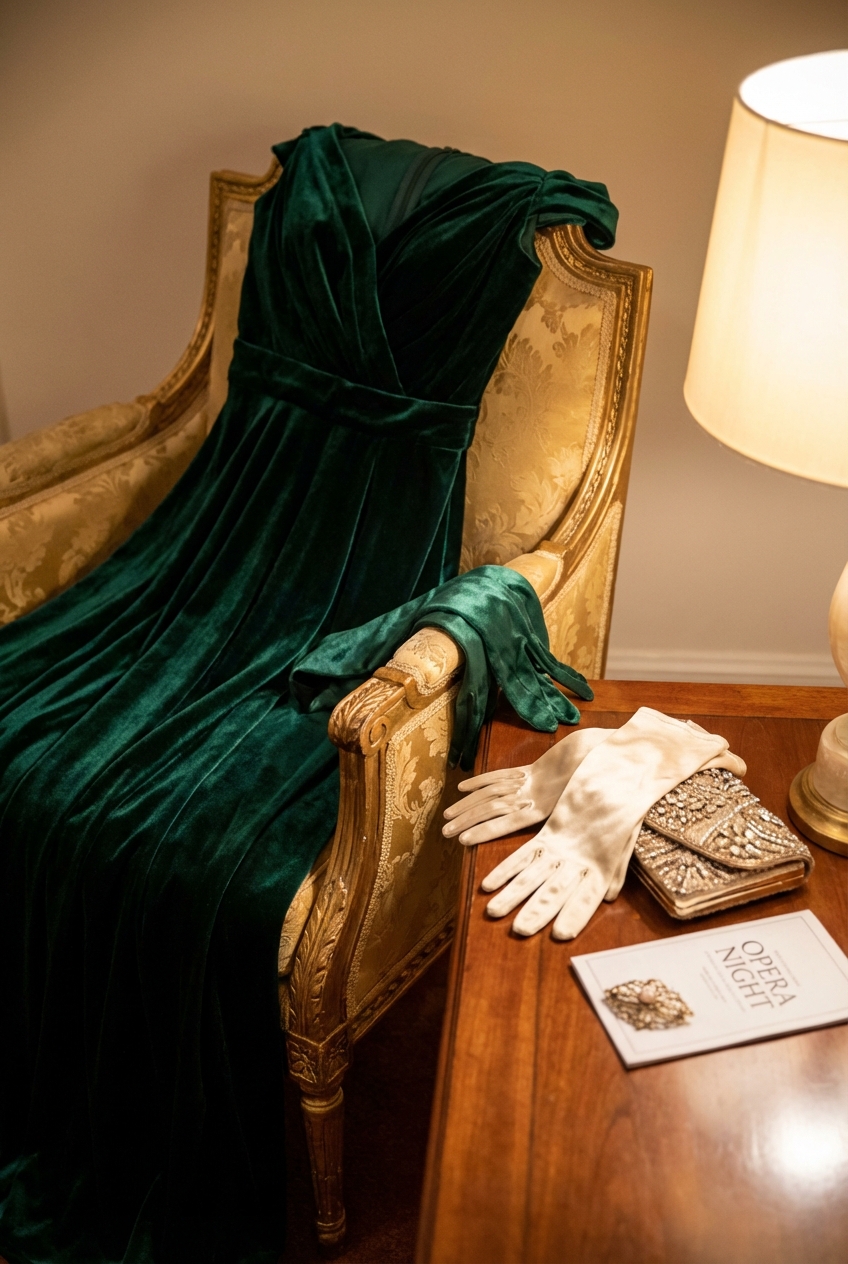
Regal Evening Gowns For Opera Nights
There are few occasions left in modern life that demand the level of grandeur found at the opera. The soaring music, the velvet-lined boxes, and the crystal chandeliers create an atmosphere that practically begs for sartorial drama. Unlike a gala or a wedding, where dancing and socializing dictate your movement, the opera is about presence, poise, and the art of sitting beautifully.
As a fashion stylist who has dressed clients for premieres at the Met and opening nights in Vienna, I treat opera styling as a form of costume design for the audience. You are part of the scenery. The gown you choose must hold its own against the gold leaf and red velvet of the theater while ensuring you remain comfortable through a three-hour production of Tosca. It is a delicate balance of visual impact and physical endurance.
Finding that perfect gown requires looking beyond the mannequin. You have to consider how the fabric catches low light, how the skirt compresses in a narrow vintage seat, and how the silhouette reads from across the lobby. If you are looking for visual inspiration, keep in mind that a curated Picture Gallery is available at the end of this blog post.
Understanding the Venue and the Unspoken Code
The first step in selecting a regal gown is understanding the specific environment of the opera house. Not all venues are created equal. A night at the Santa Fe Opera is open-air and distinctively different from the ornate, closed environment of the Palais Garnier. However, if we are aiming for “regal,” we are likely attending a major house where tradition reigns supreme.
Lighting plays a massive role here. Opera houses are generally dim, lit by warm tungsten or candlelight-mimicking LEDs. This lighting swallows matte, dark fabrics. A plain black crepe dress that looks chic in a restaurant will disappear entirely in an opera box. You need fabrics that interact with light. Think satins, heavy silks, velvets, or fabrics with metallic threading.
Temperature is the second constraint. Most historic theaters are kept aggressively cold to preserve the costumes on stage and the comfort of the performers. A strapless gown with no plan for outerwear is a rookie mistake. You will spend the second act shivering instead of enjoying the aria.
Designer’s Note: The AC Factor
I once styled a client in a stunning, backless chiffon number for a summer opera. She looked incredible upon arrival, but she texted me at intermission saying she was freezing. The lesson? Always incorporate the warmth into the look, not as an afterthought. Now, I always plan the “opera coat” or stole as 50% of the outfit.
The Architecture of the Silhouette
When choosing a gown for the opera, you must prioritize the “sit test.” You will be seated for the vast majority of the evening. A dress that creates a stunning column while you stand at the bar is useless if it cuts into your ribcage the moment you sit down.
Avoid rigid boning that starts too low on the hips. When you sit, your torso compresses. If the corset or boning is too long, it will push up into your underarms or dig into your thighs. Look for bodices where the structure ends at the natural waist. This allows you to breathe deeply and sit comfortably without fighting your garment.
Volume is another consideration. A full ballgown is the epitome of regal, but you must be mindful of the seat width. Opera seats are notoriously narrow. If you choose a skirt with layers of tulle or a wide hoop, you run the risk of spilling over onto your neighbor.
Common Mistakes + Fixes
Mistake: Wearing a “Mermaid” or distinct “Trumpet” silhouette with a tight knee break.
Fix: These dresses restrict your knees. You cannot cross your legs or adjust your position easily, which leads to cramping after an hour. Opt for a modified A-line or a sheath with a high slit instead to allow for leg movement.
Fabric Choices: Noise and Wrinkles
The opera is an acoustic environment. The acoustics are designed to project a pin drop from the stage to the back row. This means the audience also projects sound. This is a nuanced detail that many overlook: your dress should be silent.
Avoid stiff taffeta or heavily beaded fabrics that clack when you move. I have sat next to women whose sequined gowns made scratching noises every time they shifted in their seats. It is distracting to you and your neighbors.
Soft, dense fabrics are your best friends. Silk velvet is the gold standard for opera attire. It is silent, it absorbs light beautifully for a rich look, and it offers a surprising amount of warmth. Heavy silk charmeuse is also excellent, though it requires a critical eye for wrinkles.
The Wrinkle Reality
You will sit for 45 to 90 minutes at a time. If your dress is made of crisp cotton or thin satin, you will look like a crumpled receipt by the first intermission. I always perform a “scrunch test” on fabrics. Squeeze the fabric in your hand for ten seconds. If it holds the crease, it isn’t for the opera. Brocades and jacquards are excellent alternatives because their busy textures hide minor creases.
The Palette of Performance
Color theory for the opera differs from other evening events. Because the environment is usually rich with red velvet, gold leaf, and dark wood, you want colors that complement this heavy, warm palette.
Jewel tones are the safest and most effective route to looking regal. Deep emeralds, sapphires, rubies, and amethysts hold their own against the opulent background. These colors look expensive and substantial.
Pastels can be tricky. Under the warm, yellow-toned lights of a theater lobby, pale blues and pinks can wash out or look grey. If you love light colors, lean into metallics like champagne, rose gold, or silver. These reflect the light rather than absorbing it.
What I’d Do in a Real Project
If I am dressing a client for a winter premiere:
- Base: A midnight blue velvet gown with long sleeves and a plunging back.
- Structure: A-line skirt (generous but not massive) to allow for comfort.
- Accent: Vintage gold brooch at the waist to catch the light.
- Reasoning: The blue stands out against red theater seats, the velvet keeps her warm, and the long sleeves eliminate the need for a shawl during the performance.
The Opera Coat and Outerwear
In high-end fashion, the arrival is just as important as the event. You cannot wear a puffer jacket or a trench coat over a ballgown. The coat must be part of the ensemble. This is where the concept of the “Opera Coat” comes from—a coat cut specifically to accommodate volume underneath.
Look for coats with a “swing” cut or a cape silhouette. These drape over the shoulders and expand at the hips, ensuring your gown isn’t crushed. The length should either cover the dress entirely or hit exactly at the waist. A coat that cuts off at the knees while your dress drags on the floor breaks the visual line and looks messy.
Fur (vintage or high-quality faux) is traditional, but a heavy wool cape with satin lining is equally dramatic and often more comfortable. The key is ease of removal. You often hand check your coat, but if you keep a stole or capelet, it needs to be easy to slip off your shoulders when the house lights go down.
Hemlines and Staircases
Grand opera houses usually feature grand staircases. This means you will be walking up and down stairs while surrounded by a crowd. Your hem length is a safety issue as much as a style one.
For a floor-length gown, the hem should graze the top of the shoe, hovering about half an inch off the ground. It should not puddle. A “puddle train” looks majestic in a photoshoot, but on a crowded staircase, it is a hazard. Someone will step on it, and you will stumble.
If you are committed to a train, you must have a bustle loop (a loop of fabric at the end of the train that sits on your wrist) or a way to hook it up. I generally advise against trains for the opera unless you have a dedicated handler or date to help you manage it.
Designer’s Note: The Shoe Strategy
Nobody sees your shoes while you are sitting. However, you will stand on concrete or marble floors during intermission. I recommend a closed-toe pump or a very supportive sandal. Avoid stilettos if the venue has historic carpet, which can be thick and unstable. A block heel gives you stability on the stairs and comfort during the “stand and sip” intermission.
Managing Essentials: The Clutch
Your bag needs to be small, but not microscopic. It must sit on your lap or at your feet for the duration of the show. A large tote is unacceptable, and a bag with a metal chain strap is risky because the chain can slide off your shoulder and clang against the chair.
I prefer soft clutches or “minaudières” (hard-cased small clutches) that have no strap. The clutch needs to hold your phone (turned off, obviously), your ticket, a lipstick, and perhaps a small packet of cough drops.
Noise Control Pro-Tip
Ensure the clasp of your bag is easy to open silently. I once had a client with a magnetic clasp that made a loud “SNAP” every time it closed. She was mortified. Test the volume of your accessories in a quiet room before you leave the house.
Undergarments and Foundation
The foundation of a regal look is what happens underneath. Since you are sitting, waistbands dig in. Shapewear that feels fine for five minutes can become torture after two hours of seated compression.
Opt for high-waisted briefs rather than a full cincher. You want smoothing, not restriction. If your dress requires a bra, ensure the straps are non-slip. There is nothing less regal than constantly reaching into your bodice to adjust a falling strap.
For backless gowns, avoid adhesive silicone cups if the theater is warm or if you tend to run hot. They can lose adhesion. Instead, look for gowns with built-in structure or have a tailor sew cups directly into the lining of the dress.
Finish & Styling Checklist
Before you head out the door for your night at the opera, run through this final check to ensure your look is polished and practical.
- The Sit Test: Have you sat in a low chair for 10 minutes? Does the zipper hold? Can you breathe?
- Hemline Safety: Put on your shoes. Does the dress drag? If yes, use fashion tape or safety pins for a temporary fix, or change shoes to a higher heel.
- Wrinkle Check: Did the fabric crease immediately when you sat? If so, consider a quick steam or bring a wrap to cover your lap.
- Temperature Control: Do you have a wrap, cape, or coat that coordinates with the gown?
- Sound Check: Shake your body. Do your earrings jingle? Does the fabric rustle? Silence is golden.
- Bag Contents: Ticket, phone, ID, lipstick, silent lozenges. Leave the heavy keychain at home.
- Grooming: Check the back of your hair. People will be staring at the back of your head for hours.
FAQs
Can I wear a short dress to the opera?
Technically, yes, many modern opera houses have relaxed dress codes. However, if you are aiming for a “regal” aesthetic or attending a premiere, a short dress often lacks the gravitas of a gown. If you must wear short, choose a cocktail length (just below the knee) in a very heavy, luxurious fabric like velvet or brocade to maintain formality.
Is black tie mandatory?
It depends on the night. Opening nights and galas are strictly black tie. Regular Tuesday evening performances are often “business formal” or “creative cocktail.” However, it is impossible to be overdressed for the opera. You will never feel out of place in a ballgown, even if others are in suits.
Can I wear gloves?
Absolutely. Opera gloves are having a major fashion resurgence. The rule of thumb: the shorter the sleeve, the longer the glove. If you wear gloves, you must remove them (finger by finger, gently) before eating or drinking during intermission. You may keep them on while shaking hands in the receiving line or sitting in the box.
What do I do if my dress has a large skirt and the seats are small?
This is a common issue. Gather the excess fabric in your hands as you sit and try to tuck it under your own legs or drape it over the armrest away from your neighbor. If you are in a box, you have more room. If you are in the orchestra stalls, you simply have to apologize and contain the tulle as best you can.
Conclusion
Dressing for the opera is an exercise in romance and respect. You are paying respect to the performers, the historic venue, and the tradition of the art form. A regal evening gown elevates the experience from a simple night out to a memory that lasts a lifetime.
By focusing on rich fabrics, comfortable structures that withstand hours of sitting, and the interplay of light and shadow, you can curate a look that feels just as dramatic as the soprano on stage. Remember that confidence is the final accessory. When you walk up those stairs, shoulders back, in a gown that fits perfectly and moves silently, you aren’t just attending the opera; you are part of the magic.
Picture Gallery


