
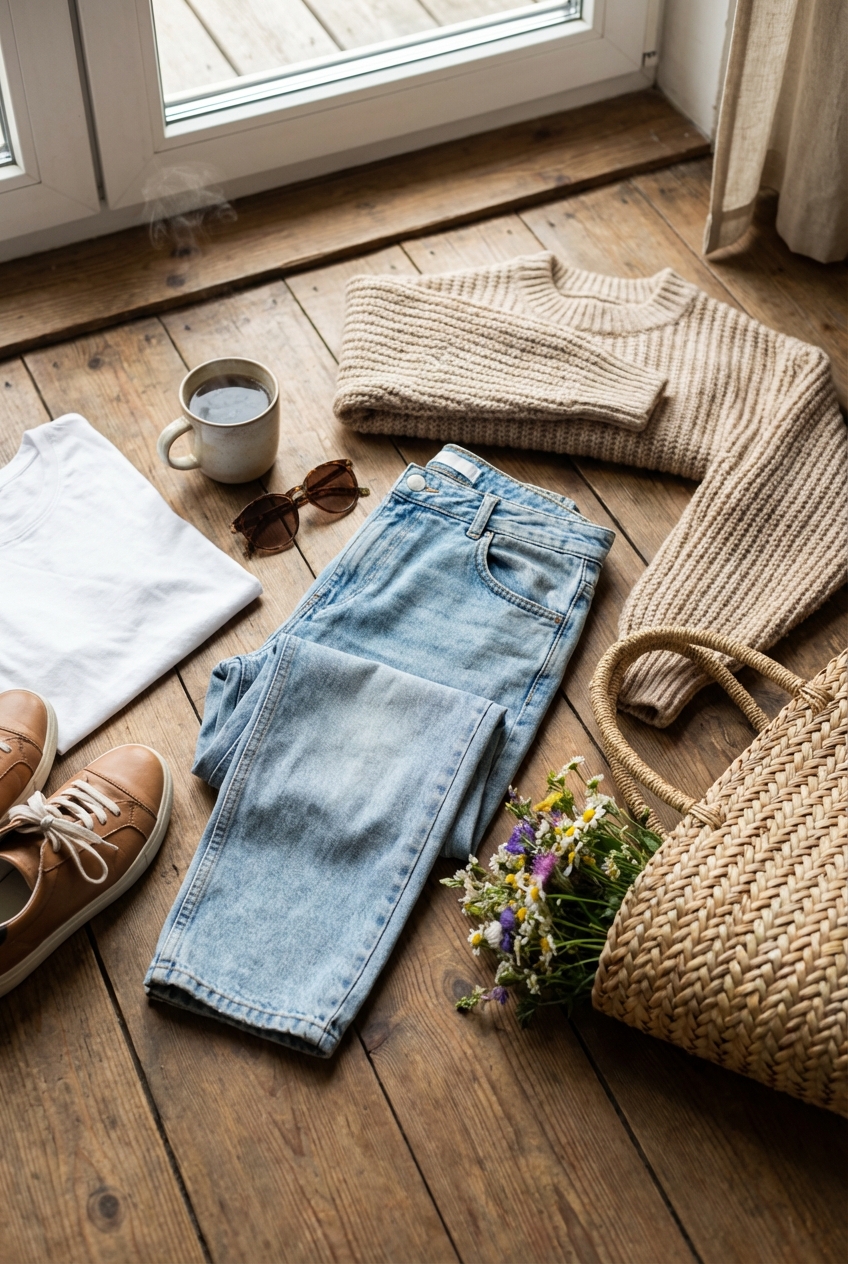
Relaxed Boyfriend Jeans For Casual Everyday Wear
There is a distinct moment in every woman’s style evolution when she realizes that comfort and chic are not mutually exclusive. For years, we were told that “flattering” meant skin-tight, leading to a decade of restricted circulation courtesy of skinny jeans. The pendulum has swung, and the relaxed boyfriend jean has emerged not just as a trend, but as a modern classic essential for a curated wardrobe.
Styling this silhouette requires a shift in perspective. You are moving away from highlighting the exact contours of your legs and toward creating an architectural shape. It is about attitude as much as it is about fabric. The goal is to look effortlessly undone, like you grabbed the nearest pair of denim and they happened to sit perfectly on your hips—even though we know it takes specific tailoring to achieve that effect.
This guide will walk you through the precise mechanics of selecting, fitting, and styling relaxed boyfriend jeans. We will cover fabric weights, cuffing techniques, and the proportion rules I use when styling high-end clients. If you are looking for visual inspiration on how to pull these looks together, make sure to look at the Picture Gallery at the end of the blog post.
Understanding the Silhouette: It is All in the Rise and Fit
The term “boyfriend jean” is often used interchangeably with “mom jeans” or “dad jeans,” but from a design perspective, they are distinct. A true boyfriend cut is designed to look like a men’s jean that has been worn in. It features a straighter fit through the hips and a relaxed thigh that tapers slightly toward the hem. Unlike a mom jean, which emphasizes a high waist and a pear shape, the boyfriend jean sits lower and offers a boxier top block.
When fitting clients, I look for a mid-to-high rise, usually between 9 and 11 inches depending on the torso length. The waistband should sit comfortably just below the natural waist or rest on the hip bones for a slouchier vibe. If the rise is too high, you lose the “borrowed from the boys” aesthetic. If it is too low, you risk distorting your leg line.
The inseam is the critical variable here. Because this style is voluminous, the hem must hit at the right spot to prevent you from looking shorter. The jean should end right at the ankle bone or slightly above. This exposes the narrowest part of your leg, providing a visual break that adds structure to the loose fabric.
Designer’s Note: The Slouch Factor
A lesson from the fitting room: The biggest error I see is clients buying boyfriend jeans that are too tight in the thighs. This defeats the purpose. The fabric should skim your leg, not cling to it. If you can see the outline of your quad muscle when standing still, size up. The waist can always be taken in by a tailor, but you cannot add fabric to the thigh.
Fabric Composition: Why Rigid Denim Reigns Supreme
In the world of luxury denim, fabric composition dictates the silhouette. For a relaxed boyfriend jean, you want structure. This usually means looking for 100% cotton or a blend with very low elastane (1% or less). Rigid denim holds its shape throughout the day, maintaining that cool, architectural hang away from the body.
High-stretch denim (anything over 2% elastane) is designed to cling. If you buy a relaxed cut in a high-stretch fabric, it will look less like a stylistic choice and more like a skinny jean that is a size too big. It tends to sag in the rear and buckle behind the knees in an unflattering way.
We also need to talk about denim weight. For everyday wear, look for a medium-weight denim (around 12oz to 14oz). This weight is substantial enough to smooth over texture and hang straight, but soft enough to be comfortable for sitting. A lighter weight denim often looks cheap and lacks the stiffness required to hold a good cuff.
Common Mistakes + Fixes
- Mistake: Buying soft, thin denim for a relaxed look.
Fix: Check the tag for “heavyweight” or “rigid” descriptors. The fabric should feel substantial between your fingers. - Mistake: Relying on the dryer to shrink jeans back to shape.
Fix: Buy the size that fits your hips perfectly in rigid denim. Wash cold and hang dry to preserve the fibers and fit.
Proportion Play: The Rule of Thirds
Fashion styling relies heavily on the “Rule of Thirds”—a concept often used in art and photography. Visually, the human eye finds a 1/3 to 2/3 ratio most pleasing. When wearing voluminous pants like boyfriend jeans, you generally want your top half to occupy 1/3 of the visual space and your legs to occupy 2/3.
Because boyfriend jeans add volume to your lower half, you must balance that volume on top. This does not always mean wearing a tight shirt, but it does mean defining the waist. A fitted bodysuit is the easiest way to achieve this. It creates a sleek line that disappears into the relaxed waistband, instantly highlighting your shape.
If you prefer a looser top, such as a button-down shirt or a cashmere knit, the “French Tuck” is non-negotiable. Tucking just the front of the shirt into the waistband reveals the waistline and the button of the jeans. This restores the vertical line of the leg, preventing you from looking like a shapeless block.
What I would Style for a Client
Scenario: Saturday Brunch to Errands.
- Base: Mid-wash rigid boyfriend jeans, cuffed to show the ankle bone.
- Top: A white ribbed tank top or fitted crew neck tee tucked in completely.
- Layer: An oversized menswear blazer in navy or charcoal wool.
- Why it works: The fitted tank balances the loose jeans. The blazer adds broad shoulders, balancing the width of the hips.
Footwear Strategy: Anchoring the Look
Shoes make or break a boyfriend jean outfit. Because the hem is wider than a skinny jean, your choice of footwear determines the overall vibe. The wrong shoe can make your feet look lost or your legs look stumpy.
For a casual, everyday look, a low-profile sneaker is ideal. Think vintage tennis shoes or slim leather trainers. Avoid chunky “dad sneakers” unless you are very tall, as the combination of bulky shoes and bulky pants can weigh down your frame.
If you want to elevate the jeans for a dinner date, a pointed-toe pump or a heeled mule is the professional choice. The pointed toe extends the leg line visually, counteracting the cropping effect of the cuffed jean. The exposed skin on the top of the foot (the vamp) is crucial here—it creates lightness.
Ankle Boots and Cuffs
Pairing boyfriend jeans with ankle boots requires precision. The hem of the jean should meet the top of the boot or overlap it slightly. You want to avoid a “skin sandwich”—where you have jeans, a strip of skin, and then the boot—unless you are intentionally styling a cropped summer look. For winter, unroll the cuff so the jeans stack slightly over the boot shaft.
Customizing for Your Body Type
One of the most persistent myths in fashion is that relaxed jeans are only for tall, thin women. This is false. As a stylist, I put boyfriend jeans on every body type; the secret lies in the specific adjustments we make to the garment.
For petite women (under 5’4″), a tapered leg is essential. You want a “slim boyfriend” cut rather than a wide leg. This provides the relaxed feel without overwhelming your frame. A high-contrast shoe—like a nude heel or a sneaker that matches your skin tone—can also help elongate the leg.
For curvy figures or those with a smaller waist and wider hips, the waist gap is the enemy. Look for brands that offer “curve” fits, which provide more room in the hip and thigh while nipping in at the waist. Alternatively, buy to fit your widest part (hips/thighs) and have a tailor take in the waist. It is a $20 alteration that makes a $200 pair of jeans look like a custom piece.
Designer’s Checklist for Fit
- Waist: Should fit two fingers comfortably but not gap significantly at the back.
- Hips: Fabric should drape, not pull. No horizontal whiskering lines across the crotch.
- Length: Must show the ankle bone when cuffed or hit the top of the foot when uncuffed.
Elevating the Look: Accessories and “Third Pieces”
To take boyfriend jeans from “laundry day” to “fashion editor off-duty,” you need a third piece. In interior design, we talk about layering textures; in fashion, we layer items. A simple jeans-and-tee outfit is functional, but adding a third element makes it a look.
Belts are mandatory with boyfriend jeans. Because the fit is relaxed, a belt acts as a visual anchor. A medium-width leather belt with interesting hardware (gold or silver buckle) draws the eye to the waist, reinforcing the hourglass structure we created with our tucking techniques.
Jewelry should be intentional. Since the denim reads as masculine, I like to contrast it with feminine elements. Layered gold necklaces, hoop earrings, or a stack of bracelets add polish. A structured leather handbag also helps. A slouchy hobo bag paired with slouchy jeans can look messy, but a structured tote or a stiff crossbody bag adds necessary geometric lines.
Washes and Finishes: The Style Spectrum
The color of your denim dictates the formality. For pure casual wear, a light-to-medium blue wash with some fading is the gold standard. It feels vintage and lived-in. Distressing (rips and tears) creates a very specific, youthful energy. If you are over 35 or styling for a smart-casual environment, keep distressing minimal—perhaps a rubbed hem or a single knee slit rather than shredded thighs.
Dark indigo or black boyfriend jeans are incredibly versatile. They can almost pass for trousers in a creative office environment. When styling dark washes, keep the rest of the outfit sleek. A black boyfriend jean, a black turtleneck, and black boots create a “column of color” that is slimming and chic, even with a relaxed fit.
White boyfriend jeans are a fresh option for spring and summer. However, white denim is unforgiving. Ensure the denim is heavyweight and opaque. I always recommend sizing up one size in white denim compared to blue denim, as white fabric reflects light and highlights texture more than darker washes.
Finish & Styling Checklist
Before you head out the door, run through this quick mental checklist to ensure your outfit is balanced and polished.
- Check the Rise: Are the jeans sitting at your natural waist or hips as intended? Adjust your belt to hold them in the sweet spot.
- The Cuff Test: Is your cuff neat? A single large fold (about 2 inches) usually looks more modern than a small, tight roll.
- Waist Definition: Is your top tucked in, or is the hem cropped? Ensure your waist is visible to maintain proportion.
- Shoe Gap: Can you see your ankle bone? If not, cuff the jeans higher or switch to a lower-cut shoe.
- Hardware Check: Does the metal on your belt match the metal on your bag or jewelry? Mixing metals is fine, but matching them looks more cohesive.
- Volume Balance: If the jeans are very baggy, is your top fitted? If your top is loose, is the jacket structured?
FAQs
Q: Can I wear boyfriend jeans if I have short legs?
Absolutely. The key is to avoid cuffs that are too thick, which can visually chop up your leg. Opt for a raw hem cut at the ankle instead. Pair them with a nude shoe or a shoe with a deep vamp (low cut front) to extend the leg line.
Q: How often should I wash my boyfriend jeans?
As rarely as possible. Rigid denim adapts to your body heat and shape the longer you wear it. Washing resets the fibers and tightens the denim back up. I recommend washing every 10 wears, or only when there are visible stains. Spot clean in between.
Q: Should I size down for a tighter fit?
Generally, no. If you size down too much, you lose the “boyfriend” effect and end up with a poor-fitting straight leg. If you want a tighter look, buy a “slim boyfriend” or “girlfriend” cut, which is designed to be narrower, rather than squeezing into a size too small.
Q: Can I wear boyfriend jeans to work?
This depends on your office dress code. For creative or casual offices, yes. Choose a dark, uniform wash with no distressing (no holes). Pair them with a blazer, a crisp button-down, and loafers or heels. Avoid sneakers and t-shirts to keep it professional.
Q: My boyfriend jeans get baggy knees by the end of the day. What do I do?
This is the nature of 100% cotton denim. It relaxes. To minimize this, look for a blend with 1% elastane, which provides recovery without looking like stretch denim. Alternatively, accept the lived-in look as part of the style’s charm.
Conclusion
Embracing the relaxed boyfriend jean is about more than just following a trend; it is about embracing a lifestyle that values ease without sacrificing style. This silhouette offers a freedom of movement that skinny jeans never could, while still providing ample opportunity to showcase your fashion prowess through layering and accessorizing.
Remember that the perfect pair is the one that makes you feel confident. It might take trying on ten different brands to find the right ratio of rise-to-hip-to-thigh, but once you find it, it will become the workhorse of your closet. Treat denim shopping like an investment project—focus on the fabric quality and the fit mechanics, and the style will follow naturally.
Whether you are pairing them with a silk camisole for date night or a graphic tee for a coffee run, relaxed boyfriend jeans are the ultimate canvas for personal expression. Roll those cuffs, tuck in that shirt, and walk out the door knowing you have mastered the art of casual cool.
Picture Gallery


