
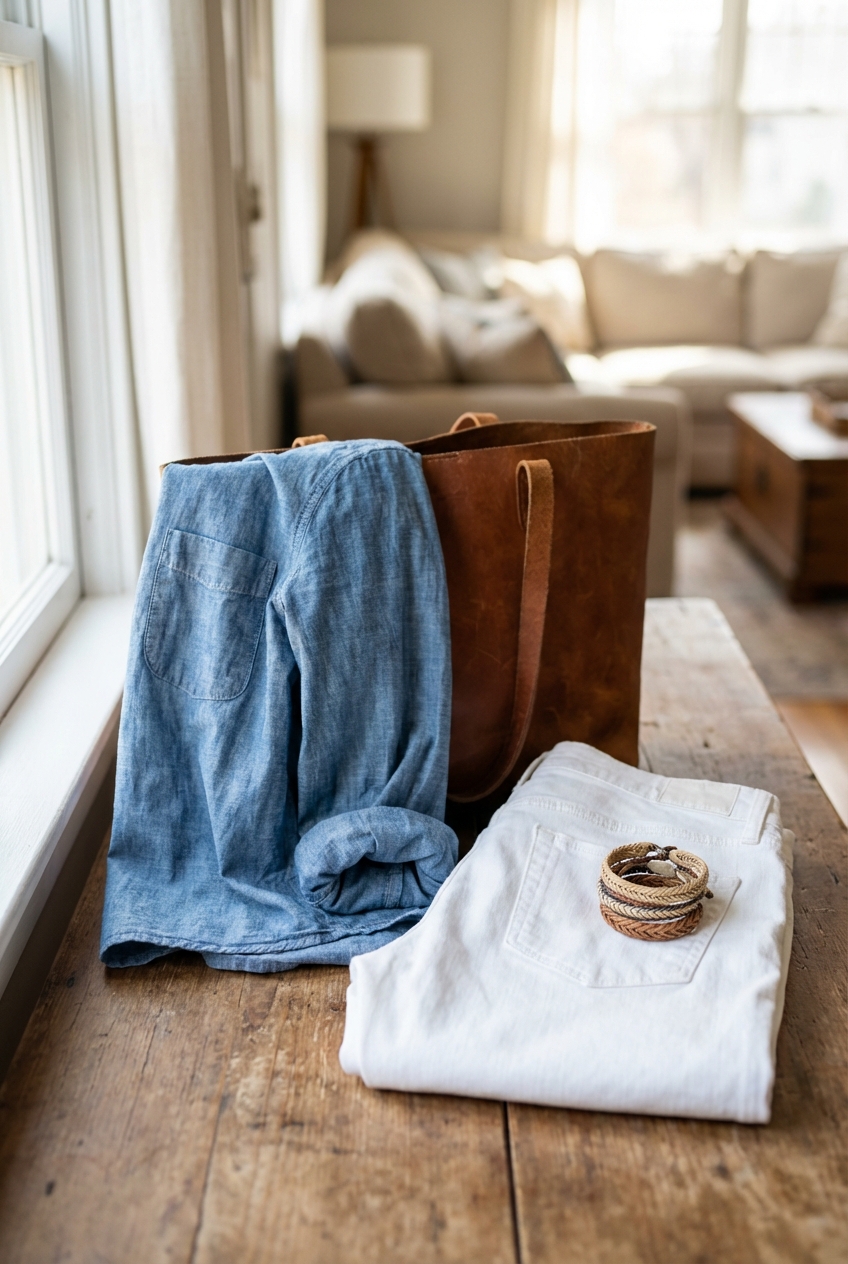
Relaxed Chambray Shirts For Casual Looks
1) Introduction
There are very few items in a woman’s wardrobe that work as hard as a high-quality chambray shirt. It sits right in that sweet spot between the crisp authority of a white button-down and the utter comfort of your favorite broken-in denim. As a stylist, I consider it a foundational “anchor piece” because it grounds prints, neutralizes bright colors, and adds texture to monochromatic looks.
I remember my first investment in a luxury Japanese chambray shirt years ago; it felt stiff at first, but after a month of wear, it draped beautifully against the body like second skin. That styling versatility is why I recommend every client own at least one in a mid-tone wash. Whether you are running errands, heading to a casual brunch, or layering up for a chilly evening, this shirt delivers effortless elegance without trying too hard.
In this guide, we are going to break down exactly how to select, style, and care for this wardrobe staple. We will cover fit mechanics, fabric choices, and the specific tucking techniques that stylists use on set. For a massive dose of visual inspiration, make sure you scroll down to see the curated Picture Gallery is at the end of the blog post.
2) Fabric Fundamentals: Chambray vs. Denim
Many people use the terms “chambray” and “denim” interchangeably, but they are technically different fabrics. Understanding this distinction is crucial for achieving that relaxed, breezy look we are aiming for.
Chambray is a plain weave fabric, meaning the warp and weft threads alternate one over the other. This construction makes the fabric lighter, softer, and more breathable than denim.
Denim is a twill weave, where the thread goes over two or more threads, creating that diagonal ribbing texture you see on jeans. Denim is heavier and structured, while chambray is airy and drapes fluidly.
Why Weight Matters
For a casual, relaxed look, you want a shirt that moves with you. If the fabric is too heavy, it will box you in and look more like a “shacket” (shirt-jacket) than a blouse.
Look for a weight between 3.5 oz and 5 oz. This range ensures the shirt is substantial enough not to be sheer, but light enough to tuck into waistbands without creating bulk.
Fashion Expert’s Note
I always check the underside of the fabric. In true chambray, the underside will look almost identical to the front. This is a sign of a quality plain weave that will soften beautifully over time.
3) Finding the Perfect “Relaxed” Fit
The term “relaxed” is often misinterpreted as “oversized,” but in high-end fashion, there is a distinct difference. An oversized shirt is cut large everywhere, while a relaxed fit is strategically cut to skim the body without clinging.
You want the shoulder seam to sit slightly off the shoulder point, perhaps by half an inch. This drop-shoulder effect signals that the look is intentional and casual.
However, the sleeves should still hit at the wrist bone. If the sleeves are too long, you risk looking like you are wearing a borrowed men’s shirt that doesn’t fit.
The Bust Gap Rule
The most common issue with button-downs is the dreaded gap at the bust line. A truly well-fitted relaxed shirt should have enough circumference in the chest area to prevent pulling.
When trying on a shirt, sit down. Our bodies expand slightly when seated, and this is usually when buttons start to pull. If the placket (the strip of fabric holding the buttons) creates an oval opening, size up.
Common Mistakes + Fixes
Mistake: Buying a fitted shirt two sizes too big to get the “relaxed” look.
Fix: This usually results in armholes that are too low and a collar that gapes. Buy a shirt specifically cut as “boyfriend” or “relaxed” in your actual size.
4) The Art of the Tuck and Roll
The difference between looking sloppy and looking styled often comes down to how you manipulate the fabric. You rarely see a stylist let a chambray shirt just hang straight down.
We use tucking and rolling to create shape and highlight the waist. Since chambray is soft, it holds a roll or a tuck much better than stiff poplin.
The French Tuck (Half-Tuck)
This is the gold standard for casual looks. Tuck only the front portion of the shirt into your waistband, leaving the back loose to cover your seat.
Grab the bottom hem directly below your belly button. Push about three inches of fabric into your jeans, then blouse it out slightly.
The “Stylist” Sleeve Roll
Don’t just shove your sleeves up your forearm. For a polished look, unbutton the cuff and the gauntlet button (the small button on the forearm placket).
Fold the cuff back once so it is inside out. Then, fold it again, covering the cuff completely. This creates a secure roll that stays above the elbow without cutting off circulation.
What I’d Do in a Real Project
When styling a client for a casual photo shoot, I often use double-sided fashion tape between the buttons at the bust. This keeps the placket perfectly flat, even if the client moves around. It creates a clean vertical line that elongates the torso.
5) Pairing with Bottoms: Volume and Proportion
Styling a relaxed top requires balancing the volume on the bottom. If you wear a loose shirt with baggy trousers, you risk losing your figure entirely.
The rule of thumb is to contrast the silhouette. If the top is loose, keep the bottom fitted or structured.
White Denim
This is the quintessential coastal look. The contrast between the indigo blue shirt and crisp white jeans is timeless and fresh.
Opt for a straight-leg or slim-cut white jean. The brightness of the white makes the blue of the chambray pop.
Black Skinny Jeans or Leggings
For an edgy, city-chic vibe, pair your chambray with black denim. The darker bottom creates a sleek foundation.
This is a great option for “running around” days. Add black leather loafers to elongate the leg line.
Wide-Leg Trousers
You can wear a relaxed shirt with wide-leg pants, but you must define the waist. This is non-negotiable.
Tuck the shirt in completely and tightly. Add a leather belt to create a visible break between the torso and legs. This restores your proportions and keeps the look intentional.
6) Mastering the “Canadian Tuxedo”
Denim on denim has evolved from a fashion faux pas to a style statement. The key to pulling this off is managing the contrast between the shades of blue.
The safest route is high contrast. Pair a light, bleached-out chambray shirt with dark, raw indigo jeans.
Monochrome Denim
If you want to wear similar shades of blue, the textures need to be different. The smooth, matte finish of the chambray shirt should contrast with the rougher texture of the jeans.
Break up the wall of blue with accessories. A tan leather belt and matching sandals serve as a visual palate cleanser.
Pro Tip: The Third Piece
If you feel like there is too much blue, add a third layer. Throw a camel trench coat or an olive green utility jacket over the top.
This breaks the vertical line and adds dimension. It distracts the eye so the denim-on-denim isn’t the only focal point.
7) Layering Strategies
Chambray acts as a neutral, meaning it layers beautifully under almost anything. Its lack of bulk makes it superior to flannel or oxford cloth for layering.
Under Knitwear
Wear your chambray shirt under a chunky cable-knit sweater. Pull the collar out, but also let the curved hem of the shirt peek out from under the sweater at the bottom.
Pull the cuffs of the shirt out beyond the sweater sleeves. This adds a pop of color and texture to a cozy winter look.
As a Light Jacket
In the summer, treat your unbuttoned chambray shirt as a light cardigan. Wear it over a white ribbed tank top or a slip dress.
Tie the front tails in a knot at the waist to create a cropped jacket effect. This works perfectly with high-waisted midi skirts.
The Blazer Combo
For a business-casual environment, swap your white blouse for a chambray shirt under a navy or grey blazer.
The texture of the chambray softens the severity of the blazer. It makes the suit look approachable and modern rather than corporate and stuffy.
8) Accessories to Elevate the Look
Since a chambray shirt is inherently casual, your accessories dictate the final formality of the outfit. You can dress it up or down instantly just by changing your jewelry and shoes.
Jewelry Choices
Gold jewelry looks particularly stunning against the blue tones of chambray. A chunky gold chain necklace or gold hoop earrings add warmth to the cool indigo fabric.
If you prefer silver, go for sculptural, modern pieces. Avoid dainty silver chains as they can get lost against the textured fabric.
Footwear Pairing
Sneakers: A clean white leather sneaker keeps the vibe athletic and weekend-ready.
Loafers: A penny loafer adds a preppy, academic touch.
Heels: To dress it up for date night, choose a nude pump or a strappy metallic sandal.
Leather Goods
Cognac, tan, and chocolate brown leathers are the natural best friends of chambray. The earth tones complement the blue perfectly.
Avoid matching your bag perfectly to your shoes. If you are wearing tan sandals, try a cream canvas tote or a woven straw bag for texture.
9) Finish & Styling Checklist
Before you head out the door, run through this quick stylist checklist to ensure your look is polished.
The Collar Check: Is the collar standing up nicely or flattened? Give it a quick press if it looks floppy.
The Button Check: Are you showing too much skin? Usually, unbuttoning the top two buttons is the perfect balance.
The Roll Check: Are both sleeves rolled to the same height? Symmetry helps the look feel put-together.
The Tuck Check: Raise your arms. Did the shirt untuck completely? If so, you need to tuck more fabric in or wear a belt to secure it.
* The Lint Check: Darker chambray can attract lint. A quick roll with a lint roller is always a good idea.
10) FAQs
Q: Can I wear a chambray shirt to the office?
A: Yes, provided the dress code isn’t strictly formal. Choose a darker wash without distressing or fading. Tuck it fully into tailored trousers or a pencil skirt and wear closed-toe heels.
Q: How do I wash my chambray shirt to keep it soft?
A: Wash in cold water on a gentle cycle. Hang it to dry rather than using the dryer. The heat from the dryer can make the cotton fibers brittle and stiff over time.
Q: What is the difference between chambray and Oxford cloth?
A: Oxford cloth is a basket weave and is generally thicker and stiffer. It is more associated with preppy, business-casual menswear. Chambray is finer, smoother, and has a more fluid drape.
Q: Should I iron my chambray shirt?
A: For a sharp look, yes. However, part of the charm of chambray is its lived-in texture. A quick steam is usually enough to remove deep creases while leaving the natural character of the fabric intact.
Q: Can I wear chambray in the winter?
A: Absolutely. It is a four-season fabric. In winter, use it as a layering piece under wool sweaters, cardigans, or blazers to add color without adding heat.
11) Conclusion
The relaxed chambray shirt is a testament to the idea that style does not have to be complicated. It offers a blank canvas for your personal aesthetic, whether that leans towards preppy, bohemian, or minimalist. By focusing on the right fit, mastering the roll of the sleeve, and understanding how to balance proportions, you can turn this humble workwear fabric into the chicest item in your closet.
Remember that the goal is an outfit that looks lived-in and comfortable, yet intentional. Invest in a quality shirt made of natural fibers, and it will only get better with age, softening and fading into a piece that is uniquely yours.
12) Picture Gallery


