
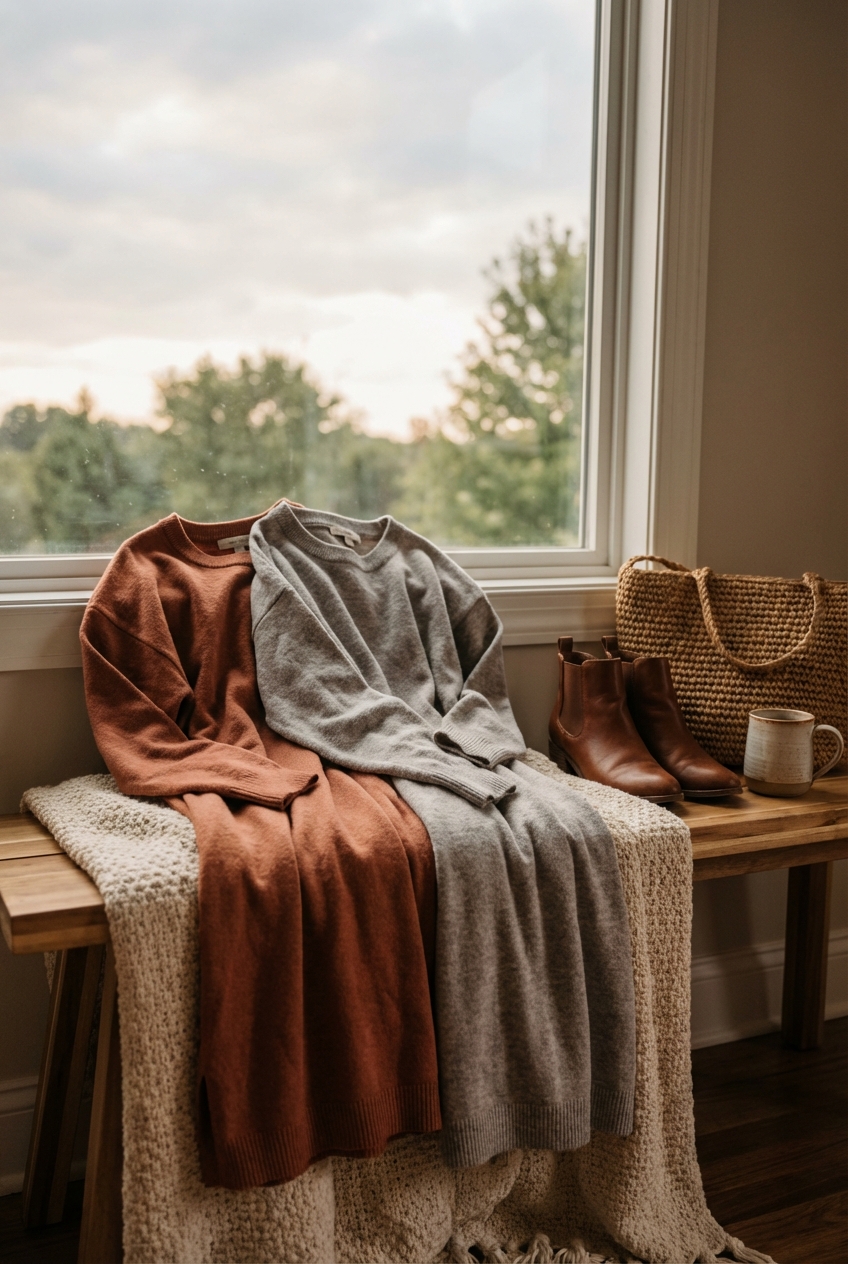
Relaxed Knit Dresses For Warm Yet Cloudy Evenings
There is a very specific type of weather that challenges even the most curated wardrobes. It is that transitional atmosphere where the temperature remains warm and perhaps a bit humid, yet the sky is overcast and grey. In these moments, a summer sundress feels too exposed and flimsy for the lack of sunshine, yet a heavy jacket or wool ensemble is far too stifling.
The solution lies in the relaxed knit dress. This is not the body-con sweater dress of deep winter, nor is it the sheer beach cover-up of high July. It is a sophisticated middle ground that relies on breathable fibers, strategic draping, and the unique ability of knitwear to provide comfort while maintaining a polished silhouette. As a fashion stylist, I often tell my clients that a high-quality knit dress is the equivalent of a “blank slate” room in interior design—it provides texture and structure, waiting only for your finishing touches.
I have curated this guide to help you select and style the perfect knit pieces for these unique weather conditions. We will look at fiber composition, gauge, and fit to ensure you look effortless rather than undone. If you are looking for specific visual inspiration, skip ahead to the curated Picture Gallery at the end of this blog post.
Understanding Fiber Composition for Humidity
The single most important factor in choosing a knit dress for warm weather is the fiber content. The “hand” of the fabric—how it feels against your skin—dictates your comfort level more than the cut of the dress. When the air is heavy or humid, synthetic fibers like 100% acrylic or heavy polyester blends act like plastic wrap, trapping heat and moisture against the body.
For warm evenings, you must prioritize natural fibers or high-quality semi-synthetics. Cotton is the standard, but look specifically for Pima or mercerized cotton. These varieties have longer fibers that resist pilling and offer a slight sheen, which elevates the look from casual to elegant. They breathe exceptionally well, allowing air to circulate through the loops of the knit.
Linen blends are another secret weapon for the fashion-forward wardrobe. A 100% linen dress can wrinkle aggressively, but a linen-cotton or linen-viscose blend knit offers the cooling properties of linen with the soft drape of cotton. The texture of linen adds a beautiful “slub” or irregularity to the yarn, giving the dress an organic, artisanal quality that looks expensive.
Designer’s Note: The Silk Advantage
One often overlooked fiber for knitwear is silk. While we associate silk with woven blouses, spun silk used in knits regulates body temperature incredibly well. It keeps you cool when it is warm and offers just enough insulation if a breeze picks up. A cotton-silk blend knit dress offers the ultimate luxury hand-feel and drapes over curves without clinging.
The Architecture of the Fit: Silhouette and Scale
In high-end fashion styling, we talk about “volume management.” A relaxed knit dress should not look like a sack. The goal is to achieve a silhouette that skims the body rather than hugging it or swallowing it whole. This is where the concept of scale becomes critical.
If you are choosing a maxi-length knit dress, ensure the volume is controlled at the top. A sleeveless or fitted shoulder creates a “column” effect that lengthens the body. If the dress has voluminous sleeves or a dropped shoulder, a midi length (hitting mid-calf) is often more flattering because it exposes the ankles, breaking up the visual weight of the fabric.
Pay close attention to the neckline. On a cloudy evening, a boat neck or a deep scoop neck helps frame the face and adds lightness to the look. High turtlenecks should be avoided unless the knit is an extremely open gauge, as they can look too wintry for the temperature. The “relaxed” element comes from the ease through the waist and hips. There should be roughly two inches of positive ease at the hip—enough to move freely, but not so much that the fabric collapses on itself.
Common Mistakes + Fixes
Mistake: Buying a relaxed dress that is too large in the armholes.
The Fix: The shoulder seam is your anchor point. Even in an oversized dress, the armhole should not gap specifically to show your undergarments (unless that is a deliberate styling choice with a bandeau). If the armhole gaps, the dress is likely too big, or the pattern was poorly graded. Take it to a tailor to lift the shoulder seam or take in the side seam just under the arm.
Gauge and Texture: Creating Visual Interest
“Gauge” refers to the number of stitches per inch in a knit. For warm but cloudy evenings, you want to look for a fine to medium gauge. A chunky cable knit reads as “winter lodge,” whereas a fine ribbed knit or a pointelle stitch reads as “transitional elegance.”
Texture is vital when the lighting is flat. On a cloudy evening, you don’t have the benefit of direct sunlight to create high-contrast shadows or highlight the sheen of a fabric. Therefore, the texture of the knit itself must do the heavy lifting. A ribbed texture creates vertical lines that elongate the figure. A waffle knit adds a casual, tactile dimension that feels cozy but remains breathable.
Transparency is also a tool you can use. “Open work” knits or crochet-style dresses allow for maximum airflow. To keep this high-end and not beachy, wear a separate slip dress underneath in a matching tone. This adds depth to the outfit and ensures modesty while maintaining that breezy aesthetic.
What I’d Do in a Real Project
If I were styling a client for an outdoor dinner party on a grey, 75-degree evening, I would select a sleeveless, midi-length rib-knit dress in a sand or charcoal tone. The ribbing provides structure so the dress doesn’t cling to imperfections. I would choose a dress with a side slit to create movement when walking, which visually lightens the heavy texture of the knit.
Color Theory for Flat Light
The quality of light on a cloudy evening is diffused and cool. This can sometimes make skin tones look washed out. When selecting your knit dress, consider colors that hold their own without needing direct sun to sparkle.
Avoid muddy earth tones that might blend too much with the greyscale environment. Instead, opt for “jewel tones” or stark neutrals. A deep emerald green, navy blue, or rich burgundy looks stunning against a grey sky. These colors absorb the available light and frame the body beautifully.
If you prefer neutrals, cream and ivory are superior to stark white in cloudy weather. Stark white can look clinical in flat light, whereas creamy tones add warmth to your complexion. Charcoal and slate grey are also sophisticated monochrome options; just ensure you break up the color with metallic accessories to avoid looking gloomy.
Hardware and Finish Coordination
Treat your jewelry like the hardware in a room renovation. On a knit dress, the fabric absorbs light, so your accessories need to reflect it. High-shine gold or polished silver cuffs, chunky chain necklaces, or statement earrings provide the necessary contrast against the matte texture of the cotton or linen knit.
Layering Without Bulk
The challenge of a “relaxed” dress is that adding layers can sometimes make the outfit look sloppy. However, you need a contingency plan if the temperature drops or the wind picks up. The rule here is “opposing textures.”
Do not layer a heavy knit cardigan over a relaxed knit dress. The friction between the two knits will cause bunching and sticking, and the silhouettes will merge into a shapeless lump. Instead, contrast the soft knit dress with a structured layer. A cropped denim jacket creates a waistline. A leather moto jacket adds edge and structure to the soft drapery of the dress.
For a more elegant approach, a lightweight trench coat made of Tencel or silk is ideal. It offers coverage without warmth. Leave the trench open and tie the belt in the back to create a narrowed silhouette that reveals the dress while covering your arms.
Pro-Level Styling Rule: The Third Piece
In fashion, the “Third Piece Rule” suggests that every outfit needs three elements to look finished (e.g., Top + Bottom + Jacket). With a dress, you only have one main element. Your “second” and “third” pieces become critical.
1. The Dress (The Foundation)
2. The Belt (The Structure – optional but recommended for loose knits)
3. The Statement Shoe or Structured Bag (The Anchor)
Footwear: Anchoring the Look
The choice of shoe dictates the entire vibe of a relaxed knit dress. Because the dress itself is soft and unstructured, your footwear needs to provide stability. Avoid flimsy flip-flops, which downgrade the look to “loungewear.”
For warm evenings, a leather slide sandal with a thick strap is chic and practical. It mimics the relaxed nature of the dress but the leather adds polish. If you want height, a block-heel mule is the perfect transitional shoe. It covers more of the foot than a strappy sandal (appropriate for cloudy weather) but remains open at the back for airflow.
Sneakers can work, but they must be pristine. A clean, white leather sneaker paired with a maxi knit dress is a classic “fashion editor” uniform. It suggests you are busy and practical but value luxury. However, ensure the hem of the dress hits at the ankle bone so it does not drag on the ground or get caught in the shoe.
Measurements and Hemlines
Midi Dress + Boots: If you choose to wear boots, ensure there is a gap of skin between the top of the boot and the hem of the dress, or that the boot goes fully under the dress. Never let the hem hit the very top edge of the boot, as this visually cuts off your legs.
Maxi Dress + Sandals: The hem should hover 0.5 to 1 inch off the ground. Any longer, and you risk tripping or ruining the knit. Any shorter (like 3 inches off the ground), and it looks like the dress shrank in the wash.
Finish & Styling Checklist
Before you head out into the warm, grey evening, run through this mental checklist to ensure your look is cohesive and functional.
- Undergarment Check: Knit fabrics are unforgiving regarding texture. Are you wearing seamless, nude-tone undergarments? Lace textures will show through smooth knits.
- The Transparency Test: Stand in a doorway with light behind you. Can you see a silhouette of your legs? If yes, do you have a slip or biker shorts underneath?
- The Sit Test: Knits can bag out. When you sit down, does the dress pull uncomfortably across the hips? If so, the size is too small.
- Accessory Balance: Since the dress is matte, do you have at least one “shiny” element (jewelry, bag hardware, or glossy leather shoes)?
- Hemline Safety: If you are wearing flat shoes, ensure the hem is not dragging. Knits can stretch vertically as you wear them due to gravity.
- Snag Hazard: Check your jewelry and bag hardware for sharp edges. A relaxed open-weave knit can snag easily on a claw-set ring or a rough zipper.
FAQs
How do I stop my knit dress from growing longer as I wear it?
This is gravity at work, especially with heavy cotton or viscose knits. The looser the weave, the more it will stretch. To prevent this, store the dress folded, never hung. If it stretches during wear, washing it and reshaping it flat to dry will usually snap the fibers back to their original length.
Can I wear a belt with a relaxed knit dress without it looking bunched?
Yes, but the type of belt matters. Avoid thin, digging belts. Use a wide leather belt or a soft sash. The trick is to blouse the fabric slightly over the belt so the cinching looks intentional and creates a gentle fold, rather than looking like you have tied a rope around a pillow.
What do I do if my knit dress starts pilling under the arms?
Pilling is a reality of natural fibers and friction; it does not necessarily mean poor quality. Invest in a small battery-operated fabric shaver or a pumice sweater stone. Gently run it over the high-friction areas (underarms, where your bag hits the hip) after every few wears. Never pull the pills off by hand, as this pulls the fiber loose and creates more pilling.
Is it okay to wear a knit dress to a formal event?
For a warm, cloudy evening event? Absolutely. The key is the gauge and the condition of the fabric. A fine-gauge silk or mercerized cotton knit in black or navy, free of pills and snags, is incredibly chic. Pair it with a heel and statement earrings. Avoid chunky, oversized knits for formal settings.
Conclusion
Embracing the relaxed knit dress for warm, cloudy evenings is about mastering the balance between comfort and intentionality. It is a garment that respects the humidity while acknowledging the lack of sun. By choosing the right natural fiber blends, paying attention to the scale of the silhouette, and adding structure through thoughtful accessories, you transform a simple piece of clothing into a sophisticated ensemble.
Remember that the beauty of a knit dress lies in its movement and its texture. It is a tactile experience as much as a visual one. Whether you are hosting a dinner on the patio or attending a gallery opening, these pieces allow you to move with ease and confidence. Treat your knitwear with care—fold it, de-pill it, and accessorize it well—and it will serve as the backbone of your transitional wardrobe for years to come.
Picture Gallery


