
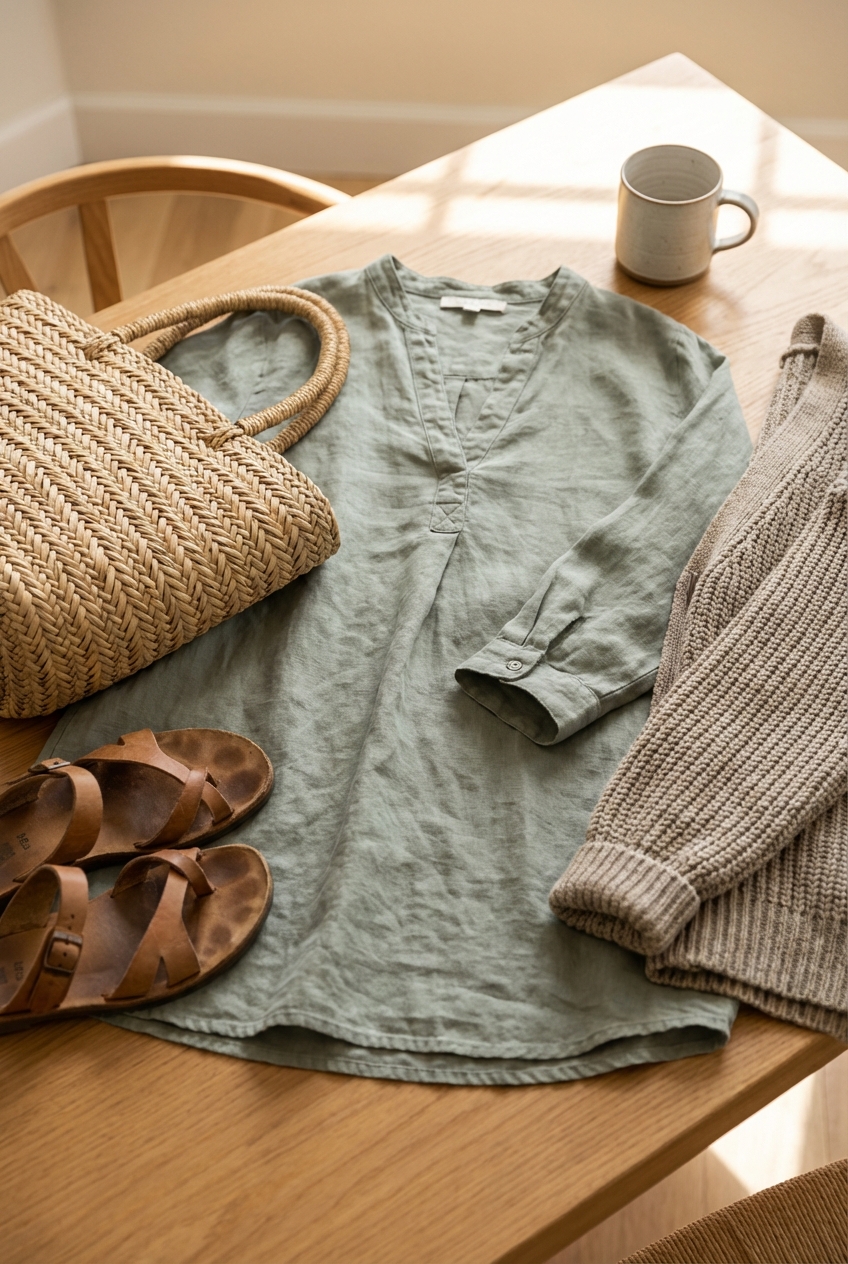
Relaxed Tunic Tops For Everyday Wear
I recall a specific chaotic Tuesday early in my styling career. I had a client fitting, a fabric sourcing trip, and a dinner meeting all in one day. I needed an outfit that felt like pajamas but looked like I commanded the room. That was the day I truly discovered the power of a well-cut tunic. It wasn’t just a long shirt; it was an architectural solution to a busy life.
We often fall into the trap of thinking “comfortable” means “sloppy.” We assume that if a garment is loose, it lacks shape or intention. However, the modern tunic is a masterclass in purposeful volume. It allows for movement and ease while providing a canvas for high-end accessories and distinct silhouettes. It is the backbone of a functional, chic wardrobe.
Finding the right tunic is less about size and more about geometry. It requires understanding where the hem hits your leg, how the fabric drapes over the bust, and how it interacts with your bottom layer. I have curated a visual guide to these silhouettes, and you can find the complete Picture Gallery at the end of the blog post.
The Architecture of Silhouette: Balancing Volume
The first rule of wearing a relaxed tunic is identifying the “Rule of Opposites.” In design, we balance a room by pairing heavy furniture with light accents. In fashion, if you have volume on top, you generally need a streamlined silhouette on the bottom. This prevents the outfit from overwhelming your frame.
When a tunic has a relaxed fit, it creates a visual block of fabric. To ground this, you must pair it with a fitted bottom. Leggings are the obvious choice, but slim-cut denim, cigarette trousers, or even a pencil skirt can work beautifully. The goal is to show the outline of the leg to prove there is a body underneath the fabric.
Designer’s Note:
One common issue I see is the “tent effect.” This happens when a client wears a wide tunic with wide-leg trousers. Unless you are very tall or styling a specific avant-garde look, this tends to widen the figure. I always recommend tapering the look as you move down the body.
Common Mistakes + Fixes:
- Mistake: Wearing a tunic that is boxy at the shoulders and the hips.
- Fix: Ensure the shoulder seam hits exactly at your natural shoulder point. A fitted shoulder anchors the fabric so the rest can flow without looking ill-fitting.
- Mistake: Choosing a hemline that cuts across the widest part of the calf.
- Fix: Aim for a hem that hits either mid-thigh or just above the knee. This elongates the leg line.
Fabric Integrity and “The Hand”
In the world of high-end styling, we talk about the “hand” of a fabric—how it feels and how it behaves when held. For a tunic, the hand dictates the drape. A stiff fabric will stand away from the body, creating structure. A fluid fabric will cling and flow, highlighting curves subtly.
Natural fibers are paramount for everyday wear. Cotton poplin provides a crisp, button-down aesthetic that works well for office environments. It holds its shape and keeps collars standing tall. However, it can wrinkle, so it requires a commitment to steaming or ironing.
For a softer, more forgiving look, look for Tencel, Modal, or Bamboo blends. These materials have a weight to them that allows the fabric to drop vertically rather than puffing out. They are excellent for layering under blazers or cardigans because they don’t add bulk.
What I’d do in a real project:
- For summer clients: I source 100% linen tunics. The wrinkles are part of the charm (textural luxury). I look for side slits to increase airflow.
- For winter clients: I prioritize fine-gauge merino wool. It offers the length of a tunic without the overheating associated with chunky knits.
- For travel wardrobes: I choose jersey blends with a small percentage of elastane. They recover their shape after a long flight.
Hemlines, Slits, and Vertical Proportions
The hemline is the most critical measurement of a tunic. A standard top hits at the hip bone. A tunic, by definition, extends below the hip, usually covering the rear. However, not all lengths are created equal. The “Golden Ratio” of your outfit depends on where this line stops.
If you are petite (under 5’4″), a tunic that is too long can shorten your legs significantly. In this case, I recommend a high-low hem. This is where the front of the shirt is slightly shorter than the back. It gives the illusion of longer legs from the front view while providing the coverage you want in the back.
Side slits are functional engineering. A tunic without side slits can bunch up around the hips when you sit or put your hands in your pockets. A generous side split allows the back panel to move independently of the front. This improves comfort and adds a dynamic element to the garment when you walk.
Specific Measurements to Watch:
- Fingertip Rule: Stand with your arms straight down. Ideally, a casual tunic should hit right around where your fingertips end. This is usually the sweet spot for wearing leggings.
- The 3-Inch Rule: If wearing a tunic with boots, try to keep at least 3 inches of leg (clad in leggings or tights) visible between the hem of the tunic and the top of the boot. This breaks up the heaviness.
Necklines and Framing the Face
Because a tunic covers so much of the torso, the neckline becomes the focal point. It draws the eye up to the face. The choice of neckline changes the formality of the piece instantly. A high crew neck is modern and modest, but it can create a “monolith” effect of solid color.
To break up the expanse of fabric, V-necks or deep scoops are highly effective. They expose the collarbone and create a vertical line that slims the upper body. If you prefer a button-down tunic, leaving the top two or three buttons undone achieves the same effect.
For a more sophisticated, architectural look, a boat neck (bateau) is stunning. It widens the shoulder line visually, which can balance out wider hips. This is a classic trick used in fashion design to create an hourglass illusion without tight clothing.
Designer’s Note:
Don’t ignore the back of the neck. Many high-end tunics feature a center-back pleat or a yoke. This extra fabric ensures that when you reach forward (driving, typing, hugging), the fabric doesn’t pull tight across the shoulder blades. It’s a sign of quality construction.
Styling For Context: The “Third Piece” Rule
A tunic and leggings is a base, not a full outfit. To elevate this for everyday wear, you need to apply the “Third Piece Rule.” This rule states that an outfit feels finished only when you add a third element beyond the top and bottom.
Option A: The Structure (Jackets and Vests)
Because tunics are long, cropping the outer layer looks fantastic. A cropped denim jacket or a leather moto jacket that hits at the natural waist creates a distinct waistline. The tunic flows out from underneath, creating layers of texture. Long utility vests also work well, creating a long column line that is very slimming.
Option B: The Clinch (Belting)
If you feel like you are drowning in fabric, a belt is your best friend. However, avoid thin, flimsy belts. A relaxed tunic needs a substantial leather belt or a wide sash. Cinch it at your true waist (the smallest part of your torso), not your hips. Blouse the fabric slightly over the belt to hide any tension lines.
Option C: Statement Accessories
If you prefer the loose silhouette unbelted, use a long pendant necklace to create a vertical centerline. This draws the eye inward and down, narrowing the visual width of the torso. A substantial scarf draped—not tied tight—can also add verticality.
Care and Longevity of Oversized Garments
Maintaining the shape of a relaxed tunic is different from caring for fitted tees. Because there is more fabric, the weight of the water during washing can drag the garment out of shape if you aren’t careful. This is especially true for knits and jerseys.
Laundering Rules:
- Gravity is the enemy: Never hang a damp knit tunic. The water weight will stretch the shoulders and lengthen the hem unevenly. Always dry flat.
- Reshaping: While the garment is damp, gently tug the side seams and the plackets to straighten them. This prevents the “torquing” effect where the side seams twist around to the front.
- Storage: Woven tunics (cotton, linen) should be hung on wide, padded hangers to prevent shoulder nipples. Knit tunics should be folded to maintain the elasticity of the fibers.
When buying, check the grain of the fabric. If the threads look crooked on the hanger, they will twist permanently after the first wash. High-quality garments are cut “on grain,” meaning the weave runs straight up and down.
Finish & Styling Checklist
Before you head out the door, run through this quick mental checklist to ensure your relaxed look is polished, not messy.
- Check the Shoulder Seam: Is it sitting on your shoulder bone or intentionally dropped? If it’s hovering in between, the fit is wrong.
- The Sit Test: Sit down on a chair. Does the tunic pull tightly across the hips? If so, you need a size up or a garment with deeper side slits.
- Opacity Check: If wearing leggings, bend over in front of a mirror. Is the tunic fabric sheer in the light? Ensure your undergarments are nude or the tunic is fully opaque.
- The Sleeve Roll: If the sleeves are long, try rolling or scrunching them to the elbow. exposing the forearm is a stylist’s trick to make oversized clothes look tailored.
- Balance Check: Look at your shoes. If you are wearing a heavy tunic and leggings, avoid tiny ballet flats which can make your feet look disproportionately small. Opt for a loafer, sneaker, or boot with some visual weight.
FAQs
Can I wear a tunic if I have a large bust?
Absolutely. The key is to avoid high, tight necklines which create a “shelf” effect. Opt for V-necks or split-neck styles. Also, look for tunics that have darts at the bust line. This provides shape without tightness, preventing the fabric from hanging straight down from the bust like a curtain.
Are tunics appropriate for the office?
Yes, but fabric choice is critical. Avoid jersey cottons that look like loungewear. Choose crisp cotton poplin, silk, or high-quality rayon. Pair them with slim ankle trousers rather than leggings. A pointed-toe flat or heel instantly elevates the look to business casual.
How do I stop my tunic from clinging to my leggings?
Static cling is a common issue with synthetic blends. Using a static guard spray is the quickest fix. Alternatively, wearing a slip or a camisole underneath can create a buffer layer. Washing your synthetics with a specialized anti-static rinse can also help long-term.
What is the difference between a tunic and a short dress?
The main difference is usually the width of the hem and the rise of the armhole. Tunics are cut with the assumption that you will wear pants, so the side slits may go higher than a dress. Additionally, a tunic dress is usually fully opaque, whereas some tunic tops might be slightly sheer, relying on the bottom layer for coverage.
Conclusion
The relaxed tunic is more than just a comfortable fallback option; it is a deliberate style choice that prioritizes self-assurance and ease. By understanding the simple rules of proportion—balancing volume with slim bottoms, selecting fabrics with the right drape, and utilizing hemlines to elongate the leg—you can create a uniform that serves you for years.
Fashion should ultimately make your life easier, not harder. A collection of high-quality tunics provides a reliable foundation for everyday wear, allowing you to move through your day with grace and functionality. Whether you are managing a renovation, running a boardroom meeting, or simply navigating a busy weekend, the tunic is your sartorial ally.
Picture Gallery


