
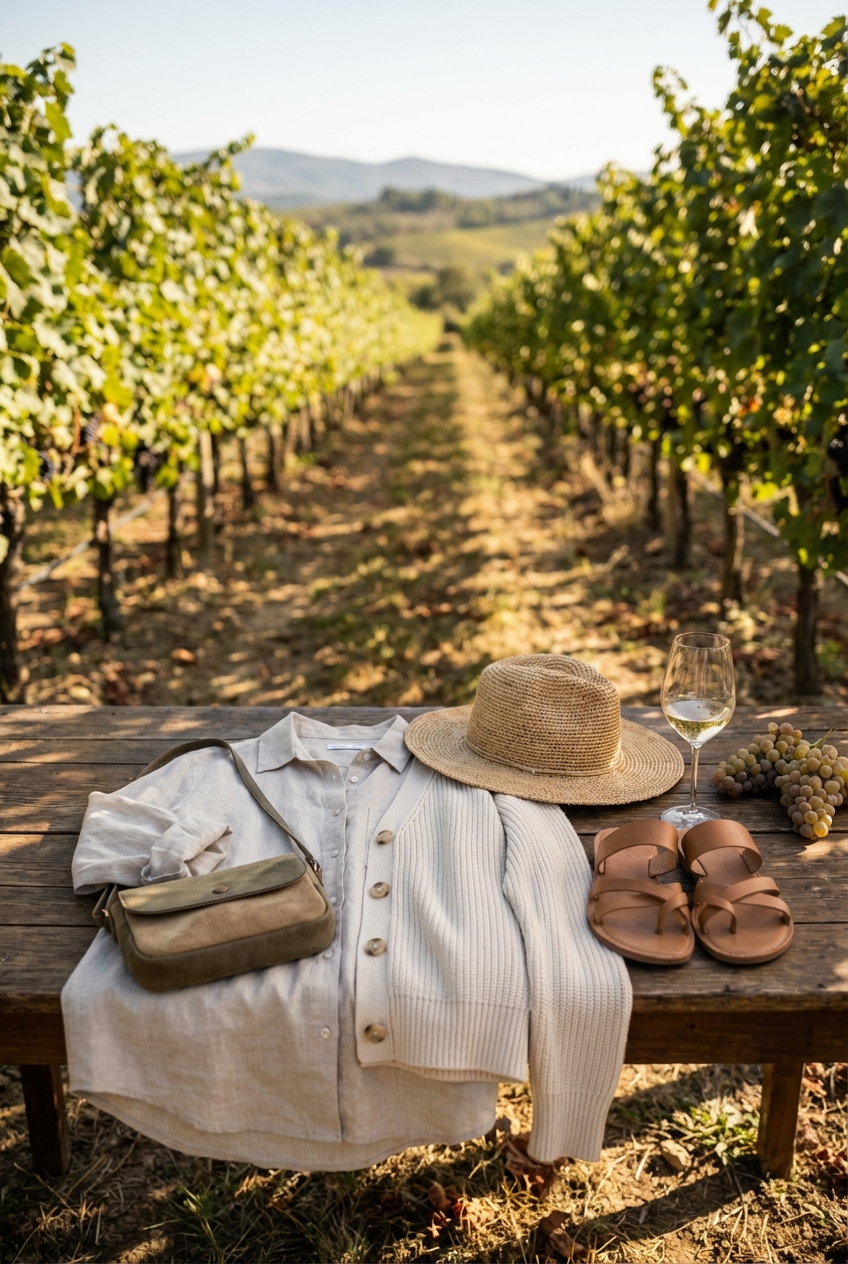
Relaxed Winery Tour Attire With Neutral Linen Pieces Effortless Sophistication For Vineyard Strolls
There is a specific romanticism attached to a winery tour that few other excursions can match. We imagine ourselves walking through rows of grapevines, glass in hand, bathed in the golden hour light while looking effortlessly chic. However, the reality of a vineyard visit often involves scorching sun, dusty trails, and significant temperature drops when entering barrel caves.
Early in my career as a fashion stylist, I made the amateur mistake of prioritizing high-glamour aesthetics over environment-specific functionality for a Napa Valley shoot. I quickly learned that stiletto heels sink into the soil and synthetic fabrics trap heat the moment the sun hits its peak. True sophistication in this setting requires a marriage of breathable luxury and practical silhouettes.
This is where neutral linen becomes your absolute best friend. It offers a texture that feels organic to the landscape while providing the structural integrity needed to look polished after hours of sitting and standing. If you need visual inspiration for these looks, please remember that the carefully curated Picture Gallery is at the end of the blog post.
The Science of Linen: Why It Anchors the Vineyard Aesthetic
Linen is often misunderstood as difficult due to its propensity to wrinkle. However, in the world of high-end resort wear, those wrinkles are actually part of the charm. We call this “rich texture.”
The flax fiber used to create linen is hollow, allowing for maximum air permeability. Unlike cotton, which absorbs moisture and holds it against the skin, linen wicks moisture away and dries rapidly. This is crucial for wineries, which are often located in dry, hot agricultural belts.
When selecting pieces for a tour, you want to look for “medium-weight” linen. This usually falls in the 150–200 GSM (grams per square meter) range. This weight is heavy enough to fall beautifully without being see-through, yet light enough to keep you cool.
Designer’s Note: The Scrunch Test
I always teach my clients how to identify quality linen before purchasing. Gather a handful of the fabric and squeeze it tightly for five seconds, then release.
If the fabric springs back slightly and the wrinkles are soft and rolling, it is high-quality long-staple linen. If the creases are sharp, jagged, and hold rigid, the fibers are likely short and brittle. This lower quality fabric will look messy rather than “lived-in” within an hour of wear.
Mastering the Neutral Palette: Beyond Just White
While a stark white linen dress is iconic, it is high-risk in an environment dedicated to red wine. As a stylist, I steer clients toward complex neutrals that offer the same breezy feel but with more depth and practicality.
The goal is to harmonize with the surroundings—the dusty greens of the vines, the beige of the dried grass, and the warm wood tones of the tasting room.
Here are the specific neutral tones that work best for this setting:
Oatmeal and Flax: These are the natural colors of undyed linen. They hide dust from the trails incredibly well and look expensive.
Stone and Greige: A mix of gray and beige. This is cooler in tone and photographs beautifully against the warm sunlight.
Sage and Olive: While technically greens, in a vineyard setting, these act as neutrals. They provide a monochromatic look against the vines.
Terracotta or Clay: These warm earth tones mimic the soil and offer a rich contrast if you have a cooler skin undertone.
Common Mistakes + Fixes
Mistake: Wearing synthetic nudes or “flesh tone” polyester blends.
Fix: Stick to natural fibers in earth tones. Synthetics reflect light in a way that looks artificial outdoors, whereas linen absorbs light, softening your appearance in photos.
Silhouettes and Scale: Balancing Volume
One of the most common questions I get regarding linen is how to wear it without looking like you are wearing a potato sack. The secret lies in the rule of proportions.
Linen has volume and stiffness. If you wear a loose linen top with loose linen trousers, you lose your shape entirely. You must create a counterbalance in your silhouette to maintain elegance.
The “Tight/Loose” Principle
If you choose a wide-leg linen trouser—which is fantastic for airflow—pair it with a more fitted tank or a bodysuit. This highlights the waistline and prevents the fabric from swallowing you.
Conversely, if you opt for an oversized linen button-down shirt, pair it with a slimmer bottom. For a winery, a bias-cut midi skirt is often a better choice than tight shorts, as it offers more sun protection while seated outdoors.
Dress Lengths for Vineyards
The length of your hem is a practical safety concern in a vineyard.
The Maxi: Avoid floor-grazing hemlines. You will be walking on dirt, gravel, and grass. A hem that touches the ground will be stained brown within twenty minutes.
The Midi: This is the gold standard. A hem that hits mid-calf (roughly 26 to 28 inches from the waist depending on your height) keeps the fabric clean but provides modesty when sitting on low picnic blankets or lounge chairs.
The Mini: While cute, be mindful of wind. Vineyards are often in valleys that channel breezes. A structured linen A-line mini is safer than a flowy circle skirt.
Footwear Strategy: Navigating Gravel and Grass
Footwear is usually the point of failure for most winery outfits. I have seen countless beautiful outfits ruined because the wearer was stumbling in stilettos or grimacing in uncomfortable sandals.
Vineyards are working farms. You will encounter loose gravel driveways, soft grass lawns, and uneven wooden floorboards in the barrel rooms.
What I’d Do in a Real Project
If I were styling a client for a day of tasting in Sonoma, here is the hierarchy of footwear I would recommend:
1. The Block Heel Slide: Look for a heel height between 1.5 and 2.5 inches. The wide base prevents sinking into the grass. Leather or suede straps add texture.
2. The Luxe Espadrille: A wedge espadrille is the quintessential wine country shoe. The rope sole grips uneven terrain, and the wedge offers height without instability.
3. The Structured Flat: A pointed-toe mule or a high-end leather sandal. Avoid rubber flip-flops, which downgrade the look instantly.
Specific Measurement Note: Ensure your shoe has a sole thickness of at least 0.25 inches. Ultra-thin soles will let you feel every sharp rock on the gravel path, leading to foot fatigue very quickly.
Layering for Micro-Climates
The temperature differential between a sun-drenched patio and a subterranean barrel cave can be as much as 20 degrees Fahrenheit. You need a layering strategy that looks intentional, not like an afterthought.
Linen breathes, which keeps you cool outside, but it offers zero insulation inside a 55-degree cellar.
The “Shoulder Drape” Technique
I recommend bringing a layer that uses a denser natural fiber. A chunky cotton cable-knit sweater or a cashmere-blend cardigan works perfectly.
Instead of wearing it, drape it over your shoulders and tie the sleeves loosely in front. This adds a “preppy” texture to your outfit and keeps your hands free.
The Linen Blazer
An unlined linen blazer is another sophisticated option. It protects your shoulders from the sun outside. When you go inside, the sleeves provide just enough coverage to ward off the chill.
Ensure the blazer is slightly oversized. You want to be able to roll the sleeves up to the elbow. A rigid, fitted blazer feels too corporate for a relaxed day of drinking wine.
Accessories: Functional Luxury
In high-end fashion, accessories are never just decoration; they serve a purpose. For a winery tour, your accessories need to protect you from the elements and manage your essentials.
The Hat Dilemma
Hats are highly recommended, but brim size matters. A brim that is too wide (over 4 inches) will flop over your eyes and make it difficult to greet people or sip wine.
Look for a stiff-brimmed boater hat or a structured Panama hat made of straw. These shapes are classic and frame the face without obscuring your vision. The natural straw color complements the neutral linen palette perfectly.
The Bag Choice
You need your hands free for the wine glass and potentially a plate of charcuterie. A clutch is impractical here.
Opt for a crossbody bag or a small structured bucket bag.
Material: Woven leather or rattan.
Size: It should be large enough to hold your phone, sunscreen, sunglasses, and a stain removal stick.
Strap Length: Ensure the bag hits at your hip bone. If it hangs too low, it will bounce against your leg as you walk through the vines.
Finish & Styling Checklist
Before you head out to the vineyard, run through this final checklist to ensure your look is cohesive and practical.
Fabric Check: Is your linen medium-weight (not sheer)? Have you done the scrunch test to ensure it relaxes into soft folds rather than sharp creases?
Hemline Safety: Is your dress or skirt at least 2 inches off the ground to avoid dragging in the dust?
Shoe Stability: Are you wearing a block heel, wedge, or flat? Have you tested walking on an uneven surface?
Layering Prep: Do you have a sweater or blazer for the cold barrel room? Does it coordinate with your neutral palette?
Sun Protection: Do you have a structured hat and sunglasses?
Undergarments: If wearing white or flax linen, are you wearing nude (skin-tone) seamless underwear? White underwear will show through white linen.
FAQs
What happens if I spill red wine on my linen?
This is the number one fear with neutrals. I always carry a “tide to go” pen or a small packet of wine wipes. However, the beauty of linen is that it releases stains relatively well if treated immediately. Blot the stain with sparkling water (or white wine) to lift the pigment. Do not rub, as this damages the fibers.
Can I wear denim to a winery?
You can, but it often reads as too heavy or casual, especially in the heat. If you love the look of denim, swap it for a chambray linen trouser or skirt. You get the indigo blue color but with the breathability and movement of linen.
How do I prevent my linen from looking sloppy by the end of the day?
Embrace the wrinkle, but control the silhouette. If your clothes are well-tailored to your body, the wrinkles look intentional. If the clothes are too big, the wrinkles look messy. Also, spray your linen with a wrinkle-release spray before leaving the house to soften the fabric fibers.
Is black linen appropriate for a winery?
Black linen is incredibly chic, especially for evening tastings or cooler months. It hides wine spills perfectly. However, be aware that black attracts heat in the direct sun. If you choose black, ensure the silhouette is very loose to allow for maximum airflow.
Conclusion
Dressing for a winery tour is about respecting the environment while maintaining your personal style standards. It is a delicate balance of navigating rugged terrain and variable temperatures while looking polished enough for a luxury experience.
By choosing neutral linen pieces, you solve the problems of heat and comfort instantly. The fabric speaks to the agricultural nature of the vineyard, while the neutral palette reflects the sophisticated, organic vibe of wine country.
Remember, the goal is effortless sophistication. You want to look as though you belong in the scenery—relaxed, comfortable, and undeniably elegant. When you prioritize the right fabrics and practical footwear, you are free to focus on the experience, the company, and the wine.
Picture Gallery


