
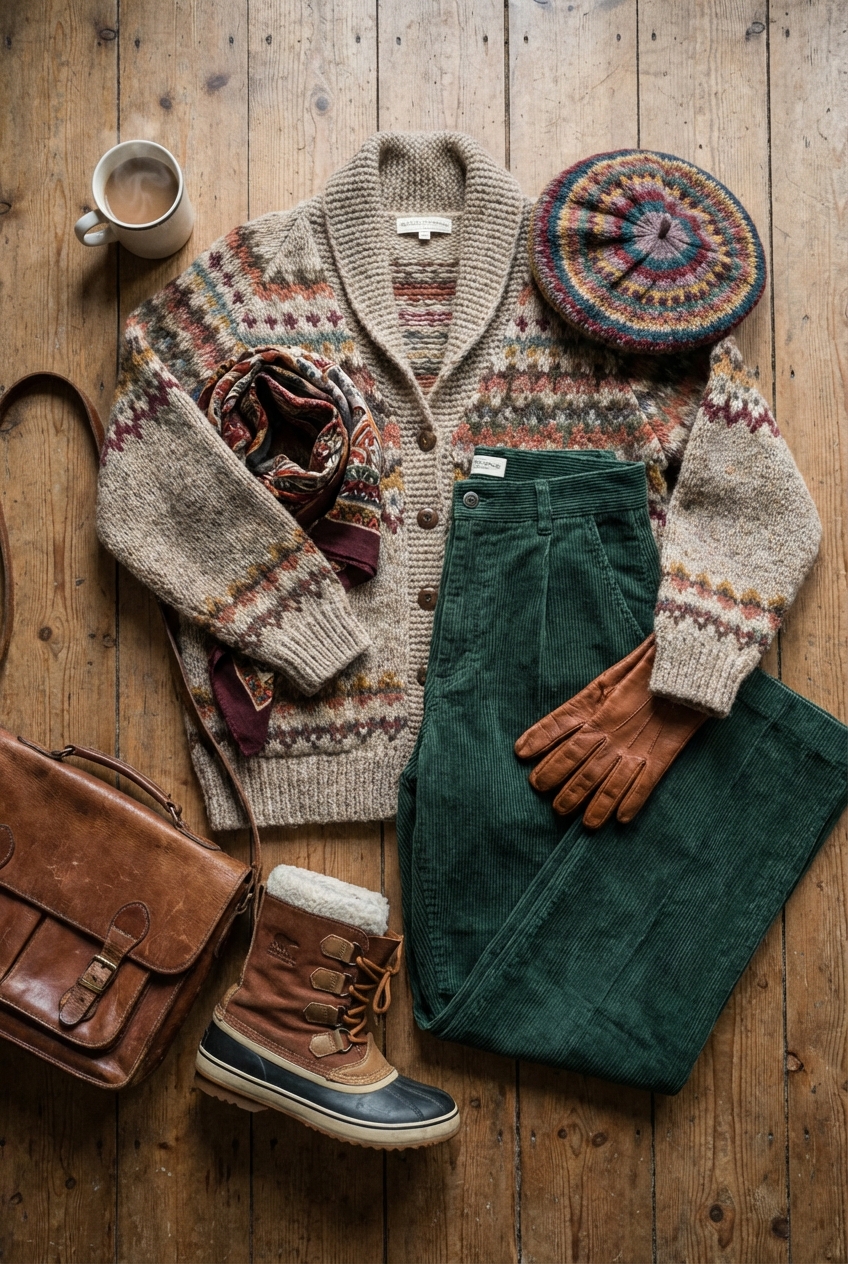
Retro Winter Wardrobe Essentials
1) Introduction
There is a distinct magic to winter fashion that simply doesn’t exist in the warmer months. It is the only season where the interplay of texture, weight, and layering allows for true sartorial storytelling. When I think of my favorite winter looks, I rarely look to the future; I look to the past. The structured mods of the 1960s and the earthy, bohemian layers of the 1970s offer a blueprint for staying warm without sacrificing elegance.
My obsession with retro winter styling began years ago in a dusty vintage archive in London. I found a heavy, suede shearling coat that weighed nearly five pounds. It wasn’t just a piece of clothing; it was armor against the damp chill, cut with a precision we rarely see in fast fashion today. That coat taught me that retro dressing isn’t about looking like you are wearing a costume. It is about integrating time-tested silhouettes and superior materials into a modern rotation.
In this guide, I will walk you through the essential components of a retro-inspired winter wardrobe. We will cover the specific fabrics to hunt for, the tailoring adjustments that make vintage cuts flattering, and how to mix decades without looking chaotic. For a visual breakdown of these looks, you can scroll down to the Picture Gallery at the end of the blog post.
2) The Statement Outerwear: Shearling and Faux Fur
The anchor of any retro winter wardrobe is the coat. In the 1970s, the “Penny Lane” coat—characterized by shearling lining, suede exterior, and dramatic cuffs—was the gold standard. Today, this silhouette remains the most effective way to elevate a simple outfit.
When sourcing this style, you must pay attention to the shoulder seam. Vintage coats often have narrower shoulders than modern cuts. The seam should sit exactly at the corner of your shoulder bone. If it creeps up toward your neck, the coat is too small and will restrict movement when layered over knitwear. Conversely, a dropped shoulder works for a grunge 90s look, but for a polished 70s aesthetic, structure is key.
For materials, I always advise clients to look for genuine vintage shearling or high-quality modern faux options that mimic the weight of the original. Cheap faux fur often has a plastic sheen that flattens in the snow. You want a pile that is dense and matte.
Designer’s Note: The Weight Factor
Real vintage sheepskin is incredibly heavy. I often warn clients that wearing a 1970s shearling coat is a physical commitment. If you commute on foot, it is fantastic. If you spend a lot of time driving or on crowded subways, the bulk can be overwhelming. In those cases, opt for a modern “bonded” shearling, which offers the look with half the weight.
Common Mistakes + Fixes
- Mistake: Ignoring the lining condition.
- Fix: Vintage linings often shatter or tear near the armholes. Check this first. If it is damaged, factor in $100–$150 for a professional relining job before you buy.
- Mistake: Overwhelming a petite frame.
- Fix: If you are under 5’4″, avoid the floor-length Afghan coats. Opt for a mid-thigh cut to keep your legs visible, which elongates the silhouette.
3) The Knitwear Edit: Fair Isle and Cable Knits
Retro knitwear focuses heavily on texture and pattern. The Fair Isle sweater, popularized by the royals in the 20th century, is a quintessential piece. It bridges the gap between sophisticated après-ski and casual weekend wear.
When selecting a Fair Isle knit, look for patterns that circle the yoke (the area around the neck and shoulders). This draws the eye upward and frames the face. In terms of composition, you should prioritize natural fibers like wool, mohair, or cashmere. Vintage acrylics from the 60s and 70s can be durable, but they do not breathe, meaning you will sweat indoors and freeze outdoors.
Cable knits offer a solid-color alternative that relies on texture. The “fisherman” sweater is a unisex staple. For a feminine, retro twist, look for a slightly shrunken fit or a cardigan with distinct buttons—leather toggles or brass shanks add immediate vintage character.
What I’d do in a real styling session:
- Check the gauge: I look for a tight gauge (stitch density). If I can see through the weave when holding it up to the light, it won’t be warm enough for winter.
- The “Tuck” Test: I test if the sweater is thin enough to be half-tucked into high-waisted trousers. If it is too bulky, it must be worn over the waist, which changes the silhouette requirements of the pants.
- Neckline balance: If a client has a shorter neck, I avoid the tight turtle necks typical of the 60s and opt for a mock neck or crew neck to allow for breathing room.
4) Bottoms: Corduroy and High-Rise Flares
Nothing screams “retro winter” quite like corduroy. It is warm, durable, and provides a rich texture that denim simply cannot match. The key metric here is the “wale” count—the number of ridges per inch.
For a 70s vibe, look for a “wide wale” (fewer ridges, thicker texture). This looks luxurious but adds visual bulk. If you want a leaner look reminiscent of the 60s mod era, go for a “fine wale” or “pinwale” corduroy. The most flattering cut for almost every body type in this genre is the high-waisted, wide-leg trouser.
The rise is critical. A true retro high-rise should measure between 11 and 13 inches, depending on your torso length. It should sit at the smallest part of your waist, usually an inch above the belly button. This creates the illusion of legs that start much higher up, especially when paired with a heeled boot.
Stylist’s Checklist for Hemming Flares:
- The Break: You want the hem to graze the top of your foot but not drag on the ground.
- Shoe Height: You must bring the shoes you intend to wear to the tailor. You cannot hem a wide-leg flare for flats and then wear them with 3-inch boots; they will look like “high waters.”
- The Floating Hem: Ideally, the pants should hover about 1/4 to 1/2 inch off the floor at the heel.
5) Layering Essentials: Turtlenecks and Pussy Bows
The secret to retro style is often in the layering piece that sits closest to the skin. The thin, ribbed turtleneck is the workhorse of the winter wardrobe. In the 1970s, these were layered under everything—button-down shirts, pinafore dresses, and even V-neck sweaters.
Stick to a neutral palette for these base layers: cream, camel, charcoal, and black. A cotton-cashmere blend is ideal because it creates a smooth silhouette without adding bulk to the arms. This allows you to slide a coat over the top without feeling like the Michelin Man.
For a dressier option, the pussy-bow blouse (silk or satin tie-neck) is essential. This can be worn tucked into the corduroy trousers mentioned above or layered under a wool blazer. The bow adds volume at the chest, which is helpful for balancing out wide-leg pants.
Common Mistakes + Fixes
- Mistake: Using a chunky sweater as a base layer.
- Fix: Keep the bottom layer tissue-thin. Save the bulk for the cardigan or coat.
- Mistake: Clashing necklines.
- Fix: Avoid wearing a mock-neck top under a collared shirt unless you are very intentional about the styling. It often looks messy. A true turtleneck rolls over smoothly and looks cleaner.
6) Footwear: Platform Boots and Knee-Highs
Your choice of footwear dictates the decade you are channeling. For a late 60s/early 70s look, a square-toed block heel boot is non-negotiable. The block heel provides stability on icy sidewalks that a stiletto cannot offer, making it a practical winter choice.
Knee-high boots are having a massive resurgence. When fitting these, you must measure your calf circumference. Vintage boots tend to run very narrow in the calf (often 13–14 inches). Modern “wide calf” options are often necessary for an athletic build.
The “platform” is another element to consider. A modest 1-inch platform under the toe reduces the pitch of the foot, making a 3-inch heel feel like a 2-inch heel. This is a stylist’s secret for clients who need height for their long trousers but want to walk comfortably all day.
Material Matters:
- Leather: Best for dry, cold days. It molds to the foot.
- Patent Leather: Very 60s mod, but can crack in extreme sub-zero temperatures. Use with caution.
- Suede: Beautiful for the boho look, but requires heavy weatherproofing spray before leaving the house.
7) The Finishing Touches: Accessories
Accessories are where you can inject personality without breaking the bank. The silk headscarf is a versatile retro tool. Tied around the neck, it mimics an ascot. Tied around the handle of a bag, it adds color. Tied over the hair (think Jackie O or Bridget Jones in the convertible), it protects your blowout from the wind.
Gloves should be leather. In the 50s and 60s, gloves were mandatory. Today, a sleek pair of cognac or black leather gloves elevates a puffer coat instantly. Look for cashmere-lined interiors for actual warmth.
Finally, consider the belt. A wide leather belt cinched over a blazer or a cardigan creates that hourglass silhouette favored in retro fashion. Look for heavy brass buckles or woven leather details.
Designer’s Note on Scale:
If you are wearing a voluminous coat and wide pants, keep your bag structured and medium-sized. A giant slouchy tote will make the whole outfit look sloppy. A structured top-handle bag or a saddlebag balances the soft textures of the clothes.
8) Finish & Styling Checklist
Before you head out the door, run through this quick mental checklist to ensure your retro look is polished, not costumey.
The “Rule of One”
- Are you wearing one true vintage or retro-inspired statement piece? (e.g., The Coat).
- Are the rest of your basics modern and well-fitted? (Mixing head-to-toe vintage can look like you raided a costume shop).
The Texture Check
- Do you have at least three distinct textures? (e.g., Denim + Wool + Leather).
- Is there too much of one fabric? (Avoid denim-on-denim unless you are intentionally doing a specific 80s look).
The Proportion Audit
- If wearing wide-leg pants, is the waist defined?
- If wearing an oversized sweater, is the bottom half more fitted (like a straight-leg jean or midi skirt)?
- Can you move your arms freely in your coat?
9) FAQs
Q: How do I clean vintage wool and shearling?
A: Never throw vintage wool in the washing machine, even on the delicate cycle. The agitation felt the wool, shrinking it to doll size. Dry clean coats annually. For sweaters, hand wash in cool water with wool-specific detergent and lay flat to dry.
Q: Can I mix brown and black in a retro wardrobe?
A: Absolutely. This was a fashion taboo that has been debunked. A camel coat over an all-black outfit is incredibly chic. The key is to make it look intentional. Use accessories (like a scarf featuring both colors) to bridge the gap.
Q: I’m plus-size; where can I find retro fits?
A: True vintage sizing is notoriously small (a vintage size 14 is often a modern size 8). However, the retro style is very accessible. Look for modern brands that specialize in reproduction clothing. They cut for modern bodies with curves, using the aesthetic of the 50s and 70s. Focus on A-line coats and wrap dresses which are universally flattering.
Q: Are skinny jeans “retro”?
A: Not for the specific aesthetics of the 60s or 70s. While “cigarette pants” existed in the 50s/60s, they were usually ankle-length and tailored, not skin-tight denim. To capture the vibe, try a straight-leg jean or a slight bootcut instead of a super-stretch skinny.
10) Conclusion
Building a retro winter wardrobe is not about living in the past; it is about recognizing the quality and silhouettes that have stood the test of time. By investing in a statement shearling coat, mastering the art of layering natural knits, and tailoring your trousers to the perfect length, you create a look that is both nostalgic and refreshingly modern.
Remember that confidence is the most important accessory. Whether you are channeling the rock-and-roll edge of the 70s or the structured glamor of the 60s, the goal is to feel comfortable and protected against the elements. Start with one key piece—perhaps that perfect cable knit or a great pair of boots—and build your collection slowly. Fashion is a marathon, not a sprint.
11) Picture Gallery


