
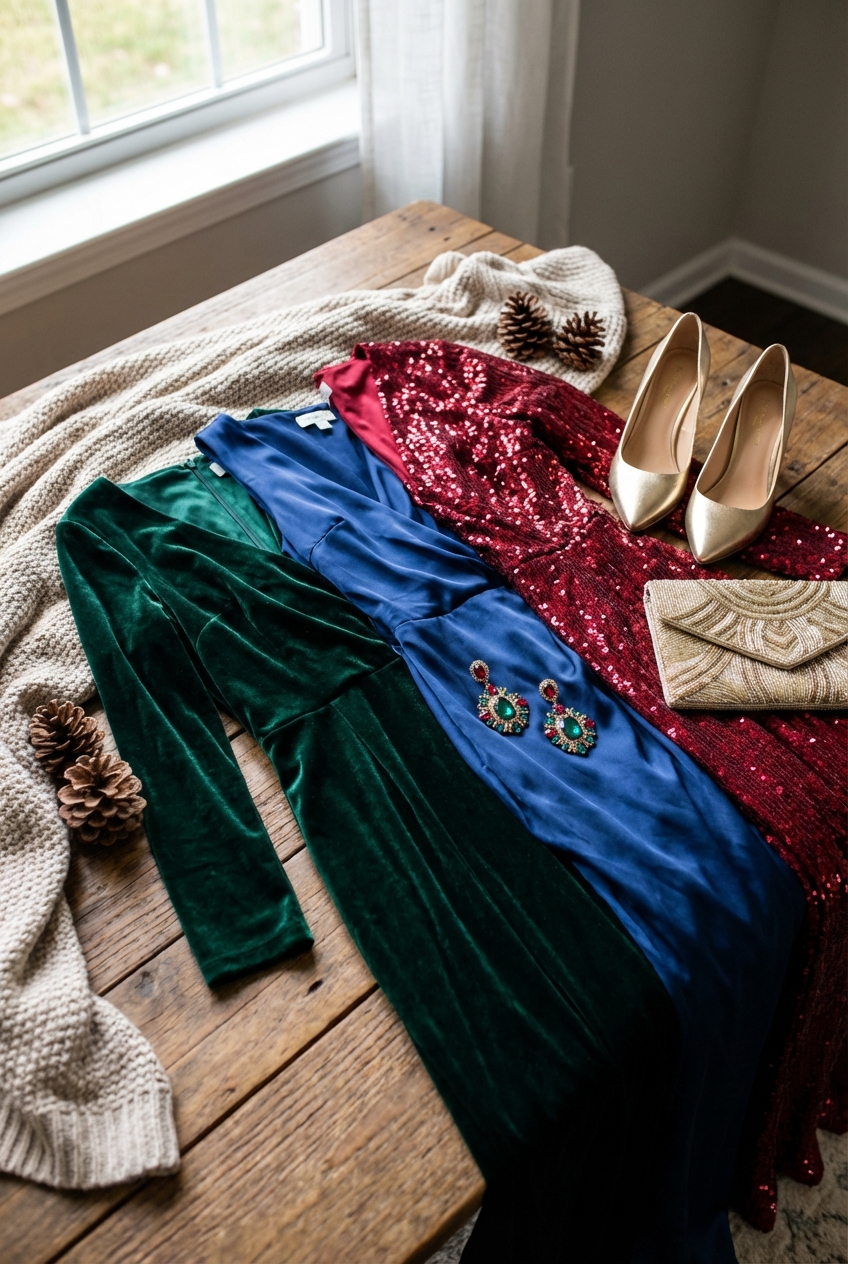
Rich Jewel Toned Dresses For Winter Parties Your Guide To Radiant Seasonal Glamour
There is a distinct shift in the air when late November hits. The crisp autumn breeze turns biting, the daylight fades faster, and our wardrobes usually take a turn for the utilitarian. We bundle up in greys, blacks, and heavy wools to survive the commute. But then, the invitations start arriving. Whether it is an office holiday gala, a sophisticated New Year’s Eve dinner, or an intimate cocktail party, winter events are the perfect excuse to break free from the drab monotony of cold-weather gear.
I remember my first major styling job for a winter solstice charity ball. The client wanted to wear beige because she felt it was “safe.” I convinced her to try a deep, structural emerald velvet gown instead. The transformation was instantaneous. Her skin looked luminous, her posture straightened, and she commanded the room not through volume, but through the sheer depth of color. That is the power of jewel tones. They bring a richness and warmth that counters the cold, making you look radiant even when the sun sets at 4:00 PM.
In this guide, I am going to walk you through exactly how to select, style, and maintain these rich hues. We will cover color theory for your skin tone, fabric weights that flatter without overheating, and the architectural details of a perfect fit. For a visual feast of these principles in action, make sure to check out the Picture Gallery at the end of the blog post.
Defining The Palette: Why Jewel Tones Work
Jewel tones are saturated, strongly pigmented colors that mimic natural gemstones. Think of the deep red of a ruby, the mesmerizing green of an emerald, the cool blue of a sapphire, or the regal purple of an amethyst. Unlike pastels or neon brights, these colors have a low value and high saturation. This means they absorb light beautifully rather than bouncing it off, creating a slimming and smoothing effect on the body.
The primary reason these shades dominate winter fashion is their relationship with light. Winter lighting is often harsh and artificial indoors, or blue and dim outdoors. Jewel tones hold their own in these conditions. A pastel pink might wash out under the yellow glow of a chandelier, but a deep garnet red will look even richer.
When I style clients, I treat these colors as neutrals with personality. They are incredibly versatile. You can pair them with black, metallic, or even color-block them against each other if you are feeling bold. The key is understanding that the color itself is the accessory. You do not need excessive frills or patterns when the hue is this powerful.
Designer’s Note: The Lighting Test
One lesson I learned the hard way involves venue lighting. I once styled a client in a deep plum dress for a dimly lit jazz club event. In that lighting, the dress just looked black.
The Fix: If you know the venue will be dark, opt for a jewel tone with a sheen, like satin or crushed velvet, to catch whatever light is available. If the venue is bright, matte fabrics like crepe or wool blends show off the true depth of the color best.
Selecting The Right Gemstone For Your Skin Tone
While jewel tones are universally flattering, certain shades will make your specific complexion sing. This isn’t about rigid rules, but about finding the color that reduces the need for makeup. If you put a dress on and your under-eye circles seem to disappear, you have found your match.
For those with cool undertones (veins appear blue), Sapphire Blue and Amethyst Purple are your best friends. These colors echo the cool base of your skin, making you look porcelain rather than pale. A deep, icy sapphire gown provides a striking contrast to silver hair or platinum blonde tones as well.
If you have warm undertones (veins appear green), gravitate toward Ruby Red, Citrine Yellow, and Emerald Green. These colors highlight the golden hues in your skin. Emerald is particularly magical because it acts as a complementary color to any redness in the skin, neutralizing flushing and making your complexion look even and creamy.
Common Mistakes + Fixes
Mistake: Assuming all reds are the same.
Fix: Ruby red has blue undertones and suits cool skin. Garnet or rust-leaning reds have orange undertones and suit warm skin. Hold the fabric up to your face in natural light; if your teeth look yellow, it’s the wrong red.
Mistake: Avoiding yellow entirely.
Fix: Citrine or deep mustard is not the same as a pale, sickly yellow. A rich, golden citrine velvet can be incredible on darker skin tones.
Fabric Architecture: Texture and Weight
In interior design, we talk about “hand” and “drape,” and the same applies to high-end fashion. The fabric you choose determines how the dress moves and how warm you will be. A jewel tone looks expensive because of the pigment, but cheap fabric can ruin the illusion instantly.
Velvet is the quintessential winter fabric. It has a “pile,” meaning the fibers stand up. This creates a two-tone effect where the fabric looks lighter or darker depending on the angle.
Pro Tip: Always check the “nap” of the velvet. When you run your hand down the dress, it should feel smooth. If it feels rough, the nap is going up. Up-nap velvet looks darker and richer; down-nap looks shinier and lighter.
Silk Satin and Charmeuse are fantastic for indoor parties where heating is cranked up. They are fluid and drape over curves like water. However, satin is unforgiving. It shows every undergarment line.
What I’d do: If choosing satin, I always size up. Satin should skim the body, not cling. If it pulls across the hips, the light will distort, ruining the sleek effect of the jewel tone.
Brocade and Jacquard add structure. If you prefer a dress that holds you in rather than draping over you, these are excellent choices. They often feature raised patterns, adding a tactile element to the deep colors. A midnight blue brocade with silver threading is a standalone masterpiece.
The Rules of Proportion and Silhouette
Winter party dresses often involve more fabric—long sleeves, high necks, or floor-length hems. This means managing proportions is critical so you don’t look like you are drowning in a sea of purple or green.
If you opt for a high neckline or long sleeves, balance it with a fitted waist or a slit in the skirt. You need to show the architecture of your body somewhere. A fully covered, loose sack dress in a dark color can look heavy and imposing.
Hemlines are arguably the most technical part of the fit.
Floor Length: For a gown, the hem should just “kiss” the floor. It should be 1/2 inch to 1/4 inch off the ground with your heels on.
Midi Length: The hem should hit the slimmest part of your calf or just below the knee. Never let a hem stop at the widest part of your calf, as it visually thickens the leg.
Mini: If you go short in winter, balance the exposure. A mini dress looks chicest with long sleeves and opaque tights.
What I’d Do In A Real Project: Alterations Checklist
When I buy a dress for a client, it rarely goes straight from the bag to the body. Here is my mini-checklist for tailoring:
1. Shoulder Seams: These must sit exactly at the corner of your shoulder bone. If they droop, the whole dress looks borrowed.
2. Sleeve Length: Long sleeves should hit just past the wrist bone. If they cover your knuckles, they are too long.
3. The “Sit Test”: Sit down in the dress. Does it cut into your stomach? Does the slit open too high? Fabric must have “ease”—usually 1 to 2 inches of extra room at the hips for sitting.
Accessorizing Deep Hues: The Hardware
Think of accessories as the hardware in a room—the cabinet pulls and light fixtures that finish the look. With jewel tones, you are working with strong colors, so your metals need to stand up to them.
Gold vs. Silver vs. Rose Gold
Emerald Green: Pairs beautifully with yellow gold. The warmth of the gold makes the green pop.
Sapphire Blue: Looks crisp and modern with silver or white gold. It creates an “ice queen” aesthetic that is very chic for winter.
Ruby Red: Can go both ways. Gold makes it look regal and traditional; silver makes it look more contemporary and edgy.
Amethyst: Stunning with rose gold or copper tones, which pull out the warmth in the purple.
Footwear Strategy
For winter parties, open-toed sandals can look seasonally confused (and leave you with cold toes). I prefer a closed-toe pump or a sleek bootie.
The Nude Shoe Myth: Nude shoes are great for leg-lengthening, but against a dark jewel tone, they can sometimes look too pale/casual.
Metallic Neutrals: A gold or gunmetal shoe acts as a better neutral for evening wear. Gunmetal is particularly excellent with cool tones like teal or violet because it isn’t as harsh as black.
Outerwear: The Arrival Outfit
A common failure point in winter styling is the outerwear. You spend hours choosing the perfect dress, only to throw a sporty, utilitarian puffer coat over it. The “arrival” is part of the fashion moment. You want to look polished from the moment you step out of the car.
The Coat Length Rule
Ideally, your coat should be longer than your dress. If that isn’t possible (like with a floor-length gown), the coat should hit at the waist or hip (like a faux fur jacket or bolero). The awkward middle ground is when a dress peeks out 3 inches below a knee-length coat. It ruins the silhouette.
Texture Play
If you are wearing a satin dress, a wool coat offers a nice matte contrast. If you are wearing velvet, a sleek leather trench or a faux fur wrap adds dimension.
My Go-To: A cape. A wool cape sits easily over puffed sleeves or structured shoulders without crushing them. It looks dramatic and elegant, and you don’t have to wrestle your arms into tight coat sleeves.
Hosiery: To Wear or Not to Wear?
In the dead of winter, bare legs are not a badge of honor; they are often just uncomfortable. High-fashion embraces tights, provided they are the right ones.
Denier Counts
Denier refers to the thickness of the weave.
Ultra-Sheer (5-15 Denier): Barely there. Good for evening, but offers zero warmth.
Semi-Opaque (20-40 Denier): The sweet spot for formal events. It gives the leg a uniform color but still shows the silhouette.
Opaque (50+ Denier): Best for daywear or very short styling. A 100-denier black tight with a red velvet mini dress is a classic, mod look.
Texture and Pattern
Avoid opaque woolen tights with formal satin dresses; the texture clash is too jarring. Stick to nylon or silk blends with a slight sheen. For a fun twist, a swiss-dot pattern adds visual interest without overwhelming the jewel tone.
Finish & Styling Checklist
Before you head out the door, run through this final styling audit to ensure your look is cohesive and functional.
Undergarment Check: Are bra straps visible? With velvet and heavy fabrics, seamless, laser-cut shapewear is best to avoid visible panty lines (VPL).
Static Guard: Winter air is dry. Static cling is the enemy of silk and satin. Spray the inside of your dress and your tights with static guard. In a pinch, run a metal hanger over the fabric to discharge the electricity.
The Lint Roller: Velvet is a magnet for dust and lint. Keep a travel-sized lint roller in your clutch.
Shoe Grips: New dress shoes can be slippery on polished dance floors. Scuff the soles with sandpaper or stick on adhesive rubber grips.
* Jewelry Balance: If the dress has a high, embellished neck, skip the necklace and go for statement earrings. If the neckline is a deep V, a pendant is essential.
FAQs
Can I wear jewel tones to a wedding?
Absolutely. Jewel tones are the gold standard for winter wedding guest attire. They are formal, photograph well, and are not white. Just avoid wearing bright red if the couple is very traditional, as it can sometimes be seen as “distracting.”
How do I clean a velvet dress?
Check the care label, but 90% of the time, the answer is dry clean only. Never iron velvet; you will crush the pile and leave permanent shiny marks. Use a handheld steamer, holding it about 2 inches away from the fabric. Steam from the inside out if possible.
Can I mix jewel tones together?
Yes, this is called color blocking. The trick is to keep the saturation levels equal. A deep emerald skirt pairs beautifully with a sapphire silk blouse because both have the same intensity. Do not pair a muted jewel tone with a neon; the balance will be off.
What makeup goes with these strong colors?
You generally want to avoid matching your eyeshadow exactly to your dress (e.g., blue shadow with a blue dress). It looks dated. Instead, go for neutrals on the eyes (golds, browns, charcoals) and let the dress be the color statement. A bold lip in a berry tone usually complements jewel tones perfectly.
Conclusion
Embracing rich jewel tones for your winter events is about more than just following a trend; it is about working with the season rather than fighting it. These colors harness the low light of winter to make you look vibrant and regal. By paying attention to the fabric quality, nailing the fit, and accessorizing with intention, you create a look that is timeless.
Remember, the most important element of any outfit is your confidence. When you wear a color that complements your skin and a silhouette that honors your body, you naturally stand taller. So this season, step away from the safety of the little black dress and step into the radiance of emerald, ruby, and sapphire. You will not only look the part of the fashion expert; you will feel it.
Picture Gallery


