
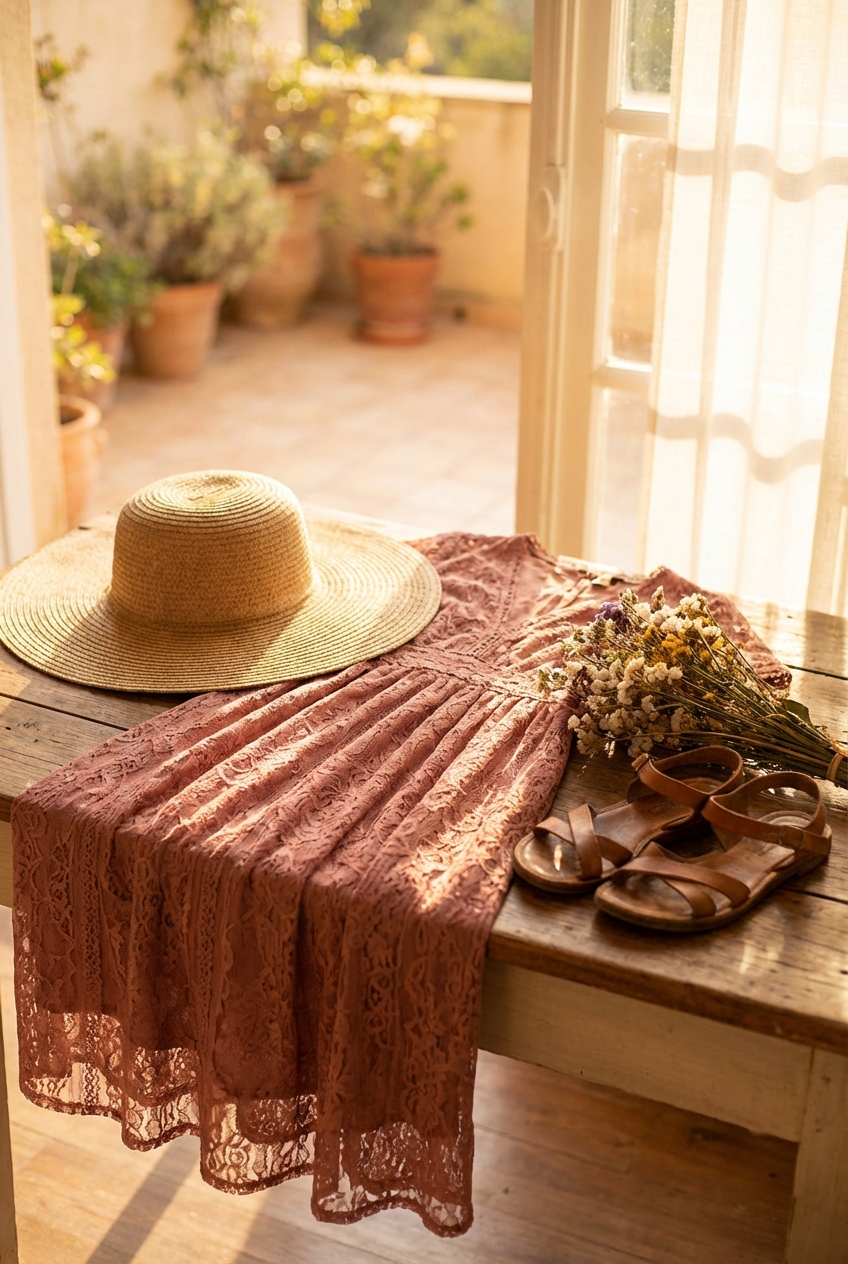
Romantic Dresses For Golden Hour Photoshoots Capturing The Perfect Glow
There is a specific window of time, roughly sixty minutes before sunset, where the world transforms. The harsh shadows of midday soften, the sky turns into a painter’s palette of amber and violet, and skin looks effortlessly luminous.
As a fashion stylist, I live for this “golden hour.” However, I have learned the hard way that the light is only half the equation; the wardrobe you select determines whether the photo feels magical or flat. A dress that looks stunning on a hanger in a studio might fall completely flat when backlit by the intense, low-angle sun.
To help you navigate this, I have broken down the elements of the perfect golden hour ensemble, from fabric science to color theory. For visual inspiration, check out the curated Picture Gallery at the end of this post.
Understanding Light and Fabric Interaction
When styling for golden hour, you are essentially dressing for backlighting. The sun will likely be behind you for many shots to create that halo effect. This means the light is going to try to push through your clothing rather than just bouncing off it.
This creates a unique set of challenges and opportunities regarding opacity. If a fabric is too dense, like a heavy wool or a thick lined crepe, it blocks the light entirely. This can create a heavy, silhouette-like black hole in the image that lacks dimension.
Conversely, fabrics that are too thin will disappear entirely, revealing every outline of your body and undergarments in an unflattering way. The goal is to find the “diffusion sweet spot.” You want materials that catch the light and scatter it, creating an ethereal glow around your body without total transparency.
Stylist’s Note: The “Hand Test”
When shopping, hold the dress up against a window or a strong light source. If you can clearly see the details of your hand through two layers of the skirt, it is too sheer for a backlit shoot unless you have a specific slip planned. If no light comes through at all, the dress may look heavy in photos. You want a soft, hazy shadow of your hand.
Fabric Selection: Texture and Sheen
Texture is the secret weapon of high-end editorial photography. During golden hour, light grazes the surface of clothes from the side. This emphasizes weave, embroidery, and surface details that might go unnoticed at noon.
Silk and Satin
Silk charmeuse or high-quality satin are phenomenal choices because they have specular highlights. The fabric acts almost like a mirror, catching the warm oranges and pinks of the sky and reflecting them back at the camera. This creates a liquid gold effect that is incredibly romantic.
Chiffon and Tulle
These are your diffusers. Layered tulle or chiffon traps light between the layers. This adds depth and a dreamlike quality. When you toss a chiffon skirt in the air, the light passes through the single layer, making it look lighter and brighter than the rest of the dress. This dynamic range adds visual interest.
Lace and Crochet
I love using lace for golden hour because it creates a stencil effect. As the light passes through the open weave, it casts intricate shadow patterns on your skin. It adds immediate texture and complexity to the shot without needing accessories.
Common Mistakes + Fixes
- Mistake: Wearing flat, matte cotton or jersey. These fabrics absorb light and can look dull or casual in high-contrast lighting.
- Fix: If you prefer natural fibers, choose a cotton voile or a linen blend with a looser weave that allows some light play.
- Mistake: Choosing stiffer fabrics like taffeta that don’t move with the breeze.
- Fix: Opt for materials with a fluid drape that react to the wind, adding movement to your still images.
Color Theory: Harmonizing with Warmth
Golden hour light is not white; it is heavily saturated with red, orange, and yellow wavelengths (low Kelvin temperature). This tinted light acts as a filter over everything you wear. Understanding how your dress color interacts with this filter is crucial for achieving a cohesive look.
The Warm Palette (Analogous Harmony)
Wearing warm tones—terracotta, rust, champagne, blush, or mustard—creates a seamless, monochromatic blend with the environment. The dress will appear to melt into the light. This is perfect for a soft, ultra-romantic aesthetic where nothing jars the eye.
The Cool Palette (Complementary Contrast)
If you want to pop against the background, look at the color wheel. Blues and greens are opposite to orange. A dusty sage, slate blue, or muted teal dress will stand out distinctly against a golden sunset. This creates a more dramatic, editorial look.
Neutrals and Whites
White is the classic choice, but be careful. A stark, blue-toned bright white can look clinical. Opt for ivory, cream, or oat. These warmer neutrals pick up the golden sun and reflect a creamy, flattering light onto your face.
What I’d Do in a Real Project:
For a client with cool-toned skin shooting in a grassy field, I would pull a dusty lilac or periwinkle gown. The cool purple contrasts the green grass and orange sky, while the softness of the color keeps it romantic. For a client with warm skin tones, I would choose a metallic gold or deep bronze slip dress to amplify their natural glow.
Silhouettes That Catch the Breeze
Static poses rarely translate well in romantic, outdoor photography. The best photos usually involve movement—walking, spinning, or running. Therefore, the cut of your dress needs to facilitate and enhance that movement.
The Skirt Volume
A tight bodycon dress restricts the visual drama. I always recommend A-line, circle skirts, or wrap dresses with significant yardage. You want enough fabric that you can grab the skirt and toss it, or let the wind catch it like a sail. This extends your presence in the frame and creates leading lines.
Sleeve Drama
Sleeves are an underrated element for golden hour. Bell sleeves, flutter sleeves, or bishop sleeves catch the backlight beautifully. Even when your arms are down, the light illuminating the translucent fabric of a sleeve can create a beautiful separation between your arm and your torso.
Necklines and Backs
Since you will likely be backlit, you might end up in silhouette in some shots. An open back or a plunging neckline creates interesting negative space. A high neck can sometimes look blocky in silhouette, whereas deep V-necks or scooped backs elongate the form.
Styling for Specific Locations
The “romance” of a dress is heavily dependent on the context of the location. A ballgown that looks spectacular in a Parisian garden might look out of place on a rugged cliffside. I categorize location styling into three main vibes.
The Beach Glow
Here, the elements are wind, sand, and water. Avoid anything too structured or restrictive.
- Fabric: Lightweight chiffon or crinkle rayon that dries quickly if it gets wet.
- Cut: High slits are essential here to allow for movement in the sand and to keep the dress from getting soaked.
- Vibe: Boho, unstructured, and effortless. Think maxi dresses with spaghetti straps.
The Field or Forest
This setting is textured and rustic. You need a dress that can stand up to snagging hazards like twigs or tall grass while looking soft.
- Fabric: Lace, eyelet, or a heavier crepe. Tulle can snag easily on briars, so be cautious.
- Cut: Modest romantic cuts, like tiered midi dresses or prairie-inspired silhouettes, work beautifully here.
- Vibe: Cottagecore, vintage, and whimsical.
The Urban Sunset
Rooftops or city streets call for a sleeker, more modern interpretation of romance.
- Fabric: Silk, satin, or sequin. You want to match the hard surfaces and glass of the city.
- Cut: Slip dresses, architectural ruffles, or structured bodices.
- Vibe: Chic, polished, and high-fashion.
The Practical Logistics of the Shoot
As a stylist, my job is 10% creative vision and 90% problem-solving. Golden hour shoots move fast. You have limited light, and you don’t want to waste it fixing wardrobe malfunctions.
Undergarments are Non-Negotiable
I cannot stress this enough: backlighting makes fabrics transparent. A nude seamless thong and a nude bra (or sticky cups) are mandatory. Do not wear white undergarments under a white dress; they will shine like a beacon. You need a tone that matches your skin exactly.
Footwear Matters (Even if Hidden)
You might think your shoes won’t show under a maxi dress, but if you are lifting your skirt or walking, they will pop out. Avoid chunky sneakers or flip-flops. If you need comfort, wear leather sandals or wedges. If you are going barefoot, ensure your feet are pedicured, as they will be visible.
Wrinkle Management
Natural light highlights texture, including wrinkles. Linen and rayon wrinkle the moment you sit in the car. Bring a portable steamer to the location, or choose wrinkle-resistant synthetic blends if you don’t have an assistant to help you prep.
Finish & Styling Checklist
Before you head out to chase the sun, run through this final stylist checklist to ensure your look is camera-ready.
- The Transparency Check: Have you stood in front of a bright window to check your undergarment visibility?
- The Sit Test: Can you sit down in the dress without it pulling uncomfortably or riding up too high?
- The Wind Factor: If it is windy, do you have a plan? (e.g., dress weights or safety pins to keep wrap dresses closed).
- The Accessories: Are your jewelry pieces reflective? Gold jewelry looks stunning during golden hour; silver can sometimes get lost or look dark.
- The Steam: Is the dress perfectly steamed? Wrinkles around the hemline are notoriously hard to Photoshop out.
FAQs
What is the best length for a golden hour dress?
Maxi or midi lengths are superior. They offer more fabric to play with for movement shots and catch the wind better. Mini dresses can be difficult to manage if it is breezy and offer less dramatic silhouettes.
Can I wear black for a golden hour shoot?
You can, but it is challenging. Black absorbs light, meaning you won’t get that glowy, ethereal effect on the clothing itself. If you wear black, choose a fabric with sheer panels (like lace or tulle) to allow some light to pass through, ensuring you don’t look like a solid silhouette.
How do I keep a wrap dress from flying open?
This is a classic location nightmare. Use double-sided fashion tape to secure the neckline and the thigh overlap. For extra security, I often use a tiny safety pin on the inside layer of the skirt, pinning it to the underlayer near the hip.
Should I wear prints or solids?
Solids are generally safer and more timeless for romantic shoots. However, soft, small-scale florals can be beautiful. Avoid large, high-contrast geometric prints, as they can distract from the soft, organic nature of the lighting.
Conclusion
Choosing a dress for a golden hour photoshoot is about more than just personal style; it is about partnering with the environment. The right dress acts as a canvas for the sun, catching the light, diffusing it, and creating an atmosphere of warmth and romance.
By focusing on fabrics that allow for light play, silhouettes that invite movement, and colors that harmonize with the sunset, you elevate your photos from simple portraits to art. Trust the movement of the fabric, embrace the wind, and let the glow do the rest.
Picture Gallery


