
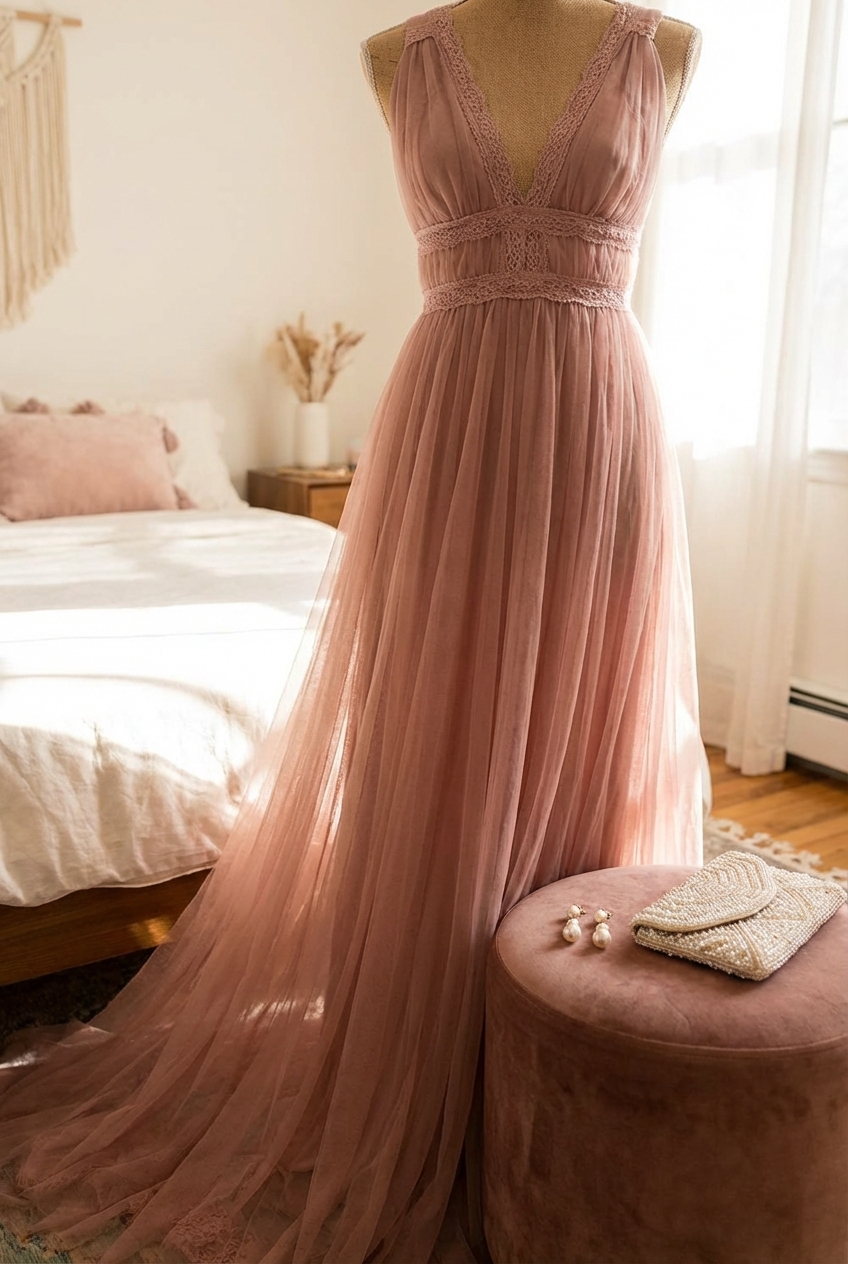
Romantic Empire Waist Gowns For Formal Looks
There is something undeniably enchanting about the empire waist silhouette. It immediately evokes images of Regency-era elegance, softly lit ballrooms, and a kind of femininity that feels both timeless and effortless. As a stylist, I often turn to this cut when a client wants to feel regal without the constriction of a corset or the weight of a heavy ballgown.
I remember styling a client for a summer gala in the Hamptons who was terrified of formal wear. She felt that modern evening gowns were too structured and uncomfortable for an outdoor event. We selected a silk chiffon empire waist gown in a dusty rose hue. The moment she put it on, her posture changed. She felt tall, statuesque, and crucially, she could breathe and move freely. That is the power of this specific silhouette.
In this guide, we will break down exactly how to choose, fit, and style these gowns for a high-end formal aesthetic. If you are looking for visual inspiration, make sure to check out the Picture Gallery at the end of the blog post.
Understanding the Architecture of the Empire Silhouette
To master this look, you must first understand the construction. An empire waist gown is defined by a fitted bodice that ends just below the bust, giving way to a loose, gathering skirt that skims the body rather than hugging it. This creates a high-waisted appearance that dramatically elongates the lower body.
From a design perspective, this cut alters the visual proportions of the wearer. It shifts the focal point upward to the décolletage and neck, which is why it is considered so romantic. Because the “waistline” sits on the ribcage, it is universally flattering, offering structure where you are narrowest and forgiveness through the midsection and hips.
However, the lack of structure in the lower half means the upper bodice must be impeccable. In high-end fashion, we look for internal construction within that small bodice area. Even if the dress looks ethereal, the bust area should have boning or high-quality interlining to support the weight of the skirt.
Designer’s Note: The Proportion Rule
When I am on a fitting set, I always check the ratio of the bodice to the skirt. Ideally, for a formal gown, the bodice should take up about one-quarter to one-third of the total length, while the skirt takes up the remaining two-thirds. If the waist seam sits too low, you lose the lengthening effect. If it sits too high (cutting across the bust), the fit looks incorrect.
Selecting the Right Fabric for Formal Gravity
The success of an empire waist gown relies almost entirely on the fabric’s behavior. Because the skirt hangs loose from the ribcage, the material must have excellent “drape.” Drape refers to how a fabric flows under its own weight.
For a romantic, formal look, you generally want to avoid stiff fabrics like taffeta or heavy brocade in an empire cut. These materials tend to “tent” out from the bust, making the wearer look larger than they are. instead, we want fabrics that fall vertically and sway with movement.
Top Fabric Picks:
- Silk Chiffon: The gold standard for romance. It is sheer and lightweight, usually layered over a lining. It creates a soft, hazy silhouette that looks incredible in candlelight.
- Silk Georgette: Slightly heavier and more opaque than chiffon, with a crepe surface. It offers a bit more durability while maintaining that fluid movement.
- Soft Tulle: For a more ethereal, fairy-tale vibe. Look for “English Net” or fine tulle rather than stiff crafting tulle.
- Stretch Velvet: For winter formals, velvet works beautifully with an empire waist because it has weight. The weight pulls the fabric down, creating a long, sleek line.
Necklines and Sleeve Variations
Since the empire waist highlights the upper body, the neckline is your primary styling opportunity. The neckline dictates the level of formality and the “vibe” of the romance.
The Square Neck:
This is the most historically accurate option, referencing the Napoleonic and Regency eras. It frames the collarbones beautifully. I often recommend this for clients with narrower shoulders, as the wide set of the straps or sleeves balances the frame.
The Deep V-Neck:
This modernizes the silhouette. An empire waist with a plunging V-neck elongates the torso visually, countering the shortening effect of the high waist seam. It adds a touch of sensuality to an otherwise modest cut.
Sleeve Lengths:
- Cap Sleeves: These offer a sweet, youthful look. They act as an extension of the shoulder line.
- Bishop Sleeves: Long, billowing sleeves gathered at the wrist are incredibly romantic. However, ensure the fabric is sheer (like chiffon) to keep the look from becoming too heavy.
- Sleeveless/Strapless: This is the most common for formal black-tie events. It keeps the focus entirely on the jewelry and the face.
The Fit Guide: Technical Measurements
Fitting an empire waist gown is different from fitting a mermaid or A-line gown. In a standard waist dress, we focus heavily on the hip and natural waist measurements. Here, those measurements are secondary.
The Ribcage Measurement:
This is the critical number. You must measure the circumference of your torso directly underneath your bust. This is where the structural band of the dress will sit. It needs to be snug enough to support the dress (so it doesn’t slide down) but loose enough to allow for full lung expansion.
The Cup Size:
Many ready-to-wear empire gowns have limited cup space. If you are larger than a C-cup, you may need to size up to accommodate the bust and then have a tailor take in the ribcage band. This is a standard alteration I request for about 60% of my clients.
Hem Length Logic:
For a formal floor-length gown, the hem is crucial.
- The Rule: The dress should skim the top of your shoes, hovering about 0.5 inches off the floor.
- The Exception: If the fabric is very lightweight (chiffon), I prefer it to touch the floor slightly (breaking by about 0.5 to 1 inch) to create a puddle effect.
- The Mistake: Do not hem the dress while barefoot if you plan to wear heels. The change in posture and height will leave the dress looking noticeably short.
Common Mistakes + Fixes
Even with a beautiful gown, things can go wrong during the styling process. Here are the most frequent issues I see and how to correct them.
Mistake 1: The “Maternity” Misconception
People worry the dress looks like maternity wear.
The Fix: Ensure the fit under the bust is tailored perfectly. There should be zero gaping. Additionally, choose a dress with a skirt that is not too gathered. A skirt cut on the bias (diagonal grain) will skim the tummy rather than puffing out over it.
Mistake 2: The Sliding Bodice
Strapless empire gowns have a tendency to slide down because gravity pulls on the heavy skirt.
The Fix: Use a waist stay. This is a grosgrain ribbon sewn inside the dress that hooks around your ribcage, separate from the zipper. It anchors the dress to your body. Any skilled tailor can add this for a small fee.
Mistake 3: Incorrect Undergarments
Wearing a standard bra often results in visible lines or straps, as empire necklines can be wide or low.
The Fix: Invest in a long-line bustier that cuts off at the waist, or use individual adhesive cups. The goal is lift without a back band that cuts into the soft tissue of the back.
Styling the Look: Accessories and Hair
Because the gown has a lot of fabric movement, your accessories should be curated carefully. You do not want to look like you are wearing a costume.
Jewelry:
Since the neckline is the star, necklaces are important.
- For square necks: A choker or a short pendant necklace works best.
- For V-necks: A lariat or a drop pendant mimics the line of the dress.
- For high necks: Skip the necklace and go for dramatic drop earrings.
Footwear:
In an empire gown, your shoes are mostly hidden. This is a secret luxury. You can prioritize comfort. However, avoid chunky wedges that might catch on the delicate hem of a chiffon skirt. A sleek stiletto or a satin block heel is safest to prevent snagging.
Hairstyles:
To enhance the elongation of the neck, up-dos are generally the preferred choice for formal empire gowns. A soft, messy chignon or a French twist complements the romantic vibe. If you wear your hair down, keep it behind your shoulders to reveal the neckline.
Color Palettes for Evening Elegance
The color you choose dictates the season and the mood. While black is a staple for formal wear, the romantic nature of this cut invites color.
Soft Pastels:
Blush, sage green, periwinkle, and champagne. These colors lean into the “Bridgerton” aesthetic. They are perfect for spring and summer weddings or garden galas.
Jewel Tones:
Emerald, sapphire, deep burgundy, and plum. These shades add a layer of maturity and sophistication to the look. They are ideal for winter balls or evening galas where flash photography is involved. Jewel tones read very expensive on camera.
Metallics:
A soft gold or pewter empire gown is a showstopper. However, ensure the metallic thread doesn’t make the fabric too stiff. Liquid gold lame or beaded tulle are excellent choices.
What I’d Do in a Real Project: A Mini Checklist
If I were styling you for a red carpet event tomorrow, this is the exact workflow we would follow:
1. Foundation First: We buy the correct undergarments before the dress fitting.
2. The Sit Test: You must sit down in the dress. The ribcage band should not dig in painfully.
3. Movement Check: Walk briskly. Does the fabric bunch between your legs? If so, we may need to add a slip.
4. Lighting Check: We look at the dress in natural light and artificial light to ensure the fabric isn’t accidentally transparent.
5. Steam, Don’t Iron: Just before the event, we steam the skirt vertically. Ironing can flatten the romantic texture of fabrics like chiffon.
Frequently Asked Questions
Can petite women wear empire waists?
Absolutely. In fact, it is one of the best silhouettes for petite women. By raising the waistline, your legs look inches longer. Just ensure the skirt isn’t too voluminous, which can overwhelm a small frame.
Is this style appropriate for a Black Tie event?
Yes, provided the fabric is formal. Cotton or linen empire dresses are for the beach. Silk, velvet, satin, and beaded tulle are for Black Tie. The length must be floor-grazing.
How do I handle a train on an empire gown?
Trains add major drama, but they can be tricky on a crowded dance floor. Ask your tailor to add a “bustle”—a hook and eye system that lifts the train up off the floor for the reception.
What do I do if the straps keep falling off my shoulders?
This is common with wide square necklines. Use “fashion tape” (double-sided adhesive strips) to secure the strap to your skin. Alternatively, a tailor can add a clear silicone strip to the underside of the strap for grip.
Conclusion
The empire waist gown is more than just a nod to history; it is a practical, flattering, and incredibly stylish choice for modern formal events. It offers a rare combination of comfort and high-impact elegance.
By focusing on the drape of the fabric, the fit of the ribcage, and the balance of your accessories, you can curate a look that feels both romantic and powerful. Whether you choose soft silk chiffon for a summer wedding or rich velvet for a winter gala, this silhouette ensures you remain the focal point.
Remember, the most important accessory is your confidence. When you feel comfortable in your gown—able to breathe, move, and eat—that confidence shines through.
Picture Gallery


