
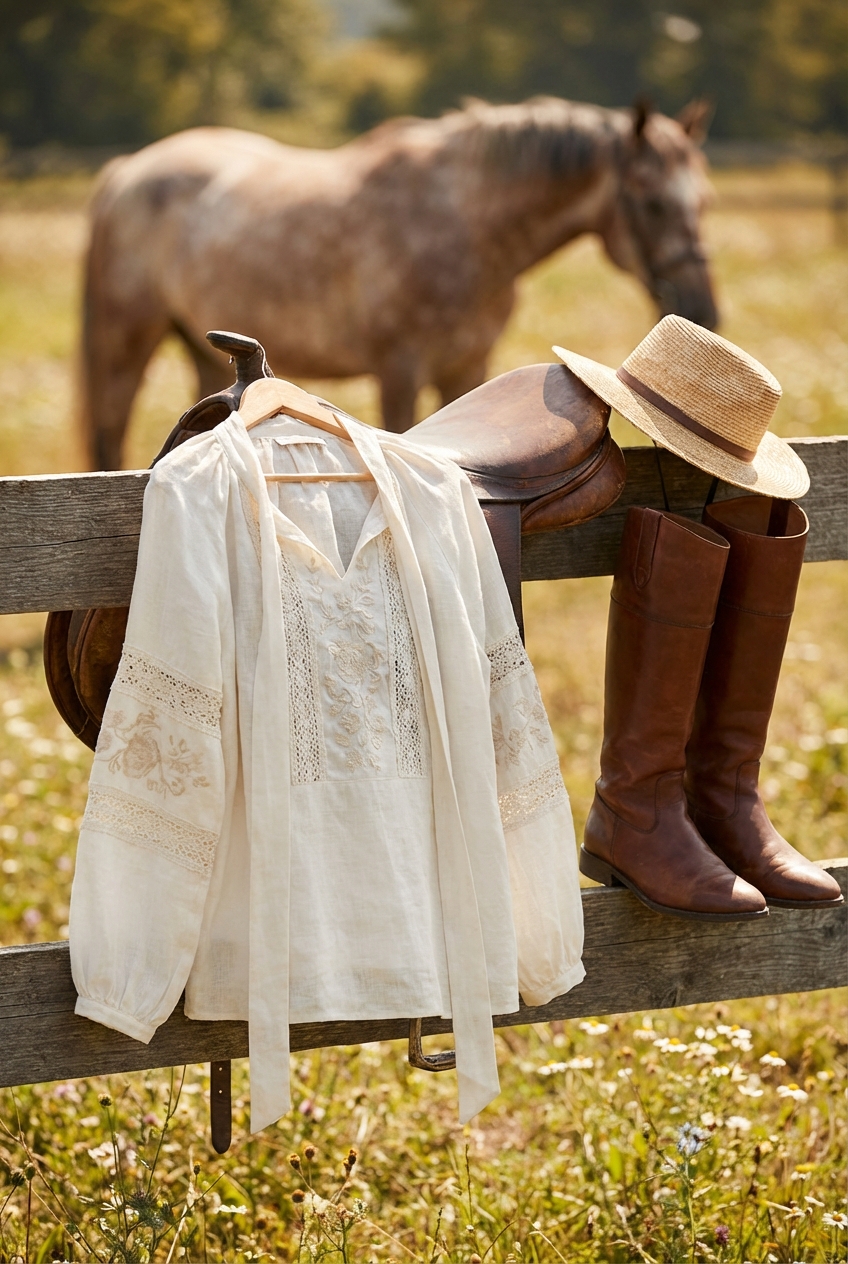
Romantic Horseback Riding Styles With Breezy Blouses Effortless Elegance In The Saddle
There is a distinct magic that happens when high fashion meets the equestrian world. I vividly remember my first time styling a campaign at a heritage stable in the English countryside; the juxtaposition of rugged leather tack against ethereal, billowing fabrics created a visual language that was both commanding and incredibly soft. It wasn’t just about looking the part, but about feeling the romance of the ride while maintaining absolute control in the saddle.
For many of my clients, the goal is to bridge the gap between technical athletic wear and genuine personal style. You want the functionality required to handle a horse safely, but you also crave the feminine, timeless aesthetic of a heroine in a period novel. A breezy blouse paired with structured riding gear offers that perfect balance of “effortless elegance,” provided you know how to handle the volume and fabric weights.
In this guide, I will walk you through exactly how to execute this look without sacrificing safety or comfort. For visual inspiration on how to combine these textures and silhouettes, be sure to scroll down to the Picture Gallery at the end of the blog post.
1. The Architecture of the Blouse: Fabric Weight and Movement
When selecting a blouse for riding, the fabric’s behavior in motion is your most critical consideration. In high-end fashion styling, we talk about “drape” and “hand,” but in riding, we must talk about aerodynamics and distraction. A fabric that is too light will flap aggressively at a gallop, potentially spooking a sensitive horse or breaking your concentration.
I recommend avoiding ultra-lightweight chiffons or synthetic organzas. These materials lack the weight to hang properly against the wind generated by riding. Instead, opt for heavy-weight silk crepe de chine (ideally 16mm to 19mm weight) or a high-quality cotton voile.
These natural fibers breathe exceptionally well, which is vital when you are working hard in the saddle. They offer that romantic, billowing aesthetic while possessing enough density to settle back against the body when you slow to a walk.
Stylist’s Note:
The most common issue I see is choosing polyester blends that mimic silk. These trap heat against the skin and create a “sauna effect” under a riding vest or jacket. Always check the care label for 100% natural fibers to ensure moisture wicking.
2. Managing Volume: Tucking and Tailoring Techniques
The “breezy” look implies volume, but excess fabric around the waist is a safety hazard and a silhouette killer. The golden rule of equestrian styling is the “inverted triangle” silhouette: volume at the shoulders or sleeves, tapering down to a snatched, secure waist.
To achieve this, you must master the military tuck. Fold the excess side fabric of the blouse backward before tucking it into your breeches. This keeps the front smooth and flat, preventing the fabric from bunching up under your waistband or belt.
If the blouse has voluminous bishop sleeves, ensure the cuffs are fitted and reinforced. A loose cuff can snag on reins or saddle pads. I often have my tailor add a second button to the cuffs of ready-to-wear blouses to ensure they sit tight against the wrist bone.
Common Mistakes + Fixes:
- Mistake: Leaving the blouse untucked or loosely tucked, which looks messy and obscures your seat position in the saddle.
- Fix: Use high-waisted breeches with a silicone grip waistband to lock the blouse hem in place.
- Mistake: Sleeves that are too long and cover the hands.
- Fix: Tailor sleeves to hit exactly at the wrist bone so your gloves fit cleanly over or under the cuff without bunching.
3. The Anchor: Selecting the Right Breeches
Because your top half is soft, romantic, and unstructured, your lower half must be architectural and severe. This contrast is what makes the outfit look expensive and intentional rather than sloppy.
Avoid riding tights or leggings for this specific aesthetic. While comfortable, they often lack the structure and belt loops necessary to ground a voluminous blouse. You need traditional breeches with a structured waistband and a front zip.
Color theory plays a massive role here. To lean into the romantic vibe, steer clear of stark black or bright white (which reads as competition gear). Instead, choose earth tones like fawn, taupe, rust, or sage green. These colors harmonize beautifully with cream or ivory blouses and age the look, making it feel established and “old money.”
What I’d do in a real project:
- I would source high-waisted breeches in a warm beige tone.
- I would ensure the fabric is a technical blend that repels dirt, as lighter breeches show saddle stains easily.
- I would look for Euro-seat stitching, which provides a flattering curve on the backside and adds to the tailored appeal.
4. Layering with Structure: Waistcoats and Corsetry
Sometimes a breezy blouse needs an external anchor to keep it practical for serious riding. This is where the waistcoat or structured vest becomes your secret weapon. It serves a dual purpose: it compresses the loose fabric of the blouse against your torso for safety, and it adds a layer of sartorial sophistication.
Look for vests inspired by menswear tailoring or soft corsetry. A tweed waistcoat or a fitted velvet vest can elevate a simple cotton blouse into a full fashion statement. The structure of the vest highlights your posture—a key element of good equitation—while allowing the romantic sleeves of the blouse to remain the focal point.
Ensure the armholes of the vest are cut high enough to not gape, but low enough to not restrict your shoulder rotation. You need full range of motion to effectively communicate with the horse through the reins.
Stylist’s Note:
When layering, pay attention to the length of the vest. It should hit just below the waistband of your breeches. Anything longer will bunch up when you are seated in the saddle, ruining the clean line of your back.
5. Footwear: The Crucial Leather Element
Boots are the non-negotiable anchor of any equestrian outfit. When styling a romantic look, the condition and color of the leather matter immensely. Scuffed, muddy paddock boots will clash with the elegance of a silk blouse.
I prefer tall field boots or dress boots in a rich cordovan or cognac leather. Brown leather tends to look softer and more approachable than black, which is traditionally reserved for dressage or formal hunting. The warmth of brown leather complements the creamy tones of a romantic blouse.
If you have a shorter calf or struggle with off-the-rack boot heights, consider Spanish-top boots. These have a higher outer edge that elongates the leg line, making you look taller and more elegant in the saddle.
Measurements and Fit:
- Height: The boot shaft should come up to the crook of your knee when standing. It will drop about 1–2 centimeters as the leather breaks in.
- Width: You should be able to fit one finger comfortably inside the top of the boot. Any tighter and you risk cutting off circulation; any looser and the boot will slouch.
6. Accessories: Balancing Function and Ornamentation
The difference between a rider and a styled rider lies in the accessories. However, in an equestrian setting, accessories must never dangle or jingle. Safety is paramount.
Swap long necklaces for a silk neck scarf. A small, square silk scarf tied tightly at the neck prevents windburn, catches sweat, and adds a pop of color that bridges your blouse and breeches. It is a classic nod to vintage equestrian style.
For jewelry, stick to studs. Pearl studs are the standard for a reason; they illuminate the face without posing a snagging risk. Avoid hoop earrings or long pendants that could catch on a branch or a piece of tack during a dismount.
Expert Tip:
Gloves are not optional. They protect your hands and complete the look. For a romantic style, choose crochet-backed leather gloves. They offer vintage appeal and excellent breathability, keeping your hands cool while maintaining a firm grip on the reins.
7. Maintaining the Look: Practical Care for Delicate Fabrics
One of the biggest hesitations my clients have regarding wearing “nice” clothes to the barn is the fear of ruining them. Horses are dusty, slobbery, and messy animals. However, with the right fabric choices and care routine, you can wear luxury items regularly.
If you choose silk, you must be prepared to hand wash or dry clean. However, high-quality cotton voiles and linens can often be machine washed on a delicate cycle. The key is to treat stains immediately. Keep a stain remover pen in your grooming kit or tack trunk.
Be mindful of the saddle oil. Freshly oiled saddles can bleed onto light-colored breeches or the tail of a long shirt. I always recommend riding in dark breeches if you have recently conditioned your tack, or using a seat saver until the oil has fully absorbed.
Finish & Styling Checklist
Before you head out to the barn, run through this quick mental checklist to ensure your outfit is both camera-ready and ride-ready.
- The Tuck Check: Is the blouse tucked in securely all the way around? Raise your arms above your head; if the hem pulls out, it needs to be retucked or pinned.
- The Sleeve Test: Can you bend your elbows fully without the cuffs cutting into your circulation?
- The Hardware Audit: Are all zippers on your boots locked? Is your belt secure? Loose hardware can scratch your saddle.
- The Palette: Do you have at least one grounding neutral color (beige, brown, olive) to balance the white or cream of the blouse?
- The Hair: Is your hair secured in a low bun or braid? Loose hair tangling with a breezy blouse can look messy quickly in the wind.
FAQs
Can I wear a white blouse for trail riding?
Yes, but be strategic. White reflects the sun, keeping you cool. However, it shows dust instantly. I suggest an ivory or cream tone instead of stark white, as it forgives dust much better while maintaining that bright, airy aesthetic.
How do I stop a silk blouse from slipping out of my breeches?
This is a common issue with slippery fabrics. I recommend sewing a thin strip of silicone gripper elastic (similar to what is found inside strapless bras) onto the inner hem of the blouse. Alternatively, wear a bodysuit instead of a traditional shirt for a guaranteed tuck.
Are puff sleeves safe for jumping?
Generally, yes, provided the volume is at the shoulder and not the wrist. You do not want excess fabric near your hands where it could interfere with your release or get caught on the martingale. Keep the forearm tapered and fitted.
What is the best bra to wear under a sheer breezy blouse?
Since riding is a high-impact sport, you need support. Look for a nude-colored sports bra with a smooth silhouette. Avoid lace or textured bras, as the texture will show through the delicate fabric of the blouse.
Conclusion
Blending the rugged utility of equestrian sport with the soft romance of high fashion is not just about aesthetics; it is about celebrating the art of riding. There is a profound confidence that comes from knowing you are dressed appropriately for the discipline while still expressing your personal style.
By focusing on natural fabrics like heavy silk and cotton, mastering the military tuck, and anchoring your look with quality leather and tailored breeches, you can achieve an effortless elegance that looks as good in the stable as it does in the saddle. Riding is a dance between horse and human, and your attire should flow with that movement, never against it.
Picture Gallery


