
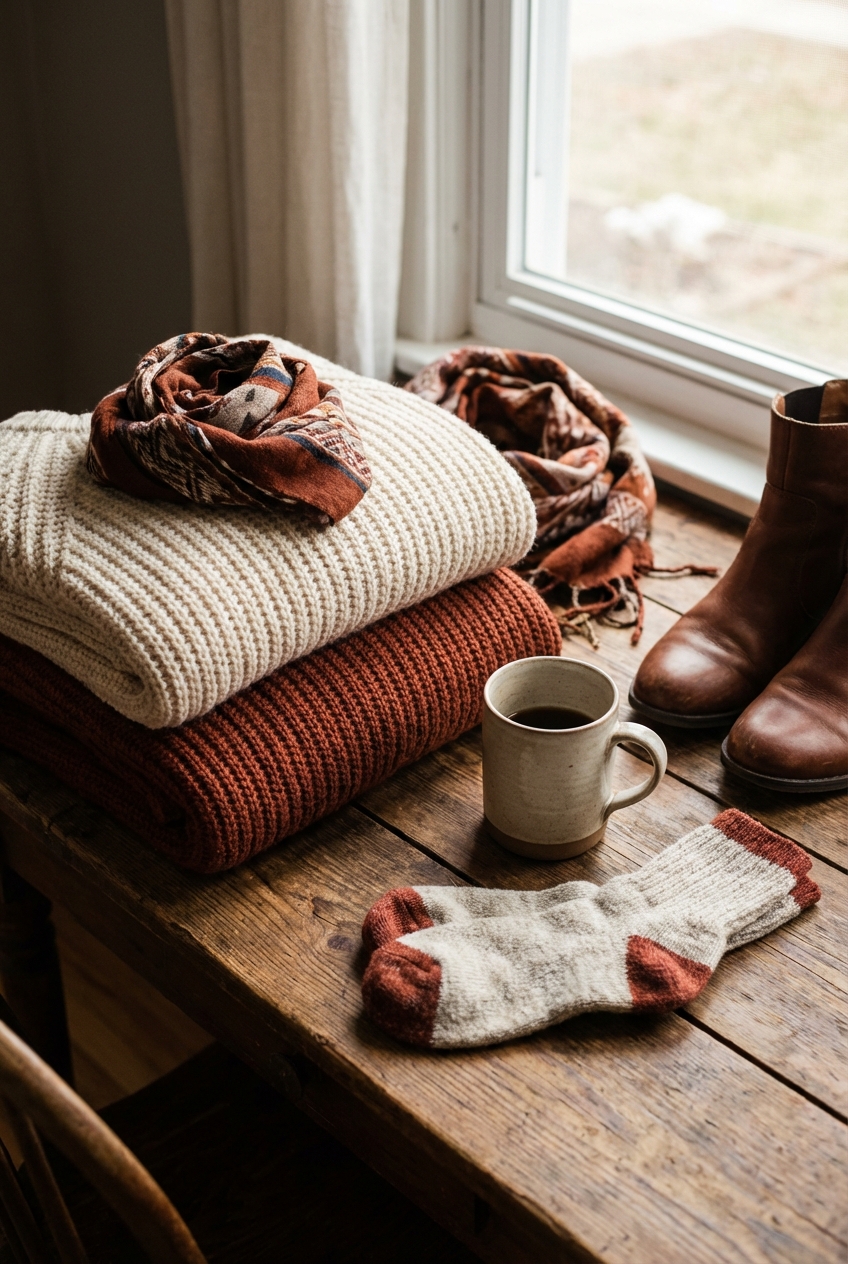
Rust And Cream Outfit Ideas For Cozy Sweaters
There is a specific kind of magic that happens when you combine warm, earthy rust tones with soft, luxurious cream. In my years working as a fashion stylist, I have found this combination to be one of the most universally flattering palettes for the cooler months. It strikes a balance between the richness of autumn leaves and the crisp brightness of winter snow.
Many of my clients initially hesitate to wear cream during fall and winter, fearing it might look too summery or get dirty too easily. However, when anchored by a deep, substantial color like rust, cream becomes incredibly sophisticated. It acts as a reflector, bouncing light onto the face and combating the dreary gray cast of winter days.
Whether you are dressing for a casual weekend coffee run or a polished office environment, this color duo conveys an aesthetic of “quiet luxury.” If you want to see exactly how these textures and tones come together in real life, be sure to check out our curated Picture Gallery at the end of the blog post.
The Color Theory: Matching Your Undertones
Before we start buying sweaters, we need to address the specific shades of rust and cream. In high-end styling, the success of an outfit often comes down to the temperature of the colors. Rust is inherently warm, sitting somewhere between burnt orange, brick red, and brown.
Because rust is warm, it pairs best with creams that have a yellow or golden undertone, often called “ecru” or “vanilla.” Avoid stark, optical whites. Optical white has a blue undertone that can make rust look muddy and disconnected.
Designer’s Note: The Lighting Test
When I am pulling clothes for a client, I always take the two fabrics to a window. Artificial store lighting often masks the undertone. If the cream fabric looks gray next to the rust item, it is too cool. You want the cream to look rich and buttery to complement the earthiness of the rust.
Common Mistakes + Fixes
Mistake: Wearing a rust sweater that is too orange for your skin tone.
Fix: If you have cool undertones (veins look blue), lean toward a “brick” rust that has more red/blue in it. If you have warm undertones (veins look green), choose a “terracotta” rust with more orange/gold.
The Monochromatic Cream Base
One of the most elongating and expensive-looking styling tricks is “column dressing.” This involves wearing the same color on the top and bottom (underneath a layer) or wearing a single color from head to toe. For this look, we use cream as the base column.
Start with a pair of high-waisted cream trousers and a matching cream bodysuit or lightweight turtleneck. This creates a long, unbroken vertical line that adds height. Layer an open rust cardigan or an oversized rust pullover on top.
The contrast between the light base and the dark knitwear draws the eye inward, which is naturally slimming. When selecting cream trousers, pay attention to opacity. In my fittings, I always ensure pockets are lined in beige, not white, to avoid them showing through.
What I’d Do in a Real Project
I would choose wide-leg wool trousers in an oatmeal or heavy cream shade. I would ensure the hem breaks exactly 0.5 inches off the floor while wearing the intended shoe. This prevents the “floating pants” look and keeps the hem clean.
Playing with Texture: Knits and Leathers
Because rust and cream is a simple two-tone palette, texture becomes your most important variable. If every item in your outfit is flat cotton, the look will fall flat. You need tension between materials to create visual interest.
I love pairing a chunky, cable-knit cream sweater with smooth rust-colored leather (or faux leather) bottoms. The heavy, matte texture of the wool contrasts beautifully with the slight sheen of the leather. This adds dimension without needing prints or patterns.
Alternatively, a rust mohair or cashmere sweater offers a fuzzy halo effect. Pair this with crisp cream denim or a satin skirt. The rule of thumb here is opposites attract: soft with hard, matte with shine, chunky with sleek.
Pro-Level Measurements
When mixing bulky knits with leather skirts or trousers, proportion is key. If the sweater is oversized, the bottom should be fitted. If you are doing a “front tuck” (French tuck), ensure your waistband has enough structure to hold the bulk of the sweater without bulging.
The Rust Sweater: Finding the Right Silhouette
The rust sweater is the hero piece of this aesthetic. However, the cut of the sweater dictates the entire vibe of the outfit. A cropped boxy fit reads modern and youthful, while a long tunic cut reads more traditional and relaxed.
For a versatile wardrobe, I recommend a crew neck with a raglan sleeve. This shoulder style is softer and accommodates layering better than a set-in shoulder seam. It allows you to wear a collared cream shirt underneath without looking restricted.
Styling Checklist for Sweater Fits:
- The Shoulder Seam: For a tailored look, the seam should hit right at the corner of your shoulder bone. For a relaxed look, it should drop 1.5 to 2 inches down the arm.
- The Neckline: If you have a shorter neck, avoid tight turtlenecks. Opt for a mock neck that stands 1 to 2 inches high, leaving some breathing room.
- The Hem: Ideally, a sweater should end around the mid-hip or high hip to elongate the legs. Tunics that cut across the widest part of the thigh can shorten the leg line.
Outerwear: The Third Piece Rule
In styling, the “Third Piece Rule” suggests that an outfit needs three key elements to feel complete (pants + top + third piece). In fall and winter, your coat is that critical third piece. The rust and cream palette opens up beautiful outerwear options.
A classic camel coat works effortlessly here, as camel is a cousin to both rust and cream. However, for a bolder fashion statement, I prefer a rust-colored wool coat over an all-cream outfit. It is a “wow” moment that turns heads on the street.
If you prefer a cream coat, look for a textured “teddy” coat or a shearling aviator jacket. The cream shearling mimics the coziness of the sweater, while the rust accents underneath ground the look. Keep the length in mind; a coat should ideally be slightly longer than your longest knit layer underneath.
Common Mistakes + Fixes
Mistake: Wearing a coat that is tighter than the chunky sweater underneath.
Fix: When buying winter coats, I always advise clients to size up one size or bring their thickest sweater to the fitting. You should be able to cross your arms comfortably without the fabric pulling across the upper back.
Accessorizing: Metals and Leathers
Accessories are where you can make or break the rust and cream aesthetic. Because these are warm tones, gold jewelry is the natural choice. Silver can look too cold and clinical against the warmth of rust. Opt for brushed gold or antique brass finishes rather than high-shine yellow gold for a more organic feel.
For leather goods (shoes, belts, and bags), you have two main paths. You can go tonal with cognac, tan, or deep chocolate brown. These shades harmonize with the rust. Avoid black leather if possible; it can look too harsh and high-contrast against soft cream and warm rust.
If you must wear black footwear, try to tie it in with another black element, like a belt or buttons on the sweater. This creates visual balance so the shoes don’t look like an afterthought.
What I’d Do in a Real Project
I would style a rust sweater and cream jeans with ankle boots in “snakeskin” or a textured embossed leather. The pattern usually contains creams, browns, and rusts, tying the whole color palette together seamlessly at the feet.
Finish & Styling Checklist
Before you head out the door, run through this mental checklist. These are the final touches I perform on set to ensure the look is polished and intentional.
The “High-End” Polish Checklist:
- De-pill the Knit: Rust creates dark shadows, and cream shows everything. Use a fabric shaver to remove pilling from the underarms and sides of your sweater.
- The Sleeve Roll: Don’t just push sleeves up. Fold the cuff back once, then push. Exposing the wrist bone (the thinnest part of the arm) balances the visual weight of a heavy sweater.
- Shoe Gap: Check the gap between your pants and boots. Ideally, the pant hem should cover the boot shaft, or there should be a tiny sliver of skin. Avoid bunching jeans into tight ankle boots.
- Lint Roll: Dark rust lint on cream trousers looks messy. Carry a travel lint roller if you are wearing a mohair or shedding wool blend.
- Steam, Don’t Iron: Knits should never be ironed flat; it kills the texture. Use a steamer to relax wrinkles and fluff the fibers.
FAQs
Can I wear rust if I have pale skin?
Absolutely. The key is contrast. If you are very pale, a deep, saturated rust provides a beautiful contrast. Avoid “nude” rusts that match your skin tone too closely. Wearing a cream collar or scarf near your face can also act as a buffer between your skin and the rust color.
How do I keep cream jeans clean in winter?
It is a risk, but manageable. I recommend treating cream denim with a spray-on fabric protector (like Scotchgard) before the first wear. Also, opt for cropped hems or tuck them into boots on wet days to avoid “hem drag” in puddles.
What color shoes go best with rust pants?
Nude or beige boots that match your skin tone or the pant color are best for elongating the leg. Dark brown or cognac is also excellent. White boots can look very mod and chic if they match a cream top.
Is rust considered a neutral?
In the fashion world, we treat rust as a “pseudo-neutral.” It pairs with almost everything that navy, black, or gray would pair with, including denim, olive green, and mustard. It adds color without being loud.
Conclusion
Embracing the rust and cream color palette is a surefire way to elevate your cold-weather style. It moves away from the safety of all-black outfits and introduces warmth and texture that feels approachable yet expensive.
Remember that the secret lies in the quality of the fabrics and the intentionality of the styling. Mix your textures, check your undertones, and don’t be afraid to layer. With these guidelines, you will feel confident and cozy all season long.
Picture Gallery


