
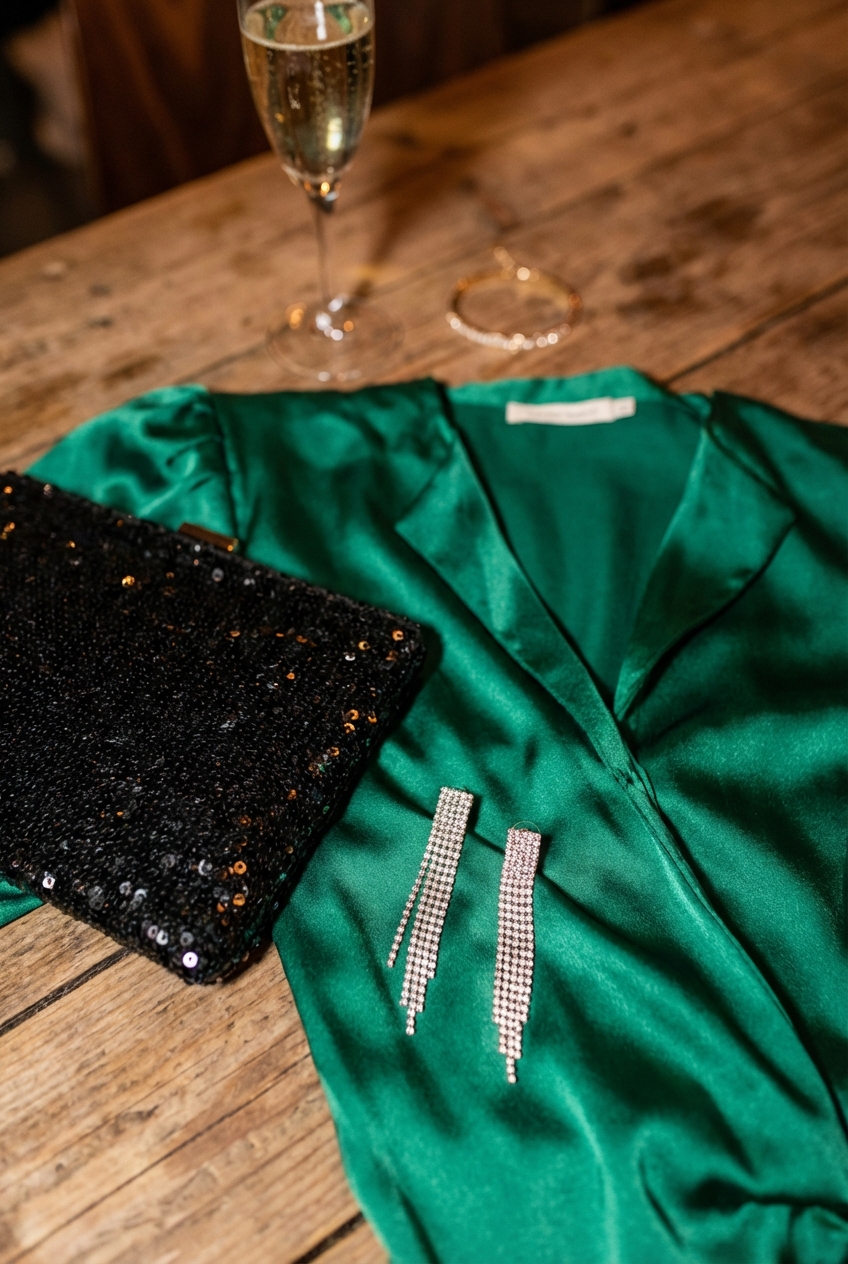
Satin And Sequins Together In Glamorous Party Looks
There was a time early in my styling career when I was terrified of mixing two high-shine textures. I assumed that if one piece was shouting, the other had to whisper. I vividly remember a client fitting for a New Year’s Eve gala where she insisted on pairing a micro-sequin midi skirt with a liquid gold satin camisole. My instinct was to swap the top for matte cashmere, but once she put the look together, the result was electric. It wasn’t “too much”; it was pure, unapologetic luxury.
The secret to mastering this combination lies in understanding how light interacts with surface textures. Satin offers a fluid, continuous glow, while sequins provide a fractured, scattering sparkle. When you learn to balance these two different types of light reflection, you create depth rather than chaos. It is about architectural balance within the silhouette and ensuring the fabrics have the correct weight relative to one another.
This guide will walk you through the technical formulas for mixing these power players, from fabric weights to snag prevention. If you are looking for visual inspiration on how to execute these concepts, be sure to check out the Picture Gallery at the end of the blog post. Let’s break down exactly how to style satin and sequins without looking like a disco ball.
1. The Physics of Fabric Weight and Scale
The most common mistake I see is pairing a heavy, encrusted sequin with a flimsy, lightweight satin. This creates a visual imbalance and often leads to the satin bunching or pulling awkwardly. To look high-end, the fabrics must effectively “fight” each other to a draw.
If you are wearing a skirt with large paillettes (sequins larger than 5mm), you need a satin with significant gram weight. Look for Duchess satin or a heavy crepe-back satin rather than a light charmeuse. The structure of the satin must be able to stand up to the bulk of the sequins.
Conversely, if you are wearing micro-sequins (sand-sized beads), a lighter bias-cut silk slip dress or camisole works beautifully. The drape of the liquid silk complements the fluid movement of small sequins. Match the physical weight of the garments to ensure the silhouette hangs correctly.
Designer’s Note: The “Drag” Test
In a real styling session, I always perform a “drag test.” I rub the sequin fabric against the inside of my wrist. If it scratches me, it will absolutely shred your satin. High-quality sequins are usually sewn flat or faced with mesh. If you feel sharp edges, do not pair it with silk satin; it will cause pulls within twenty minutes of wear.
2. Monochromatic Mastery: The Column of Color
If you are new to mixing these textures, the safest and most chic entry point is a monochromatic palette. By removing color contrast, you force the eye to focus entirely on the difference in texture. This is an old runway trick to elongate the body while maintaining high visual interest.
Try a midnight blue satin blouse tucked into a midnight blue sequin pencil skirt. Because the hues match, the outfit reads as a cohesive “column.” The eye travels vertically without interruption, which is incredibly slimming.
However, “matching” doesn’t mean identical. In fact, a slight variation in tone adds sophistication. A champagne satin top paired with a rose-gold sequin pant works because they share the same warm undertone. Avoid mixing cool-toned silver sequins with warm cream satin unless you are intentionally clashing for an avant-garde look.
Common Mistakes + Fixes
- Mistake: Pairing bright primary colors in satin and sequins (e.g., red satin and blue sequins). This reads as a costume.
- Fix: Stick to neutrals, metallics, or jewel tones. If you mix colors, keep one neutral (black sequin blazer) and one colored (emerald satin dress).
3. Managing Volume and Proportions
Satin and sequins are both attention-grabbing, so the silhouette needs to be controlled. If both pieces are voluminous, you risk looking larger than you are. The rule of thumb is “Tight vs. Loose.”
If you choose a loose, billowy satin blouse, pair it with a fitted sequin skirt or tailored sequin trousers. The volume on top creates a sense of ease, while the structure on the bottom anchors the look. This follows the classic “inverted triangle” styling method.
Alternatively, if you are wearing a loose sequin shift dress, layer a fitted satin trench or blazer over it. You never want both fabrics to be oversized. One must contour the body to show your shape amidst the shine.
What I’d Do in a Real Project
For a winter cocktail party, I love styling a wide-leg satin trouser with a fitted sequin bodysuit. The pants should have a circumference of at least 20-22 inches at the hem for maximum movement. The bodysuit ensures the waist is defined and eliminates the bulk of tucking in a heavy top.
4. The “Snag Zone” and Spatial Awareness
We need to talk about the practical side of this pairing: friction. Sequins are abrasive. Satin is delicate. When they rub together, the satin always loses. You must engineer your outfit to minimize contact points between the two fabrics.
Avoid wearing a sequin blazer over a satin dress if the blazer is unlined at the cuffs. As your arms swing while walking, the sequin cuffs will abrade the hip area of the satin dress. I have seen expensive gowns ruined in a single night because of this.
A better configuration is “Top vs. Bottom” where the contact point is minimal, usually just at the waistline. If you tuck a satin blouse into a sequin skirt, ensure the waistband of the skirt is lined with a soft material (like grosgrain ribbon) or that the sequins stop a quarter-inch from the edge.
Real Styling Scenario: The Distance Rule
When I dress clients, I aim for a 1-inch “buffer zone” whenever possible. If wearing a sequin jacket, I push the sleeves up to the elbow so the cuffs don’t touch the satin side of the torso. If that isn’t possible, I apply a small strip of clear styling tape to the abrasive edge of the cuff to blunt the sharp sequin edges.
5. Accessorizing: The Rule of Matte
When your clothing is 100% shine, your accessories must provide a visual place for the eye to rest. This means avoiding patent leather shoes, metallic bags, or rhinestone belts. You need matte textures to ground the look.
Suede is the absolute best companion for satin and sequins. A black suede pump absorbs light, whereas a patent leather pump would reflect it, competing with your outfit. The matte texture of suede acts as a visual anchor.
For jewelry, stick to solid metals rather than pavé or gemstone-heavy pieces. A solid gold cuff or simple hoop earrings work best. You already have “jewelry” on your body in the form of sequins; you don’t need to add more sparkle near your face.
Metric for Jewelry
Keep a distance of at least 3 inches between your jewelry and the sequins. If you have a high-neck sequin top, skip the necklace entirely and opt for earrings. If the neckline is low, a simple pendant works, provided it sits on your skin, not the fabric.
6. Tailoring and Hemlines
Fit is unforgiving with these materials. Satin highlights every curve and crease, while sequins add physical bulk to the frame. Tailoring is non-negotiable for a high-end look.
For satin trousers, the hem should break just slightly over the top of your foot (a “quarter break”). If they pool on the floor, the satin will pick up dust and lose its luster. For sequin pants, you want no break at all; they should hang straight to the floor, ending 0.5 inches above the ground to prevent the sequins from catching on your shoe heels.
If you are taking sequin garments to a tailor, bring extra money. Sequin alterations are labor-intensive because the tailor must remove the sequins from the seam allowance before sewing, then hand-sew them back on to cover the stitch line. Expect to pay 30-50% more for alterations on these garments.
Designer’s Note on Undergarments
Satin requires seamless, laser-cut undergarments. Lace or elastic edges will show through immediately (VPL). With sequins, the concern is comfort. Ensure you wear a full slip or shapewear under a sequin dress to protect your skin from scratchy backing mesh.
Finish & Styling Checklist
Before you head out the door, run through this quick mental checklist to ensure your look is polished and practical.
- The Friction Check: Swing your arms back and forth. Do your sequin sleeves catch on your satin bodice? If yes, roll the sleeves or change the top.
- The Light Test: Stand in bright light. Is your satin too sheer? Do the sequins look cheap (iridescent/rainbow) or expensive (metallic/matte)?
- The Balance: Look in a full-length mirror. Is there one matte element (shoes, bag, skin) to break up the shine?
- The Static Guard: Have you sprayed your satin with anti-static spray? Sequins create static electricity, which will make the satin cling to your legs.
- The Hardware: Check that your jewelry doesn’t have claws or prongs that will snag the satin or get caught in the sequins.
FAQs
Can I wear satin and sequins during the day?
Generally, this is a strictly evening combination. However, you can dress it down by swapping one element. A grey oversized cashmere sweater with a silver sequin skirt is acceptable for a holiday lunch. Satin and sequins together, however, usually read as “after 6 PM” attire.
How do I wash a look like this?
Never wash these pieces together. Satin can sometimes be hand-washed, but sequins are almost exclusively dry clean only. The heat and agitation of a washing machine can melt sequins or dissolve the glue holding them. Always take sequin garments to a cleaner who specializes in evening wear.
What shoes work best with this combo?
As mentioned, suede is your best friend. Velvet is another great option as it absorbs light. Avoid glitter shoes or high-shine patent leather, as they compete with the outfit. A simple strappy sandal (nudist style) is also a safe bet as it minimizes material.
My sequin skirt keeps snagging my satin top. What can I do mid-party?
If you are already at the event, try to tuck the top in tighter to reduce the billowing fabric that catches the sequins. If you have a clutch bag, hold it at your hip to create a barrier between your arm and your body.
Conclusion
Mixing satin and sequins is a bold style move that signals confidence and a mastery of fashion mechanics. It moves beyond the safety of the “Little Black Dress” and enters the territory of true glamour. The key is never to let the outfit wear you. By managing the proportions, respecting the delicate nature of the fabrics, and keeping your color palette tight, you can pull off this look with the ease of a runway pro.
Remember that fashion is ultimately about how you feel in the clothes. If the scratchiness of sequins bothers you, or the slip of satin makes you self-conscious, it won’t look good no matter how perfectly styled it is. Choose pieces that fit impeccably, protect your delicate fabrics from abrasion, and then forget about the rules and enjoy the party. When you get the balance right, the interplay of soft glow and hard sparkle is truly magical.
Picture Gallery


