
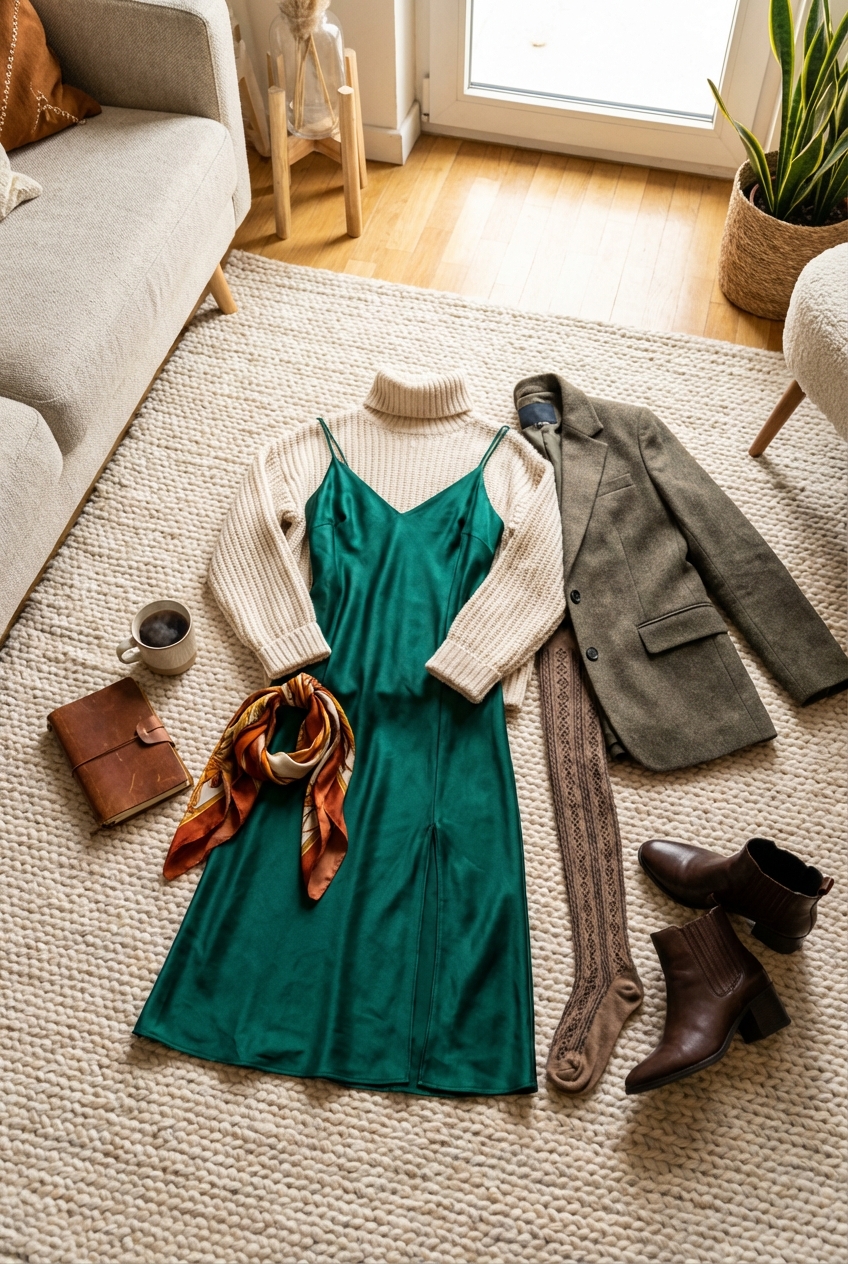
Satin Slip Dresses For Winter Layering Looks
1) Introduction
The slip dress is often pigeonholed as a summer fling. We associate it with ninety-degree days, strappy sandals, and the kind of effortless minimalism that seems impossible once the temperature drops below freezing. However, as a stylist, I actually prefer working with slip dresses in the winter. The sleek, light-reflecting texture of satin provides a necessary break from the matte, heavy absorption of wool and cashmere.
Transitioning a bias-cut dress into colder months is largely an architectural challenge. You are dealing with a garment designed to skim the body, which means bulky base layers are out of the question. You have to think about heat retention without destroying the silhouette. It requires a specific formula of fabric weights and lengths to ensure you look intentional, rather than like you just grabbed the first dress you saw in your closet.
In this guide, I will walk you through the exact layering techniques I use for editorial shoots and private clients during the winter season. We will cover everything from the denier of your tights to the specific hemline ratios between your coat and your dress. If you are looking for visual inspiration, please scroll to the bottom because I have curated a specific Picture Gallery at the end of the blog post.
The Foundation: Fabric Weights and The Base Layer
Before we talk about what goes on top, we have to talk about what goes underneath. The biggest failure point in winter satin styling is the fabric quality itself. A polyester satin from a fast-fashion retailer often lacks thermal properties and generates immense static electricity when layered.
For winter wear, I always recommend a silk charmeuse or a heavy-weight cupro. If you are buying silk, look for a “momme” weight (the unit used to measure silk density) of at least 19mm or 22mm. This heavier weight hangs better against tights and provides a surprising amount of insulation.
Designer’s Note: The Bias-Cut Variable
Most quality slip dresses are cut on the bias (diagonally across the grain of the fabric). This gives the dress its stretch and drape. However, it also means the dress will cling to any lumps underneath. When choosing thermal underwear or bodysuits, you must opt for laser-cut edges and seamless construction. A traditional hem on a thermal tank top will show a visible ridge through a bias-cut dress.
Common Mistakes + Fixes
Mistake: Wearing cotton leggings underneath for warmth.
Fix: Cotton grabs onto satin, causing the dress to bunch up at the hips as you walk. Switch to a high-denier nylon or a specific “heat-tech” synthetic blend that has a smooth finish. The fabrics need to glide against each other, not grip.
The “Sweater Over” Technique
Placing a knit over a slip dress creates the illusion of a satin midi skirt, but with a streamlined waistline. This is the most common way to style the look, yet it is often executed poorly due to proportion issues.
If the sweater is too long, you lose your waist and look swallowed by fabric. If the sweater is too cropped, it cuts the torso in an unflattering spot. The goal is to create a “column” effect where the textures break, but the silhouette remains long.
What I’d do in a real project:
- The Fold-Under Trick: If wearing an oversized chunky knit, I never just let it hang. I use a skinny belt over the sweater at the natural waist. Then, I pull the sweater fabric up and flop it over the belt. This mimics a tucked-in look without the bulk of actually tucking a thick sweater into a delicate dress.
- Texture Pairing: I look for high contrast. A fuzzy mohair or angora blend looks incredible against glass-smooth satin. The difference in light absorption makes the outfit look expensive.
- Neckline Logic: If the slip dress has lace detailing at the chest, use a deep V-neck sweater to frame it. If the dress is plain, a high mock-neck creates a sharper, more modern silhouette.
The Turtleneck Underlayer
Layering underneath the dress creates a pinafore effect that feels distinctly vintage yet practical. This works best with slip dresses that have a slightly looser fit through the bust. If the dress is already tight across your chest, adding a layer underneath will pull the fabric and create drag lines.
The underlayer must be skin-tight. I recommend a tissue-weight merino wool turtleneck or a modal bodysuit. Avoid heavy cotton turtlenecks, as they will stretch the delicate straps of the dress and create bulk in the armpits.
Color Coordination Rules
When layering under, you have two main options for color:
- Monochromatic: A black turtleneck under a black slip dress creates a seamless “evening gown” look that is work-appropriate.
- Tonal Shift: A cream turtleneck under a champagne or gold dress. Keeping the colors in the same family prevents the “color blocking” from looking too harsh or dated.
Outerwear Lengths and Proportions
The coat you choose dictates the formality of the look. The most common error I see on the street is a coat hem that hits at the widest part of the calf, clashing with the midi length of the dress.
There is a simple rule of thumb for coat lengths with midi dresses: Go much shorter, or go longer.
Option A: The Long Wool Coat
Ideally, your coat should be longer than your dress by at least two inches. This creates a clean, vertical line. If the dress peeks out from the bottom, it can look messy unless the dress has a distinct ruffle or lace edge meant to be seen.
Option B: The Cropped Jacket
A shearling aviator jacket or a leather moto jacket that hits at the hip bone is excellent for waist definition. The contrast between the tough leather and the soft satin is a classic “fashion editor” trope for a reason. It works.
Managing Legwear: Tights and Boots
Bare legs are rarely an option in true winter. This introduces the challenge of static and visual continuity.
The Boot Connection
Knee-high leather boots are the secret weapon for winter slip dresses. By having the hem of the dress overlap the top of the boot, you eliminate the slice of skin (or tights) that cuts your leg length visually. This provides maximum warmth and creates a continuous vertical line.
If you prefer ankle boots, they must be fitted at the shaft. A wide, gaping ankle boot combined with a floaty midi dress tends to shorten the leg.
Tights Selection
- Denier 10-20 (Sheer): Good for evening, but visually chilly.
- Denier 40-60 (Semi-Opaque): The sweet spot for city wear.
- Denier 100+ (Opaque): Best for casual daytime looks. When wearing opaque tights, match the color of the tights to your boots to elongate the leg.
Designer’s Note: Static Management
Static electricity is the enemy of winter satin. The dry air causes the dress to cling to tights instantly. To prevent this, I always have my clients run a metal wire hanger over their tights before putting the dress on. Alternatively, applying a light layer of unscented body lotion to your legs (under the tights) or spraying the tights with an anti-static spray is non-negotiable.
Styling For Occasions: Day vs. Night
The versatility of the slip dress lies in its ability to shift gears based on accessories.
The Office Edit
To make a slip dress appropriate for a corporate or creative office, coverage is key. I would style a navy or charcoal slip dress over a white button-down shirt (crisp poplin). The collar and cuffs protruding from the satin dress add structure. Pair this with opaque tights and a block-heel loafer. The crisp cotton shirt neutralizes the “boudoir” feel of the slip.
The Dinner Date
Here, we embrace the sheen. Remove the layers underneath. Throw an oversized blazer over your shoulders (cape style). Swap the heavy boots for a slingback kitten heel with sheer black tights. The focus shifts to the clavicle and the movement of the fabric.
Finish & Styling Checklist
Before you head out the door, run through this mental checklist to ensure the outfit is polished and functional.
- The Static Test: Walk across the room. Does the dress creep up your legs? If yes, apply anti-static spray to the inside of the dress and the outside of your tights.
- The Strap Check: If wearing a layer underneath, are the dress straps twisting? Secure them with a tiny piece of double-sided fashion tape if necessary.
- The Hem Ratio: Look in a full-length mirror. Does your coat completely cover the dress, or does it cut it off awkwardly mid-calf?
- The Texture Mix: Do you have at least one matte texture (wool, suede, cotton) to balance the shine of the satin?
- The Hardware: If your dress is a cool tone (silver, icy blue), stick to silver jewelry and belt buckles. If it is warm (champagne, rust), go with gold. Satin amplifies metal tones.
FAQs
Can I wear a slip dress if I have a curvy midsection?
Absolutely. The key is the cut of the dress. Avoid garments cut on the “straight grain” and look specifically for “bias cut.” Bias cut fabric stretches horizontally as it goes down, molding to curves rather than squeezing them. Pairing it with a cropped sweater that hits at your narrowest point (usually the natural waist) is extremely flattering.
What shoes work best for snow or slush?
Do not risk your satin hem in slush. If the weather is wet, I tuck the hem of the dress gently into the top of my tall boots while I am outside, or I wear a coat that is strictly longer than the dress. For footwear, a lug-sole Chelsea boot adds a grunge element that contrasts cooly with the feminine dress, and it keeps you elevated off the wet pavement.
Is velvet an alternative to satin for this look?
Yes, and often it is warmer. A velvet slip dress follows the exact same styling rules as satin but offers a richer, deeper color palette. It is less prone to static cling but can catch lint from fluffy sweaters, so be mindful of shedding knits.
How do I wash these layers?
Silk satin is protein-based. In winter, you don’t need to wash the dress after every wear if you are wearing base layers. Spot clean and steam it to kill bacteria. Over-washing silk in winter can dry out the fibers and increase static issues.
Conclusion
Layering a satin slip dress for winter is about mastering the tension between delicate and durable. It is the juxtaposition of a rugged wool coat against liquid silk that makes the outfit compelling. By paying attention to the invisible mechanics—the static control, the thermal base layers, and the architectural proportions of your knits—you turn a summer staple into a year-round power player.
Don’t be afraid to experiment with heavy textures. The slip dress is a blank canvas of light; your job is to frame it with warmth.
11) Picture Gallery


