
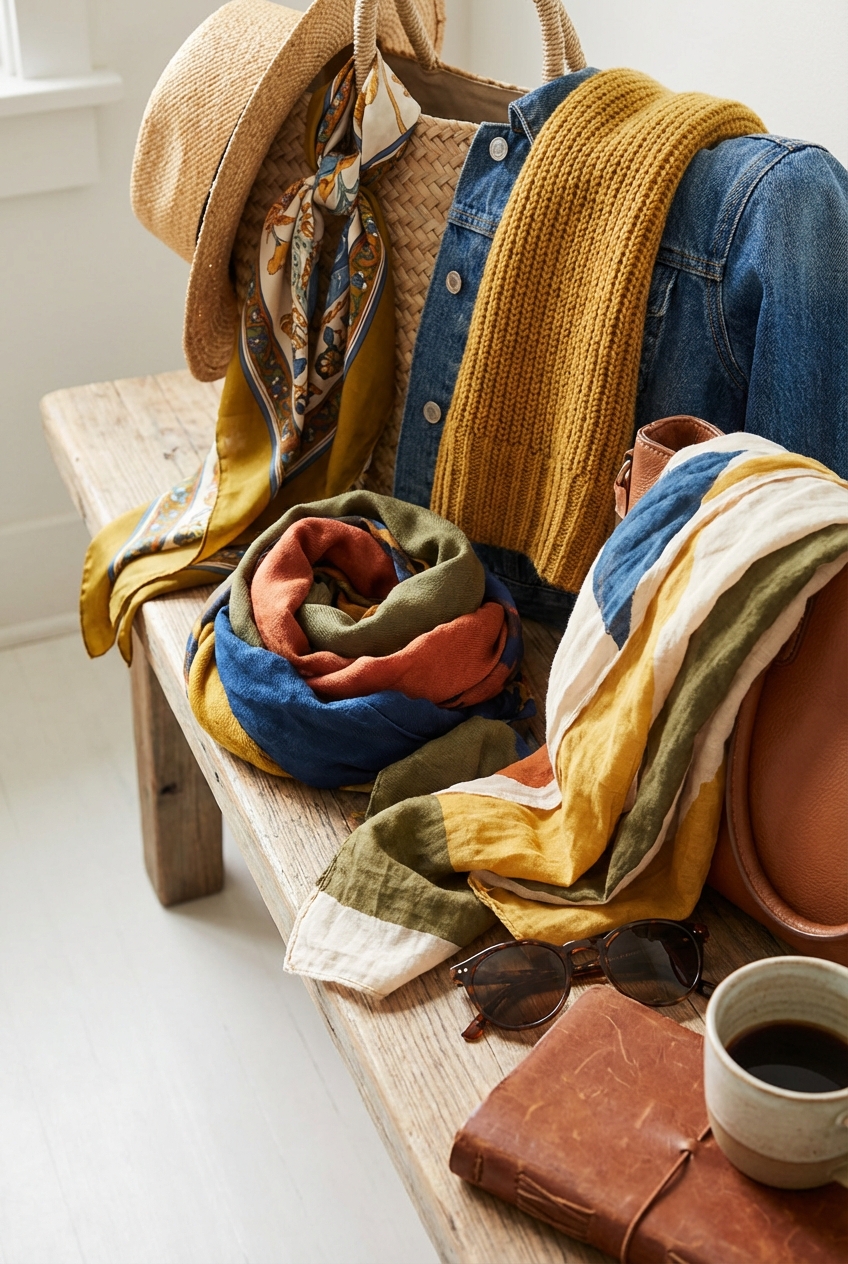
Scarf Styling Guide Different Ways To Wear Scarves All Year Round
There are very few accessories in a wardrobe that carry the same transformative power as a high-quality scarf. Over my years working in high-end fashion styling, I have seen a simple silk square turn a basic T-shirt and jeans combination into a street-style masterpiece. A scarf is not merely a tool for warmth; it is the ultimate finishing piece that bridges the gap between wearing clothes and having a style.
Many clients initially feel intimidated by scarves, fearing they will look like a flight attendant or feel suffocated by too much fabric. The secret lies in understanding the architecture of the fold and selecting the right weight for the season. Once you master the basic geometry of a bias fold, you unlock infinite possibilities for elevation.
In this guide, I will break down the mechanics of scarf styling, from the classic French silk knot to the architectural draping of winter cashmere. If you are looking for visual inspiration to accompany these steps, please find our curated Picture Gallery at the end of the blog post.
Understanding Scarf Architecture: Sizes and Fabrics
Before we discuss tying techniques, we must address the foundation of scarf styling: scale and material. In interior design, we talk about rug sizes anchoring a room; in fashion, scarf dimensions anchor your silhouette. Using the wrong size for a specific knot will result in a look that is either droopy or awkwardly stiff.
There are three primary dimensions you should have in your wardrobe. The first is the classic square, typically measuring 90cm by 90cm (35 inches). This is your workhorse for neckties, headscarves, and classic knots.
The second is the “shawl” or “stole” size, usually 140cm (55 inches) square or a long rectangle. This provides the volume needed for coat layering and dramatic draping. Finally, there is the “twilly” or skinny scarf, a narrow strip perfect for wrists, bag handles, and subtle neck accents.
Fabric Weight Matters
- Silk Twill: This holds its shape beautifully. It is rigid enough to create architectural bows that stay upright.
- Silk Chiffon: This is fluid and romantic. It collapses on itself, making it ideal for soft, draping looks where volume isn’t desired.
- Cashmere/Wool Blends: These provide texture. Always look for a blend with some silk content to prevent the scarf from feeling too itchy against the neck.
The Classic Silk Square: The Bias Fold Technique
The biggest mistake people make with square scarves is folding them simply in half. To get that polished, flat appearance that sits smoothly against the collarbone, you must use the “bias fold.” This technique creates a flexible ribbon of fabric that curves naturally around the neck.
How to Create the Bias Fold
- Lay your square scarf flat on a table, face down.
- Fold the top corner down towards the center and the bottom corner up towards the center so they meet in the middle.
- Fold the top and bottom edges inward again towards the center line.
- Fold the entire strip in half lengthwise so the two sides meet. You should now have a long, slender, multi-layered strip.
Designer’s Note: When I am on set, I always iron the scarf before doing a bias fold, but I never iron the folds themselves flat. You want the rounded edges of the fabric to remain soft. If you press the folds flat, the scarf loses its life and looks like a piece of paper.
The “French Girl” Knot
This is the standard for effortless chic. It works best with a crisp button-down shirt or a crewneck sweater.
- Place the bias-folded scarf around your neck with the ends hanging forward.
- Make one side slightly longer than the other.
- Bring the long end over the short end and wrap it around once.
- Bring the long end up through the loop at the neck and pull it tight.
- Adjust the knot to the side of your neck, rather than dead center.
Styling The Oversized Winter Scarf
Winter styling often sacrifices silhouette for warmth, but you do not have to choose. The goal with a large wool or cashmere scarf is to control the volume so it frames the face without swallowing your head.
The “Milano” or “Pretzel” knot is my go-to for heavy fabrics. It creates a flat, woven look that stays put in the wind and looks incredibly sophisticated over a structured wool coat.
The Milano Knot Step-by-Step
- Fold your long rectangular scarf in half lengthwise.
- Drape it around your neck so you have a loop on one side and two loose ends on the other.
- Take one of the loose ends and pass it through the loop.
- Twist the loop 180 degrees to create a second opening.
- Feed the second loose end through this new opening.
- Adjust the tension so the weave sits flat against your chest.
Common Mistakes + Fixes
Mistake: Wearing a chunky infinity scarf wrapped too tightly near the chin.
Fix: This visually removes your neck, making you look shorter and broader. Instead, leave the scarf loose around the collarbone to expose a bit of skin or the collar of your coat. This “breathing room” elongates the silhouette.
The Triangle Drape: The Cowboy Evolution
The triangle drape has moved past its western roots to become a staple of urban fashion. It is particularly effective for showcasing the print of a designer scarf, as it displays a large surface area of the pattern.
This style works exceptionally well with V-neck sweaters or open blazers, as it fills the negative space with color and texture. It acts almost like a bib necklace but with more softness.
Refining the Look
- Fold your 90cm square scarf in half diagonally to create a triangle.
- Place the triangle in front of your chest, bringing the two ends around the back of your neck.
- Cross the ends behind your neck and bring them forward.
- Tie the ends in a small double knot underneath the triangle point in the front.
- Fluff the triangle so it covers the knot entirely.
What I’d Do in a Real Project: If I am styling a client who has a shorter neck or a larger bust, I modify this look. Instead of tying the knot under the triangle, I leave the ends loose or tie them very low. This creates a vertical line that draws the eye down, rather than cutting the neck off horizontally.
The Belted Scarf: Silhouette Engineering
One of the most underutilized ways to wear a scarf is as a garment layer. Using a large blanket scarf or a silk stole belted at the waist is a trick we use constantly in editorial shoots to add dimension to simple outerwear.
This technique is brilliant for transition weather when it is too warm for a heavy coat but too cold for just a dress. It essentially turns your scarf into a vest or a gilet.
The Execution
- Drape a large rectangular scarf or shawl over your shoulders so the ends hang down evenly in front of you.
- Ensure the scarf is lying flat against your chest and stomach, not bunched up.
- Take a slim leather belt and fasten it around your natural waist, capturing the scarf.
- Pull the fabric slightly upward above the belt to create a slight “blouse” effect.
Designer’s Note: The choice of belt is critical here. A wide, chunky belt will fight with the pattern of the scarf. A skinny belt in a complementary leather tone (cognac or black) provides structure without visual clutter.
The Headscarf: Vintage Glamour to Modern Boho
Headscarves have seen a massive resurgence. They serve a dual purpose: they protect your hair from humidity and wind, and they provide an immediate vintage aesthetic.
There are two distinct vibes here: the “Grace Kelly” and the “70s Pirate.”
The Grace Kelly (Chin Tie)
This is formal, elegant, and protects a blowout perfectly.
- Fold a 90cm square into a triangle.
- Place the long edge along your hairline.
- Cross the ends under your chin.
- Bring the ends to the back of your neck and tie them, or simply knot them loosely under the chin for a more relaxed look.
The 70s Pirate (Nape Tie)
This is cooler, more bohemian, and looks great with beach waves.
- Fold the scarf into a triangle.
- Place the long edge across your forehead (or just behind the hairline for a cleaner look).
- Bring the two ends to the back of your head, over your hair.
- Tie firmly at the nape of the neck, letting the triangle point hang loose over the knot.
Creative Accessory Styling: Bags and Wrists
Sometimes an outfit feels complete, but your accessories feel plain. A silk scarf is the easiest way to customize a handbag or add a pop of color without wearing it near your face.
This is particularly useful if the scarf’s colors do not flatter your skin tone. You can still enjoy the print by moving it away from your complexion.
The Bag Handle Wrap
This not only looks chic but protects the leather handles of investment bags from the oils on your hands.
- Use a Twilly or a bias-folded 70cm scarf.
- Secure one end at the base of the handle with a tight knot.
- Wrap the fabric tightly around the handle, overlapping slightly so no leather shows.
- Secure the other end with a knot at the opposite base.
The Wrist Wrap
Replace a heavy bracelet with silk for a softer look. This is ideal for summer when metal jewelry feels sticky or heavy.
- Wrap a small square or skinny scarf around your wrist twice.
- Tie a small knot on the top of the wrist.
- Tuck the loose ends under the wrap for a cuff look, or leave them loose for movement.
Finish & Styling Checklist
Before you head out the door, run through this mental checklist to ensure your scarf enhances rather than overwhelms your look.
Balance and Proportion
- Volume Check: If your scarf is voluminous (blanket style), keep your bottom half slim (tailored trousers or leggings) to avoid looking round.
- Pattern Mixing: If your outfit has a loud print, opt for a solid scarf or a print in the exact same color family. If your outfit is monochrome, this is your moment for a bold, contrasting pattern.
The “Three Color” Rule
When selecting a scarf, look for one that contains at least one color currently in your outfit. This ties the look together. For example, if you are wearing navy trousers and a cream sweater, a scarf with navy, cream, and red connects the top and bottom while adding a third accent hue.
Secure the Knot
Silk is slippery. For a knot that needs to hold all day, try spraying a tiny amount of texture spray or dry shampoo on the fabric where the knot will sit. This adds grip without damaging the silk (test on an inconspicuous area first). Alternatively, use a scarf ring for a secure hold that adds a jewelry element.
Frequently Asked Questions
How do I stop my silk scarf from slipping off?
The texture of your clothing matters. Silk on silk will always slide. Try wearing your silk scarf over a textured fabric like cashmere, wool, or cotton. If you are wearing it over a smooth blouse, secure the scarf with a small, discrete safety pin underneath the knot, or use a “magnet pin” designed specifically for delicate fabrics.
Can short people wear blanket scarves?
Absolutely, but placement is key. Do not wrap it multiple times around your neck, as this shortens you. Instead, let the long ends hang down vertically to create long lines down your body. Belt it at the waist to define your figure, which prevents the fabric from swallowing you.
How should I store my scarves?
Never leave scarves tied in knots; this weakens the fibers and creates permanent creases. Untie them immediately after wearing. For silk, roll them gently to prevent creases, or fold them over a padded hanger. Avoid hanging them on hooks, which can distort the fabric weave. Keep them away from direct sunlight to prevent fading.
What is the best size for a beginner?
Start with a 90cm (35-inch) silk square. It is the most versatile size. It is large enough to tie around the neck comfortably but small enough to wear as a headscarf or bag accessory. It is the industry standard for a reason.
Conclusion
Integrating scarves into your daily wardrobe is an exercise in creativity and elegance. It allows you to wear the same capsule wardrobe pieces repeatedly while making them look different every time. Whether you choose a structured silk knot for a business meeting or a loose cashmere drape for a weekend coffee run, the scarf signals that you have put thought into your presentation.
Start with one classic knot, master the bias fold, and then experiment with scale and texture. You will find that this simple square of fabric is the hardest working item in your closet.
Picture Gallery


