
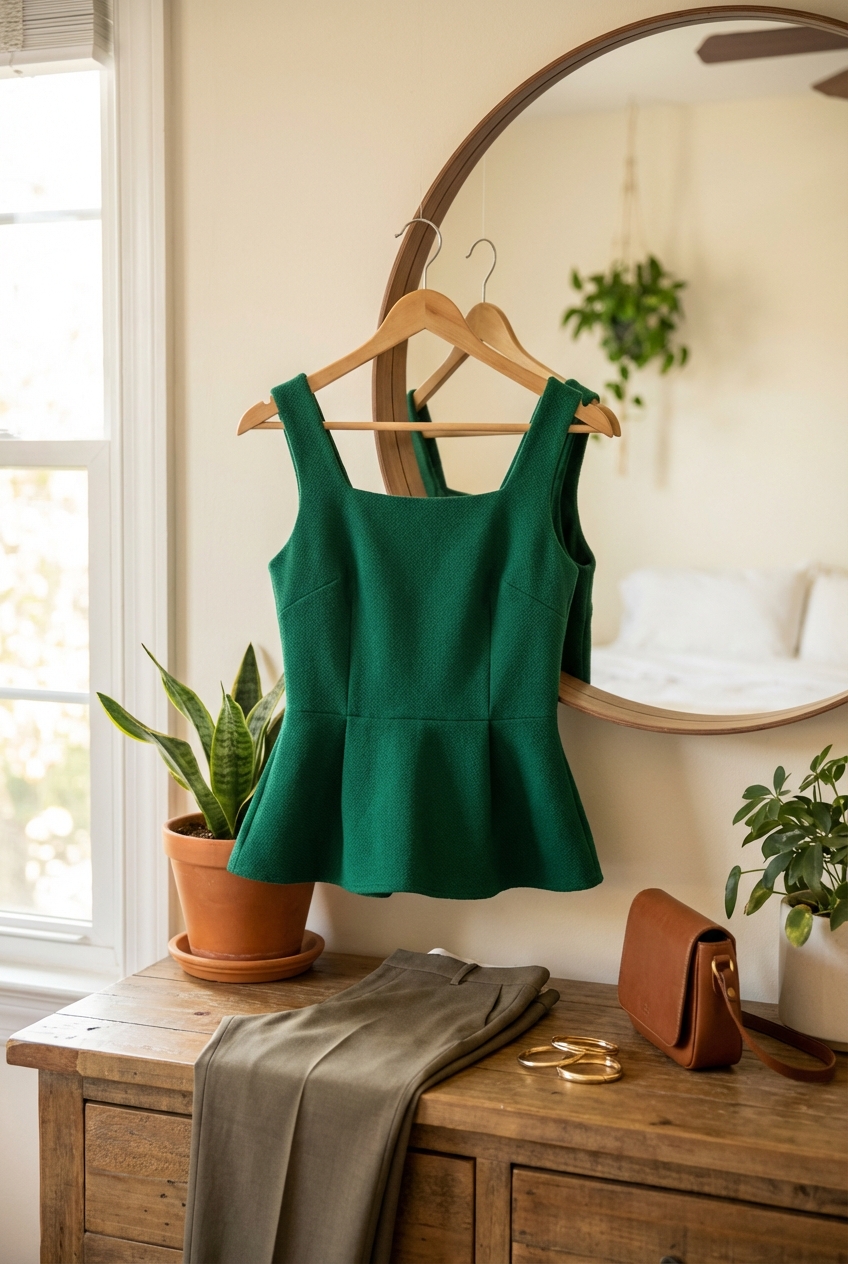
Sculpted Peplum Tops For Sophisticated Outfits
The peplum silhouette has undergone a massive transformation over the last decade. I recall styling a high-profile client recently who immediately recoiled when I pulled a peplum top from the rack, remembering the flimsy, jersey-knit versions that dominated fast fashion years ago. I urged her to try on the piece I selected—a structured, heavy-weight architectural top that didn’t just hang, but stood away from the body with intention.
The moment she zipped it up, the shift was immediate; the garment created a powerful hourglass shape that felt modern, sharp, and incredibly expensive. This is not about adding frills to your waistline; it is about using architectural tailoring to manipulate proportion. If you are looking for visual inspiration regarding these silhouettes, check out the comprehensive Picture Gallery at the end of this blog post.
Defining the Sculpted Aesthetic
When we talk about “sculpted” peplums, we are referring to garments that hold their own shape regardless of the body underneath. These pieces rely on advanced pattern making and stiff interfacings. The flare should feel crisp, creating a definitive line between the waist and the hip.
A true sculpted top functions almost like a corset without the restriction. It nips in tightly at the smallest part of the waist and flares out dramatically. This creates a visual trick that makes the waist appear significantly smaller while smoothing over the hip area.
The difference lies in the “stand.” A sculpted peplum stands away from the body, creating negative space. This architectural gap is what elevates the look from casual daywear to high-end sophistication.
Designer’s Note: When shopping, perform the “collapse test.” Place the top on a hanger or lay it flat. If the peplum collapses onto itself or looks rippled and soft, it will not give you the sophisticated look we are aiming for. It must look rigid even when unworn.
Fabric Selection is Non-Negotiable
In my years of styling, I have found that fabric choice is the single most important factor in a successful peplum outfit. You simply cannot achieve a sculpted look with rayon, thin polyester, or lightweight silk. These fabrics drape rather than sculpt.
For a sophisticated outcome, you need textiles with a high thread count and inherent stiffness. Look for Scuba (neoprene), heavy silk gazar, structured wool crepe, or brocade. Bonded fabrics, where two layers are fused together, are excellent for this silhouette.
Leather and faux leather are also exceptional choices for a modern edge. They naturally hold a shape and provide a sleek, matte finish that absorbs light beautifully. This creates a very expensive, polished aesthetic suitable for evening wear or creative office environments.
Common Mistakes + Fixes:
- Mistake: Buying jersey cotton peplums for workwear.
- Fix: Switch to a mid-weight cotton poplin or a wool blend. The fabric should snap when you move it, not flow.
The Rule of Proportions: Pairing Bottoms
The volume a peplum adds to your midsection requires strict discipline with your lower half. The golden rule of styling this silhouette is simple: if the top flares, the bottom must narrow.
I always pair sculpted tops with cigarette pants, tapered trousers, or pencil skirts. The goal is to create an inverted triangle or an hourglass visual. If you pair a peplum with a wide-leg trouser or an A-line skirt, you risk looking blocky and overwhelmed by fabric.
For a sharp, professional look, a slim ankle pant is the most reliable pairing. The hem of the pant should hit right at the ankle bone, showing a sliver of skin or a clean shoe line. This elongates the leg and balances the width of the peplum flare.
What I’d do in a real project:
- If the peplum flare is 6 inches or longer: I style it with a super-slim pencil skirt that hits below the knee.
- If the peplum flare is short (3-4 inches): I can get away with a straight-leg trouser, provided it is tailored perfectly through the thigh.
Identifying the Correct Waist Placement
The “break point”—where the bodice turns into the flare—must hit you at exactly the right spot. For 90% of women, this is the natural waist, which is usually an inch or two above the belly button.
If the seam hits too low, resting on the high hip, it destroys the leg-lengthening effect. It creates a “drop waist” look that is much harder to pull off and can make the torso look disproportionately long.
Conversely, if the waist hits right under the bust (empire style), it loses the sophisticated edge and moves into maternity-wear territory. The sculpted peplum is about defining the natural waist, so fit is paramount.
Specific Measurements:
When working with a tailor, I usually ask them to nip the waist in 0.5 inches tighter than a standard blouse. Because the fabric flares out immediately after, you have room to breathe, but that tight anchor point is essential for the structure to hold.
Styling for Professional vs. Social Settings
For the office, restraint is your best friend. Choose a monochromatic palette. A black sculpted top with black wool trousers is a power move. It reads as a suit but with more femininity and flair.
Avoid busy prints in professional settings when wearing this silhouette. The shape itself is the statement. Adding a loud floral print to an architectural shape can look costume-like. Stick to solids: navy, camel, cream, or charcoal.
For social events or dinner dates, you can play with asymmetry. A one-shoulder sculpted peplum top is incredibly chic. Here, you can also introduce texture, such as a metallic finish or a jacquard weave.
Designer’s Note: For evening wear, I love pairing a structured peplum top with a floor-length column skirt. It mimics the look of a ballgown but offers the versatility of separates. It is a modern alternative to the traditional cocktail dress.
Navigating Outerwear Challenges
The biggest logistical headache with sculpted tops is finding a coat that fits over them. A standard trench coat or fitted blazer will crush the architecture you worked so hard to style.
The solution lies in cropped jackets or capes. A cape is the ideal outerwear companion because it allows the peplum to exist underneath without being squashed. It drapes over the shoulders and leaves the waist area free.
Alternatively, a cropped jacket that ends exactly at the waist seam of the top works beautifully. It highlights the flare rather than fighting against it. If you must wear a long coat, ensure it is an oversized “cocoon” style coat that has enough room in the hips to accommodate the volume.
Footwear and Accessories
Because a peplum draws the eye to the waist and hips, your choice of footwear dictates the vertical flow of the outfit. I almost strictly advise heels with peplum tops. You need the extra height to counterbalance the horizontal volume at the hip.
A pointed-toe pump is the classic choice. It extends the leg line and mimics the sharpness of the top’s tailoring. Avoid chunky ankle boots or rounded-toe flats, as they can make the overall silhouette feel bottom-heavy.
Regarding jewelry, keep necklaces minimal. A sculpted top usually has a defined neckline. A large necklace competes with the structural details. Instead, focus on statement earrings or a substantial cuff bracelet.
Finish & Styling Checklist
Before you walk out the door, run through this mental checklist to ensure the outfit looks expensive and intentional.
1. The Bounce Test
Walk toward a mirror. Does the peplum bounce and hold its shape, or does it flop against your stomach? It should remain rigid.
2. The Hemline Gap
Check the gap between the peplum hem and your hips. There should be visible air or “negative space.” This proves the fabric is sculpted enough.
3. The Bottom Silhouette
Look at your legs. Is there any bunching of fabric at the knees or thighs? Your trousers or skirt must be sleek and wrinkle-free to contrast the volume on top.
4. The Waist Anchor
Can you fit more than two fingers inside the waistband? If so, it might be too loose. The waist needs to be snug to support the weight of the flare.
5. The Shoe Vamp
Are you showing enough foot? A low-vamp shoe (one that shows toe cleavage) elongates the leg better than a high-vamp shoe when wearing this specific top.
FAQs
Can petite women wear sculpted peplums?
Absolutely. The key for petite frames is a shorter peplum flare. Look for a flare that is no longer than 3 to 4 inches. This ensures the top doesn’t swallow your hips or shorten your legs.
How do I handle a peplum top that is too long?
This is a standard alteration. A tailor can shorten the hem of the peplum. However, ask them to face the hem with horsehair braid. This is a stiff mesh tape used in hems to help them stick out and keep their shape.
Can I wear a belt with a sculpted top?
Generally, no. A true sculpted top is designed with a specific waist seam that stands on its own. Adding a belt often disrupts the clean lines and can cause the fabric to bunch awkwardly. Let the tailoring do the work.
Is this style suitable for curvier body types?
It is actually one of the most flattering styles for curves. It accentuates the waist-to-hip ratio. Just ensure the flare hits at a flattering point on your hip, usually just above the widest part, to avoid adding visual bulk.
Conclusion
Embracing the sculpted peplum is about embracing the power of tailoring. It moves away from the fast-fashion tendency toward shapeless comfort and returns to the art of dressing with intention.
These tops are armor for the modern woman. They provide coverage and confidence while creating a striking, sophisticated silhouette that commands attention.
By choosing the right heavy-weight fabrics, balancing your proportions with sleek bottoms, and ensuring a precise fit at the waist, you elevate this look from trendy to timeless. It is a style that demands a bit more effort in the selection process, but the visual payoff is undeniable.
Picture Gallery


