
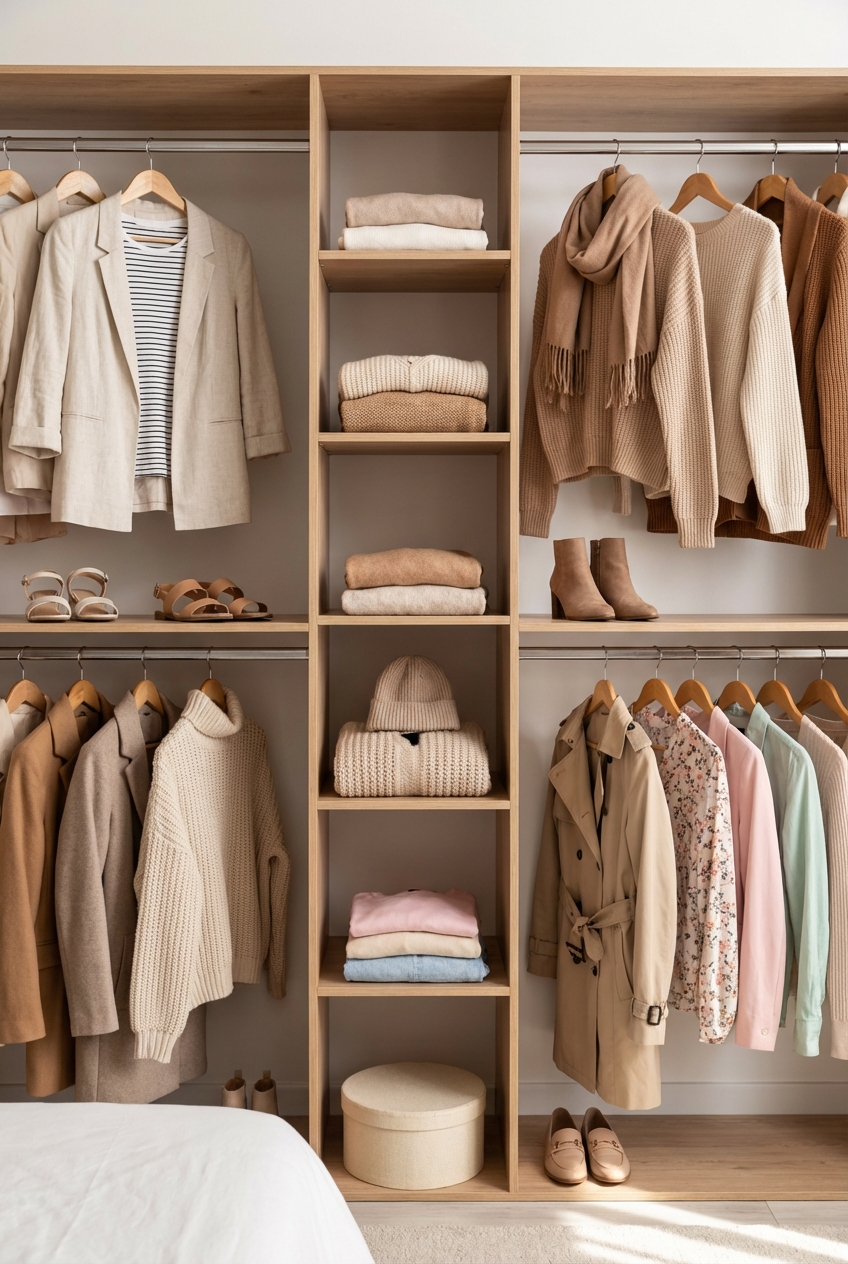
Seasonal Capsule Wardrobes Adjusting Essentials Throughout The Year
Every season, I see the same panic set in with my clients. The weather shifts, and suddenly their closets feel like a chaotic mix of heavy wools and flimsy linens, with nothing practical to wear in between. The concept of a capsule wardrobe isn’t about restricting yourself to ten items or living in a monochrome world; it is about architectural planning for your personal style.
A functional wardrobe operates much like a well-designed home. It requires a solid foundation, seasonal accents, and a flow that makes daily life effortless. When we adjust your essentials seasonally, we are essentially renovating your daily routine to match the environment outside your window.
In this guide, I will walk you through the exact system I use to transition high-end wardrobes from season to season without the clutter. If you are looking for visual inspiration on how these pieces come together, make sure to look at the Picture Gallery at the end of the blog post.
The Core Foundation: Establishing Your Year-Round Anchors
Before we talk about seasonal rotation, we must identify the structural beams of your wardrobe. These are the items that never leave the closet, regardless of the temperature. In my experience, the biggest mistake people make is packing away too much, leaving them without layering pieces.
The “Always-In” collection should consist of fabrics that breathe in summer but insulate when layered in winter. We are looking for mid-weight cottons, silk, and specific denim washes. These pieces act as the canvas for your seasonal updates.
Here is what should stay on your hangers 365 days a year:
- The Mid-Weight White Button-Down: Look for 100% poplin cotton. It is crisp enough for work but cool enough for summer.
- Vintage Wash Denim: A straight-leg jean in a medium blue works with a tank top in July and a cashmere sweater in January.
- The Silk Slip Dress or Skirt: This is the ultimate chameleon. It is a standalone piece in warm weather and a textural layer under chunky knits in the cold.
- The Tailored Blazer: Opt for a tropical wool blend. It regulates temperature better than synthetics and drapes beautifully.
Stylist’s Note: The “hanger test”
I often see clients keeping items year-round simply because they are expensive. Here is a rule I use: if you haven’t reached for it in two distinct seasons (e.g., both spring and fall), it is not a core anchor. It is a seasonal specialty piece, or it needs to be donated. Real luxury is utility.
Understanding Fabric Weights and Layering Ratios
Transitioning a capsule wardrobe is largely a game of textiles. As a stylist, I pay close attention to the “hand” and weight of fabrics. Just as you wouldn’t put velvet drapes in a sunroom, you shouldn’t keep heavy tweeds accessible in June.
The goal is to rotate the top 30% of your closet while keeping the remaining 70% constant. This rotation is based entirely on fabric density. We swap out the extremes—the very thin and the very thick—while managing the middle ground.
The Spring/Summer Insertion:
- Linens and Ramie: These have zero heat retention.
- Open-Weave Cottons: Look for eyelet or gauze textures.
- Viscose and Rayon: These offer movement and cooling properties.
The Fall/Winter Insertion:
- Cashmere and Merino Wool: High insulation with low bulk.
- Leather and Suede: These block wind and add structure.
- Heavyweight Corduroy or Velvet: texture-rich fabrics that absorb light and add warmth.
Common Mistakes + Fixes
Mistake: Storing all knitwear away in spring.
Fix: Keep your two lightest cashmere crewnecks. Summer nights and air-conditioned offices often require a warm layer. A lightweight grey or camel sweater is a year-round necessity, not a winter exclusive.
The Color Palette Pivot: Integrating Seasonal Tones
A capsule wardrobe does not mean you are stuck with black, white, and beige. However, color needs to be introduced strategically so you don’t end up with a disjointed closet. I use a “Base plus Accent” formula for my clients.
Your base colors (navy, black, charcoal, denim, white) stay on the rods. The seasonal switch is where you inject current trends or nature-inspired hues. This keeps your look fresh without requiring a total overhaul.
Warm Season Palette Strategy:
- Base: White, Camel, Light Denim.
- Accents: Pastels, bright citrus tones, or soft neutrals like sage and clay.
- Application: Use these colors in tops, scarves, and accessories rather than investment outerwear.
Cold Season Palette Strategy:
- Base: Black, Charcoal, Dark Denim.
- Accents: Jewel tones (emerald, burgundy), deep earth tones (rust, chocolate), and metallics.
- Application: Introduce these through heavy knitwear and handbags.
What I’d do in a real project
If I were styling a client for Fall, I would take her summer white denim (yes, you can wear white after Labor Day) and pair it with a chocolate brown cashmere sweater and cognac boots. The “summer” item is grounded by the “winter” tones, doubling the wardrobe’s efficiency.
The Architecture of Shoes and Outerwear
Shoes and coats are the most space-consuming items in a woman’s closet. They are also the most definitive indicators of the season. Managing this category requires strict spatial planning and honest assessment of your lifestyle.
For city living, where walking is essential, footwear must be rotated to preserve its condition. Leather boots cannot survive humidity, and sandals get crushed under heavy coats. This is where storage logistics become part of the styling process.
The Swap Protocol:
- The Boot Edit: Clean and condition tall boots before storing. Use boot shapers to prevent creases at the ankle.
- The Coat Check: Dry clean wool coats before storage. Moths are attracted to body oils and perfumes, even if the coat looks clean.
- The Sandal Stash: Wipe down insoles. Store in dust bags to prevent leather from drying out or yellowing.
Specific Measurements for Visual Balance
When transitioning outerwear, pay attention to length ratios. A common styling error is a coat that fights with the hemline of a dress.
- Mini Skirts/Dresses: The coat should be longer than the skirt by at least 2 inches.
- Midi Skirts: The coat should either hit at the waist (cropped) or fall 2-3 inches below the skirt hem for a clean line.
- Maxi Dresses: A long trench or wool coat that hits mid-calf creates a heavy, luxurious silhouette suitable for winter.
Closet Logistics: The Swap-Out Workflow
The actual physical act of swapping your wardrobe is a ritual. It is the moment you assess the health of your garments. I recommend doing this twice a year: once in October and once in April. This timing usually aligns with true temperature shifts.
You need proper tools to protect your investments. Do not use wire hangers; they ruin the shoulder structure of blazers and knits. Do not use plastic garment bags for long-term storage; fabrics need to breathe, or they will rot or yellow.
My Recommended Storage Tools:
- Velvet Slimline Hangers: These save horizontal rod space, allowing you to see more of your capsule at once.
- Canvas Storage Bins: Use these for off-season knits. Place cedar blocks inside to repel pests naturally.
- Canvas Garment Bags: Essential for storing wool coats and formal wear.
Designer’s Note: The “One-Touch” Rule
When I reorganize a closet, I arrange items so the client only needs one hand to retrieve them. If you have to fight a stack of sweaters to get to your jeans, you won’t wear them. Ensure your shelves have 12 to 14 inches of depth for folded denim and heavy knits. Any deeper, and things get lost in the back.
Smart Shopping: Filling the Gaps
Once you have rotated your items, you will likely notice gaps. Perhaps your white tees are yellowed, or you lack a rain-appropriate boot. This is the only time you should be shopping—with a specific list in hand.
Buy pieces that are “Season Spanners.” These are items high in quality and moderate in weight that can bridge the gap between distinct weather patterns. A trench coat is the ultimate spanner; it works in 60 degrees and, with a sweater underneath, in 40 degrees.
Quality Indicators to Look For:
- Natural Fibers: Check the tag. You want cotton, wool, linen, and silk. Avoid acrylics that pill after one season.
- Lining: A jacket or skirt should be lined. It extends the life of the garment and helps it hang properly on the body.
- Hardware: Zippers should lie flat and move smoothly. Buttons should be securely reinforced with a smaller button on the back.
Finish & Styling Checklist
Use this checklist when you are ready to transition your wardrobe for the upcoming season.
- Audit the Core: Ensure your denim, white shirts, and blazers are clean and in good repair.
- Edit by Fabric: Move heavy wools out and light linens in (or vice versa).
- Check for Damage:Repair loose hems, missing buttons, or scuffed heels before storing anything.
- Apply the Color Rule: Ensure you have 70% neutrals and 30% seasonal accent colors.
- Outerwear Balance: Verify that your current coat selection works with your current hem lengths.
- Shoe Prep: Condition leather and replace heel taps on the boots or sandals you are bringing into rotation.
- Space Planning: Leave 1 inch of space between hangers to let clothes breathe and reduce wrinkling.
FAQs
How do I handle a fluctuating climate where it’s cold in the morning and hot by noon?
This is where the “Third Piece Rule” is vital. Your base outfit (jeans and a tee) handles the heat. Your third piece (a blazer or lightweight trench) handles the morning chill. The key is ensuring the base layer looks complete on its own so you can remove the outer layer comfortably.
Can I have a capsule wardrobe if I love bold prints?
Absolutely. A capsule does not mean boring. If you love prints, treat them as your “Accents.” Keep your trousers and skirts neutral, and let your blouses or scarves carry the pattern. This ensures you can mix and match without clashing.
How much space do I need for a seasonal capsule?
Ideally, a single standard closet rod (about 4 to 6 feet) is sufficient for a current season’s capsule. By removing off-season items, you create negative space. This visual breathing room makes getting dressed less stressful and helps you see exactly what you have.
Conclusion
Adjusting your essentials throughout the year is about more than just organization; it is about respecting your clothes and your own peace of mind. By treating your wardrobe with the same care and planning as a high-end interior project, you ensure that every piece serves a purpose.
Remember that a wardrobe is a living entity. It changes as you change and as the seasons turn. The goal is to open your closet doors every morning and feel a sense of clarity, knowing that whatever you grab will make you look and feel your best. Start with your foundation, respect your fabrics, and edit ruthlessly.
Picture Gallery


