
Sheath Dresses Sleek And Sophisticated Style
The sheath dress is the undisputed chameleon of a woman’s wardrobe. It is architectural, tailored, and ruthlessly efficient in creating a polished silhouette. As a stylist, I often refer to the sheath as the “blank canvas” of high-end fashion because it allows your accessories and personality to take center stage.
Finding the perfect sheath is less about trends and more about understanding your body’s unique geometry. Unlike the looser shift dress, the sheath relies on precise darts and nipped waists to contour the figure. When you find one that fits correctly, it acts almost like a suit of armor, offering confidence and elegance in a single zip.
In this guide, I will walk you through the technical aspects of fit, fabric selection, and the styling rules I use with my private clients. If you are looking for visual inspiration on how to style these looks, be sure to check out the Picture Gallery at the end of the blog post.
Defining the Sheath Silhouette
Before we discuss styling, we must define exactly what sets a sheath dress apart. Many people confuse it with a shift dress, but the construction is entirely different. A sheath is form-fitting and typically features a defined waistline tailored through tucks or darts.
The length usually falls around the knee, though modern variations can hit mid-calf. The primary goal of this cut is to highlight the curve of the waist and hips without being overtly tight like a bodycon dress. It skims the body rather than clinging to it.
This balance of fitted yet modest makes it appropriate for boardrooms, cocktail parties, and even royal engagements. It creates a vertical line that elongates the frame. It is the structural integrity of the dress that provides its sleek appeal.
Designer’s Note: The Difference is in the Darts
In my years of fitting clients, the most overlooked detail is the placement of the bust and waist darts. On a high-quality sheath dress, the apex of the bust dart should align perfectly with the fullest part of your bust. If it sits too high or too low, the fabric will ripple, ruining the sleek effect.
The Architecture of Fit
The fit of a sheath dress is unforgiving because there is nowhere for excess fabric to hide. When I fit a client, I start with the shoulders. The seam where the sleeve connects to the bodice must sit exactly at the corner of your shoulder bone.
If the shoulder seam droops, the entire dress looks ill-fitting and inexpensive. Conversely, if it is too tight, it will pull across the chest and create unflattering drag lines.
The next critical measurement is the ease across the hips. You should be able to pinch about one inch of fabric on either side of your hips. This “wearing ease” ensures you can sit and move comfortably without stressing the seams.
Common Mistakes + Fixes
Mistake: Buying a dress that fits the waist but pulls at the hips.
Fix: Always buy the size that fits the largest part of your body. It is simple and affordable to have a tailor take in the waist, but it is impossible to let out hips if the seam allowance isn’t there.
Fabric Selection and Structure
The fabric you choose dictates how the dress performs throughout the day. For a sleek, sophisticated look, you must avoid thin, clingy jersey materials. These fabrics show every undergarment line and lack the structure needed for a professional profile.
I always recommend natural fibers mixed with a small percentage of spandex or elastane. Wool crepe is the gold standard for high-end sheath dresses. It breathes well, resists wrinkling, and holds a crisp shape that flatters the body.
For warmer months, look for a cotton sateen or a substantial linen blend. However, ensure the linen is lined, or it will bag out at the seat after an hour of sitting. Structure is the key to maintaining that sophisticated vibe.
What I’d Do in a Real Project
When building a capsule wardrobe for a client, I prioritize three specific fabrics:
- Tropical Wool: For year-round corporate wear.
- Ponte Knit: For travel and comfort, as it offers stretch but is thick enough to hide texture.
- Silk Mikado: For evening events where a slight sheen and rigid structure are required.
Necklines and Proportion
The neckline of a sheath dress changes the entire attitude of the outfit. A jewel neck (high and round) is the most traditional and conservative. It pairs beautifully with statement necklaces or simple stud earrings.
For a more modern or alluring look, a square neckline frames the collarbones beautifully. This is particularly effective for women with rounder faces, as the angles provide a nice contrast.
If you have a larger bust, a V-neck or scoop neck helps break up the visual expanse of the chest. It draws the eye vertically, enhancing the lengthening effect of the dress.
Mastering the Undergarments
We cannot talk about sleek style without discussing what goes underneath. A sheath dress requires a smooth foundation. Lace bras or textured underwear will show through the smooth front of the dress.
I insist my clients invest in seamless, laser-cut undergarments in a tone close to their skin. A high-waisted shaping brief is often essential, not necessarily to slim you, but to provide a smooth surface so the fabric glides over your body.
A full slip can also be a game-changer, especially for unlined dresses. It prevents static cling and ensures the skirt falls straight down rather than getting caught between your legs as you walk.
Styling for the Office
The sheath dress is a corporate powerhouse. To style it for work, the “third piece” rule is essential. The dress is your base, but a blazer or structured cardigan completes the look.
Pay attention to the length of your blazer relative to the dress. A cropped jacket that hits at the waist highlights the narrowest part of your silhouette. A longer, boyfriend-style blazer can look chic but requires a higher heel to balance the proportions.
Keep jewelry understated. A simple watch and a pair of classic pumps are all you need. If the dress is a solid neutral color, you can tie a silk scarf around your neck to add a pop of color and softness near the face.
Transitioning to Evening
Taking a sheath dress from desk to dinner is one of its greatest strengths. The transformation lies in the textures and accessories. Swap your large leather tote for a sleek metallic clutch.
Change your footwear from a sensible block heel to a stiletto or a strappy sandal. This exposes more of the foot and elongates the leg, which creates a more glamorous line.
For evening, you can also be bolder with jewelry. Since the silhouette is simple, you can wear a dramatic cuff bracelet or chandelier earrings. Just choose one focal point so you don’t overwhelm the clean lines of the dress.
Outerwear Pairings
The coat you wear over a sheath dress matters significantly. Because the dress is slim, you have versatility. A classic trench coat is a timeless pairing that works for almost any occasion.
For a sharper, winter look, a tailored wool coat that hits at the same length or slightly longer than the dress is ideal. You want to avoid a coat that is two inches shorter than your dress, as the visible hem creates a messy, disjointed visual.
If you are styling a sleeveless sheath in cooler weather, consider a fitted turtleneck layered underneath. This is a very fashion-forward, 60s-inspired look that extends the wearability of your dress into winter.
The Importance of Color
When investing in a high-quality sheath dress, neutral colors offer the best return on investment. Black is obvious, but navy blue is often softer on the complexion and just as versatile.
Camel and charcoal gray are also excellent staples. These colors read as “expensive” and pair easily with black or brown accessories.
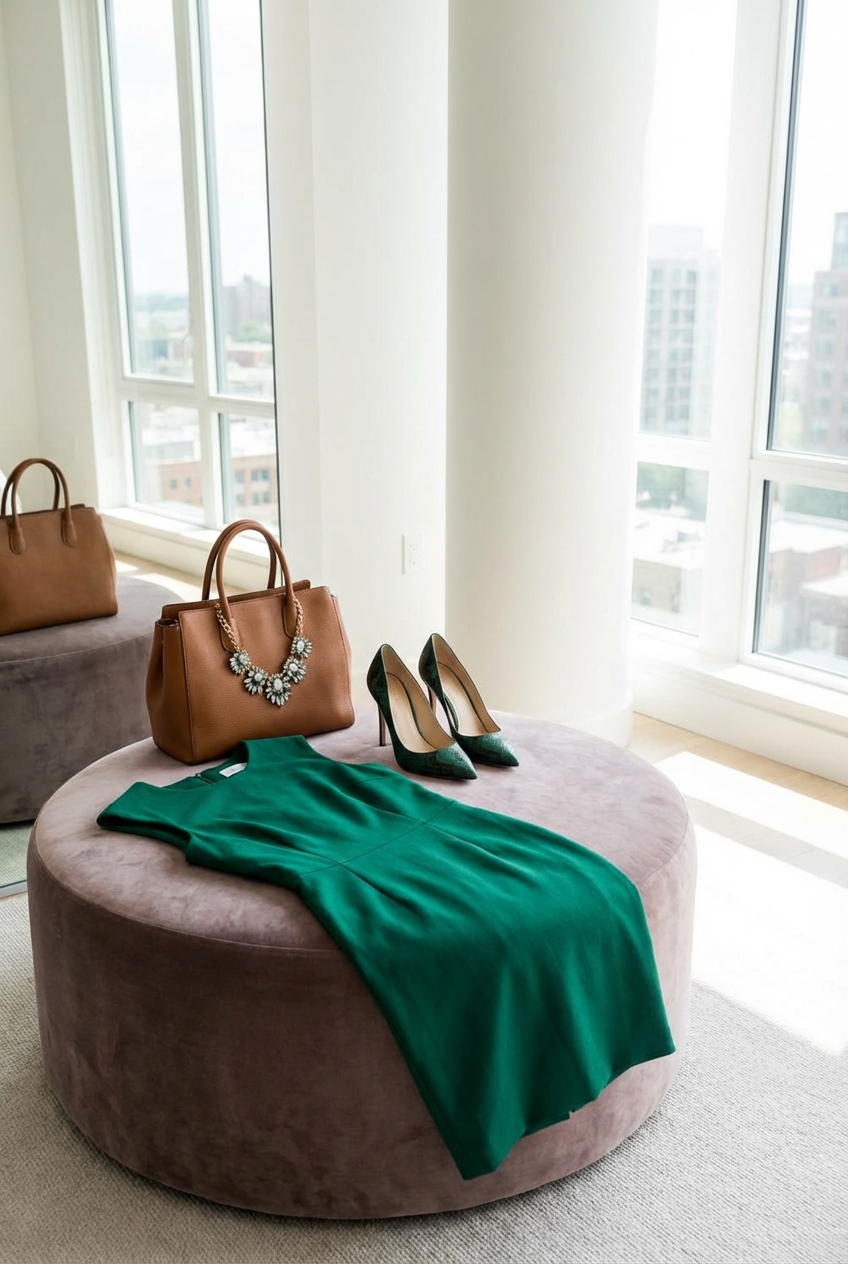
If you want to venture into color, jewel tones like emerald green, deep burgundy, or sapphire blue retain an air of sophistication. Avoid neon brights or overly busy prints, which can date the dress quickly and distract from the tailored cut.
Footwear Rules of Thumb
The hemline of a sheath dress dictates the shoe choice. If the dress hits directly at the knee, a pointed-toe pump is the most flattering option. The point extends the line of the leg.
If the dress is a “midi” length (mid-calf), you must be careful not to cut off your leg line. A nude shoe that matches your skin tone is a stylist’s trick to adding visual height.
In the winter, a knee-high boot can look fantastic with a sheath dress. The key is that the boot should disappear under the hem of the dress. You want to avoid a gap of skin between the boot top and the dress hem, which chops the leg visually.
Designer’s Note: The Heel Height Ratio
I generally advise against wearing flats with a knee-length sheath dress unless you are quite tall. The horizontal line of the hem cuts the leg, and flats can make the silhouette look heavy. A low kitten heel or a 2-inch block heel is sufficient to lift the posture and correct the proportion.
Belting the Sheath
While many sheath dresses come with a defined waist, adding a belt can further accentuate the silhouette. However, the belt must be proportionate to your torso.
If you are short-waisted, a thin belt (under 1 inch) is best. It defines the waist without taking up too much vertical space.
If you have a longer torso, you can handle a wider belt. A belt in the same fabric as the dress creates a subtle texture change, while a contrasting leather belt adds a focal point. Always ensure the belt sits on your natural waist, not your hips.
Care and Maintenance
A structured dress loses its sophistication if it looks tired or worn. Dry cleaning is usually necessary for wool or lined dresses to maintain the crispness of the interfacing.
Between wears, use a steamer rather than an iron. Ironing can crush the fibers and create an unsightly shine on wool or dark cotton. Steaming lifts the fibers and refreshes the shape.
Always hang your sheath dresses on padded or wooden hangers. Wire hangers will distort the shoulder line, creating “bumps” that are impossible to smooth out. Give the dress space in your closet to breathe so it doesn’t get crushed by neighboring garments.
Finish & Styling Checklist
Before you walk out the door, run through this quick professional checklist to ensure your look is flawless.
- The Sit Test: Sit down in a chair. Does the fabric pull tightly across the lap? If you see horizontal whiskers (stress lines), the dress is too tight.
- Hem Check: Ensure the hem is perfectly straight and no lining is peeking out from underneath.
- Lint Roll: Structured fabrics like wool crepe love lint. A quick roll is mandatory for black or navy dresses.
- Shoulder Alignment: Check that the shoulder seams are sitting on the bone, not sliding down your arm.
- Undergarment Audit: Check in natural light to ensure your bra color isn’t visible through the fabric.
FAQs
Q: Can I wear a sheath dress if I have a tummy?
A: Absolutely. Look for a sheath dress with “ruching” (gathered fabric) across the midsection. This disguises the tummy area while still providing a fitted silhouette. Also, choose a fabric with a heavier weight, like a ponte knit, which holds you in.
Q: Is a sheath dress appropriate for a wedding guest?
A: Yes, it is a perfect choice. Avoid white or cream, of course. For a wedding, choose a sheath in a softer fabric like silk or lace, or a bright, happy color. Pair it with strappy sandals rather than closed-toe pumps to keep the look festive rather than corporate.
Q: How do I style a sleeveless sheath dress for winter?
A: Layering is key. You can wear a thin, fitted turtleneck underneath the dress. Alternatively, pair it with a fitted blazer and opaque tights. Finish the look with tall leather boots that go up under the hem of the dress.
Q: What is the best hem length for a petite woman?
A: For petite frames, the hem should hit just above the knee. If the dress covers the entire knee, it can overwhelm a smaller frame. Showing a bit of knee cap elongates the leg line.
Conclusion
The sheath dress is more than just a garment; it is a tool for projecting competence and elegance. Its simplicity is its power. By focusing on the architecture of the fit and the quality of the fabric, you can curate a look that is timeless.
Remember that sophisticated style is rarely about adding more; it is about refining what is there. A well-tailored sheath dress requires very little effort to look expensive. It respects your body’s lines and provides a foundation for your personal style to shine.
Whether you are commanding a meeting or attending a cocktail hour, this silhouette ensures you are always the best-dressed woman in the room. Invest in quality, prioritize the fit, and wear it with confidence.
Picture Gallery


