
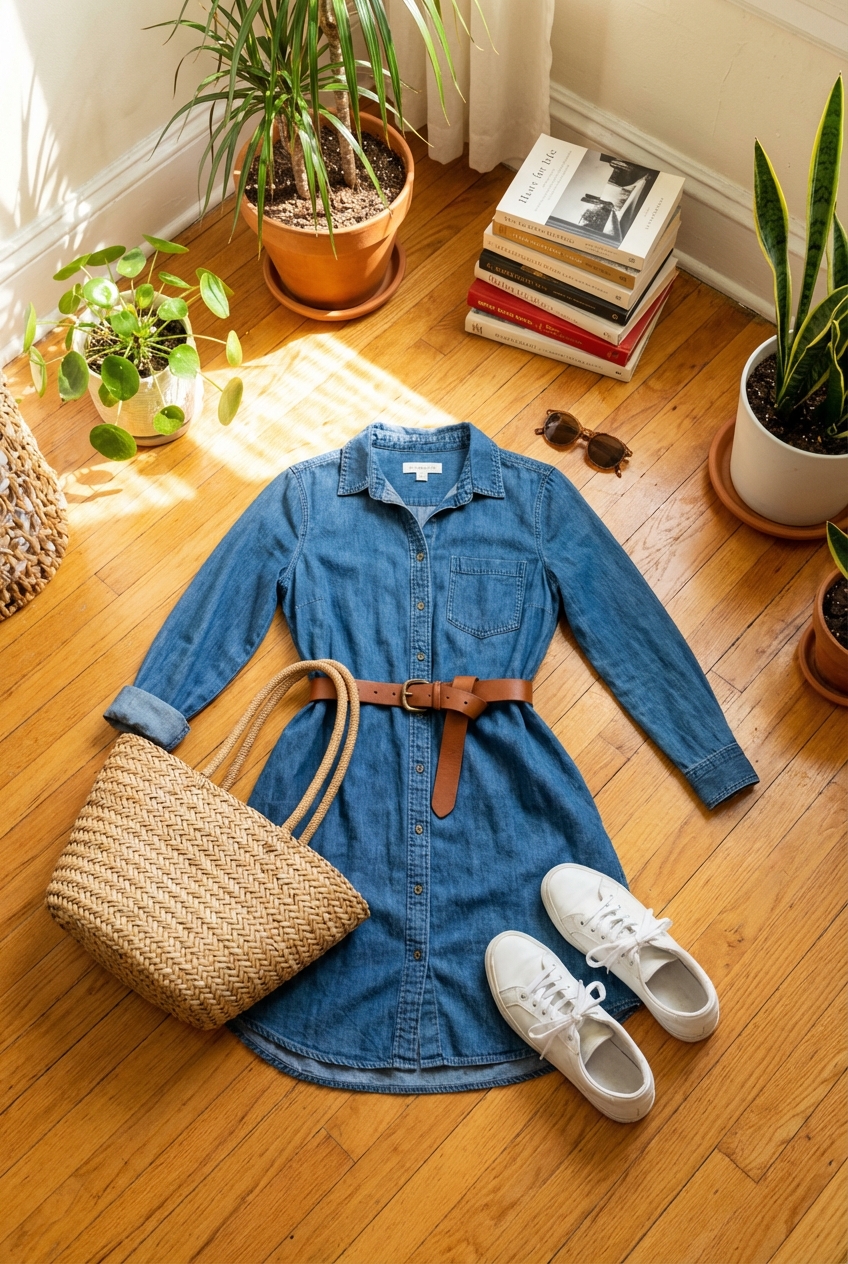
Shirt Dresses With Belted Waists For Versatile Style
There is a specific moment during a wardrobe consultation when a client realizes they don’t need more clothes; they need better architecture. I vividly recall a session with a high-profile art gallery director who was struggling with the “day-to-night” dilemma. She needed something that commanded respect during installation checks but felt elegant enough for donor dinners.
We landed on a crisp, navy cotton poplin shirt dress with a structured belt. It wasn’t just a garment; it was a solution. The collar framed her face for video calls, the skirt allowed for movement, and the belt provided that crucial definition that tailored the look to her specific silhouette.
The shirt dress is the unsung hero of a functional, high-end wardrobe. It bridges the gap between masculine tailoring and feminine draping unlike any other piece. For those of you eager to see how these looks translate to real life, keep in mind that a comprehensive Picture Gallery is at the end of this blog post.
The Architecture of the Silhouette
In fashion, just as in interior design, structure is everything. A shirt dress operates on the principle of vertical lines. The button placket running down the center front creates an illusion of height, drawing the eye up and down rather than side to side.
However, a straight column can sometimes overwhelm a figure or look too much like a painter’s smock. This is where the belted waist becomes the anchor of the design. It breaks that vertical line at your narrowest point, creating intentional proportions.
When I style clients, I treat the belt as the focal point. It dictates whether the dress feels relaxed and bohemian or sharp and corporate. Without the belt, you have a tunic; with it, you have a tailored ensemble.
Designer’s Note: The Volume Rule
One lesson I learned early in my career is managing volume. If the skirt of the dress is full or A-line, the top needs to be fitted.
Conversely, if the sleeves are voluminous or puffy, a tighter cinch at the waist is non-negotiable to prevent the look from swallowing you. Always balance the visual weight.
Fabrication: Material Matters
The difference between a shirt dress that looks expensive and one that looks messy almost always comes down to fabric choice. You want materials that hold a press but offer breathability.
Cotton Poplin
This is the gold standard for shirt dresses. It has a tight weave that creates a crisp, paper-like hand. It stands away from the body slightly, which is excellent for structure.
- Pro: Holds its shape all day and creates architectural collars.
- Con: Prone to wrinkling if not high quality.
Silk Crepe de Chine
For a fluid, dressier look, silk is unmatched. It doesn’t have the stiffness of cotton, so it glides over curves rather than creating angles.
- Pro: Incredible drape and sheen; transitions effortlessly to evening events.
- Con: Requires delicate care and often needs a slip underneath.
Linen Blends
Pure linen can wrinkle aggressively, which ruins the sharp aesthetic of a shirt dress. I always recommend a linen-rayon or linen-cotton blend. You get the texture of linen with the wrinkle resistance of the secondary fiber.
Mastering the Belt: Techniques and Swaps
The “self-belt” (the fabric belt that comes with the dress) is convenient, but it isn’t always the most stylish option. Often, these belts are too flimsy or lack the stiffness to stay put.
I almost always swap the provided sash for a leather belt. A structured leather belt elevates the outfit immediately, adding a texture contrast that makes the look feel curated.
Belt Width and Proportions
The width of your belt should be determined by the length of your torso. This is a rule of thumb I use for every fitting:
- Short Torso: Use a narrow belt (0.5 to 1 inch). A wide belt will consume your midsection and make you look shorter.
- Long Torso: You can handle a wide belt (2 to 3 inches) or a corset-style belt. This helps visually shorten the torso and elongate the legs.
- Average Torso: The standard 1.5-inch belt is the safest and most classic choice.
Common Mistakes + Fixes
The Mistake: Tying the belt too tight. This causes the fabric above the waist to “muffin top” over the belt and pulls the buttons apart at the bust.
The Fix: The “Two-Finger Rule.” You should be able to slide two fingers comfortably between the belt and your waist. The dress should skim, not strangle.
The Hemline Debate: Scale and Proportion
Choosing the right length is critical. In interior design, we talk about furniture scale; in fashion, we talk about hemline scale relative to your height.
The Midi Length
This is the most versatile and modern length. However, “midi” is a range, not a specific point.
- The Sweet Spot: The hem should hit about two inches below the thickest part of your calf. If it hits right at the widest part, it can make legs look heavy.
- Petite Clients: Go slightly shorter, just below the knee, or opt for a midi with a side slit to show more leg and break up the fabric block.
The Maxi Length
A belted maxi shirt dress is dramatic and elegant.
- The Measurement: For a floor-length look, the hem should hover exactly 1 inch off the ground when you are wearing your chosen shoes. Any longer and it drags; any shorter and it looks like it shrank in the wash.
The Mini
A shorter shirt dress can be chic, but the fit must be looser. A tight, short shirt dress rarely looks high-end. Aim for an oversized fit that is cinched tightly at the waist for a playful, architectural look.
Styling for Real Life: The Practical Checklist
When I am dressing a client, we don’t just look in the mirror; we move. A shirt dress must function in a three-dimensional world. Here is how I stress-test the garment.
The Sit Test
Sit down in a chair. Does the space between the buttons at your hips gape open? This is the most common fit issue with shirt dresses.
- The Fix: If it gapes, size up to fit your hips and tailor the shoulders down. Alternatively, have a tailor sew the placket shut from the waist down, so only the top buttons are functional.
The Transparency Check
Stand in front of a window or a bright light source. Can you see the outline of your legs? Many white or light-colored poplin dresses are more sheer than they appear in dressing rooms.
- The Solution: Invest in a seamless, nude slip skirt. It solves transparency issues and prevents the dress from clinging to your legs as you walk.
Sleeve Rolling
A long sleeve that is just hanging down can look lifeless. I always style shirt dresses with the sleeves rolled or pushed up.
- Styling Tip: Fold the cuff back once, then push the sleeve up to the elbow. It adds a sense of “effortless” style and exposes the forearm, which is a slimming visual trick.
Transitioning Seasons: Layering Logic
The beauty of the shirt dress is its year-round viability. It is a layering powerhouse.
Fall and Winter
Treat the shirt dress as a lightweight coat. I love layering a thin, merino wool turtleneck underneath a shirt dress. Leave the top three buttons of the dress open to show the knit underneath.
- Footwear: Pair with knee-high leather boots. The boots should disappear under the hem of the dress (if it’s a midi), creating a continuous line that keeps you warm and looks seamless.
Spring and Summer
Focus on breathability. Swap the leather belt for a woven raffia or canvas belt to lighten the texture.
- Footwear: Heavy boots look out of place here. Switch to loafers, mules, or strappy sandals. The goal is to show some skin at the foot to balance the coverage of the dress.
What I’d Do in a Real Project
If I were building a capsule wardrobe for you today centered around this item, here is the exact protocol I would follow.
1. Select the Anchor Piece
I would start with a navy or charcoal midi-length dress in 100% cotton poplin. These colors hide stains better than white and look more authoritative than pastels.
2. Customize the Fit
I would take the dress to a tailor immediately. We would shorten the sleeves to hit exactly at the wrist bone and ensure the shoulder seam sits squarely on the edge of the shoulder. If the skirt is too long, we would hem it to that “sweet spot” below the calf.
3. Upgrade the Hardware
If the dress came with cheap plastic buttons, I would swap them for mother-of-pearl or horn buttons. This is a $20 upgrade that makes a $100 dress look like a $500 dress.
4. Stabilize the Placket
I would use double-sided fashion tape between the buttons at the bust line to prevent gaps during movement. For a permanent fix, I’d have a small snap sewn inside the placket at the bust point.
Finish & Styling Checklist
Before you walk out the door, run through this final check to ensure the look is polished and proportional.
- Collar Check: Is the collar popped or folded? If folded, make sure it is crisp. If popped, ensure it stays up.
- Button Alignment: Are the buttons straight down your center line? A twisted dress looks sloppy.
- Belt Knot: If using a fabric sash, tie a “half-hitch” knot rather than a bow for a cleaner, more adult look. If using leather, ensure the tail of the belt is tucked into the keeper.
- Pocket Flaps: If the dress has chest pockets, ensure the flaps are lying flat and not bunched up.
- Hem Static: Is the skirt clinging? If so, run a dryer sheet over your legs or use an anti-static spray.
FAQs
Q: Can I wear a shirt dress if I am curvy or plus-size?
Absolutely. In fact, it is one of the most flattering silhouettes for curves because you can control the fit. Look for fabrics with a little bit of stretch (2-3% elastane). Avoid stiff, thick denim that adds bulk. Focus on defining the waist.
Q: How do I wash a cotton poplin shirt dress to keep it crisp?
Wash on cold with a gentle cycle and hang to dry—never put it in the dryer. The dryer breaks down the fibers and makes the fabric dull. Iron it while it is still slightly damp for that professional, dry-cleaner crispness.
Q: What shoes work best with a midi shirt dress?
Avoid ankle boots that cut you off right at the ankle bone, as this leaves a small gap of skin that visually shortens the leg. Opt for a shoe that shows the top of the foot (like a loafer or pump) or a tall boot that goes under the hem.
Q: Can I wear a shirt dress to a formal wedding?
Generally, a cotton shirt dress is too casual for a black-tie or formal wedding. However, a silk or satin shirt dress with a jeweled belt and heels can work for a cocktail-attire reception.
Conclusion
The belted shirt dress is more than just a trend; it is a foundational element of a sophisticated wardrobe. It respects the rules of proportion, offers endless versatility, and solves the functional problems of dressing for a busy life.
By paying attention to the fabrication, nailing the fit, and upgrading your accessories, you transform a simple garment into a signature look. It allows you to move through your day with confidence, knowing that your “architecture” is sound.
Picture Gallery


