
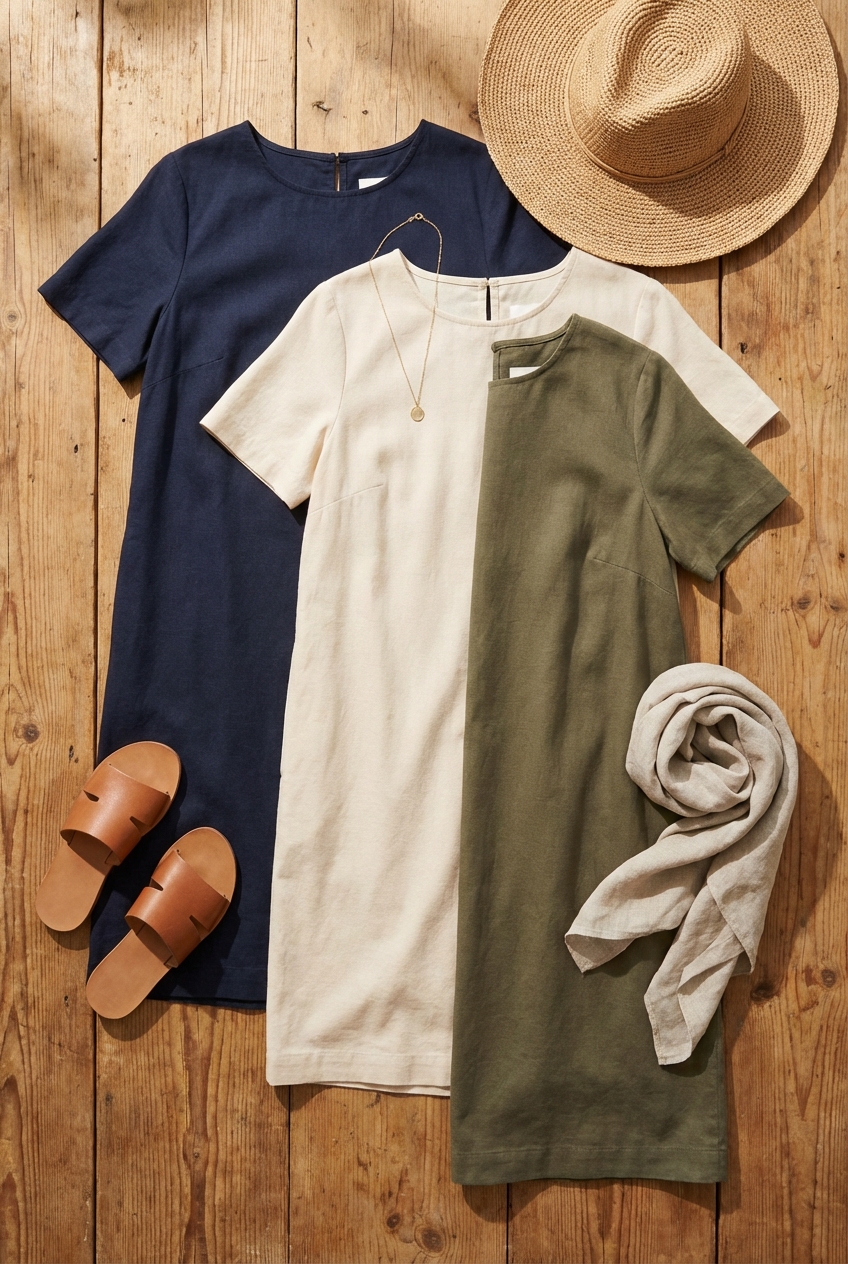
Simple Shift Dresses For Timeless Fashion Effortless Elegant And Always In Style
There is a reason the shift dress has survived every trend cycle since the 1920s and its resurgence in the 1960s. In my years of styling clients for high-stakes events and everyday luxury, I have found that no other garment offers the same return on investment. It is the architectural wonder of the wardrobe—structural, forgiving, and endlessly versatile.
Many women mistakenly believe that a “simple” dress implies a lack of style or effort. The reality is quite the opposite. A well-constructed shift dress acts as a blank canvas, allowing your personality and accessories to dictate the tone of the outfit. It solves the fatigue of morning decision-making while ensuring you look polished enough for a board meeting or a dinner date.
In this guide, I will break down exactly how to select, fit, and style this essential piece with the precision of a professional stylist. If you are looking for visual inspiration, we have curated a stunning Picture Gallery at the end of the blog post to spark your creativity.
The Architecture of the Shift: Understanding the Silhouette
To choose the right shift dress, you must first understand its structural engineering. Unlike a sheath dress, which is form-fitting and relies on waist darts to hug every curve, a shift dress hangs straight down from the shoulders. It skims the body rather than clinging to it, creating a column-like effect.
This “H-line” silhouette provides room for movement and airflow. However, the simplicity of the cut means there is nowhere for poor tailoring to hide. The balance of the dress relies entirely on how it sits on your shoulders and falls over the bust line. If the shoulder seam is even half an inch off, the entire architecture of the dress collapses.
When assessing a shift dress, look for bust darts. These are usually small, triangular folds stitched from the side seam toward the bust point. Even though the dress is loose, these darts are critical. They provide just enough three-dimensional shape to prevent the fabric from tenting out like a sack.
Stylist’s Note: The “Tent” Danger
The biggest complaint I hear is, “I look like I’m wearing a potato sack.” This usually happens when the fabric is too stiff, or the bust darts are missing. To prevent this, ensure the dress fits cleanly through the armholes and bust before it releases into the straight cut of the body.
Fabric Selection: Materiality and Weight
In interior design, we talk about the “hand” of a fabric, and the same applies to fashion. Because a shift dress has minimal structural seams, the fabric must do the heavy lifting. You need a material with enough weight to hold the shape of the rectangle without collapsing against your body.
Wool crepe is the gold standard for high-end shift dresses. It has a matte finish that absorbs light beautifully, making it look expensive and saturated in color. It also possesses a natural elasticity and recovery, meaning it won’t wrinkle the moment you sit down.
For warmer months, look for linen blends. Pure linen wrinkles aggressively, which can ruin the clean lines of a shift. A linen-rayon or linen-cotton blend will offer that breezy summer texture while maintaining the structural integrity of the garment.
Common Mistake: Thin Jersey Knits
Avoid thin, clingy jersey fabrics for a classic shift look. Thin knits will cling to undergarments and destroy the “floating” illusion of the shift silhouette. If you can see the outline of the pockets through the front of the dress, the fabric is too light.
The Hemline Rules: Scale and Proportion
The success of a shift dress depends entirely on the hemline. Because the dress does not define the waist, the hemline becomes the primary horizontal line on your body. Placing this line correctly is essential for maintaining visual proportions.
For a timeless, elegant look, the hem should hit exactly at the top of the knee or just graze the bottom of the knee cap. This length elongates the leg while remaining appropriate for professional environments. If you are petite (under 5’4″), you can go one to two inches above the knee to lengthen your vertical line.
For the taller client, a “midi” shift can be tricky. If the dress goes too far past the knee without a waist definition, it can overwhelm the frame. If you prefer a longer length, ensure the dress has a deep side slit to break up the visual heaviness of the fabric.
What I’d Do in a Real Project:
I always advise clients to buy a dress with a generous hem allowance (at least 2 inches). This allows us to tailor the length specifically to their height and preferred heel height. A tailored hem is the difference between “off the rack” and “custom luxury.”
Necklines and Sleeve Variations
The neckline of a shift dress sets the formality level. Since the body of the dress is simple, the neckline draws the eye upward toward the face. The most classic option is the Boat Neck (or Bateau). It runs horizontally across the collarbone, balancing the straight vertical lines of the dress body.
For those with a larger bust, a V-neck or a deep scoop is often more flattering. It breaks up the expanse of fabric on the chest and creates a vertical focal point. If you choose a Jewel neck (high and round), I recommend pairing it with a longer necklace to create that vertical line artificially.
Sleeve length also plays a role in the versatility of the piece. A sleeveless shift is the most traditional and works best for layering under blazers. However, if you prefer arm coverage, look for an elbow-length sleeve. Avoid cap sleeves if you have broad shoulders, as they can visually widen the upper body, disrupting the column effect.
Stylist’s Note: The Armhole Gap
Check the armhole fit carefully. A common issue with shifts is a gaping armhole that reveals your bra. A skilled tailor can add a small dart under the arm or lift the shoulders to close this gap. It is a small alteration that makes a massive difference in polish.
Tailoring: The Hidden Luxury
A “simple” dress requires the most precise tailoring. When there are no ruffles or belts to distract the eye, fit issues become glaringly obvious. The goal is what we call “ease”—the dress should hover around the body, touching but not squeezing.
When fitting a client, I ensure there is about 1 to 1.5 inches of ease at the bust and 2 to 3 inches of ease at the hips. This ensures you can sit, move, and reach without the fabric pulling horizontally across the hips. Horizontal drag lines are a sign the dress is too tight.
If you have a sway back (a curve in your lower spine), a shift dress can sometimes pool fabric at the small of your back. A tailor can add two vertical “fish eye” darts in the back of the dress. This gently shapes the fabric to your spine without making the dress tight in the front.
Common Mistake: Buying for the Waist
Do not buy a shift dress based on your waist measurement. Buy it to fit your widest part (usually the bust or hips) and have the rest tailored down. It is impossible to let a dress out if the seam allowance isn’t there, but it is always possible to take it in.
Styling for Occasions: Day to Night Transition
The true power of the shift dress lies in its adaptability. You can wear the same navy wool crepe shift to a client presentation and a cocktail party simply by swapping accessories. This versatility makes it a cornerstone of a capsule wardrobe.
For the office, structure is key. Pair the shift with a sharp blazer and a pointed-toe flat or pump. The pointed toe mirrors the sharp lines of the shift. Avoid chunky, round-toed shoes, as they can make the leg look heavy beneath the straight hem of the dress.
For evening, remove the blazer and focus on statement jewelry. Because the silhouette is so clean, you can wear bold, architectural necklaces or oversized cuffs without looking cluttered. Swap the day bag for a sleek clutch and switch to a strappy sandal to lighten the look.
What I’d Do in a Real Project:
I often suggest adding a silk scarf for a pop of color. Tie it tightly around the neck for a 60s Mod vibe, or loop it through the handle of your bag. It adds texture and softness to the rigid lines of the shift.
Finish & Styling Checklist
Before you head out the door, run through this quick professional checklist to ensure your look is cohesive and polished. These are the final touches I use on set to ensure perfection.
- Check the Undergarments: Ensure you are wearing smooth, seamless undergarments. Even though the dress is loose, lace textures can show through.
- Verify the Hem: Check your hemline in a full-length mirror with your shoes on. It should be parallel to the floor.
- The Sit Test: Sit down in a chair. Does the dress ride up too high? Does it pull tight across the hips? If yes, it may need letting out.
- Lint Roll: Shift dresses often feature large panels of solid fabric. Lint and hair are highly visible, especially on dark wools.
- Balance the Shoe: If the dress is heavy (wool/tweed), wear a substantial shoe. If the dress is light (silk/linen), wear a lighter shoe.
FAQs
Can I wear a belt with a shift dress?
Technically, yes, but proceed with caution. Belting a shift dress turns it into a tunic style. If the fabric is too thick, it will bunch up unflatteringly around the waist. If you must belt it, use a thin belt and ensure the fabric is lightweight enough to drape softly.
Is a shift dress suitable for a curvy figure?
Absolutely. The key is ensuring the dress fits the hips without pulling. Many curvy women avoid shifts because they fear the “tent” effect. To avoid this, choose a fabric with a heavy drape (weighty silk or rayon blends) rather than stiff cotton. This allows the dress to hint at your curves without clinging.
What outerwear works best with a shift dress?
Because of the straight cut, you want outerwear that either matches the length or is significantly shorter. A cropped jacket that hits at the waist is ideal for defining proportions. Alternatively, a long trench coat that is slightly longer than the dress creates a beautiful, streamlined look.
How do I clean a wool shift dress?
Always dry clean wool crepe or structured bouclé shifts. Washing them in water can shrink the fibers and warp the lining, destroying the architectural shape. Between wears, use a steamer to refresh the fabric and kill bacteria; this extends the life of the garment.
Conclusion
The shift dress is more than just a garment; it is a tool for effortless elegance. By understanding the principles of scale, fabric weight, and tailoring, you can utilize this timeless silhouette to build a wardrobe that serves you for years. It requires minimal effort to wear but commands maximum respect in any room.
Whether you choose a classic black wool crepe for the boardroom or a vibrant linen for a summer brunch, the rules remain the same: fit is king, and simplicity is the ultimate sophistication. Invest in quality materials, find a trusted tailor, and let the clean lines of the shift dress speak for themselves.
Picture Gallery


