
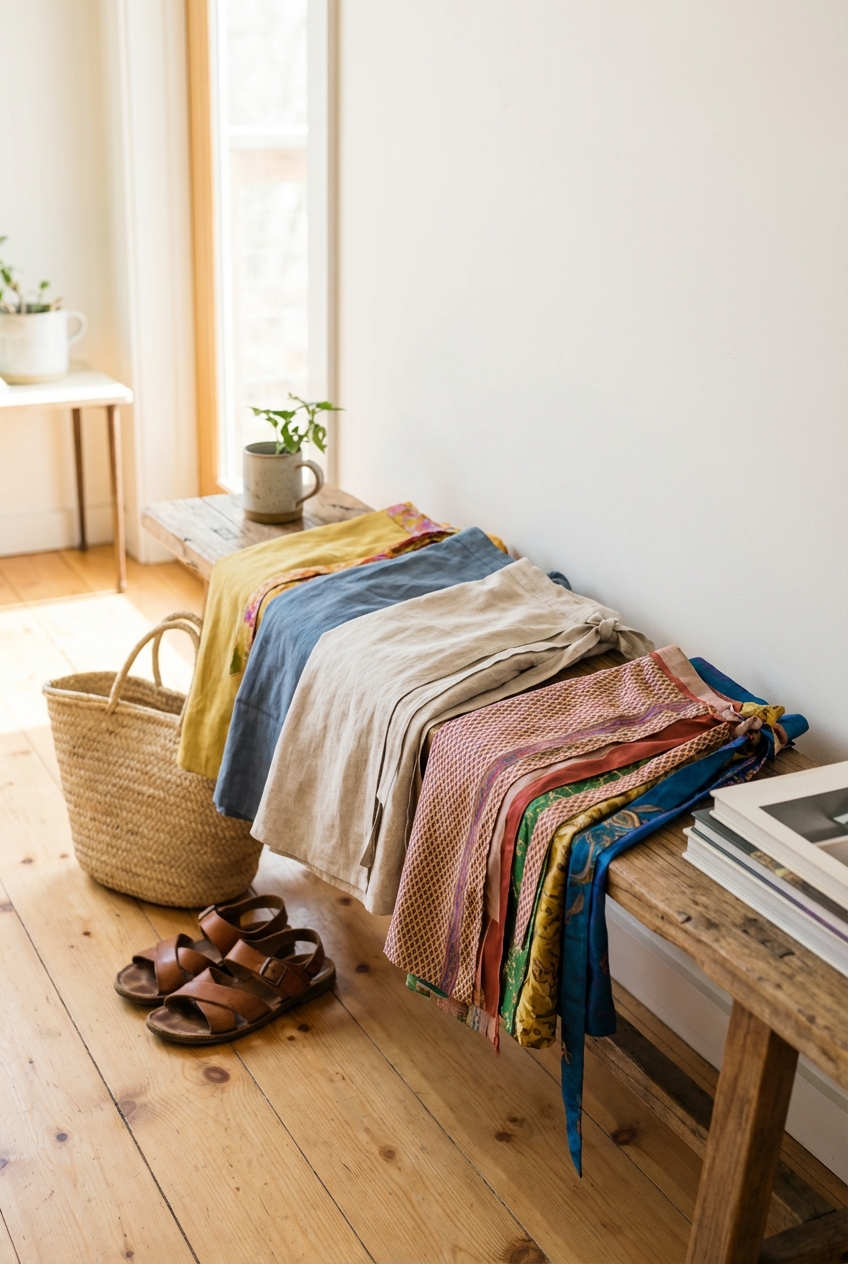
Simple Wrap Skirts For Versatile Styling
Introduction
There is something inherently architectural about a well-made wrap skirt. During my years working in high-end fashion styling, I have found that few garments offer the same balance of ease and structural elegance. I vividly remember a frantic fitting in Paris with a client who had packed entirely the wrong wardrobe for a shifting weather forecast; a single black silk wrap skirt saved her entire trip, transitioning seamlessly from a morning brunch to a black-tie gallery opening.
The beauty of this piece lies in its adjustability and the way it respects the natural lines of the body without constricting them. Unlike a zippered pencil skirt or a buttoned A-line, the wrap skirt allows for fluctuations in fit and styling that accommodate real life. It is the ultimate tool for a capsule wardrobe, providing a high return on investment for cost-per-wear.
However, styling this piece requires a specific understanding of proportion and fabric weight to avoid looking unkempt. In this guide, I will walk you through the technical aspects of selecting the right skirt and the styling formulas I use for my private clients. If you are looking for visual inspiration, please note that a curated Picture Gallery is available at the end of this blog post.
The Architecture of the Perfect Wrap Skirt
Before we discuss styling, we must discuss the garment’s construction. In luxury fashion, the difference between a skirt that flatters and one that fails is often in the “overlap.”
The overlap refers to how much fabric crosses over the front of the body. A high-end wrap skirt should have a generous overlap, ideally extending to the opposite side seam. This ensures that when you walk, sit, or cross your legs, the skirt remains modest and maintains its silhouette.
When shopping or fitting, pay close attention to the waistband construction. A reinforced waistband with a dedicated buttonhole for the tie to pass through lies flat against the torso. Cheaper versions often lack this pass-through, causing the fabric to bunch awkwardly at the hip.
Designer’s Note: The Rise Matters
I often see clients pulling wrap skirts down to sit on their hips. While this was popular in the early 2000s, the garment is mechanically designed to sit at the true waist—the smallest part of your torso.
Placing the waistband here anchors the skirt. It prevents it from sliding around as you move. When fitting a client, I always ensure the waistband sits one inch above the belly button for the most elongating leg line.
Selecting the Right Fabric and Weight
The versatility of a wrap skirt is entirely dependent on the material. As a stylist, I categorize wrap skirts into three distinct fabric groups: fluid, structural, and seasonal.
Fluid fabrics, such as silk charmeuse, rayon, or high-quality viscose, offer a bias-cut effect. They skim the body and are ideal for evening wear or summer days. When choosing silk, look for a weight of at least 19 momme. Anything lighter will show every undergarment line and is prone to static cling.
Structural fabrics include cotton poplin, linen, and lightweight wool. These hold an A-line shape and create a more defined silhouette. These are your workhorses. For linen, I always recommend Belgian or Irish linen, as the fibers are longer and less prone to aggressive wrinkling than cheaper alternatives.
Common Mistakes + Fixes
Mistake: Buying a jersey knit wrap skirt for the office.
Fix: Jersey clings and can look too casual or “beach-ready” for professional environments. Swap it for a wool crepe or a heavy cotton blend. These fabrics provide a crisp finish that commands respect.
Mistake: Ignoring the lining.
Fix: Wrap skirts are rarely lined due to their construction. If you choose a light-colored skirt, test it in natural light. You will almost certainly need a separate silk slip.
Mastering the Tie: Techniques for Security and Style
The tie is the focal point of the skirt, and how you handle it changes the vibe of the outfit. The most common error is tying a large, bulky bow directly in the center of the stomach.
This adds unnecessary volume to the midsection and disrupts the visual line. Instead, I teach my clients the “flat knot” technique. Tie the straps on the side of the hip, creating a square knot rather than a bow. This lays flat under blazers and sweaters.
For a cleaner look, try the “hidden tuck.” Tie the knot securely, then tuck the hanging ends back up into the waistband of the skirt. This creates a seamless, minimalist appearance that mimics a standard skirt but with the comfort of a wrap.
What I’d Do in a Real Project
If I am styling a client for a photoshoot or an event, I use a small safety pin or a hidden snap button.
I place the pin on the interior layer of the skirt, about mid-thigh height, securing it to the under-layer. This is invisible from the outside but guarantees that a gust of wind won’t blow the skirt open. It is a three-second fix that provides total peace of mind.
Styling for the Office: Professional Polish
Integrating a wrap skirt into a corporate wardrobe requires balancing the feminine nature of the wrap with masculine tailoring. The goal is structure.
I recommend pairing a midi-length wrap skirt in a neutral tone (camel, navy, charcoal) with a crisp button-down shirt. Do not wear a loose blouse. The volume of the skirt needs to be counteracted by a fitted top.
Tuck the shirt in tightly. If the shirt bunches, use a bodysuit that resembles a shirt. This ensures a clean waistline, which is critical when wearing a wrap style.
Footwear and Proportions
For the office, hem length is non-negotiable. The skirt should hit just below the knee or at the mid-calf. Avoid maxi lengths, which can drag and look too bohemian for a boardroom.
Shoe Rules of Thumb:
- Knee-length skirts: Pair with a knee-high boot or a pointed-toe flat. This bridges the gap between skin and fabric.
- Midi skirts: Use a block heel or a pump with at least a 2-inch lift. A midi skirt can visually shorten the legs; the heel corrects this proportion.
Layer a structured blazer over the top. The blazer should be longer, hitting below the hip, or cropped at the waist. Avoid blazers that end exactly where the skirt’s knot is, as this creates a bulky horizontal line.
Vacation and Weekend Wear: Casual Chic
This is where the wrap skirt truly shines. For a weekend look, we want to play with texture. A cotton or linen wrap skirt paired with a simple t-shirt is a timeless formula.
Focus on the quality of the t-shirt. A slub cotton or a mercerized cotton tee elevates the look. Roll the sleeves of the tee slightly to add intentionality to the styling.
When styling for vacation, I love a monochromatic look. A white linen wrap skirt with a white tank top creates a column of color that is incredibly chic. Accessories become the star here—add a leather belt over the waistband of the skirt to add a mixed-material element.
The Sandal Equation
When wearing a wrap skirt casually, the shoe choice dictates the vibe.
- Slide sandals: effortless and European. Look for leather slides rather than rubber flip-flops.
- White sneakers: sporty and practical. Ensure the skirt is hemmed appropriately so it doesn’t drag. A sneaker looks best with a midi length, showing a bit of ankle.
- Espadrilles: the classic summer choice. The wedge heel adds height while remaining walkable for cobblestone streets.
Evening Elegance: Transitioning to Night
Taking a wrap skirt into the evening requires a shift in fabric and accessories. This is the domain of silk, satin, and velvet.
The “Third Piece Rule” is essential here. Your outfit consists of a top, a skirt, and a third element that ties it together. For evening, that third piece is often statement jewelry or a luxurious shawl.
Pair a satin wrap skirt with a cashmere sweater or a silk camisole. The contrast between the fuzzy texture of cashmere and the slick sheen of satin is a hallmark of high-end styling.
Dealing with Tights
Many women believe wrap skirts are only for summer. This is incorrect. In colder months, style a heavy wool wrap skirt with opaque black tights.
The key is density. The tights should be at least 40 denier (semi-opaque) or higher. Sheer pantyhose can look dated with this silhouette. Match the color of your boots to your tights to create an unbroken vertical line, making you appear taller.
Care and Maintenance for Longevity
A wrap skirt endures more stress than a standard skirt because of the tension at the ties. Proper care is vital to keep the shape.
Never hang a heavy wrap skirt by the waistband loops alone. The weight of the fabric will stretch the waist out over time. Instead, fold the skirt over a velvet hanger bar, or use clip hangers with padding to grip the waistband without leaving indentations.
If your skirt is silk or rayon, steaming is preferred over ironing. Ironing can crush the delicate fibers and create a shine on the fabric. If you must iron, do so from the inside out (the wrong side of the fabric).
Designer’s Note: The Hemline Check
Wrap skirts, particularly those cut on the bias, can “drop” over time. This means the hem becomes uneven as gravity pulls on the fibers.
Once a season, put the skirt on and have a tailor or a trusted friend check the hemline from the back. It is common for the back to droop lower than the front. A quick hem adjustment keeps the piece looking expensive and fresh.
Finish & Styling Checklist
Before you head out the door, run through this quick mental checklist. These are the final checks I do with every client.
- Waist Placement: Is the skirt sitting at your natural waist (smallest part), or has it slipped down? Hike it up and retie if necessary.
- The Sit Test: Sit down on a chair. Does the skirt fly open completely? If so, you need a safety pin or a slip underneath.
- Knot Check: Is the knot lying flat? If you are wearing a layer on top, ensure the knot isn’t creating a visible lump.
- Shoe Synergy: If wearing a midi skirt, do your shoes elongate the leg? If wearing flats, are you showing enough ankle?
- Static Guard: If wearing tights or a silk skirt, have you applied anti-static spray? Static is the enemy of the wrap skirt’s drape.
- Top Balance: Is your top fitted or tucked in? Volume on the bottom requires sleekness on top.
FAQs
Can I wear a wrap skirt if I have a curvy figure?
Absolutely. In fact, wrap skirts are often the most flattering option for curvy figures because they accommodate the hip-to-waist ratio better than zippered skirts. Look for skirts with a curved waistband rather than a straight cut, as these will contour to your body without gaping at the back.
How do I stop the skirt from blowing open in the wind?
This is the number one concern. Aside from the safety pin trick mentioned earlier, you can also sew a small heavy coin or drapery weight into the bottom corner of the overlap hem. This added weight helps keep the fabric down during a breeze without altering the look of the skirt.
Are wrap skirts appropriate for black-tie events?
Yes, provided the material is elevated. A floor-length silk taffeta or velvet wrap skirt paired with a structured corset top or a tuxedo blazer is incredibly elegant. The key is length—it must graze the floor—and fabric quality. Cotton or linen is never appropriate for black tie.
What is the best length for a petite frame?
If you are petite (under 5’4″), heavy midi skirts can overwhelm you. I recommend a length that hits either just above the knee or a “tea length” (a few inches above the ankle). Avoid mid-calf lengths that cut the leg in half. High-waisted styles will also help elongate your lower body.
Can I wear a wrap skirt in the winter?
Yes. Switch to materials like wool, tweed, or heavy corduroy. Pair them with knee-high leather boots. The boots should disappear under the hem of the skirt so that no skin is exposed to the cold. This is a very chic, warm way to style the garment.
Conclusion
The wrap skirt is more than just a trend; it is a fundamental building block of a sophisticated wardrobe. Its ability to adapt to your body shape and the demands of your day makes it a unique ally in fashion.
By focusing on high-quality fabrics, understanding the importance of the overlap, and mastering the art of the tuck, you elevate this simple garment into a statement of personal style. Whether you are navigating a busy workday or enjoying a slow weekend, the wrap skirt offers a polished ease that few other pieces can match.
Remember that confidence in styling comes from comfort. When you know your skirt is secure, fits perfectly, and suits the occasion, you carry yourself differently. That is the true power of great design.
Picture Gallery


