
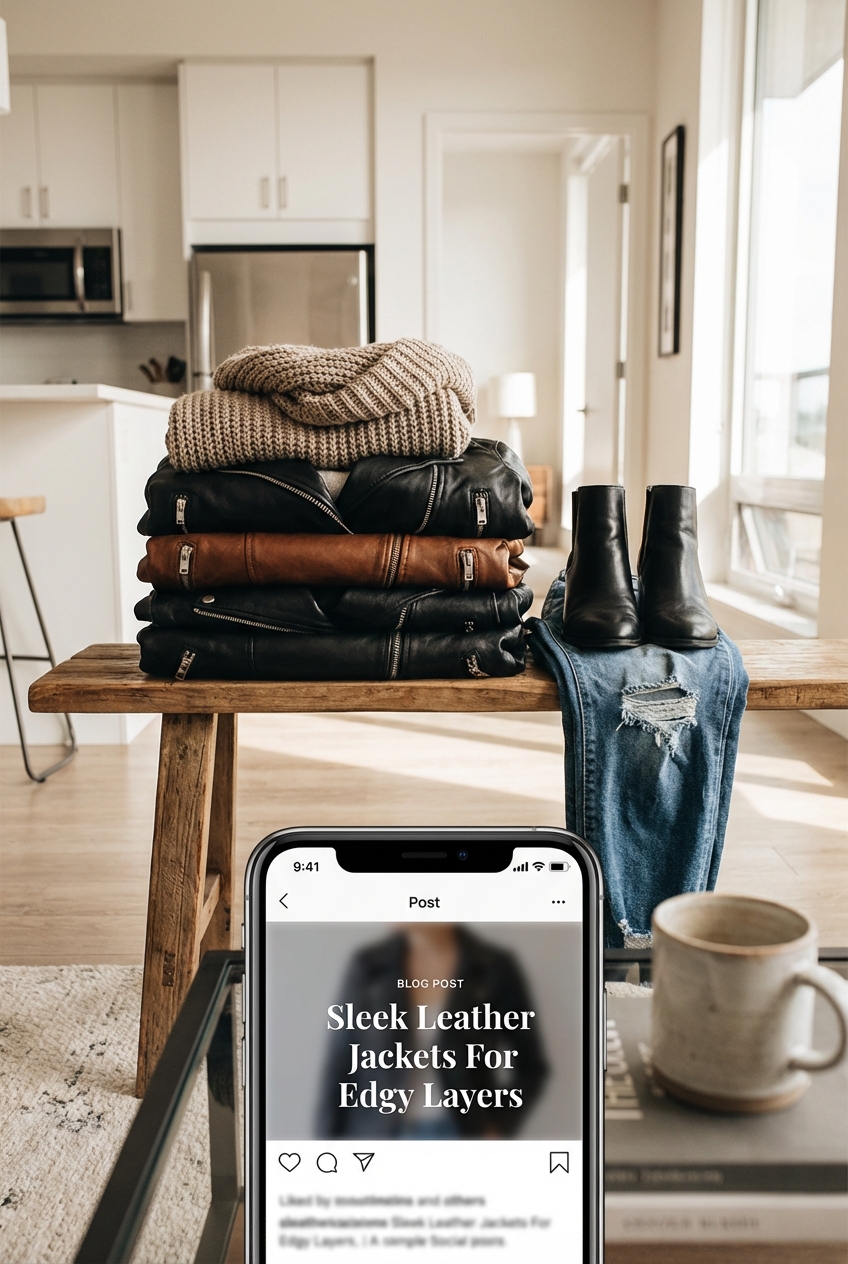
Sleek Leather Jackets For Edgy Layers
There is arguably no single garment that transforms an outfit as instantly or effectively as a well-tailored leather jacket. In my years styling high-end clients, I have seen women put on a leather jacket and immediately stand taller, walk with more purpose, and exude a confidence that soft fabrics simply cannot provide. It acts as a form of sartorial armor, bridging the gap between elegance and rebellion.
I recall a specific fitting with a client who worked in a very conservative corporate environment but wanted to reclaim her personal style on the weekends. We moved her away from structured blazers and into a sleek, lambskin moto jacket with gunmetal hardware. The shift was visceral; she realized that she could be authoritative and edgy without sacrificing the polish she had cultivated in her career.
Finding that perfect piece requires navigating a minefield of grain quality, hardware weight, and silhouette precision. If you are looking for visual inspiration on how to style these pieces, be sure to check out the curated Picture Gallery at the end of the blog post.
1. Decoding Leather Quality and Grains
The difference between a jacket that lasts three years and one that lasts thirty lies entirely in the grade of the skin. As a consumer, you must look beyond the price tag and inspect the grain itself. The “edgy” look falls flat if the material looks plastic or cracks after a season of wear.
Full-Grain Leather
This is the gold standard for investment pieces. It uses the entire hide, meaning it has not been sanded or buffed to remove imperfections. This leather is incredibly durable and, more importantly, develops a patina over time. A patina is the soft sheen and unique character the leather gains as it absorbs oils and exposure to the elements.
Top-Grain Leather
This is slightly thinner and more pliable than full-grain because the very top layer has been sanded down. It offers a more uniform finish, which many of my clients prefer for a sleek, modern aesthetic. It is more stain-resistant than full-grain but will not develop the same rich patina over the decades.
Genuine Leather
Do not let the name fool you; in the industry, “genuine leather” is a technical term for the lowest quality grade. It is made from the layers of hide that remain after the top is split off for better grades. It often relies on heavy painting or artificial texturing to look like skin. Avoid this if you want a jacket that breathes and molds to your body.
Designer’s Note: The Vegan Alternative
If you prefer vegan leather, avoid standard PVC (polyvinyl chloride), which is essentially plastic that traps heat and peels. Instead, look for plant-based leathers made from cactus, mushroom, or pineapple fibers. These materials mimic the breathability and drape of animal hide far better than synthetic plastics.
2. Selecting the Right Silhouette for Your Frame
The “edgy” aesthetic varies wildly depending on the cut of the jacket. A boxy cut reads very differently from a fitted racer style. Understanding these architectural differences is the key to balancing your proportions.
The Classic Biker (Moto)
Characterized by an asymmetrical zipper, wide lapels, and often a belt at the hem. This style adds volume to the upper body.
- Best for: Balancing pear shapes by adding width to the shoulders, or accentuating an hourglass figure if belted.
- Styling tip: Leave it unzipped to create vertical lines that elongate the torso.
The Racer
This is a minimalist design featuring a center zipper and a simple band collar (no lapels). It is sleek, aerodynamic, and devoid of excess buckles.
- Best for: Petite frames that get overwhelmed by heavy hardware, or athletic builds that want to show off shoulder definition.
- Styling tip: This is the most office-appropriate cut; it wears almost like a fitted blazer.
The Leather Bomber
Defined by ribbed cuffs and a ribbed hem, usually with a looser body and a center zip. It offers a relaxed, street-style vibe.
- Best for: Rectangular body shapes, as the volume creates the illusion of curves.
- Styling tip: Pair this with slim-fit bottoms (skinny jeans or a pencil skirt) to avoid looking bulky.
3. Mastering the Fit: Technical Measurements
A leather jacket is unforgiving; it does not stretch like a knit cardigan. When I am on a project sourcing jackets, I follow a strict set of fit rules. If the structural seams do not align with your anatomy, the jacket will look borrowed rather than owned.
The Shoulder Seam
This is the non-negotiable measurement. The seam where the sleeve attaches to the body must sit exactly at the corner of your shoulder bone. If it droops down your arm, the jacket looks too big. If it sits up toward your neck, you will look constricted.
The Armhole (Scythe)
High-end jackets feature higher armholes. This might sound counterintuitive for comfort, but a high armhole allows for greater range of motion without pulling the entire body of the jacket up when you raise your arms. Lower armholes restrict movement and create a “batwing” effect.
Sleeve Length
Leather sleeves should hit just past the wrist bone, resting at the base of the thumb. Over time, leather sleeves form creases at the elbow (called “honeycombs”), which will naturally shorten the sleeve by about a quarter to a half-inch. Buying them slightly long accounts for this evolution.
The Hug Test
Always zip the jacket up and try to hug yourself. It should feel snug—like a firm handshake—but it should not cut off your circulation or flatten your chest. If the leather pulls horizontally across the back (creating “whiskers”), it is too tight. If the chest creates a hollow gap, it is too loose.
4. Hardware: The Jewelry of the Jacket
Nothing cheapens a beautiful leather hide faster than lightweight, hollow hardware. The zippers, snaps, and buckles are the functional jewelry of the piece and play a massive role in the “edgy” factor.
Zipper Quality
Look for reputable zipper brands like YKK (specifically their Excella line) or Riri. The teeth should feel smooth to the touch, not jagged. When you zip it up, the slider should glide with a satisfying resistance, not a loose rattle.
Metal Finish
Hardware color dictates the versatility of the jacket.
- Silver/Chrome: The most classic and traditional for a biker look. It has a cool, sharp energy.
- Gold/Brass: Adds warmth and a touch of luxury. It pairs beautifully with brown or burgundy leathers.
- Gunmetal/Black Matte: The stealth wealth option. It is understated, modern, and allows the leather texture to take center stage.
Common Mistake: The Jingling Belts
Many biker jackets come with a belted waist. If the buckle is cheap, it will jingle incessantly as you walk. High-end jackets use heavy, solid brass or zinc alloy that stays put. If the belt annoys you, ensure the jacket has loops that allow you to remove it entirely without leaving awkward gaps.
5. Layering Logistics for an Edgy Aesthetic
The title of this guide mentions “edgy layers,” and this is where styling expertise becomes critical. You want to layer for warmth and dimension without looking like the Michelin Man. The goal is a curated contrast of textures.
The Hoodie Combo
This is the quintessential off-duty model look. The key is the thickness of the hoodie. Choose a cashmere or thin-gauge merino wool hoodie rather than a thick, fleece-lined gym sweatshirt. The hood should drape naturally over the leather collar, softening the harsh lines of the jacket.
Silk and Lace
Edginess requires balance. Pairing tough, structured leather with a delicate silk camisole or a lace slip dress creates a visual tension that is incredibly chic. The roughness of the leather highlights the sheen of the silk.
Length Play
Experiment with a “long over short” or “short over long” dynamic.
- Short Jacket / Long Layer: Wear a cropped biker jacket over a longline tunic or a maxi dress. This emphasizes the waist and elongates the legs.
- Oversized Jacket / Fitted Layer: An oversized, boyfriend-cut leather jacket looks fantastic over a tight turtleneck and leggings. It plays with volume and feels effortlessly cool.
6. Care and Maintenance for Longevity
Leather is skin; it needs hydration and protection. I tell my clients that buying the jacket is just the down payment; the maintenance is the monthly mortgage. If you treat it well, it will outlive you.
Waterproofing
Before you wear your jacket out, treat it with a high-quality water and stain protector spray designed specifically for leather (not suede, unless you have a suede jacket). Do a patch test on the inside hem first. This creates an invisible barrier against rain and spills.
Conditioning
Once a year, or whenever the leather feels dry to the touch, apply a leather conditioner. Massage it in with a soft cloth. This prevents cracking at the stress points (elbows and shoulders) and keeps the color rich.
Storage Rules
Never store leather in a plastic garment bag. Plastic traps humidity and promotes mold growth. Leather needs to breathe. Use a cloth dust bag or an old cotton pillowcase with a hole cut for the hanger. Furthermore, use a wide, padded hanger to support the shoulders; wire hangers will distort the leather and leave permanent bumps.
Finish & Styling Checklist
When you are in the fitting room or preparing an outfit, run through this mental checklist to ensure the look is polished and intentional.
What I’d Do in a Real Project:
- Check the Collar: Pop the collar. Does the underside look finished? High-quality jackets often have detail under the collar (like contrast felt or stitching) so it looks good standing up.
- The Sit Test: Sit down in a chair while zipped up. The jacket should not ride up into your throat. If it does, the torso length is too long or the fit is too stiff.
- Hardware Check: Match the jacket hardware to your boots or bag. If the jacket has silver zips, wear boots with silver buckles. It brings cohesion to the “edgy” chaos.
- Scent Check: Smell the jacket. It should smell like rich, earthy leather. If it smells like chemicals or gasoline, it is likely low-grade leather treated with harsh solvents.
FAQs
Does leather stretch over time?
Yes, natural leather will stretch slightly, usually about half a size, as it molds to your body heat and movement. It is better to buy a jacket that is comfortably snug rather than loose. However, it will only stretch in width, never in length.
Can I wear my leather jacket in the rain?
Ideally, no. While a light drizzle won’t destroy a treated jacket, soaking wet leather can lose its natural oils, become stiff, and develop water spots. If you get caught in a downpour, let it air dry naturally away from direct heat sources (radiators will crack it).
How do I break in a stiff jacket?
The only way to break in a jacket is to wear it. Wear it around the house while doing chores or watching TV. The constant movement of your arms warms the hide and softens the fibers. Avoid “hacks” like putting it in the dryer or rubbing it with alcohol, as these can ruin the finish.
Is lambskin or cowhide better for an edgy look?
Cowhide is thicker, heavier, and has a more rugged grain, making it better for a tough, structural “biker” look. Lambskin is buttery soft, thin, and luxurious, offering a more refined, draped silhouette. Choose cowhide for durability and lambskin for comfort.
Conclusion
A sleek leather jacket is more than just a layer for warmth; it is a declaration of style. It signals a sophisticated edge that is unafraid of texture and structure. By focusing on grain quality, mastering the shoulder fit, and understanding how to layer with contrasting fabrics, you elevate this staple from a simple coat to the centerpiece of your wardrobe.
Invest in the best quality your budget allows, and pay close attention to the hardware. When you find the one that fits your frame perfectly, it becomes a second skin—a piece of history that you build with every wear. It is the ultimate fusion of function and high fashion.
Picture Gallery


