
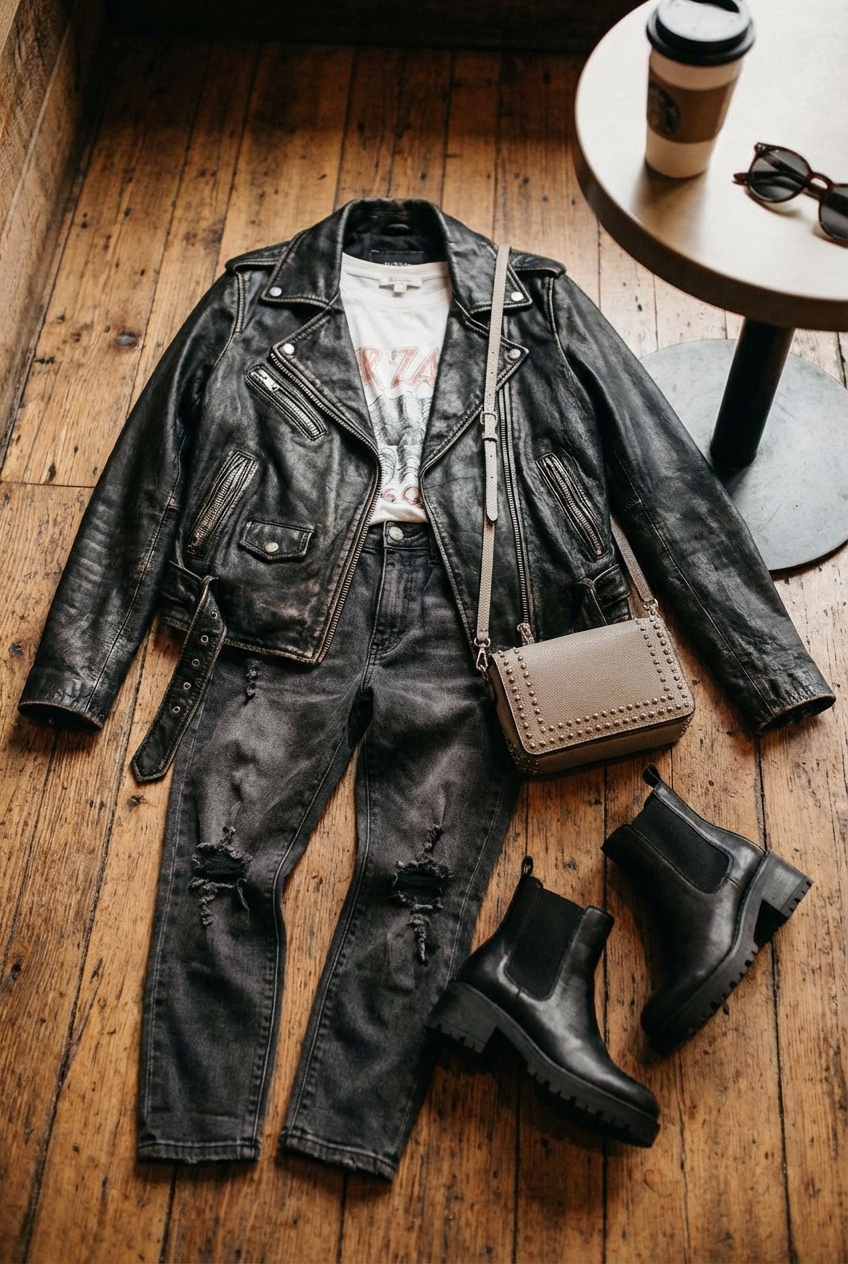
Sleek Leather Jackets For Edgy Outfits
There are very few items in a wardrobe that possess the transformative power of a high-quality leather jacket. I vividly remember my first investment piece—a cropped, asymmetrical lambskin motorcycle jacket I bought in Paris nearly fifteen years ago. It cost more than my rent at the time, but the moment I slipped it on, my posture changed. I wasn’t just wearing a coat; I was wearing armor.
That is the essence of adding a sleek leather jacket to your rotation. It instantly corrects the proportions of a flowing dress, adds grit to tailored trousers, and provides a focal point for an otherwise simple denim ensemble. As a stylist, I often tell my clients that a leather jacket is not merely an accessory; it is the anchor of the “edgy” aesthetic. It creates a silhouette that is simultaneously structured and rebellious.
However, finding the right one requires navigating a minefield of poor fits, squeaky synthetic materials, and hardware that looks cheap under daylight. You need to understand the mechanics of the garment, from the shoulder pitch to the grain of the hide. For endless inspiration on how to style these pieces, check out our curated Picture Gallery at the end of this post.
Defining the Silhouette: Moto vs. Racer vs. Bomber
When we talk about “edgy” outfits, the cut of the jacket dictates the vibe. Not all leather jackets serve the same stylistic function. You must choose a silhouette that complements your existing wardrobe and body shape.
The Moto (Biker) Jacket
The Moto is the quintessential edgy staple. Characterized by an asymmetrical zipper, wide lapels that snap down, and often belted waists, this style adds visual weight and width to the upper body.
Best for: Creating an hourglass illusion. The wide lapels broaden the shoulders, while the tapered waist cinches the midsection.
Styling note: Because this jacket has a lot of hardware and detail, keep your base layers simple. A white tee or a silk camisole prevents the look from becoming a costume.
The Racer Jacket
The Racer is the minimalist cousin of the Moto. It features a center-front zipper and a mandarin collar (often with a snap tab). It lacks lapels and heavy buckles.
Best for: Streamlining the figure. If you have broad shoulders or a larger bust, the lack of lapels reduces bulk in the chest area.
Styling note: This is the “sleekest” option. It pairs beautifully with workwear or wide-leg trousers because it doesn’t compete with other tailored lines.
The Aviator or Bomber
Originally designed for pilots, these feature ribbed cuffs and hems. In leather, they offer a slouchier, more relaxed fit.
Best for: Adding volume. If you have a petite frame, an oversized leather bomber can look incredibly chic and modern.
Styling note: Balance the volume on top with a slim bottom, like skinny jeans or a fitted pencil skirt, to maintain structural integrity.
The Anatomy of a Perfect Fit
In high-end fashion, fit is everything. A \$3,000 jacket will look like a thrift store mistake if the shoulders are misaligned. Conversely, a vintage find can look couture if it fits your frame perfectly. Here are the non-negotiable rules of thumb for fitting a leather jacket.
The Shoulder Seam Rule
The seam where the sleeve meets the body of the jacket acts as the structural hanger for the entire garment.
The Rule: The seam must sit exactly on the corner of your shoulder bone (the acromion).
The Mistake: If the seam slides down your arm (drop shoulder), it looks sloppy unless intentionally oversized. If it sits inward toward your neck, the jacket is too small and will pinch your underarms.
Designer’s Note: Leather stretches, but it rarely stretches in the shoulder width. Never buy a jacket hoping the shoulders will “give.” They won’t.
Sleeve Length and Width
Sleeves should hit at the wrist bone or up to one inch below it. Anything covering the knuckles looks like you are wearing a borrowed jacket.
High Armholes: Look for a jacket with high-cut armholes (armscyes). This allows you to lift your arm without the entire body of the jacket lifting with you. This is a hallmark of luxury tailoring.
The Sweater Test: When trying on a jacket, wear a medium-weight knit underneath. If the sleeves are so tight that you lose circulation, size up. You need room for layering to make the piece functional year-round.
Torso Length
Cropped jackets should hit at the natural waist (the narrowest part of your torso). Standard lengths should hit at the high hip bone.
Pro Tip: Avoid jackets that end at the widest part of your hips. This creates a horizontal line that widens the figure. A slightly cropped hem elongates the legs and looks much edgier.
Material Matters: Grain and Weight
The “sleekness” of a jacket is entirely dependent on the quality of the hide. As a fashion expert, I categorize leather into two camps for this look: the second-skin luxury and the structural armor.
Lambskin (Plonge)
This is the softest, most luxurious option. It feels buttery and requires zero break-in time.
Pros: Drapes like fabric. It is lightweight and perfect for wearing indoors as part of an outfit, rather than just outerwear.
Cons: It is delicate. It tears easily and is prone to scuffing.
The Look: Refined, expensive, and ultra-sleek.
Cowhide and Calfskin
This is heavier, stiffer, and more durable. It has a visible grain and a tougher appearance.
Pros: Virtually indestructible. It holds its shape well, creating a sharp, architectural silhouette.
Cons: Requires a painful break-in period. It can feel restrictive initially.
The Look: Authentic, gritty, and truly edgy.
Goatskin
This is the middle ground. It has the pebbled texture and durability of cowhide but is lighter and more flexible like lambskin. It is an excellent choice for a daily-driver jacket.
Designer’s Note: Faux Leather (PU/Vegan)
If you opt for vegan leather, avoid PVC (which looks like plastic). Look for high-quality Polyurethane (PU) or innovative plant-based leathers (like mushroom or cactus leather). The key tell is the squeak. If the material makes noise when your arms brush against your body, it will not drape correctly and will detract from the sleek aesthetic.
Hardware and Details
The hardware is the jewelry of the jacket. For an edgy but sleek look, the quality and color of the zippers and snaps are paramount.
Metal Tone
Silver (Nickel): The classic choice for a rocker vibe. It contrasts sharply against black leather for high impact.
Gold/Brass: Adds a warmer, more luxurious feel. It softens the edge slightly and pairs well with gold jewelry.
Matte Black: The stealth option. Black hardware on black leather is incredibly modern and architectural. It is the sleekest option available.
Zipper Quality
Always test the zippers. They should glide smoothly without catching on the lining. Look for heavy-gauge zippers (size 8 or 10) for the main closure. Flimsy zippers are the first thing to break and the first sign of a lower-quality garment.
Lining
Check the lining composition.
Avoid: 100% Polyester linings in cheap jackets often don’t breathe, making you sweat.
Preferred: Cupro, rayon, or cotton blends breathe better and feel cooler against the skin. A silk lining is the gold standard for luxury but is rare.
Styling Formulas for the “Edgy” Look
Now that you have the perfect jacket, styling it requires balancing textures and proportions. The goal is to create tension between the tough leather and other elements of your outfit.
Formula 1: The Texture Clash
Combine your sleek leather jacket with softer, more feminine fabrics.
The Look: Black leather moto jacket + Emerald green silk slip dress + Combat boots.
Why it works: The heavy leather grounds the floating silk. The toughness of the jacket makes the dress feel appropriate for day or night. This is a go-to for transition seasons.
Formula 2: Monochrome Minimalism
Layering black on black is the fastest way to look edgy and expensive.
The Look: Black racer jacket + Black cashmere turtleneck + Black skinny jeans + Black pointed-toe ankle boots.
Why it works: Mixing textures (leather, cashmere, denim) keeps a monochrome outfit from looking flat. The pointed boots extend the leg line, keeping the silhouette sharp.
Formula 3: The Off-Duty Model
This relies on playing with volume and casual basics.
The Look: Oversized vintage biker jacket + Grey hoodie + Straight-leg vintage denim + Retro sneakers.
Why it works: The hoodie layered under the leather collar creates a classic streetwear dimension. It says “I didn’t try too hard,” which is the height of cool.
Common Mistakes + Fixes
In my years of styling, I see the same errors repeated when clients buy or wear leather. Here is how to avoid them.
Mistake: Buying Too Big
People often buy leather jackets comfortable and roomy in the store.
The Reality: Leather stretches. A roomy jacket will become a sack within a year.
The Fix: Buy it snug. It should feel like a firm hug. As you wear it, it will mold to your body shape. If you can fit a thick fist between the jacket and your chest, it is too big.
Mistake: Ignoring the Back View
Many jackets look great from the front but “pool” or bubble in the back just above the waist.
The Cause: The jacket is too long for your torso, or the cut doesn’t account for the curve of your lower back.
The Fix: Look for jackets with “action backs” (small pleats behind the shoulders) or adjustable side tabs to cinch the waist. Altering leather is difficult and expensive, so fit the back off the rack.
Mistake: Incorrect Storage
Hanging a heavy leather jacket on a thin wire hanger.
The Result: You get “shoulder nipples”—permanent bumps in the shoulder leather where the hanger poked through.
The Fix: Always use a wide, padded, or wooden hanger that supports the full width of the shoulder.
Care and Maintenance
A good leather jacket should last decades, but it is skin, and it needs to be moisturized.
Conditioning
Treat your jacket once a year (or twice if you live in a dry climate) with a high-quality leather conditioner. Avoid products with silicone, which can dry out the leather over time. Apply a thin layer, let it absorb, and buff it off. This keeps the jacket supple and prevents cracking at the elbows.
Water Damage
If you get caught in the rain, do not panic.
1. Wipe off excess water with a soft cloth.
2. Hang the jacket on a wide hanger in a well-ventilated area.
3. Never use a hair dryer or put it near a heater. Direct heat will shrink and stiffen the leather, ruining the fit permanently.
Dealing with Stains
For oil stains, sprinkle a little cornstarch or talcum powder on the spot and leave it overnight to absorb the oil, then brush it off. For ink or heavy stains, take it to a professional leather cleaner. Do not attempt to scrub it with water, as this often sets the stain deeper.
Finish & Styling Checklist
Use this mini-checklist when you are in the fitting room or shopping online to ensure you are making a wise investment.
Shoulder Check: Seams sit on the bone; no overhang.
Zipper Test: Main zipper moves freely; hardware feels heavy, not plastic.
Sleeve Length: Ends at the wrist bone; check for high armholes for movement.
Leather Feel: Soft and cool to the touch (unless raw cowhide). No plastic squeak.
Lining: Breathable fabric (rayon/cotton/cupro), not cheap poly.
Back Fit: No pooling of excess material above the waist.
Hardware Color: Matches the majority of your existing accessories/jewelry.
FAQs
How much should I spend on a good leather jacket?
For real leather, expect to spend between \$400 and \$900 for a quality high-street brand (like AllSaints or specialized leather makers). Designer jackets can range from \$1,500 to \$5,000. If you see “real leather” for under \$200, be skeptical of the hide quality and ethical sourcing.
Can I wear a leather jacket to a formal event?
Yes, but choose the silhouette carefully. A collarless Racer jacket or a draped lambskin jacket looks elegant over a cocktail dress. Avoid heavy Moto jackets with excessive buckles for formal occasions, as they read too casual. drape the jacket over your shoulders (the “shrobing” look) for a chic evening vibe.
How do I break in a stiff leather jacket fast?
The best way is simply to wear it. Wear it around the house while watching TV. Do arm circles to loosen the shoulder joints. Some people swear by sleeping in it for a night to warm the leather and mold it to the body. Avoid using chemicals or water to speed up the process, as this compromises the leather’s longevity.
Is a leather jacket appropriate for women over 50?
Absolutely. A leather jacket is ageless. It adds a modern, youthful edge to any wardrobe. For a more sophisticated look, opt for a slightly more fitted cut with minimal hardware. A tan, burgundy, or navy leather jacket can also feel softer and more approachable than stark black.
Conclusion
A sleek leather jacket is more than a purchase; it is a commitment to a specific attitude. It is the piece you grab when you need to feel capable, cool, and put-together in seconds. By focusing on the architecture of the fit, the quality of the grain, and the balance of your styling, you can curate edgy outfits that feel authentic rather than costumed.
Remember that the beauty of leather lies in its evolution. The jacket you buy today will look different in five years—scuffed at the elbows, molded to your shoulders, and softened by wear. That patina is the ultimate sign of style. Choose wisely, care for it diligently, and wear it effortlessly.
Picture Gallery


