
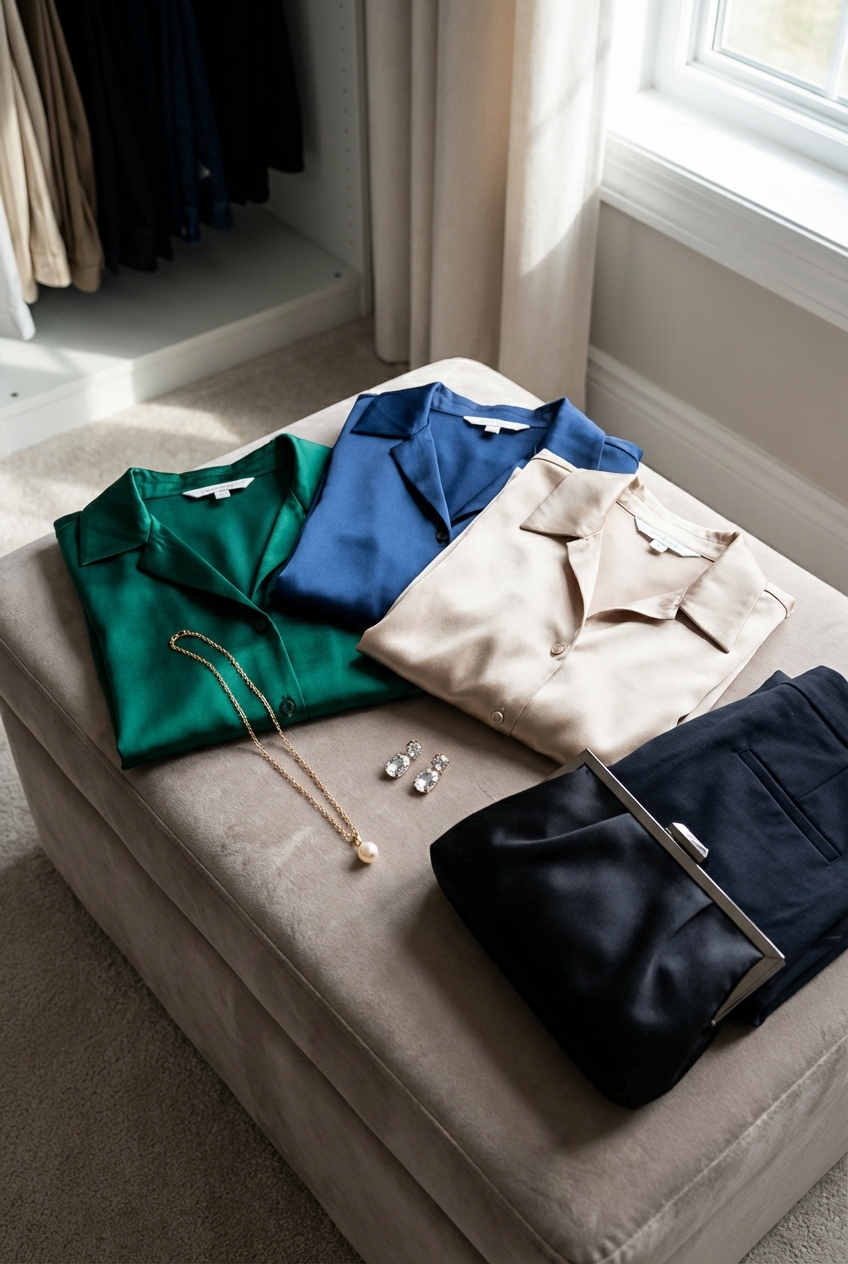
Sleek Satin Blouses For Evening Elegance
There is something inherently transforming about slipping into a high-quality satin blouse. The way the fabric captures ambient light and feels against the skin instantly shifts your mindset from “daily grind” to “evening sophistication.” I remember styling a client for a gallery opening in Chelsea who was terrified of leaving her structured blazers behind; once we found the right champagne silk charmeuse, her entire posture softened and lengthened.
However, satin is a notoriously unforgiving fabric if you do not understand how to select and style it properly. It shows every water droplet, highlights poor tailoring, and can cling to static in the least flattering ways. Mastering this garment requires a blend of fabric knowledge and precise fit adjustments that many shoppers overlook.
In this guide, I will walk you through the technical details of selecting, tailoring, and styling satin blouses for formal evening wear. If you are looking for visual inspiration on how to execute these looks, feel free to skip ahead to the Picture Gallery at the end of the blog post.
The Physics of the Fabric: Silk vs. Synthetic
To the untrained eye, all shiny fabrics look the same, but the composition dictates how the blouse will perform throughout the night. High-end evening wear usually utilizes silk satin, specifically silk charmeuse. This fiber breathes, regulates body temperature, and offers a “liquid” drape that synthetic fibers struggle to mimic.
Polyester satin has come a long way and is often more durable and machine washable. However, it traps heat. If you are attending a crowded cocktail party or a summer wedding, polyester can become uncomfortable quickly. For evening elegance, I almost always recommend investing in 100% silk or a silk-viscose blend.
Understanding the “weave” is also critical. Satin is actually the name of the weave, not the fiber. It is characterized by four or more fill yarns floating over a warp yarn. This long “float” creates the luster but also makes the fabric prone to snagging on jewelry or rough surfaces.
Designer’s Note:
I once styled a client in a stunning vintage raw silk blouse for a dinner date. She wore a bracelet with unpolished prongs. By the entrée, the right sleeve was picked and ruined. The lesson: When wearing satin, check your jewelry settings under a magnifying glass or rub them against a stocking first. If it snags the stocking, it will ruin your blouse.
Dialing in the Fit: Measurements and Ease
Satin has very little natural stretch unless elastane has been added to the weave. This means the fit must be precise, specifically regarding “ease”—the difference between your body measurements and the garment measurements. A satin blouse that is too tight will pull horizontally across the bust, creating “whiskering” tension lines that ruin the sleek effect.
For a standard button-down satin blouse, you want approximately 1.5 to 2 inches of positive ease at the bust. This allows the fabric to glide over your undergarments rather than gripping them. If you are between sizes, always size up and take the garment to a tailor.
Pay close attention to the shoulder seam. Because satin is fluid, a dropped shoulder can look sloppy rather than intentional if the rest of the shirt is tailored. The seam should sit exactly at the acromion bone (the edge of your shoulder) for a sharp, evening-ready look.
Common Mistakes + Fixes:
- The Mistake: Gaping buttons at the bust line (the “peep show”).
- The Fix: Do not rely on safety pins, which ruin satin. Sew a small snap fastener between the straining buttons on the interior placket. Alternatively, use double-sided fashion tape designed specifically for fabric-to-skin contact.
Selecting the Right Silhouette for the Occasion
Not all satin blouses convey the same level of formality. The silhouette you choose should align with the venue and the rest of your ensemble. The classic button-down is versatile, but for true evening elegance, consider a cowl neck or a pussy-bow style.
A cowl neck uses the bias cut of the fabric to create a soft, draping neckline. This is universally flattering and adds dimension without bulk. It works exceptionally well for seated dinners because the visual interest is focused on the upper body and face.
For a more structured, powerful look, a high-neck halter or a blouse with bishop sleeves is excellent. Bishop sleeves—fuller sleeves that gather at a tight cuff—add drama and movement. They look incredible when holding a champagne flute but can be hazardous during a meal if the cuffs are not fitted properly.
What I’d do in a real project:
- If the event involves a sit-down dinner, I avoid bell sleeves that widen at the wrist. They inevitably dip into sauces.
- I choose bishop sleeves with a rigid cuff that hits 0.5 inches above the wrist bone.
- I ensure the necktie on a pussy-bow blouse is ironed flat, not tied in a floppy bow. I prefer a simple knot with long tails for a modern, architectural look.
Lighting and Color Theory
Satin is a reflective surface. It acts like a mirror for the lighting in the room. This is a crucial consideration that interior designers use, and it applies to fashion as well. In dim, candlelight settings, dark jewel tones like emerald, sapphire, and onyx look rich and expensive. They absorb just enough light to show the texture without looking shiny or cheap.
In bright, harsh lighting (like a gallery or a corporate event), light-colored satins (champagne, ivory, silver) can sometimes look like sleepwear if not styled with structure. They also highlight every seam and undergarment line.
If you are unsure of the lighting at the venue, a deep navy or charcoal is the safest bet. These colors maintain their integrity in both low and high light. Avoid high-gloss neon satins for evening wear; they tend to read as costume-y rather than elegant.
Designer’s Note on Photography:
Flash photography bounces hard off satin. If you know you will be photographed, opt for a “sandwashed” silk. This finish has a suede-like texture that reduces the shine slightly, giving you a glow rather than a glare in photos.
Styling: Texture Contrast is Key
The golden rule of styling satin is texture contrast. Because the blouse is smooth, shiny, and liquid, pairing it with a similar bottom (like a silk skirt) can look flat or overly “pajama-chic” unless you are going for a deliberate monochrome look.
To elevate the blouse, pair it with light-absorbing fabrics. Velvet trousers are a phenomenal partner for a satin blouse in winter. The density of the velvet grounds the airiness of the satin.
For a modern edge, pair a sleek satin blouse with structured leather or high-twist wool crepe. The rigidity of leather creates a beautiful tension with the softness of the silk. If wearing denim for a “high-low” evening look, choose a dark, uniform wash with no distressing.
My Go-To Outfit Formula:
- Top: Ivory Silk Charmeuse Blouse (tucked in).
- Bottom: Black Wide-Leg Wool Trousers (high-waisted).
- Accessory: Patent Leather Belt (to bridge the shine of the top and the matte of the pants).
- Shoes: Suede Pointed Toe Pumps.
The Foundation: Undergarments
You cannot wear your everyday T-shirt bra under a sleek satin blouse. The texture of a lace bra will telegraph right through the fabric. You need a smooth, molded cup bra or a seamless bralette.
Color matching is also distinct here. Do not wear a white bra under a white or ivory satin blouse; it will show as a stark white band. Wear a bra that matches your skin tone exactly to make it disappear.
For backless or plunge styles, silicone nipple covers are often the best choice, but ensure they are matte finish. I have seen silicone covers reflect flash photography through thin satin. Test this at home with your phone camera flash before leaving.
Common Mistakes + Fixes:
- The Mistake: Visible panty lines or tucked-in shirt lines showing through a skirt.
- The Fix: Wear a seamless bodysuit instead of a blouse if you want a perfectly tucked look without the bulk. If wearing a traditional blouse, tuck it into shapewear shorts rather than just your underwear to smooth out the “tuck lump.”
Maintenance and Emergency Care
Satin is high-maintenance. That is part of its luxury appeal. Before you leave the house, you must steam the garment. Never iron satin directly on the face of the fabric; it will crush the fibers and leave permanent shiny streaks (glazing). Always steam from the inside out.
Water spots are the enemy of silk satin. If you splash water on your blouse while washing your hands, do not rub it. Rubbing will chafe the wet fibers, causing a permanent white fuzzy spot. Instead, blot it gently with a dry towel and let it air dry. The ring usually disappears.
Static cling is another major issue, specifically with polyester satin or in dry winter months. The fabric will stick to your body, ruining the drape.
Designer’s Note on Static:
Keep a small travel-size can of anti-static spray in your clutch. If you don’t have that, a quick rub of a dryer sheet on the inside of the blouse (and your legs/tights) works wonders. In a pinch, applying a small amount of hand lotion to your skin underneath the static area can discharge the electricity.
Finish & Styling Checklist
Before you head out the door, run through this mental checklist. I use this exact process for my clients to ensure they look polished from every angle.
1. The Steam Check
Are there any creases at the elbow or waist? Give it one last pass with the steamer. Satin looks expensive when smooth; it looks cheap when wrinkled.
2. The Tuck Test
Raise your arms above your head. Does the blouse come untucked? If so, you need a longer hemline or you need to tuck it into shapewear for more friction.
3. The Hardware Audit
Check your necklace clasp and earrings. Are there any sharp edges that could catch the collar? Rotate your necklace clasp to the back.
4. The Lingerie Scan
Look at yourself in bright light. Can you see the lace texture of your bra? Can you see the outline of the bra strap? Adjust as necessary.
5. The Deodorant Check
Satin shows white deodorant marks instantly. If you have white marks, use a piece of foam (like a hanger cover) or a pair of nylon pantyhose to rub them off gently.
FAQs
Can I wear a satin blouse to a black-tie event?
Yes, absolutely. To make it black-tie appropriate, pair it with a floor-length ball skirt in taffeta or velvet. Add statement jewelry to elevate the look. The fabric quality must be 100% silk for this level of formality.
How do I stop my satin blouse from sliding off my shoulders?
If you are wearing a wide-neck or off-the-shoulder style, use double-sided fashion tape. Place a strip on the shoulder seam and press it firmly against your skin. Ensure your skin is free of lotion in that area for the tape to stick.
Is it better to dry clean or hand wash silk satin?
For expensive evening wear, I always recommend dry cleaning. While you can hand wash silk, it often changes the texture (hand) of the fabric, making it less shiny and more matte. It can also cause shrinkage. If you love the glossy, pristine look, leave it to the professionals.
What do I do if I get an oil stain on my blouse during dinner?
Do not use water. Blot the excess oil with a napkin. As soon as you get home, cover the spot with baby powder or cornstarch to absorb the oil. Let it sit overnight before brushing it off. Then take it to the dry cleaner and point out the stain.
Conclusion
Sleek satin blouses are a cornerstone of an elegant evening wardrobe. They offer a level of sophistication and tactile luxury that few other garments can match. By understanding the composition of the fabric, ensuring a tailored fit, and paying attention to the details of lighting and undergarments, you can wear this demanding fabric with confidence.
Remember that elegance is 50% what you wear and 50% how you maintain it. A pristine, well-steamed, and properly fitted satin blouse will always turn heads. It is a timeless investment that, when treated with care, serves as your armor for the most special nights of your life.
Picture Gallery


