
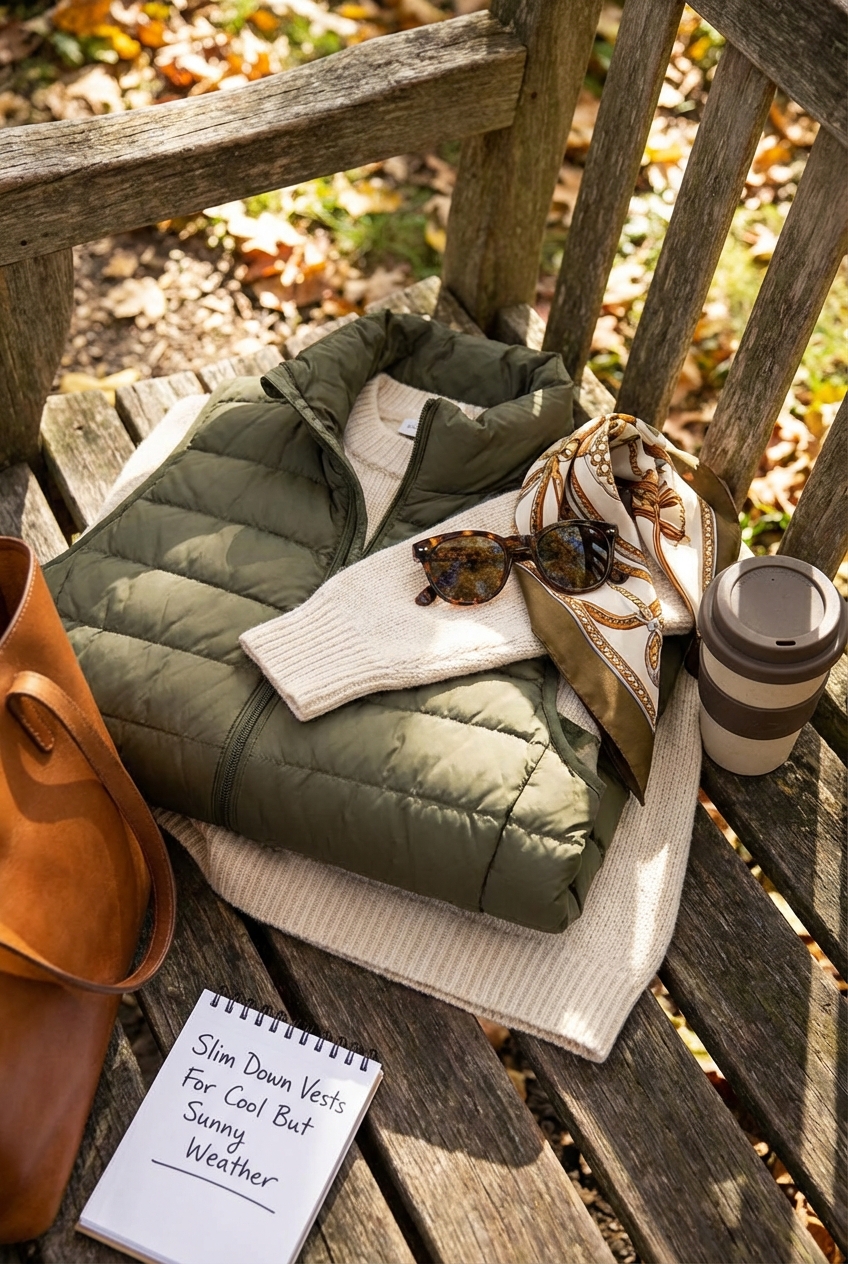
Slim Down Vests For Cool But Sunny Weather
There is a very specific type of weather that throws even the most seasoned fashion enthusiasts for a loop. It is that deceptive forecast where the sun is blazing, suggesting a warm afternoon, but the ambient air temperature hovers stubbornly in the low 50s. If you wear a full wool coat, you are sweating by noon. If you stick to a light sweater, you are shivering in the shade.
This is where the vest enters the chat. For years, I avoided vests in my personal wardrobe because I associated them with bulk. I worried that adding a layer of down or heavy wool specifically around my core would make me look boxy or top-heavy. However, after styling countless clients for transitional seasons, I realized the problem wasn’t the vest itself; it was the selection and the styling.
A well-chosen vest is actually one of the most powerful tools for creating a long, lean line while regulating your body temperature. It allows for arm mobility and keeps your vital organs warm without the claustrophobia of heavy sleeves. If you are looking for visual inspiration on how to execute these looks, keep reading because I have curated a stunning Picture Gallery at the end of the blog post.
The Physics of Volume: Selecting the Right Baffle
When we talk about “slimming down” a vest, we are often fighting against the puff factor. In technical outerwear design, the sections that hold the insulation in place are called baffles. The width and orientation of these baffles dictate how the eye perceives your silhouette.
The Wide Baffle Mistake
Avoid vests with wide, horizontal channels (anything over 3 inches tall). These act like horizontal stripes, visually widening the torso. While they are excellent for sub-zero Arctic expeditions, they are rarely flattering for a chic city brunch. They create a “Michelin Man” effect that is difficult to style away.
The Diamond and Chevron Solution
Look for diamond quilting or chevron patterns that point downward. These lines draw the eye toward the center of the body and then down, creating a narrowing optical illusion. Small-scale diamond quilting is particularly effective because it compresses the insulation, providing warmth without the marshmallow projection.
Designer’s Note:
In my experience, the matte vs. shine factor makes a huge difference here. A high-gloss finish highlights every curve and bump of the padding, increasing the perception of volume. Always opt for a matte finish or a soft, brushed fabric to absorb light and slim the silhouette.
The Armscye Equation: Fit Matters More Than You Think
The armscye is the technical term for the armhole. In vests, this is the single most critical point of fit, yet it is often ignored. If the armhole is cut too low or too wide, the vest will gape at the side of the bust. This adds unnecessary width to your upper ribcage and exposes your base layer in an unflattering way.
The High-Cut Rule
You want an armhole that sits high and close to the underarm without cutting into your circulation. This ensures the side of the vest lays flat against your torso. It creates a clean vertical line from the shoulder down to the hip.
Elasticized Openings
For sportier styles, look for armholes with a thin elastic binding. This helps the fabric hug the body and prevents cold drafts from entering, which serves a dual purpose of function and form. If you are handy with a needle or have a good tailor, taking in the side seam just under the armpit by half an inch can transform a boxy vest into a custom-fitted garment.
Fabric Weight and Texture: Beyond the Puffer
While down vests are popular, they are not the only option for cool, sunny days. If your primary goal is a sleek profile, you might need to step away from feathers entirely and look toward wool and synthetic blends.
Boiled Wool and Cashmere
A structured, boiled wool vest acts like a blazer without sleeves. It has zero “puff” but offers tremendous warmth because wool is naturally thermoregulating. It creates a sharp, tailored architectural shape that looks incredible over a silk blouse or a fine-gauge knit.
PrimaLoft and Thinsulate
If you need the weather resistance of a puffer but hate the bulk, look for technical synthetic insulations like PrimaLoft Gold. These materials are designed to trap heat in extremely thin layers. You can often find “packable” vests made with these materials that are thin enough to wear under a blazer, which is the ultimate testament to their slimming nature.
Common Mistake + Fix:
Mistake: Wearing a thick, cable-knit sweater underneath a fitted vest.
Fix: This creates friction and bunching. The rule of thumb is that the inner layer must always be thinner and smoother than the outer layer. Swap the chunky cable knit for a merino wool turtleneck or a ribbed modal tee.
The Monochromatic Column Strategy
One of the oldest tricks in the stylist handbook is the “column of color.” This is especially vital when wearing a vest. If your pants, shirt, and vest are all different colors, you are chopping your body into three distinct blocks. This shortens your height and widens your frame.
The Inner Column
Try keeping your base layer and your trousers in the same color family. For example, wear black trousers and a black turtleneck. When you throw a tan or olive vest over this, the vest acts as a frame. The eye is drawn to the continuous vertical line of black underneath, which creates an immediate lengthening effect.
The Tonal Approach
Alternatively, match the vest to the outfit for a seamless look. A navy vest over a navy sweater and dark denim creates a sophisticated, uniform appearance. This minimizes the visual weight of the vest because the boundaries between the layers blur.
Length Logic: Where the Hem Should Hit
The length of your vest dictates the balance of your entire outfit. The wrong length can make your legs look shorter or your hips look wider. We generally categorize vests into three lengths: cropped, hip, and longline.
The Crop (Use with Caution)
Cropped vests that end at the natural waist are trendy, but they can be tricky. They tend to draw a horizontal line right across the midsection. These work best with high-waisted wide-leg trousers to maintain proportion.
The Hip-Bone Sweet Spot
For most body types, the most flattering length hits right at the hip bone (iliac crest). This covers the waistband of your pants but doesn’t drag down the leg line. It allows for movement and keeps the kidneys warm.
The Longline Advantage
A “longline” vest that hits mid-thigh or even at the knee is often the most slimming option. It acts like a trench coat. It covers the hips and rear, creating a long, uninterrupted sweep of fabric. However, scale is important here. If you are petite (under 5’4″), a knee-length vest can swallow you whole. In that case, aim for mid-thigh.
Belted vs. Boxy: Defining the Silhouette
There is a misconception that to hide bulk, you should wear loose clothing. In reality, defining the waist is often the key to slimming down a layered look. Some vests come with built-in styling mechanisms to help with this.
The Interior Drawstring
My favorite feature to look for in a vest is an interior waist toggle. This allows you to cinch the waist from the inside of the garment. It pulls the back of the vest in against the small of your back, removing that boxy gap, while keeping the front looking clean and streamlined.
The Exterior Belt
For wool or trench-style vests, an exterior self-tie belt is chic. Treat it like a robe; don’t buckle it perfectly. Knot it casually to create an hourglass shape. This breaks up the visual mass of the fabric and highlights the narrowest part of your torso.
Real-World Project Lesson:
I once had a client who insisted she couldn’t wear vests because she had a large bust. The vest would hang straight down from her chest, making her look tent-like. The fix was simple: we chose a vest with a defined waist seam and added a belt. Suddenly, the fabric contoured her shape rather than hiding it. Never let a garment hang off your widest point without bringing it back in.
Finish & Styling Checklist: The “Fitting Room” Test
Before you commit to a vest for the season, run through this mental checklist. This is the exact process I use when conducting a fitting for a client. If the garment fails more than two of these points, it goes back on the rack.
1. The Friction Test
Put on the base layer you intend to wear most often (likely a sweater). Put the vest on over it. Swing your arms back and forth like you are power walking. Does the fabric grab and twist? If the lining of the vest isn’t slippery enough, it will cause your sweater to bunch up, adding phantom bulk to your frame.
2. The Sit Test
Sit down in a chair and zip or button the vest. Does it ride up into your chin? does it create a giant bubble on your lap? A good vest should have a two-way zipper (one that zips up from the bottom). This allows you to open the bottom hem when sitting, preserving the straight line of the garment.
3. The Hardware Assessment
Check the size of the zippers and snaps. oversized, chunky hardware can add visual clutter. For a sleek look, you want invisible zippers or hardware that matches the fabric color. Contrast hardware draws the eye to specific spots, so make sure those spots are where you want people looking.
4. The Collar Check
Stand in front of a mirror. Does the collar stand up straight, or does it flop? A structured collar that frames the face draws the eye upward, away from the torso. It adds height and presence. A floppy collar looks messy and unrefined.
Frequently Asked Questions
Can I wear a vest to a professional office?
Absolutely, but fabric choice is key. Leave the shiny nylon puffer for the weekend. Opt for a wool-blend gilet or a trench-style vest in neutral tones like camel, charcoal, or navy. Pair it with tailored trousers and a crisp button-down shirt or a fine-gauge cashmere sweater. It reads as “business casual” rather than “hiking trail.”
How do I clean a down vest without ruining the shape?
The biggest risk with washing down is that the feathers clump together, creating lumpy, uneven baffles. Always wash on a delicate cycle with a specific down detergent. The most important step is drying: toss three or four wool dryer balls (or clean tennis balls) into the dryer with the vest on low heat. The balls will beat the feathers as they dry, refluffing the loft and ensuring the vest retains its shape.
What shoes pair best with a longline vest?
A longline vest creates a lot of volume on top, so you want to keep the lower leg streamlined. Avoid chunky boots that widen the calf. Instead, opt for a sleek Chelsea boot, a pointed-toe flat, or a slim sneaker. If you are wearing wide-leg trousers, a block-heel boot works well to maintain height.
Is it okay to wear a vest over a blazer?
This is a very advanced fashion move (often seen at Pitti Uomo or Fashion Week), but it can be done. The vest must be slightly oversized, and the blazer must be fitted. It works best with a thin, quilted vest worn over a textured tweed or wool blazer. It’s a great look for those days that start at 40 degrees and end at 65.
Conclusion
Navigating the “cool but sunny” weather doesn’t mean you have to sacrifice your silhouette for the sake of warmth. The vest is a misunderstood hero in the fashion world. When you strip away the notion that warmth equals bulk, you open up a world of layering possibilities.
Remember the golden rules: watch your baffle width, pay attention to the armhole fit, and utilize the column of color to lengthen your frame. Whether you are running errands, heading to a casual client meeting, or just enjoying a crisp walk, a slimmed-down vest offers that perfect blend of practicality and polish. It allows you to embrace the season without looking like you are dressed for a blizzard. Trust the proportions, and you will find that the vest becomes the most reached-for item in your closet this season.
Picture Gallery


