
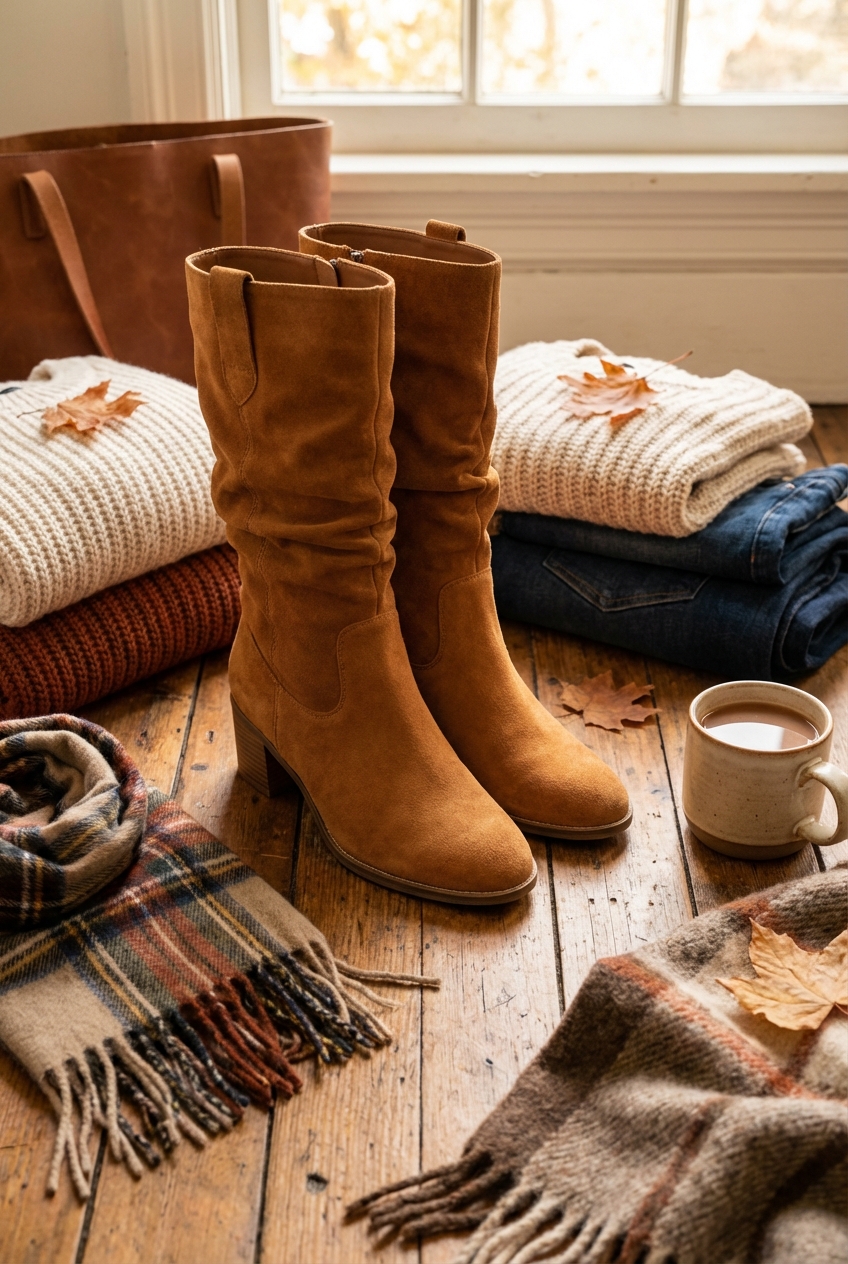
Slouchy Suede Boots For Fall Casual Looks
Fall fashion is defined by a shift in texture. As the air crisps, we move away from the crisp cottons of summer and lean into materials that offer depth, warmth, and tactile appeal. Among the most essential pieces in a high-end casual wardrobe is the slouchy suede boot.
This footwear silhouette brings a relaxed elegance that structured leather riding boots simply cannot achieve. The soft folds of suede create a sense of movement and ease, signaling a luxury that feels lived-in rather than rigid. It is the footwear equivalent of a cashmere sweater draped over your shoulders.
However, styling this boot requires a keen eye for proportion and volume. If you get the balance wrong, the look can quickly veer into “sloppy” territory rather than “chic.” For a complete visual guide on how to execute these looks, be sure to check out the Picture Gallery at the end of the blog post.
The Architecture of the Slouch: Silhouette and Scale
When selecting a slouchy boot, many clients make the mistake of thinking “loose” means “ill-fitting.” In high-end fashion, the “slouch” is a constructed design element, not an accident. The shaft of the boot should be cut wider than the calf to allow the material to pool naturally, but the ankle must still provide structural support.
My primary rule of thumb for scale is the “Volume Balance.” If you are adding visual weight to your lower legs with a slouchy boot, you cannot wear a completely tight silhouette from the knees up without looking bottom-heavy. You must echo that volume somewhere on your upper body.
Think of the boot as the anchor of your outfit. If the boot is substantial and textured, the rest of the outfit needs to have enough presence to stand up to it. This doesn’t mean you need to wear oversized clothing, but you do need fabrics that hold their own.
Designer’s Note: The Ankle Break
One specific detail I always look for is where the “break” or the main fold of the slouch hits the leg. Ideally, the heaviest gathering of material should sit just above the ankle bone.
If the slouch collapses entirely around the heel, you lose the shape of the foot and the leg looks shorter. If the boots are collapsing too much, I often advise clients to use thick boot cuffs or even scrunched socks inside to act as internal scaffolding. This keeps the suede propped up exactly where you want the volume to sit.
Selecting the Right Suede: Nap and Nuance
Not all suede is created equal, and in photography and real life, the quality of the material makes or breaks the casual aesthetic. Low-quality suede or microfiber substitutes often appear flat and reflect light in a way that looks synthetic.
High-quality suede has a “nap”—the raised fibers that change color slightly when brushed. This depth absorbs light, creating rich, saturated colors that elevate even a simple jeans-and-tee look. For fall, I recommend investing in “split calf suede” which is softer and more pliable than standard cowhide.
Color Theory for Fall
When building a wardrobe capsule, stick to earth tones that act as neutrals.
- Rich Cognac: This warms up denim and pairs beautifully with cream knits.
- Deep Olive: A surprising neutral that works well with black, navy, and beige.
- Taupe or Sand: Excellent for early fall, but be wary of rain. These lighter shades show water spots instantly.
- Chocolate Brown: The modern alternative to black. It feels softer and more expensive for daytime casual wear.
Mastering the Denim Tuck
Pairing slouchy boots with jeans is the most common casual application, but it is also the most technically difficult to get right. The friction between denim and suede can cause bunching at the knee, creating an unsightly “muffin top” effect on your leg.
To avoid this, the denim must be fitted all the way to the ankle. A straight-leg jean generally has too much fabric to tuck neatly into a slouchy boot. You need a true skinny jean or a heavy-weight legging.
Common Mistakes + Fixes
Mistake: Tucking a standard straight-leg jean into the boot, resulting in ballooning fabric at the knee.
Fix: Use the “sock trick.” Put your jeans on, then pull a tall crew sock over the hem of the jeans up to your mid-calf. Smooth the denim down inside the sock before pulling the boot on. This creates a streamlined silhouette inside the boot shaft.
Mistake: Contrasting colors cutting the leg line in half.
Fix: For a longer, leaner look, keep the value (lightness/darkness) of the jeans similar to the boot. Dark indigo denim with chocolate boots creates an unbroken vertical line.
Styling with Skirts and Dresses: The Hemline Rules
This is my favorite way to style suede boots because the contrast between the heavy boot and a flowing skirt creates dynamic tension. However, the gap between the boot and the hem is critical.
There are two distinct approaches I use in editorial styling: The Overlap and The Gap.
The Overlap Strategy
This works best with midi skirts and dresses. The hem of the skirt should cover the top 2 to 3 inches of the boot. This eliminates any skin exposure, creating a continuous column of texture.
This is particularly effective for petite clients because it avoids chopping the leg into horizontal segments. When you walk, the movement of the skirt reveals the texture of the boot, which is very chic.
The Gap Strategy
For shorter hemlines (mini or just above the knee), you need to manage the amount of skin showing. My rule is to ensure the gap is no larger than 4 to 5 inches.
If the gap is too large (like a mini skirt with ankle booties), the proportions feel disconnected. A knee-high slouchy boot with a skirt that hits mid-thigh offers the perfect balance of coverage and exposure for a casual fall day.
Balancing Textures for a “High-End” Casual Look
Since suede absorbs light, you want to pair it with fabrics that either reflect light or offer a different tactile experience. A head-to-toe matte look can feel heavy and dull.
I love pairing slouchy suede boots with silk or satin slip skirts. The sheen of the silk against the matte nap of the suede is instant luxury. Throw an oversized chunky knit sweater over the top, and you have the ultimate “off-duty model” uniform.
What I’d Do in a Real Project
If I were styling a client for a casual weekend trip to Aspen or upstate New York, here is the formula I would use:
- Base: Cream-colored corduroy leggings or skinny trousers (texture on texture).
- Footwear: Caramel slouchy suede boots with a modest 2-inch block heel.
- Top: A silk camisole layered under a cashmere cardigan.
- Outerwear: An oversized wool blazer in a plaid pattern that incorporates the caramel tone of the boots.
- Accessory: A leather belt worn over the blazer to define the waist.
This look works because the corduroy bridges the gap between the rugged boot and the delicate silk, while the blazer adds structure to the relaxed footwear.
Practicality and Maintenance in the Real World
As much as we love the look of suede, we have to acknowledge the reality of weather. Suede is porous and easily ruined by water and salt. I never let a client leave with a pair of suede boots without a care plan.
Before you ever wear them outside, they must be treated. I recommend a high-quality nano-protector spray. Do not use cheap silicone sprays, as they can darken the leather and seal the nap, ruining the soft texture.
Storage Logic
Gravity is the enemy of the slouchy boot. While we want them to slouch on the leg, we do not want them to crease permanently in the closet.
The Pool Noodle Hack: It sounds unglamorous, but it works. Cut a foam pool noodle to the height of your boots and insert them into the shafts when storing. This keeps the boot upright and prevents deep creases from forming at the ankle, which can eventually cause the leather to crack.
Dealing with Socks
Slouchy boots often fit looser around the foot. To prevent blisters and keep your foot secure, avoid thin dress socks. Opt for a mid-weight wool blend sock.
The extra volume of the sock helps fill out the footbed, preventing your heel from slipping up and down as you walk. This is crucial for comfort if you plan on walking any distance.
Finish & Styling Checklist
Before you head out the door, run through this quick stylist check to ensure your look is cohesive.
- Check the Hemline: If wearing a skirt, does it either overlap the boot or leave a deliberate 4-5 inch gap? Avoid the awkward “just touching” length.
- Review the Ankle: Is the slouch sitting nicely above the ankle bone, or has it collapsed into a puddle? Pull them up or add a boot cuff if needed.
- Volume Check: If your boots are chunky, do you have enough volume on top (scarf, blazer, knit) to balance the silhouette?
- Texture Mix: Are you wearing at least one contrasting fabric (silk, denim, leather) to break up the matte finish of the suede?
- Weather Audit: Is it raining? If yes, swap for leather. Suede is for crisp, dry days only.
- Color Harmony: Does the boot color tie into one other element of your outfit (a belt, a bag, or a color in a print)?
FAQs
Can I wear slouchy boots to the office?
Yes, but the styling needs to be sharper to offset the relaxed vibe of the boot. Pair them with a structured midi pencil skirt and a crisp button-down shirt. Ensure the boots are in pristine condition—scuffed suede looks too casual for a professional setting.
I’m petite (under 5’4”). Will slouchy boots make me look shorter?
They can if you aren’t careful. The key for petite women is to choose a boot with a pointed or almond toe rather than a round toe. The pointed toe extends the visual line of the leg. Also, opt for a monochromatic look (e.g., black boots with black tights or jeans) to avoid chopping your vertical line.
My boots keep falling down too much. How do I stop it?
This is common as suede softens. You can purchase “boot bra” strips—essentially double-sided fabric tape or Velcro strips designed for boots—that adhere the inside of the boot shaft to your jeans or socks. Alternatively, wearing a thick, tall sock that has friction can help hold the leather up.
Can I wear wide-leg trousers tucked into slouchy boots?
Generally, no. This creates a “MC Hammer” effect that is very difficult to pull off. Wide-leg trousers are best worn over a fitted boot. Slouchy boots demand a fitted leg (leggings, tights, skinny jeans) to showcase the silhouette of the boot itself.
Conclusion
Slouchy suede boots are more than just a passing trend; they are a seasonal staple that brings softness and luxury to fall layering. They offer a reprieve from the rigid structure of formal footwear while maintaining an air of sophistication.
By paying attention to the “rules” of scale, texture, and maintenance, you can integrate these boots into a variety of looks, from weekend coffee runs to creative office environments. Remember that the best style feels effortless, and the slouchy boot is the ultimate tool for achieving that curated, relaxed aesthetic.
With the right pair treated and styled correctly, you will find yourself reaching for them every time the leaves begin to turn.
Picture Gallery


